
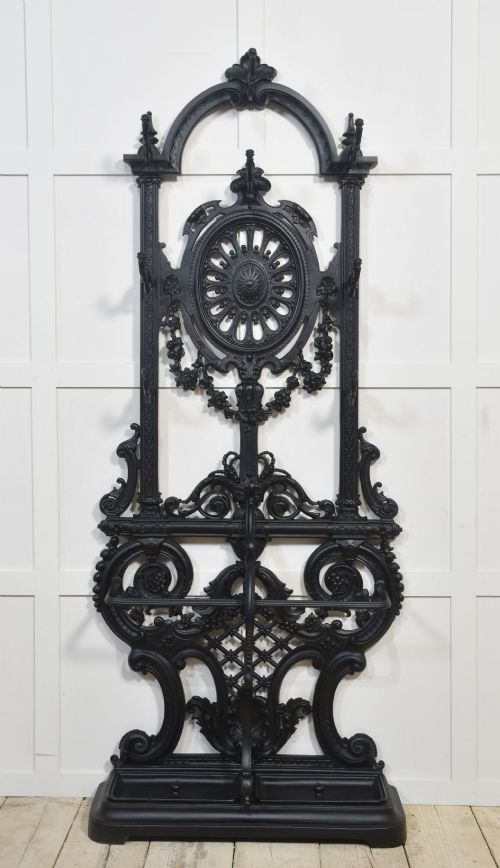


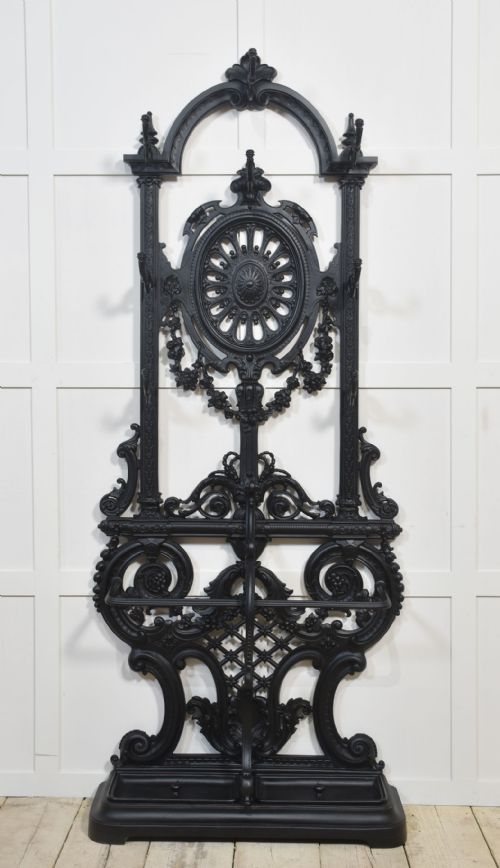


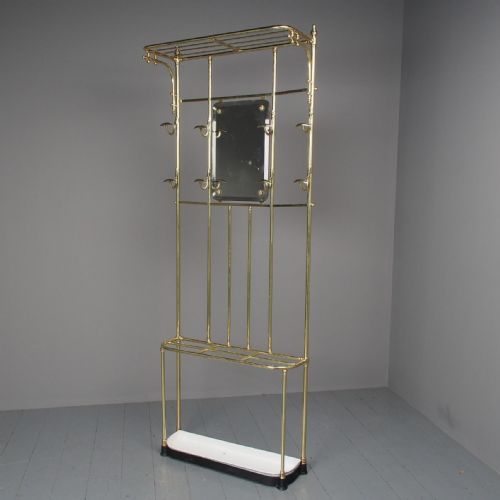

Cast Iron Hall Tree
A cast iron hall tree grounds an entrance hall with heavy industrial permanence, offering sturdy hanging space and umbrella storage for daily use.
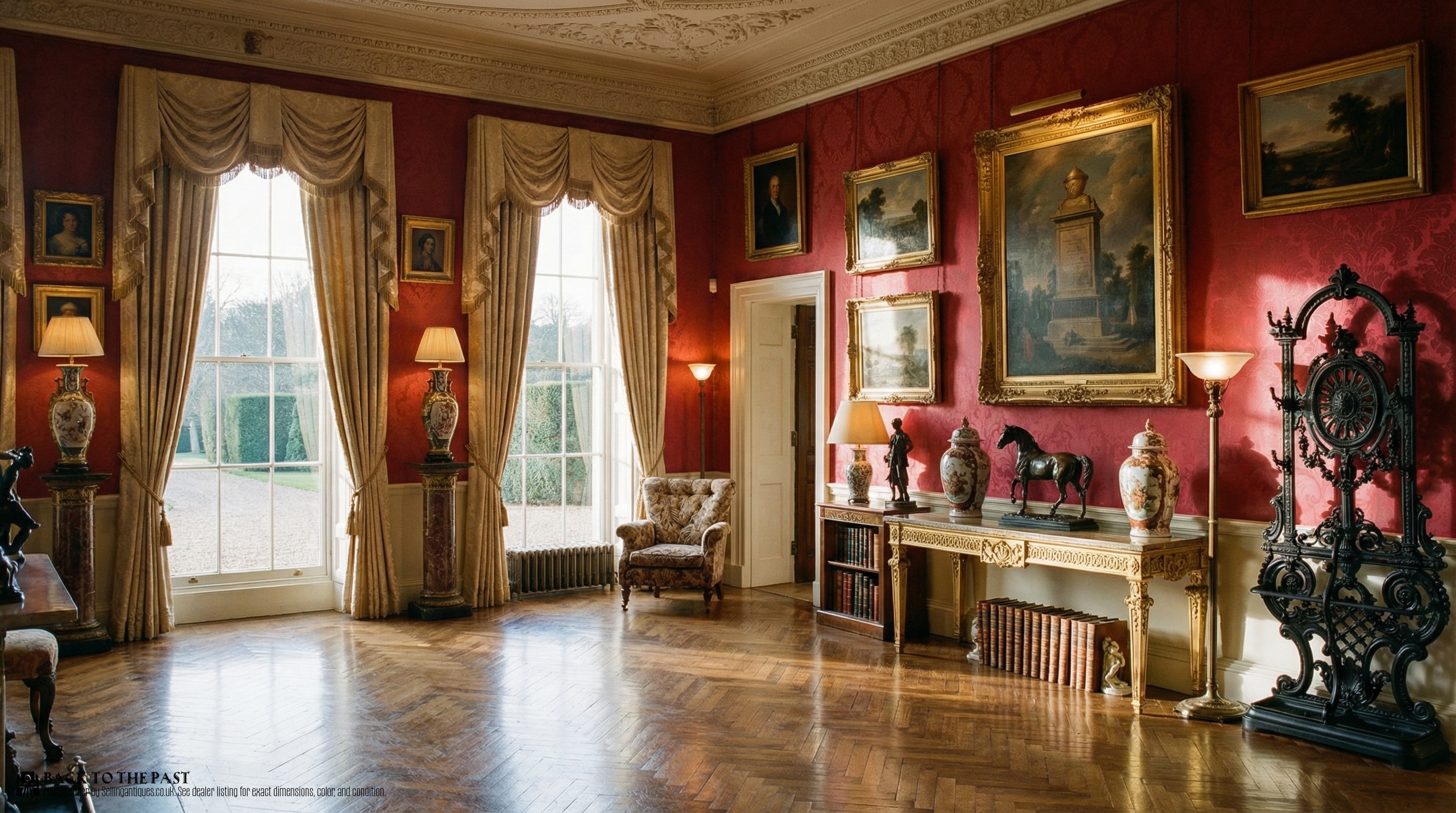
Cast Iron Hall Tree
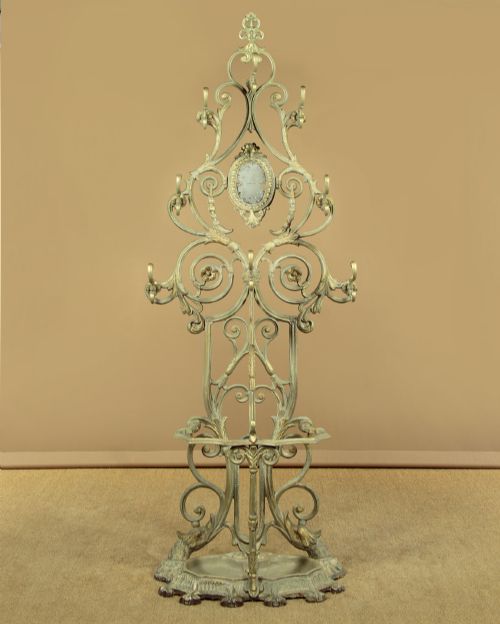
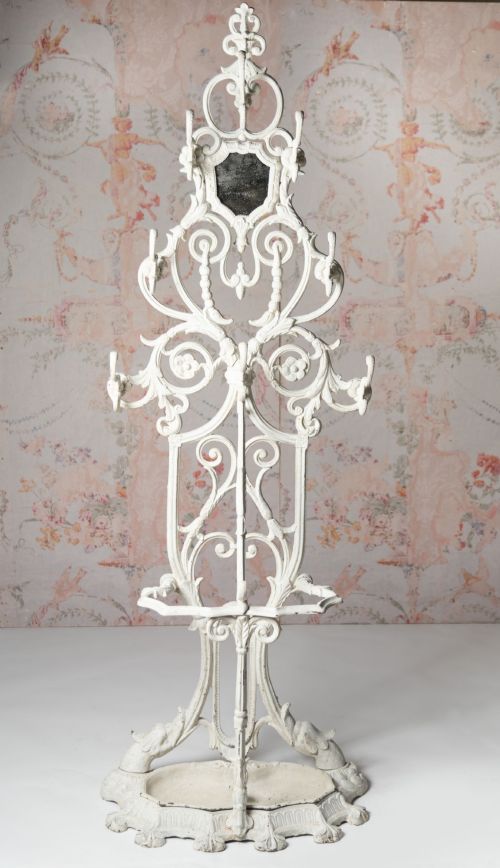
When you search for a cast iron hall tree, you encounter sturdy hallway furniture designed to organise coats, hats, and umbrellas in domestic entrances. These pieces span Victorian, Edwardian, and 1930s periods, drawing on styles such as Victorian Gothic Revival, Rococo Revival, and French Chateau aesthetics.
The most frequent versions on this page are hall stands and coat stands produced in English and French foundries during the nineteenth century. They incorporate umbrella loops, hat racks, and structural mirror frames within robust metallic frameworks.
Materials and Foundry Techniques
Makers poured molten metal into sand moulds to create the intricate openwork patterns characteristic of a cast iron hall tree. This primary structural material frequently combines with integrated brass hooks, glass elements, and inset marble drip trays.
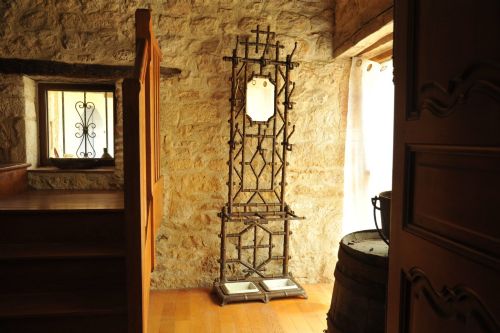
Surface finishes range from plain industrial paint to faux bamboo moulding achieved directly through casting techniques. Structural components secure together using threaded bolts to support heavy outdoor garments without warping.
Some nineteenth-century makers cast convincing bamboo stalks in cold, hard iron just to trick the eye.
Assessing Build and Aesthetic Merit
Quality in a cast iron hall tree rests on the crispness of the cast ornamentation and the structural integrity of the main frame. Pieces exhibiting deep, well-defined botanical or Gothic relief work demonstrate superior foundry skill compared to soft, worn castings.
The inclusion of original secondary materials, such as intact drip pans, mirrors, and brass hardware, elevates the historical completeness of the stand. Heavier, more complex portico designs command greater presence than simpler, utilitarian umbrella stands.
Coalbrookdale·Falkirk Foundry
The Cast Iron Hall Tree Glossary
- Cast Iron
- An iron-carbon alloy poured into moulds to create rigid, highly decorative furniture frames. It provides the heavy base weight necessary for supporting wet umbrellas and winter coats.
- Drip Tray
- A shallow basin positioned at the base of the stand to catch water from wet umbrellas. These are often made of metal or marble to prevent moisture damage.
- Faux Bamboo
- A decorative moulding technique that simulates natural bamboo joints in solid metal. It reflects nineteenth-century fascination with Asian design aesthetics.
- Umbrella Loop
- A curved metal divider designed to keep walking sticks and umbrellas upright. This feature prevents wet items from sliding across the hallway floor.
Cast Iron Hall Tree: Frequently Asked Questions
Where should I place a hall tree?
These tall stands suit entrance halls, boot rooms, and wide corridors where guests arrive and remove outerwear.
Ensure the wall surface behind the stand is stable, as some taller portico designs benefit from additional anchoring for absolute stability.
How do I clean cast iron furniture?
Dust the intricate metal crevices regularly with a dry, soft-bristled brush to prevent particulate buildup in the recessed casting patterns.
Avoid using harsh chemical solvents that might strip original painted finishes or corrode the underlying metal surface.
Can these hold heavy winter coats?
The robust metal hooks are engineered specifically to bear the weight of heavy wool coats, raincoats, and multiple hats simultaneously.
Distribute heavier garments evenly across the available hooks to maintain balance across the entire freestanding frame.
How do I identify Victorian examples?
Victorian pieces often display characteristic Gothic Revival or Rococo ornament, combined with heavy cast metal construction and maker attribution.
Look for foundational foundry stamps and traditional assembly methods involving threaded iron bolts rather than modern welds.