



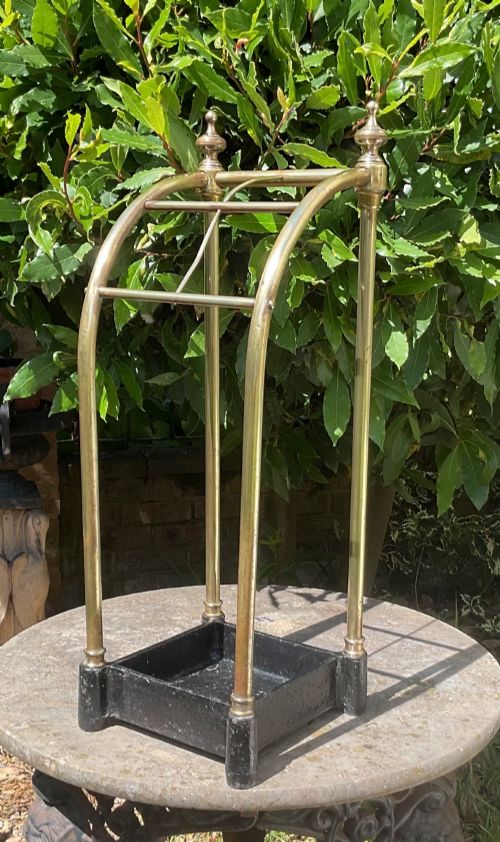
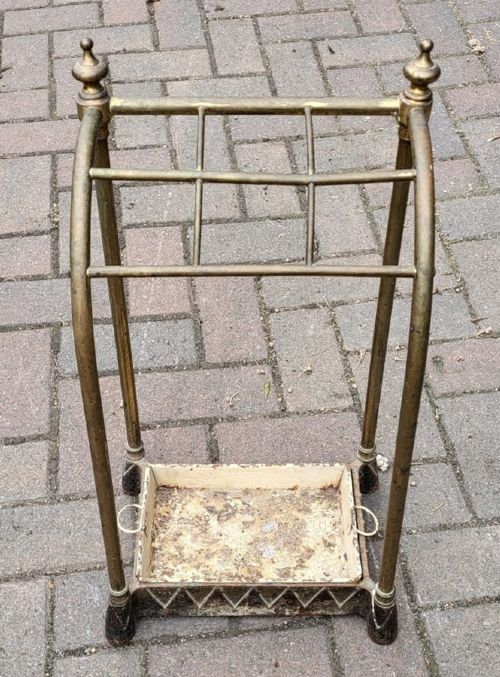
Cast Iron Hall Rack
A cast iron hall rack organises daily entrance clutter with sturdy hooks and heavy metal stands designed for wet umbrellas and heavy coats.
Cast Iron Hall Rack
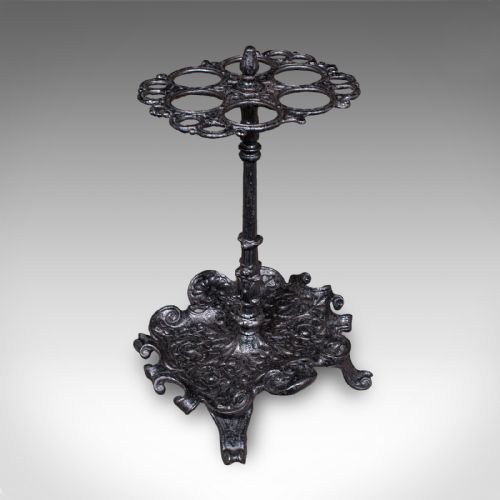
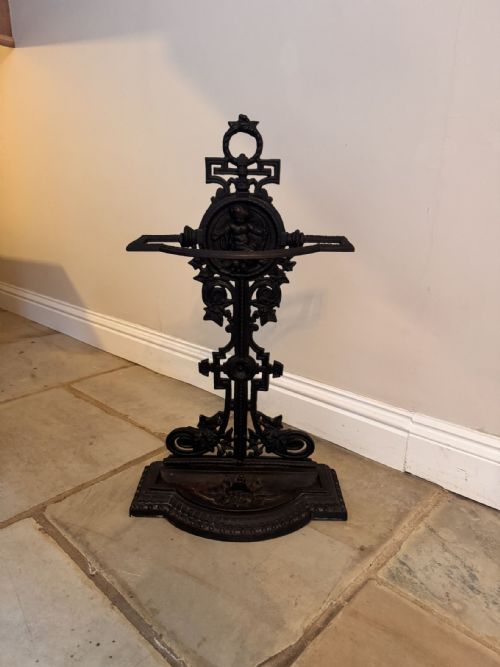
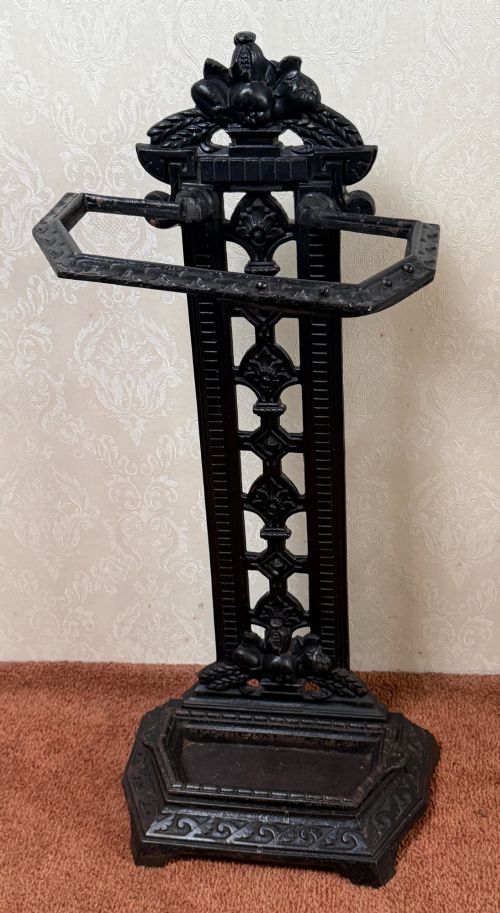
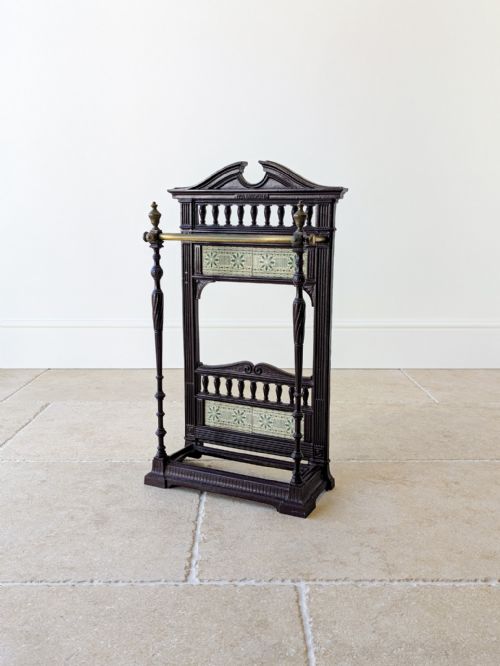
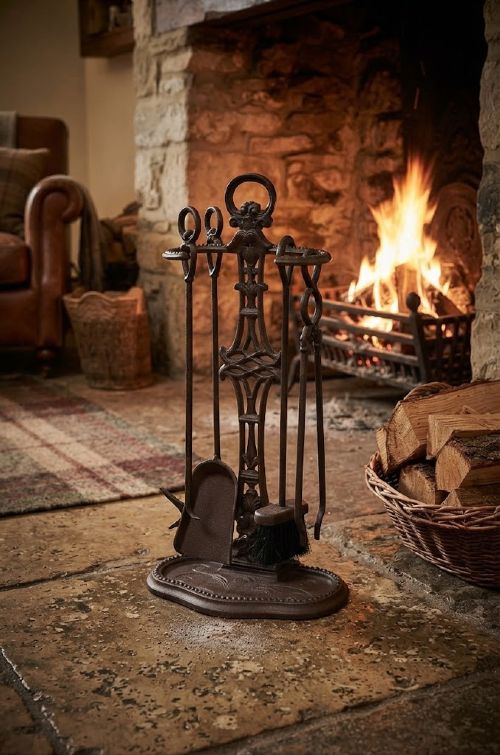
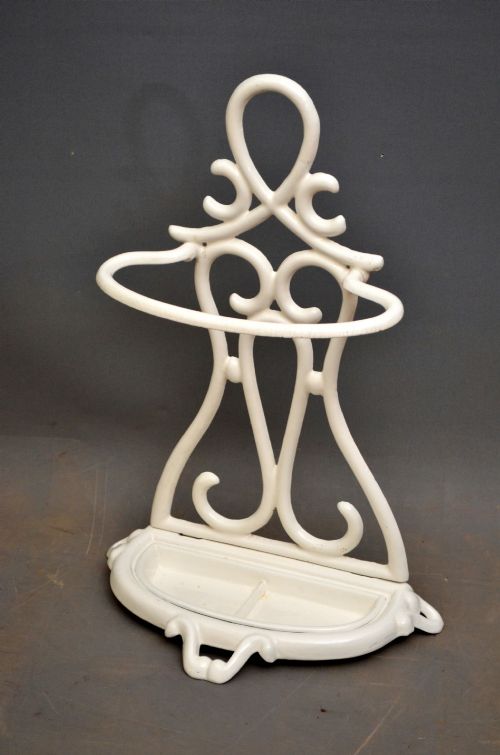
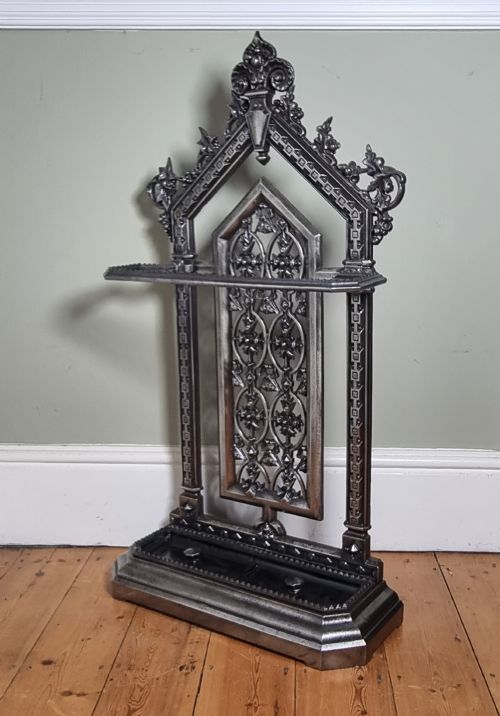
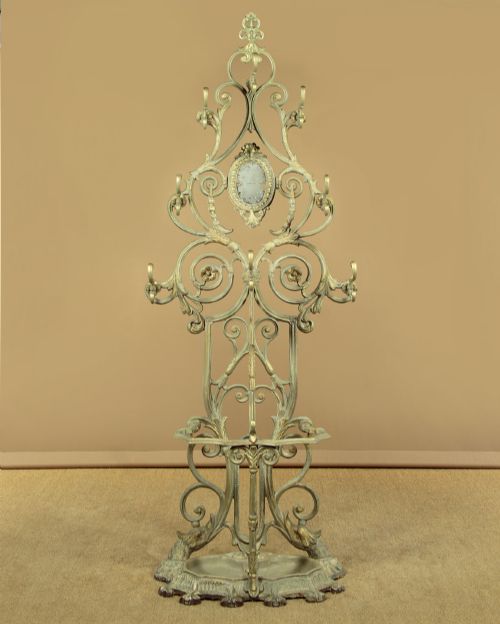
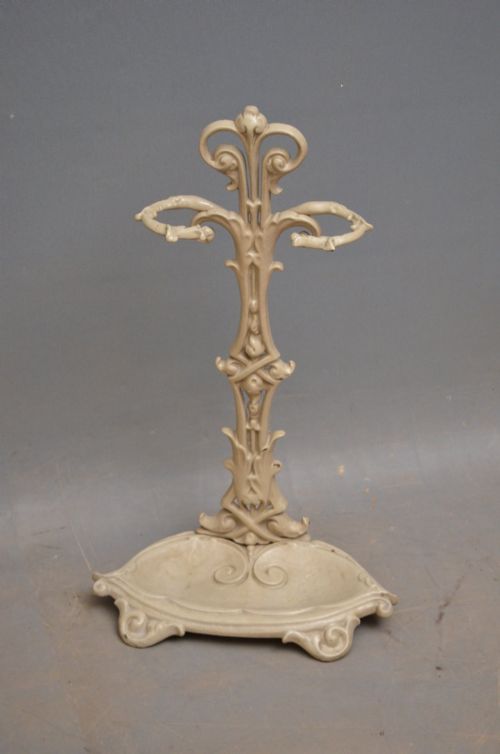
When you search for a cast iron hall rack, you find utilitarian furniture designed for entranceways, combining coat hooks with stick and umbrella stands. The pieces seen here span the Victorian and Edwardian periods, stretching from the mid nineteenth century into the nineteen thirties.
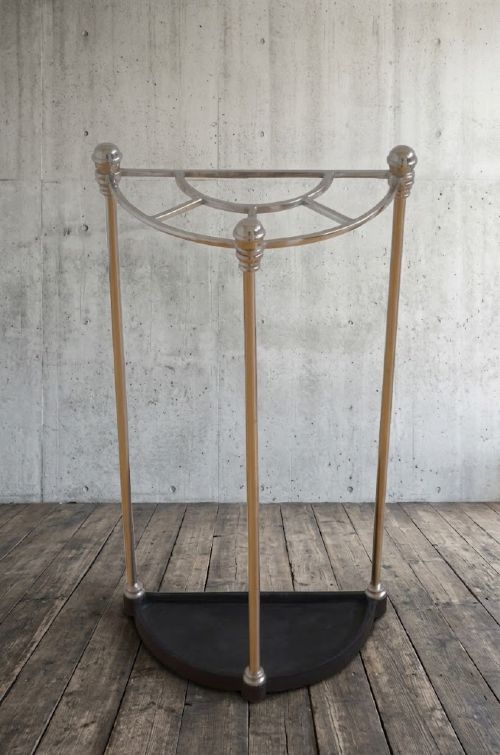
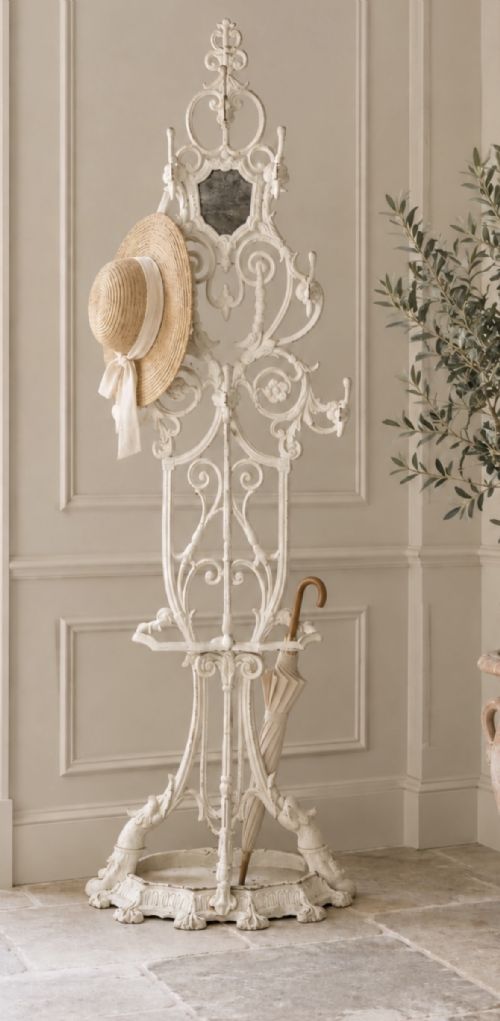
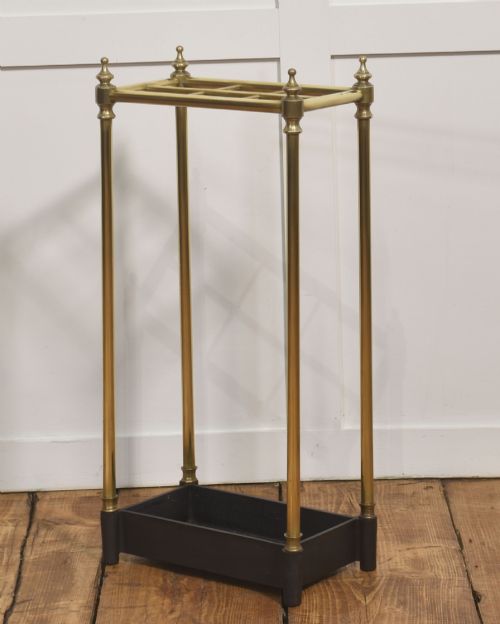
The commonest forms on this page include stick stands, umbrella racks, and combined coat and umbrella stands. Originating in British and French workshops, these items use heavy metal casting to support wet outerwear and walking gear.
How they were made
Foundries produced these objects by pouring molten iron into sand moulds, often incorporating brass rails, ceramic drip pans, and glass elements. Decoration included applied paint, white enamel finishes, and nickel plating over the iron structure.
Makers utilised plant motifs, animal figures, and structural details such as faux bamboo or faux bois effects. Cast components were bolted together, allowing complex openwork patterns to emerge from rigid industrial metal.
Cast Iron Hall Rack Retail Price Guide 2026
Typical asking prices for cast iron hall rack among the pieces listed under this phrase on Sellingantiques today, from the lower quarter to the upper quarter. They describe what is for sale here now, not the wider market.
Listings feature cast iron combined with brass, ceramic, enamel, and pitch pine across Victorian and Edwardian periods.
What varies in quality
The standard of a cast iron hall rack depends upon the crispness of the casting detail and the complexity of the moulding. Earlier examples show sharply defined ornamentation, while mass produced later pieces tend towards softer edges.
Integrity relies upon the survival of original drip trays, hooks, and secondary materials like brass or ceramic inserts. Pieces retaining their early painted or enamelled surfaces demonstrate superior preservation.
Coalbrookdale·Falkirk Ironworks·Kenrick·Shoolbred
The Cast Iron Hall Rack Glossary
- Demi-lune
- A half moon shape used for umbrella stands designed to sit flush against a hallway wall. This configuration saves valuable floor space in narrow entrances.
- Faux bamboo
- A decorative treatment carved or cast into the iron to imitate natural bamboo stalks. This style became popular during the aesthetic movement.
- Drip pan
- A removable tray placed at the base of a stick stand to catch water from wet umbrellas. These trays are frequently made of metal or ceramic.
- Aesthetic movement
- A late nineteenth century design style emphasising visual beauty over narrative subject matter. Pieces from this movement often feature stylised natural forms.
- Coalbrookdale
- A prominent ironworks foundry known for producing intricate cast iron furniture and architectural metalwork. Their designs are frequently referenced in nineteenth century hall furniture.
Cast Iron Hall Rack: Frequently Asked Questions
How do I stop rust on a cast iron hall rack?
Keep the metal dry and apply a light coat of microcrystalline wax to protect the surface from moisture.
Avoid placing damp items directly onto unprotected iron surfaces for extended periods.
Where should I place a hall stand?
Position the piece near an entrance to hold coats, hats, and walking sticks efficiently.
Ensure there is enough clearance around the stand for wet umbrellas and heavy garments.
How do I date a cast iron hall rack?
Examine the design style, such as Victorian gothic or art nouveau, alongside any foundry marks or registration numbers stamped into the metal.
Construction details, including the presence of brass fittings or ceramic drip pans, also help narrow down the period.
Are original drip pans important?
Original drip pans complete the functional design of umbrella and stick stands.
Replacements are common, so matching components add authenticity to the piece.