





Ornate Metal Stick Stand
An ornate metal stick stand brings architectural presence to a hallway, offering a sturdy and decorative home for walking sticks and umbrellas.
Ornate Metal Stick Stand
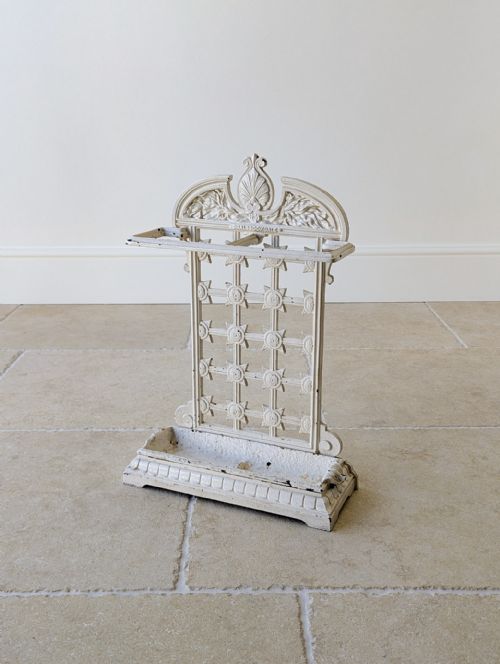
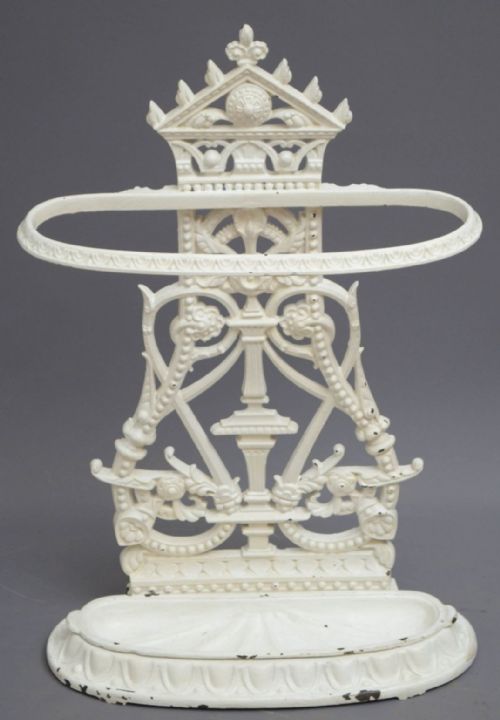
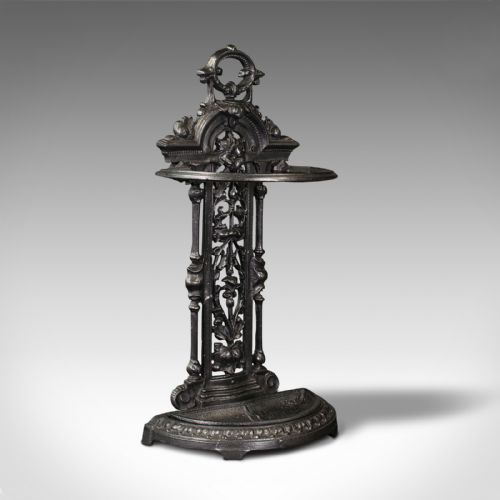
An ornate metal stick stand provides a heavy, durable vessel for hallway organisation, taking the form of cast iron or brass frames designed to catch water and hold canes upright. These items draw on Victorian and Edwardian tastes, often incorporating complex scrollwork, openwork panels, and sturdy drip pans.
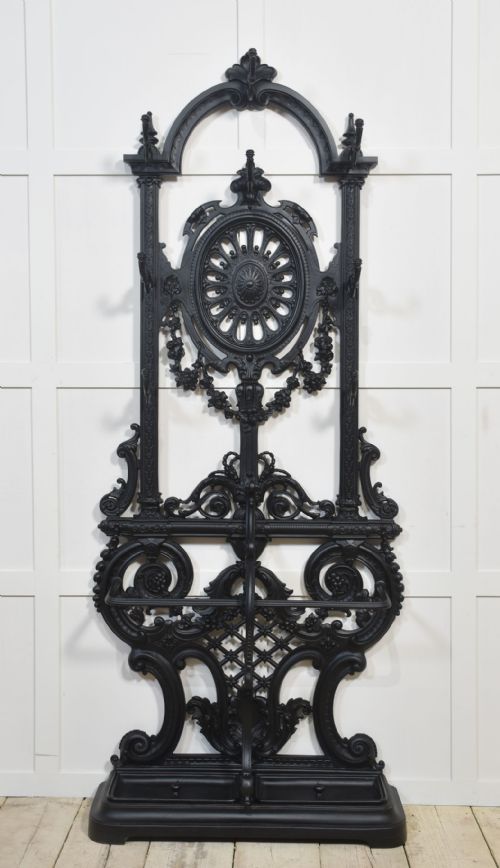
The objects seen on this page span the Victorian and Edwardian eras, alongside related nineteenth century metalwork such as hall stands and umbrella stands. While the search phrase focuses on stick stands, the surviving evidence encompasses everything from standard cast iron holders to architectural hall stands with integrated coat hooks and umbrella sections.
Materials and manufacture
Cast iron forms the primary structural material for these heavy hall furnishings, shaped through industrial sand casting to create intricate openwork patterns and robust frames. This method allowed foundries to produce complex decorative motifs that could support the weight of wet umbrellas and heavy walking sticks without flexing.
Surface finishes applied to the metal include black paint and structural metalwork designed to withstand daily domestic use in entrance halls. The combination of rigid iron casting and protective finishes ensured these utilitarian objects survived generations of household traffic.
Ornate Metal Stick Stand Retail Price Guide 2026
Typical asking prices for ornate metal stick stand among the pieces listed under this phrase on Sellingantiques today, from the lower quarter to the upper quarter. They describe what is for sale here now, not the wider market.
These heavy iron stands were built so solidly they frequently outlived the houses they were originally bought to furnish.
Judging quality and design
Quality in these pieces rests upon the crispness of the casting and the depth of the decorative relief work. Finer examples display sharp, well-defined scrollwork and clean surface detailing without the softening of lines often seen in secondary or derivative castings.
Proportion and structural integrity distinguish superior hall furnishings from simpler utilitarian models. The better pieces balance decorative ambition with solid weight distribution, ensuring the frame remains stable when fully loaded with walking sticks and umbrellas.
Coalbrookdale
The Ornate Metal Stick Stand Glossary
- Cast iron
- A strong, hard iron-carbon alloy produced by pouring molten metal into a mould. It provides the heavy, rigid structure essential for durable hall stands.
- Drip pan
- The removable tray positioned at the base of a stick stand to catch moisture from wet umbrellas. It protects hallway floors from water damage.
- Hall stand
- A larger piece of entrance furniture combining a stick stand with coat hooks, a mirror, and sometimes a glove drawer. It serves as a comprehensive greeting point for visitors.
- Scrollwork
- Decorative ornamental carving or casting formed in spiralling, S-shaped or C-shaped curves. It defines the ornate aesthetic of Victorian metalwork.
- Victorian
- Pertaining to the reign of Queen Victoria, spanning the nineteenth century. This period produced heavy, highly decorative metalwork for domestic interiors.
Ornate Metal Stick Stand: Frequently Asked Questions
What is an ornate metal stick stand?
An ornate metal stick stand is a heavy, cast iron or brass floor-standing vessel designed to hold walking sticks and umbrellas in an entrance hall. These pieces combine utilitarian function with decorative metalwork.
Surviving examples often feature openwork scroll designs and integrated drip trays to protect floors from moisture. They reflect nineteenth-century domestic design priorities for busy hallways.
How do you clean a cast iron stick stand?
Cleaning cast iron stick stands requires gentle dusting and the occasional removal of the base drip pan to clear accumulated debris and moisture. Avoiding harsh chemical cleaners preserves the original painted or patinated surface.
Regular maintenance prevents rust formation in the lower sections where wet umbrellas make direct contact with the metal. Keeping the drip tray dry ensures the structural longevity of the piece.
Where should a stick stand be placed?
Stick stands belong in entrance halls, vestibules, or boot rooms where visitors arrive and shed outerwear. Their heavy construction allows them to stand freely without wall fixings.
Placing the stand near the primary entrance ensures wet umbrellas and walking sticks find an immediate home upon entering the house. The substantial weight of cast iron prevents tipping even when heavily loaded.
How do I date a metal stick stand?
Dating these items involves examining the casting quality, stylistic influences such as Victorian scrollwork, and the specific foundry marks if present. Pieces from the nineteenth century often display heavier ironwork and specific registration or maker details.
Comparing the decorative motifs to documented foundry catalogues helps narrow down the production era. Structural construction methods also provide clues to the manufacturing date.