




Dark Metal Cane Holder
These dark metal cane holders bring honest utility to a hallway, offering a sturdy place to drop wet umbrellas and walking sticks as soon as you step inside.
Dark Metal Cane Holder
When you search for a dark metal cane holder, you are looking at practical hall furniture designed to corral walking sticks and umbrellas in domestic entryways. The examples appearing here span the Victorian, Edwardian, and early twentieth century periods, taking the form of stick stands, umbrella stands, and combined umbrella and stick stands.
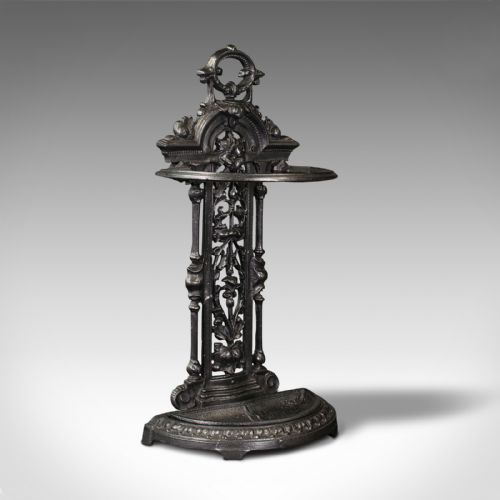
You are most likely to meet cast iron versions from the nineteenth century alongside pieces combining timber frames with metal bindings or liners. These objects originate from English country houses, continental workshops, and specific stylistic revivals, translating functional hallway storage into decorative ironwork and carved wood.
How they were made
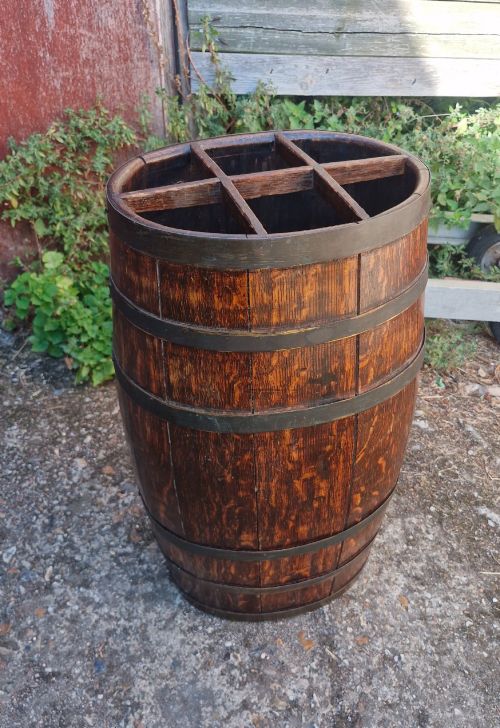
The primary construction relies on cast iron, often poured into intricate moulds to create openwork frames, botanical motifs, or Gothic arches. Other pieces utilise solid oak or walnut frameworks bound with metal straps, pairing heavy timber bodies with designated metal drip trays to catch rainwater.
Workmanship involves both industrial foundry casting and traditional joinery, occasionally incorporating carved wooden details such as the distinctive Black Forest animal motifs. Metal components range from plain zinc inserts to decorative brass fittings, securing the structural integrity of these heavy hallway accessories.
Dark Metal Cane Holder Retail Price Guide 2026
Typical asking prices for dark metal cane holder among the pieces listed under this phrase on Sellingantiques today, from the lower quarter to the upper quarter. They describe what is for sale here now, not the wider market.
Design influences recorded here range from austere English country house styles and Gothic Revival ironwork to continental Art Nouveau and carved Black Forest woodwork.
What varies in quality
Quality rests in the crispness of the casting and the integrity of the secondary materials, where finer foundry work displays sharply defined patterns rather than soft, blurred edges. The presence of original fitted components, such as matching metal drip trays, elevates an example above those altered or replaced over time.
The sophistication of the design dictates distinction, moving from utilitarian industrial items to ambitious pieces styled after notable foundries like Coalbrookdale or influenced by Art Nouveau and Gothic Revival aesthetics.
The Dark Metal Cane Holder Glossary
- Cast iron
- A hard, relatively brittle alloy of iron and carbon that can be readily cast in a mould. This material forms the heavy structural body of many nineteenth-century umbrella stands.
- Drip tray
- A shallow metal basin placed at the base of a stand to catch water from wet umbrellas. Original trays are particularly valued by collectors.
- Gothic Revival
- An architectural and decorative style drawing inspiration from medieval design. Pieces in this manner feature pointed arches, quatrefoils, and ecclesiastical motifs.
- Black Forest
- A style of wood carving originating from the mountainous region of Germany, known for realistic representations of animals and foliage. Stick stands in this manner often incorporate carved bears or naturalistic branch forms.
Dark Metal Cane Holder: Frequently Asked Questions
Where should I place a dark metal cane holder?
These stands belong in a hallway, porch, or boot room where guests enter the house. Their original purpose was to catch dripping water and mud before it reached interior rooms.
Position yours near the primary entrance door on a solid floor surface that tolerates occasional moisture.
How do I care for cast iron and metal stands?
Keep the metal surfaces dry and free from standing water in the base tray to prevent active rusting. A light application of microcrystalline wax helps protect the dark finish.
Avoid harsh chemical cleaners that strip the original patina and dark protective coatings.
Are these stands suitable for modern umbrellas?
Most historical stands easily accommodate modern walking sticks, shooting sticks, and standard umbrellas. The generous interior dimensions of nineteenth-century hall stands handle bulky wet items without difficulty.
Check the diameter of the base rings or dividers if you collect oversized golf umbrellas.
How do I distinguish Victorian from Edwardian stands?
Victorian examples tend to feature heavier cast iron work with ornate Gothic, floral, or classical scroll motifs. They prioritize dense ornamentation and substantial weight.
Edwardian pieces often introduce lighter timber frames, cleaner lines, and influences from the Arts and Crafts or Art Nouveau movements.