






Cast Iron Coat Rack
A cast iron coat rack is a sturdy hallway essential designed to hold heavy outdoor garments with industrial strength and ornamental flair.
Cast Iron Coat Rack
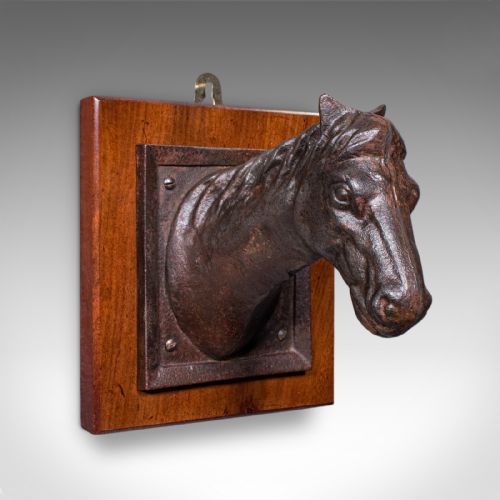
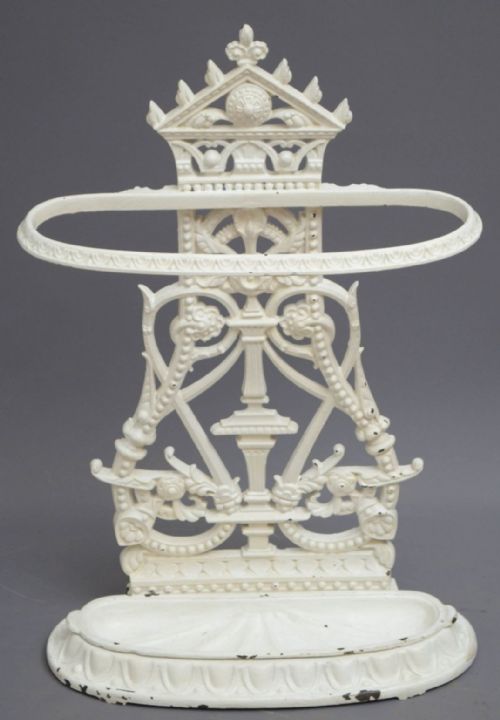
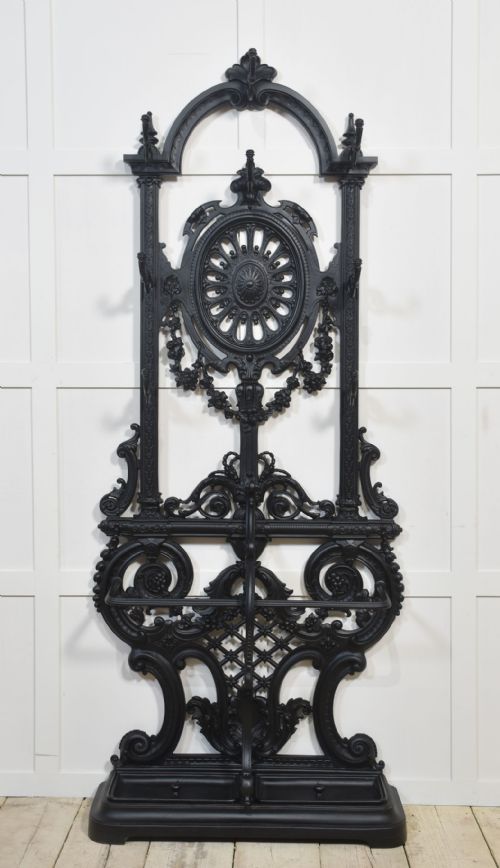
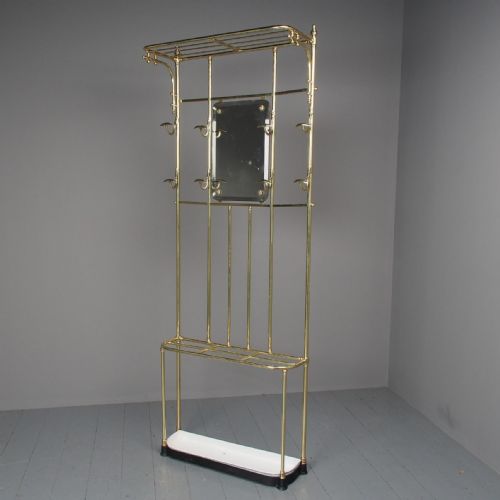
A cast iron coat rack appears in various substantial forms across this selection, ranging from wall-mounted hooks and panels to large freestanding hall stands and umbrella holders. These pieces emerge predominantly from the Victorian and Edwardian eras, spanning the nineteenth and early twentieth centuries.
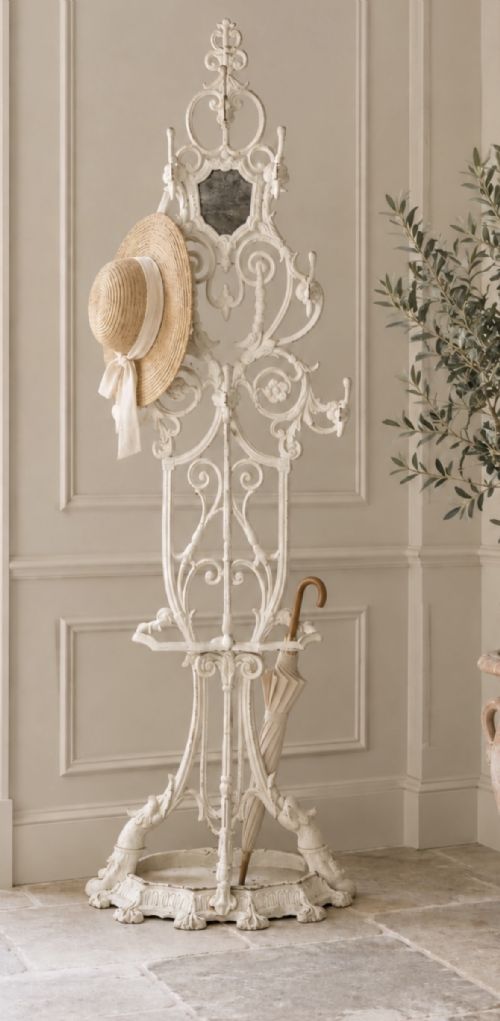
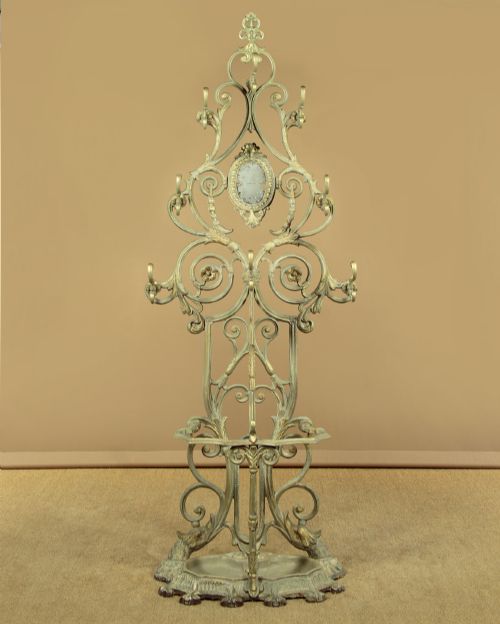
Buyers most frequently encounter large hall stands and umbrella racks alongside mounted coat hooks and hat stands. These items combine utility and decoration, often incorporating mirrors and drip pans for practical hallway use.
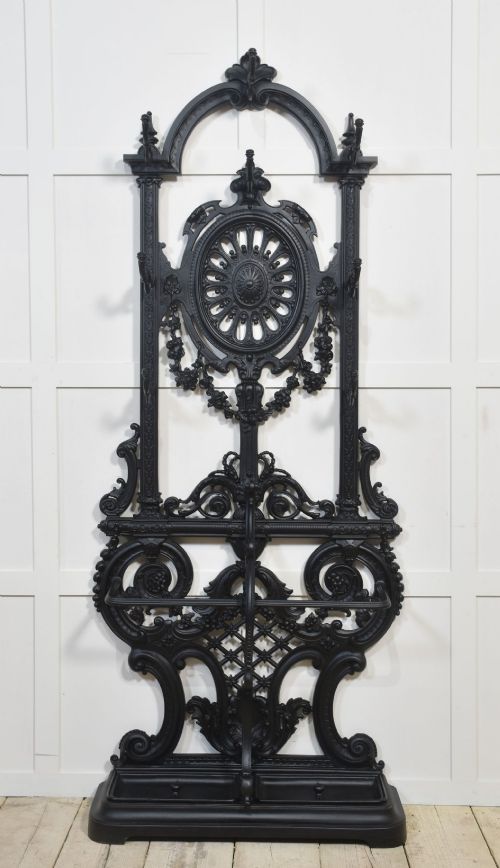
Origin points span English and French workshops, encompassing styles such as Victorian Gothic Revival, Rococo Revival, French Chateau, and Art Deco. Pieces adopt specific structural motifs including faux bamboo and equestrian tack.
How they were made
Foundries produced these items by pouring molten metal into sand moulds, capturing intricate relief work and structural rigidity. Workshops frequently paired the primary iron with brass fittings, glass elements, timber backings, and mirror glass.
Makers often finished the metal surfaces with protective paint layers to prevent oxidation and enhance decorative details. Freestanding portico designs integrated wooden components and metal trays to manage wet umbrellas and walking sticks.
Cast Iron Coat Rack Retail Price Guide 2026
Typical asking prices for cast iron coat rack among the pieces listed under this phrase on Sellingantiques today, from the lower quarter to the upper quarter. They describe what is for sale here now, not the wider market.
Object types range from compact coat hooks and hat stands to towering portico hall stands and umbrella racks.
What varies in quality
Quality separates along the crispness of the cast relief work and the sophistication of the decorative style. Foundry production standards dictate whether floral motifs, faux bamboo joints, or Gothic arches appear sharp and deep or soft and muddled.
Structural complexity also distinguishes the tier, moving from simple wall-mounted hooks to towering portico stands featuring integrated mirrors, brass details, and original drip pans.
Coalbrookdale·Falkirk Foundry
The Cast Iron Coat Rack Glossary
- Cast Iron
- An iron-carbon alloy poured into moulds to create rigid objects. This material provides the heavy, durable framework for these hallway furnishings.
- Hall Stand
- A large piece of hall furniture combining coat hooks, a hat rack, a mirror, and an umbrella stand. These items anchor traditional entranceways.
- Faux Bamboo
- A decorative moulding technique carved or cast to resemble natural bamboo stalks. This style gained popularity during the nineteenth century.
- Drip Pan
- A removable metal tray positioned at the base of an umbrella stand. It catches water from wet walking sticks and umbrellas to protect flooring.
- Portico
- An architectural framework style applied to tall coat stands. This design creates a grand entrance presence within large reception halls.
Cast Iron Coat Rack: Frequently Asked Questions
How do I secure a heavy hall stand safely?
Large cast iron hall stands require careful positioning against a solid wall to ensure stability under heavy winter coats. Many tall designs benefit from wall anchor fixings to prevent tipping.
Freestanding portico stands rely on a heavy metal base and balanced weight distribution. Placing them on level flooring ensures safe daily use.
What is the difference between a hall stand and a coat rack?
A coat rack is typically a wall-mounted rail featuring multiple hooks for garments and hats. These compact units suit smaller entrance spaces.
A hall stand is a substantial piece of furniture combining coat hooks, umbrella storage, a mirror, and sometimes a seat or glove box. They dominate large Victorian and Edwardian reception halls.
How do I care for cast iron hall furniture?
Regular dusting with a dry cloth keeps the metal surfaces clean and prevents grime accumulation within the cast relief details. Avoid abrasive cleaners that might damage painted or patinated finishes.
Check brass fittings and mirror fixings periodically to ensure they remain secure. Empty and dry integrated umbrella drip pans regularly to prevent moisture retention.
How do I identify a Victorian piece?
Victorian pieces often display characteristic period styles such as Gothic Revival or Rococo Revival ornamentation. Foundries of this era frequently produced heavy, durable items with deep cast relief work.
Construction details like slotted screws, distressed mirror foxing, and foundry marks point toward nineteenth-century origins. Designs also align with the heavy garments and formal reception spaces of the period.