

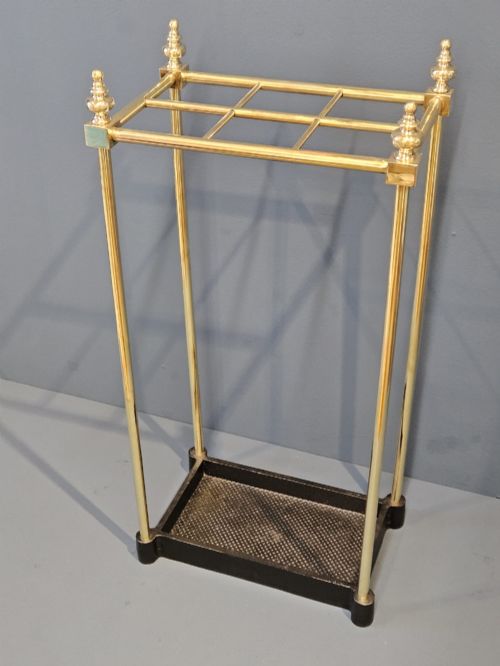
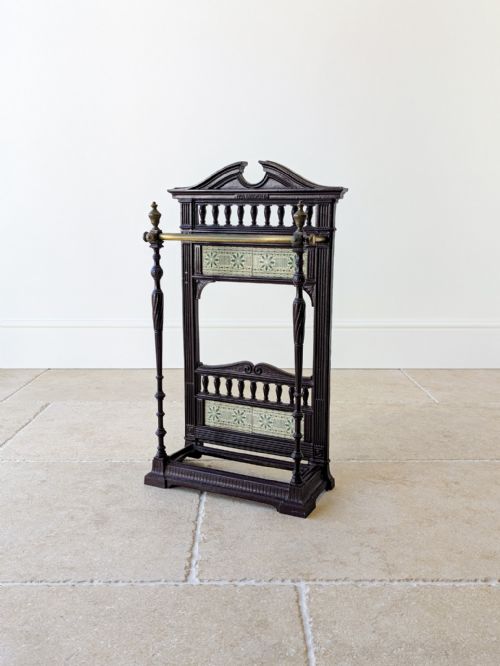
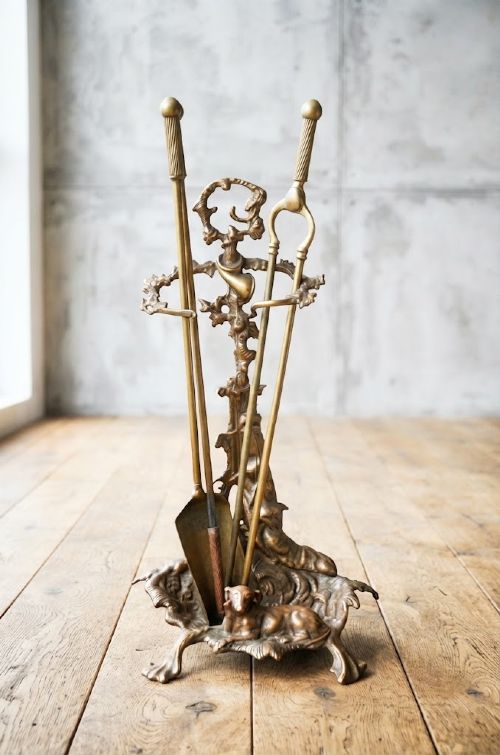
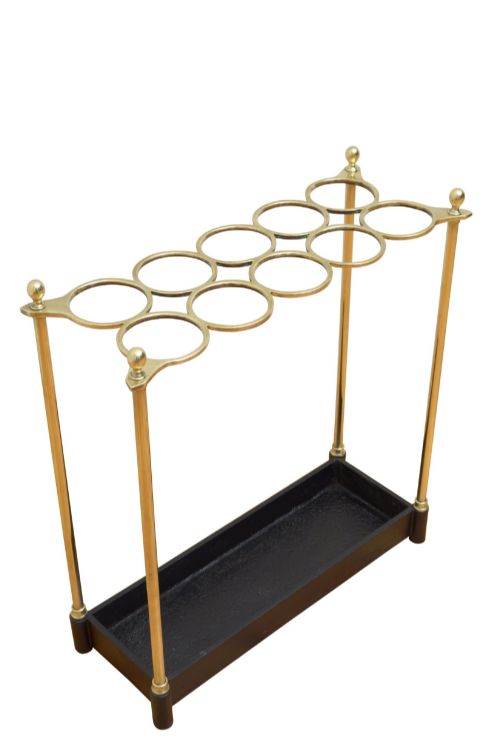
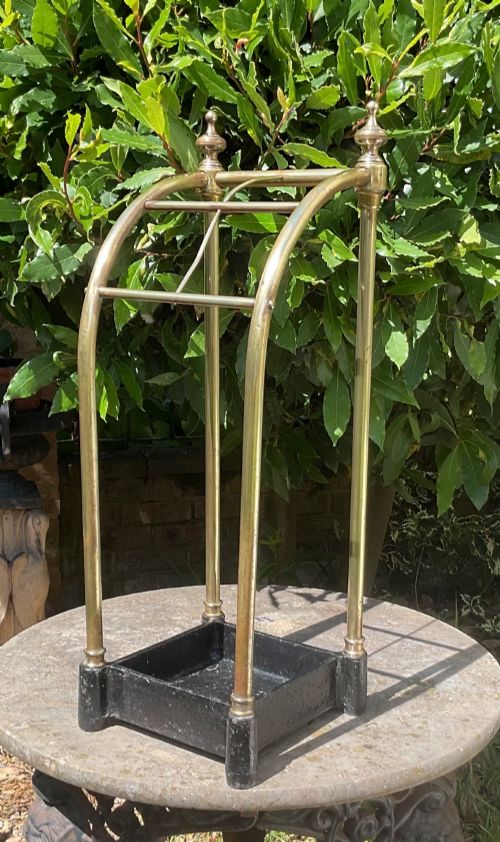
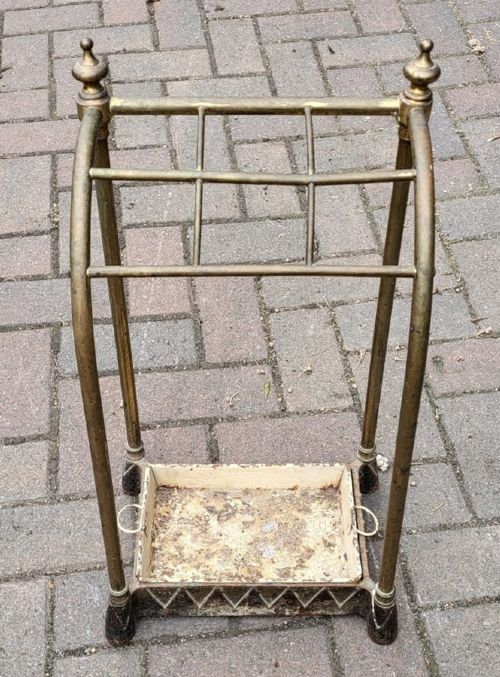

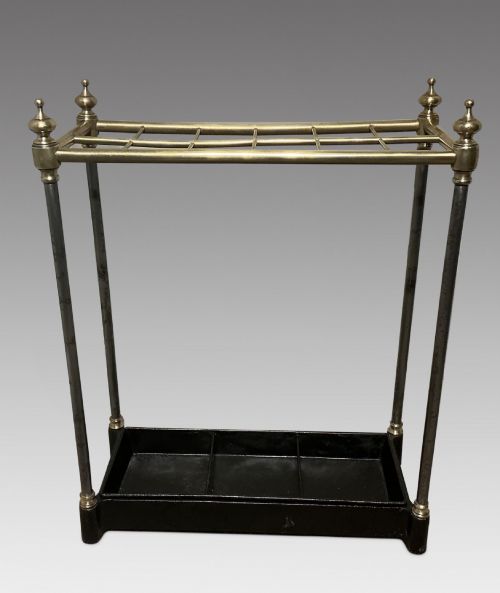

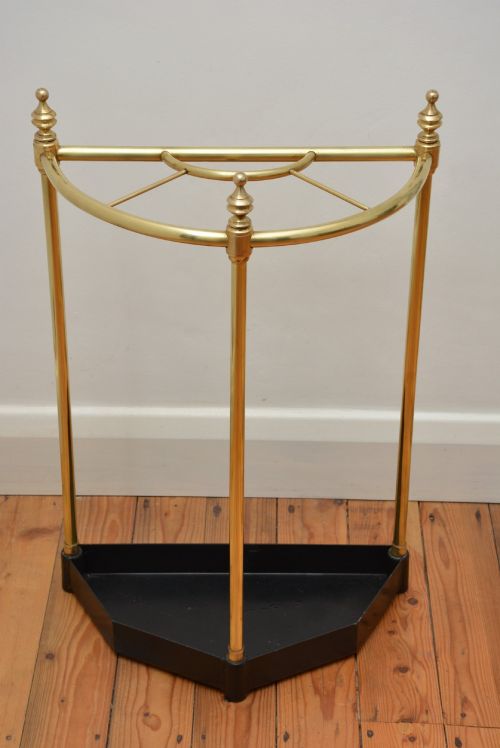
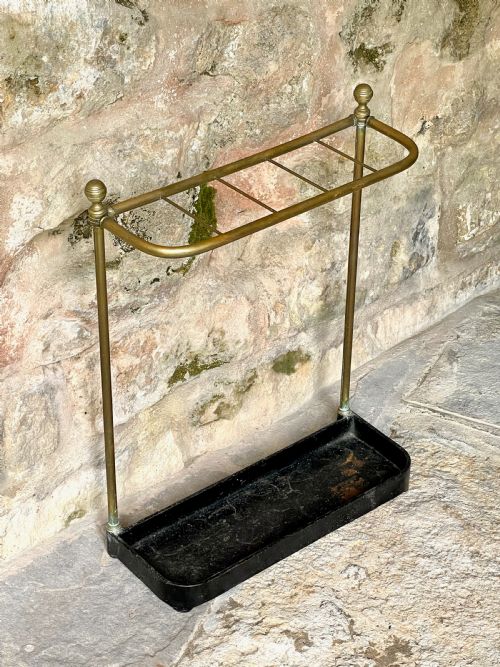

Cast Brass Umbrella Stand
A cast brass umbrella stand organises hallway footfall with substantial metalwork, offering structural permanence and period character.
Cast Brass Umbrella Stand
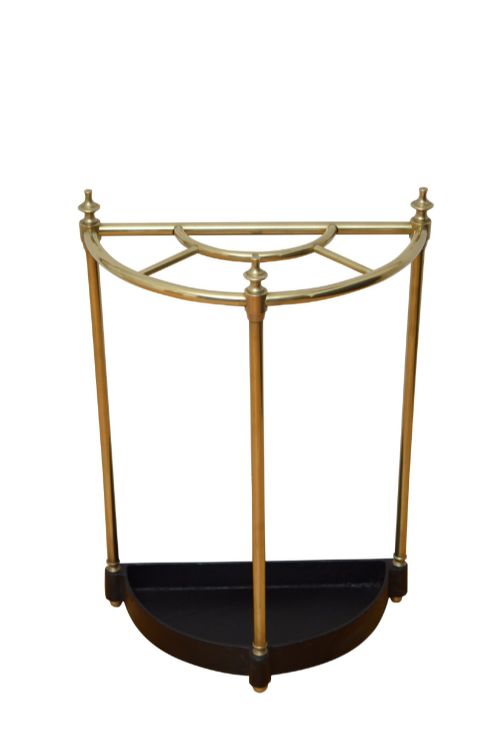
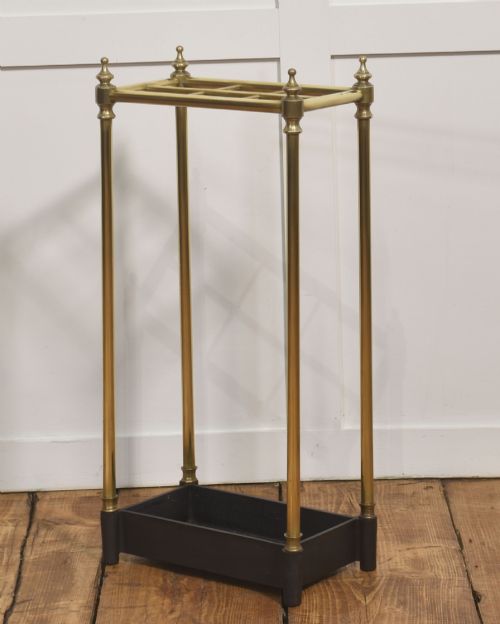
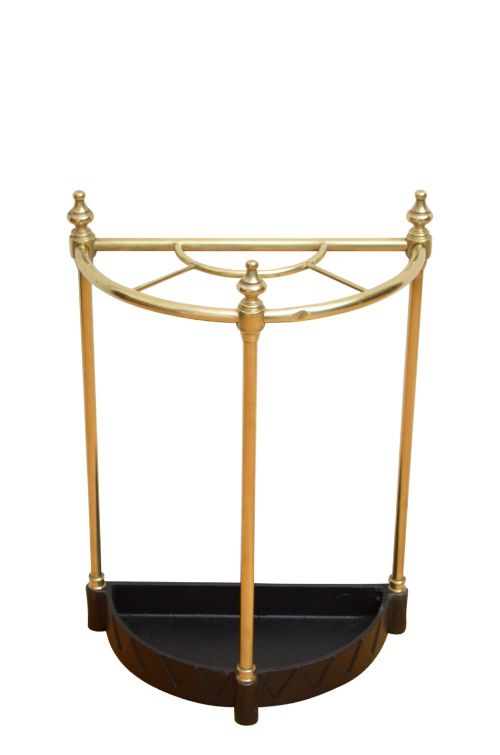
A cast brass umbrella stand provides a dedicated hallway receptacle for walking canes, umbrellas and parasols. These hall furnishings appear most commonly in Victorian and Edwardian iterations, designed to fit compactly against interior walls or corners.
The prevailing form on this page is the demi-lune or half-moon shape, engineered to sit flush in narrow entryways. Circular frames and corner configurations also appear regularly, alongside combinations incorporating oak, mahogany and cast iron components.
Makers produced these functional items to withstand daily domestic friction in busy entrance halls. Their longevity relies on heavy metal bases paired with upright brass frames that corral wet stems securely.
How they were made
Foundries utilised sand casting for heavy iron bases and structural brackets, producing robust weight at the floor level to prevent tipping. Artisans combined these weighted bases with tubular brass rails, decorative finials and cast brass loops.
Secondary materials such as oak and mahogany provided wooden backplates or trays, while removable cast iron or ceramic drip pans caught residual rainwater. Screws and threaded junctions united the mixed media components into stable architectural units.
Cast Brass Umbrella Stand Retail Price Guide 2026
Typical asking prices for cast brass umbrella stand among the pieces listed under this phrase on Sellingantiques today, from the lower quarter to the upper quarter. They describe what is for sale here now, not the wider market.
Listings feature combinations of brass, cast iron, oak and mahogany across Victorian and Edwardian periods.
What varies in quality
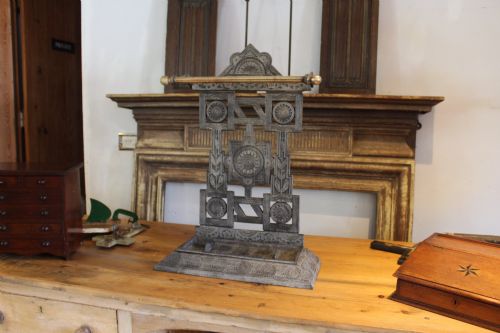
Design complexity and casting crispness separate standard utility models from ambitious artistic pieces. Fine examples display detailed decorative ball finials, intricate pierced metalwork, or specific aesthetic and arts and crafts styling.
The integrity of the mixed media assembly dictates overall standard. Superior items integrate heavy cast iron bases with substantial brass framing and retained original drip pans, whereas lesser examples rely on thinner gauge tubing and replaced elements.
Coalbrookdale·Thomas Jeckyll·Shoolbred
The Cast Brass Umbrella Stand Glossary
- Demi-lune
- Half-moon shape designed to stand flat against a wall. This profile maximises floor space in narrow hallways and corridors.
- Drip tray
- Removable base pan positioned beneath the umbrella loops to catch water. These pans are frequently cast iron or ceramic to prevent floor damage.
- Finial
- Decorative crowning ornament fixed to the top of the upright posts. They frequently take the form of polished brass balls.
- Stick loop
- Metal divider or ring framing the upper section of the stand. These loops keep individual umbrellas and walking sticks upright and separated.
Cast Brass Umbrella Stand: Frequently Asked Questions
Where were umbrella stands placed?
These pieces sat in entrance halls, vestibules and corridors near the front door. They provided an immediate drop-off point for wet protection upon entering a home.
Their narrow footprints ensured they occupied minimal floor space while remaining accessible for household members and visitors alike.
How do I identify the period?
Victorian and Edwardian models show distinct stylistic cues, from ornate cast iron bases to simpler early twentieth-century brass frames. Examining the joining methods and metal finishes helps date the piece accurately.
Patent numbers stamped into the metalwork or timber also offer clues regarding the exact production era.
Are they suitable for modern hallways?
Their compact dimensions make them practical additions to contemporary interior spaces. The demi-lune shapes fit neatly against modern hallway walls without obstructing passage.
They accommodate modern umbrellas and walking canes just as effectively as nineteenth-century parasols.
What maintenance do they require?
Regular dusting preserves the surface finish of the brass framing and wooden elements. Periodically emptying and cleaning the base drip tray prevents moisture accumulation.
Polishing depends on personal preference for bright metal versus aged patination.