

Cast Brass Stick Stand
When choosing a cast brass stick stand, you select a functional hallway centrepiece engineered from robust metal to hold umbrellas and walking canes.
Cast Brass Stick Stand
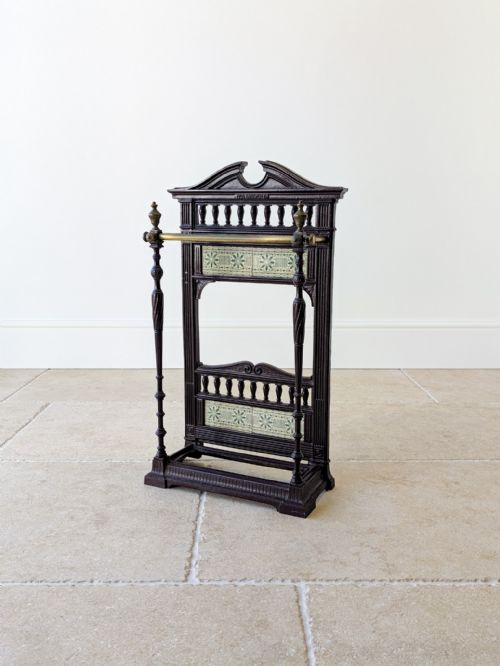
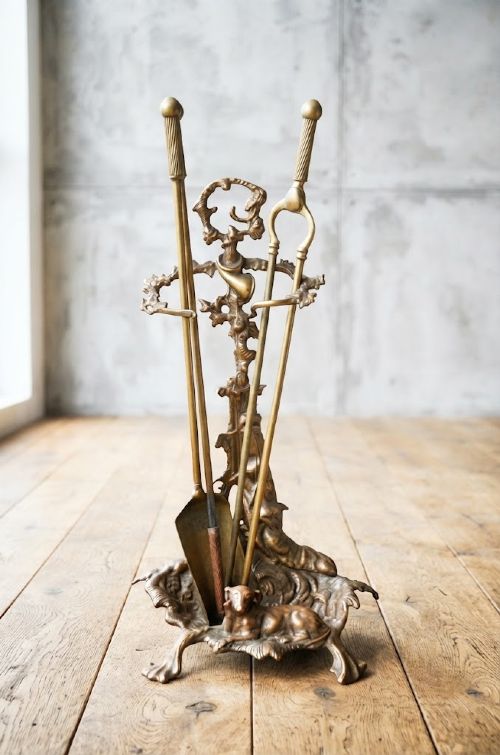
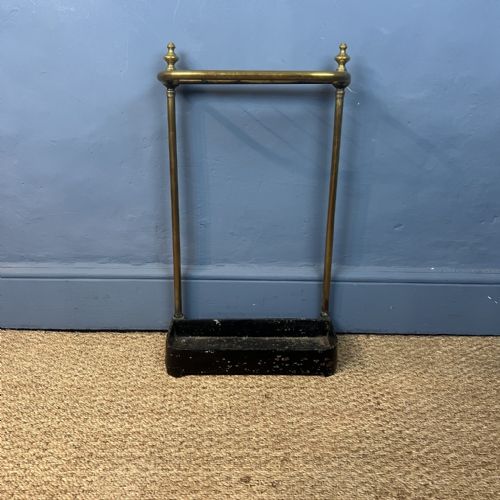
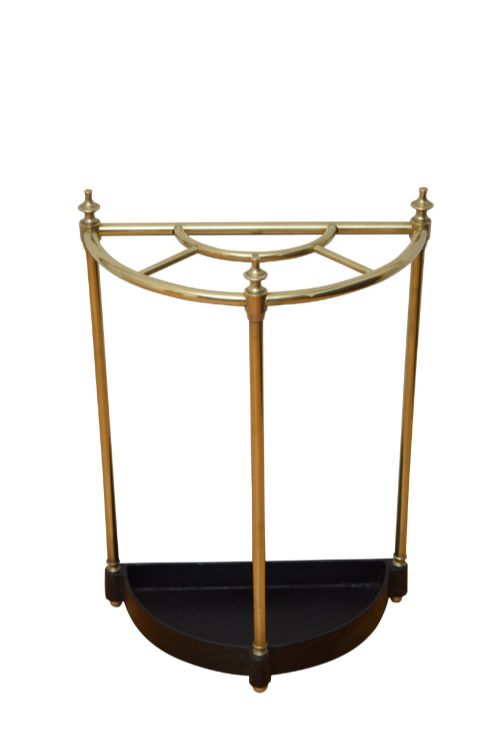
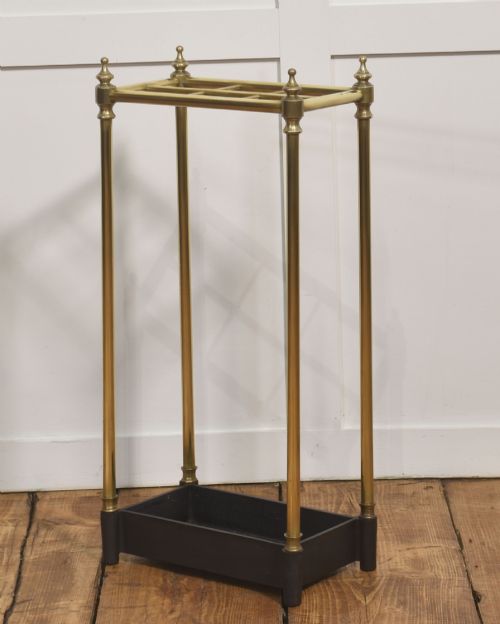
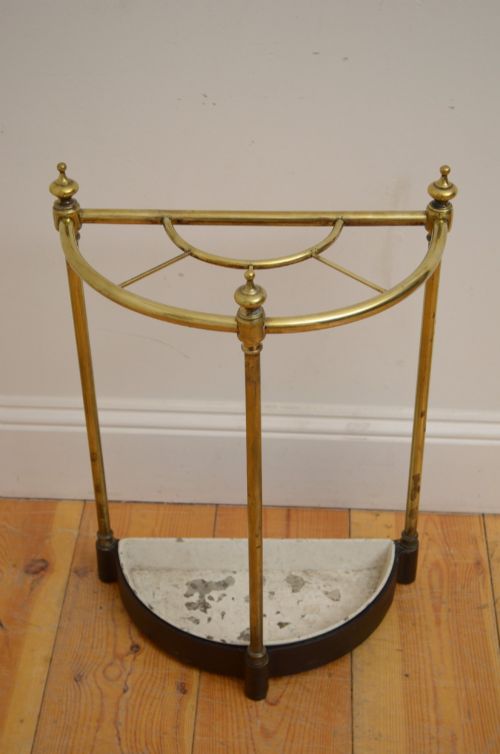
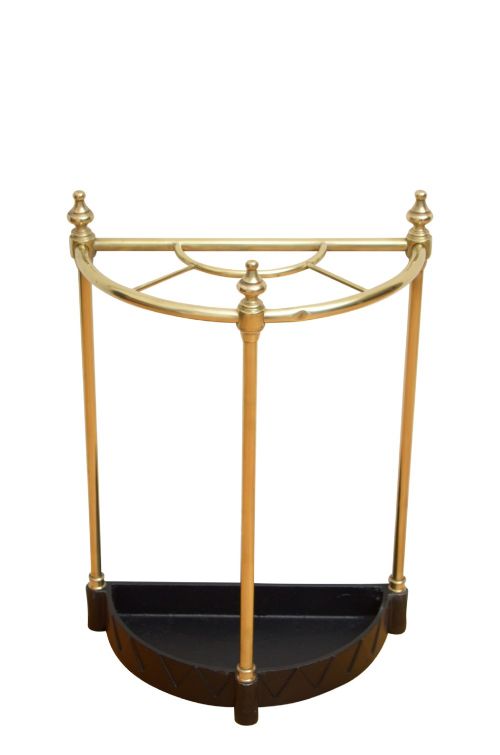
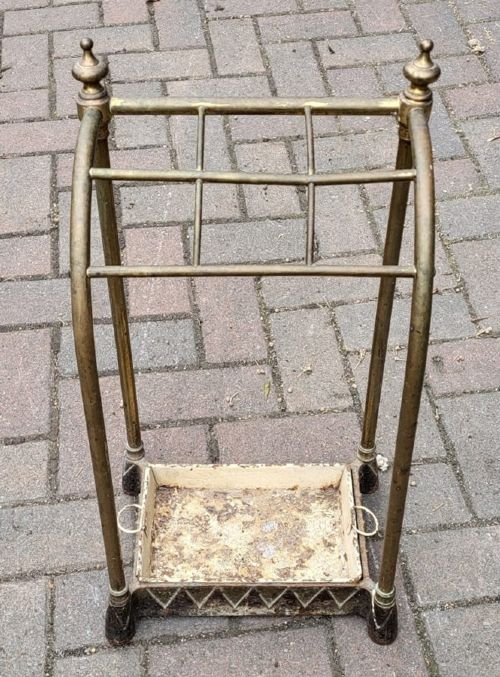
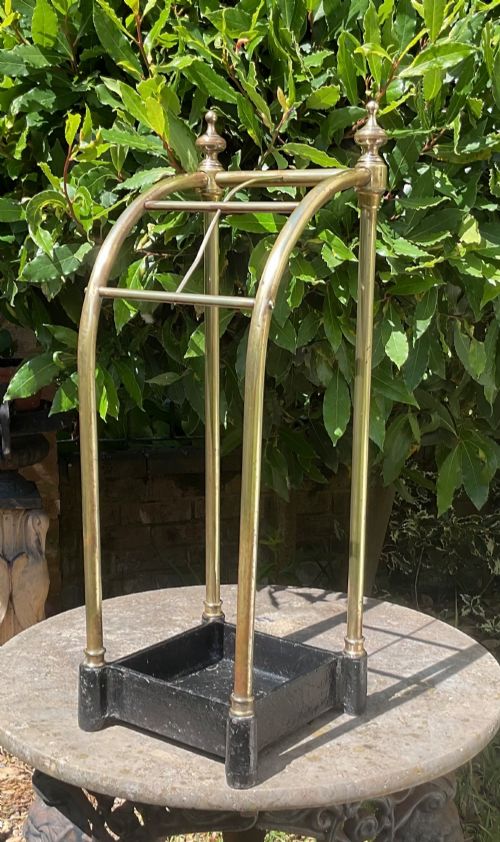
A cast brass stick stand serves as a sturdy hallway repository for umbrellas, parasols, and walking canes, originating principally across the Victorian and Edwardian eras. Buyers encounter these hall accessories in various footprints, from semicircular demi-lune designs intended to sit flush against a wall to rectangular and corner configurations.
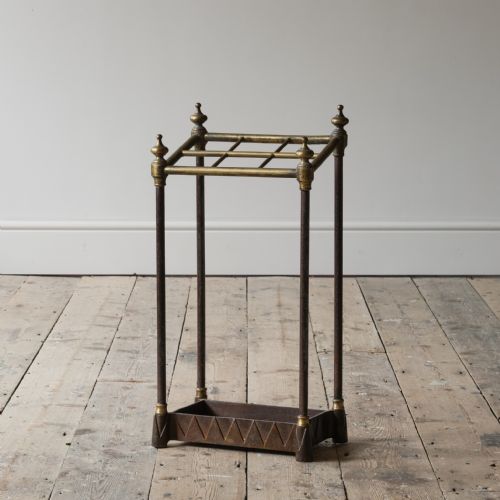
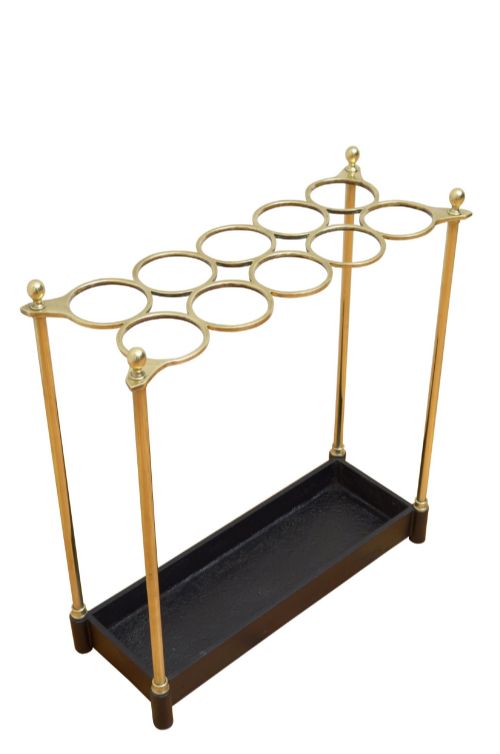
The version most commonly met on this page pairs a heavy cast iron base with a brass frame, often featuring multiple division loops to keep wet walking sticks separated. Alternatively, simpler examples rely entirely on cast brass construction or integrate secondary materials such as mahogany or oak.
Origins stretch from English workshops to continental makers, spanning periods from the late nineteenth century through to the early twentieth century. These domestic items reflect the formal entrance hall requirements of period homes, combining utility with decorative metalwork.
How They Were Made
Makers utilised sand-casting techniques to form the heavy iron bases and structural brass components, ensuring sufficient weight to prevent tipping when loaded with wet umbrellas. Frames often combine rolled brass tubes with cast junctions, secured by threaded bolts or rivets.
Drip trays frequently accompany these stands, cast in iron or brass to catch rainwater, sometimes featuring patterned designs like the dog-tooth motif. Secondary materials appear in support structures, employing hardwoods such as mahogany and oak alongside iron and steel reinforcements.
Some Victorian entrance halls kept guests company with umbrella stands shaped like entwined snakes or leaping swans.
What Varies In Quality
Quality rests in the heaviness of the casting and the crispness of decorative detailing on the frame and base. Examples featuring integrated division loops and robust cast iron foundations demonstrate superior construction compared to lighter, purely decorative variants.
The integrity of the original drip tray and the retention of finials significantly influence the standard of an individual piece. Superior specimens display clean joints and substantial gauge metal rather than thin, pressed components.
Coalbrookdale·Thomas Jeckyll·Shoolbred·J.T. & Co
The Cast Brass Stick Stand Glossary
- Demi-lune
- A half-moon shape designed to fit flat against a hallway wall. This configuration maximises floor space in narrow entrance passages.
- Cast iron
- A strong, heavy iron-carbon alloy poured into moulds to form the base. It provides the essential weight needed to anchor tall umbrella stands.
- Finial
- A decorative ornamental knob or terminal attached to the top of the frame. These elements finish the vertical corners of the stand.
- Aesthetic Movement
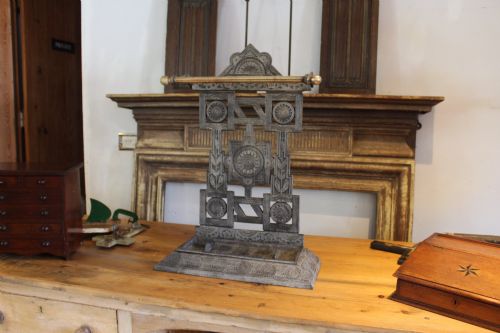
- A late nineteenth-century design style focusing on visual beauty over narrative function. Pieces from this movement often incorporate stylized natural motifs.
Cast Brass Stick Stand: Frequently Asked Questions
Where do you put a stick stand?
These pieces belong in a hallway or entrance vestibule where guests arrive with wet umbrellas and walking canes. Their narrow footprints allow them to sit neatly against walls without obstructing passageways.
Placing them near the front door ensures wet items are contained before moisture reaches interior wooden flooring or carpets.
How do you clean brass and iron?
Maintenance involves dusting the metal surfaces regularly with a soft cloth to prevent grime accumulation. Avoid harsh chemical cleaners that strip historical patination from the brass.
Cast iron parts benefit from a light application of protective wax to deter surface oxidation in damp environments.
Why do they have iron bases?
Manufacturers integrated heavy iron foundations to provide counter-balance against the leverage exerted by long walking sticks and umbrellas. Brass alone would lack the necessary mass to remain stable under a full load.
This deliberate combination of metals ensures the entire structure stays upright during daily household use.
How do I date a stand?
Dating relies on stylistic clues, manufacturing methods, and material combinations recorded across Victorian and Edwardian periods. Aesthetic movement motifs and specific foundry marks offer precise chronological markers.
Examining assembly techniques, such as the use of threaded bolts versus modern fixings, helps confirm the age of the piece.