
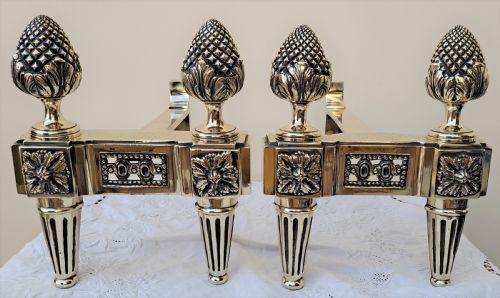
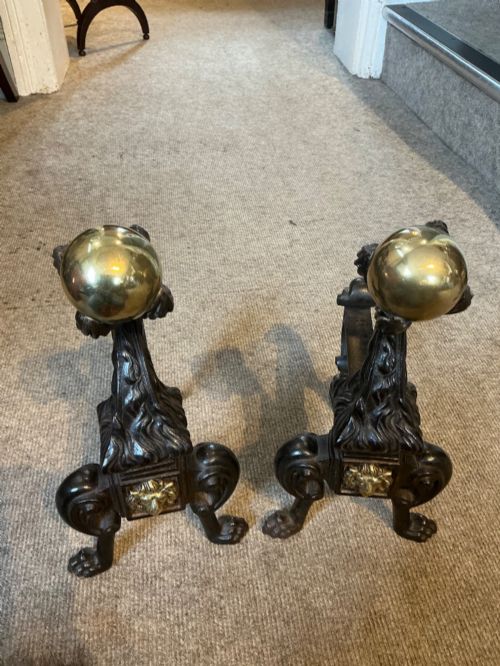
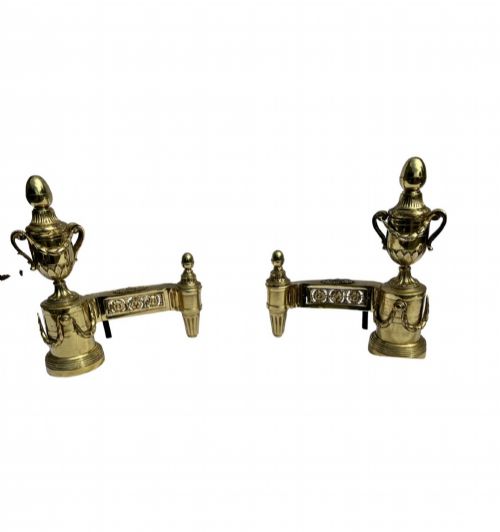


Cast Brass Fireplace Dogs
Cast brass fireplace dogs anchor an open hearth, bringing warmth and metallic sheen to a room even when the fire is unlit.
Cast Brass Fireplace Dogs
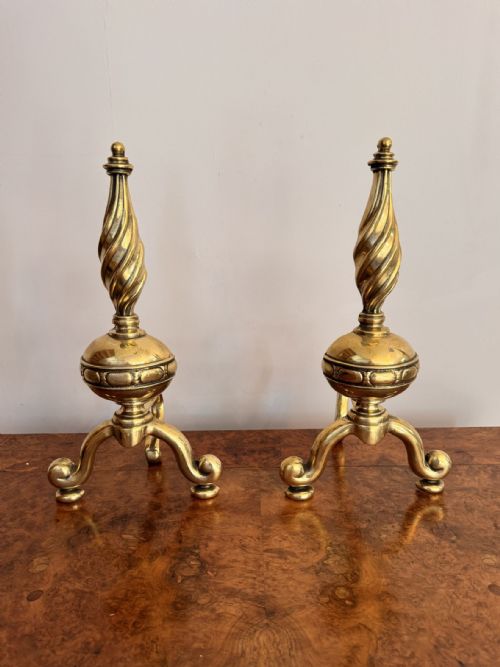
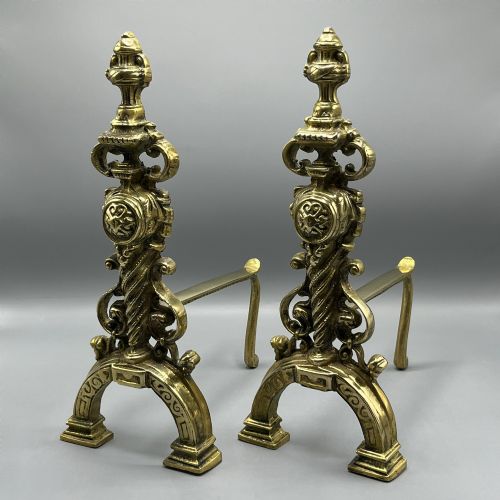
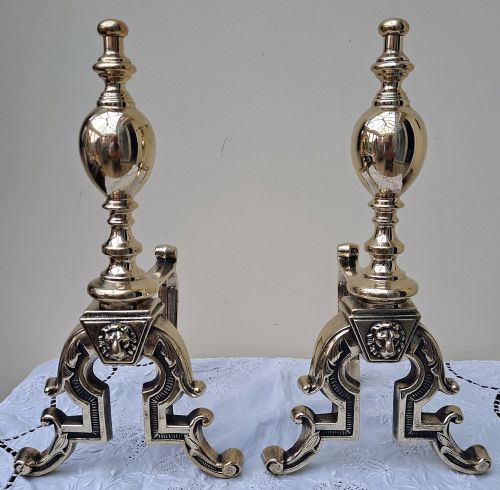
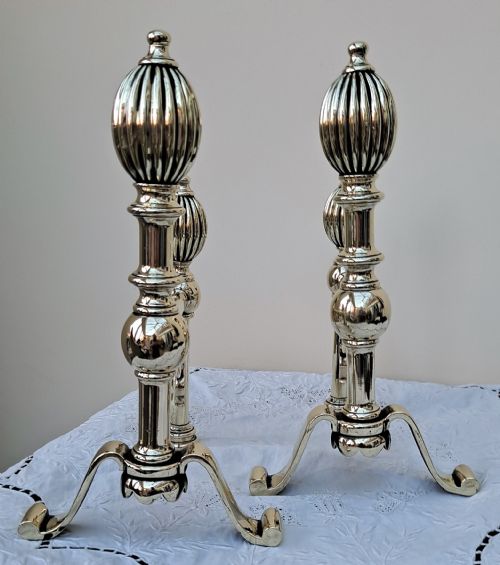
When you search for cast brass fireplace dogs, you are looking at substantial hearth furniture designed to support logs within an open fire. The pairs found here belong predominantly to the Victorian period, though earlier styles and later movements also appear.
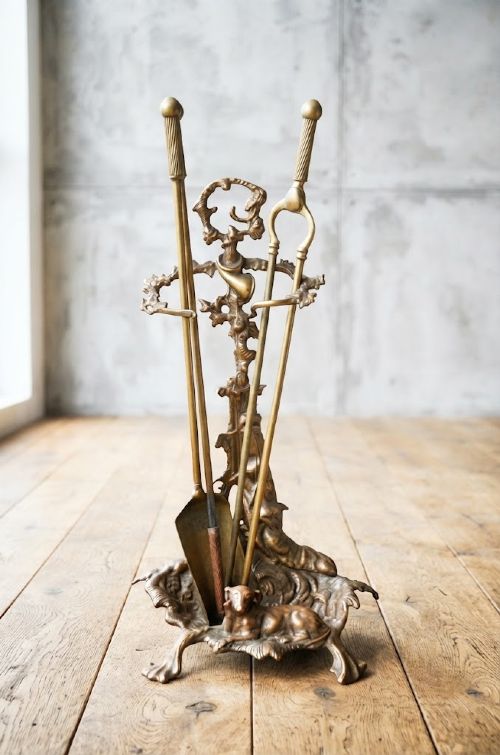
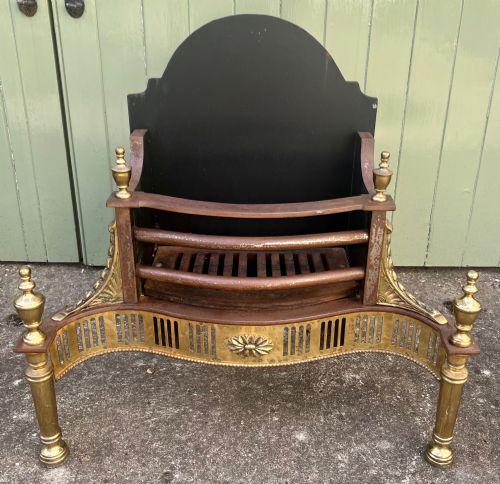
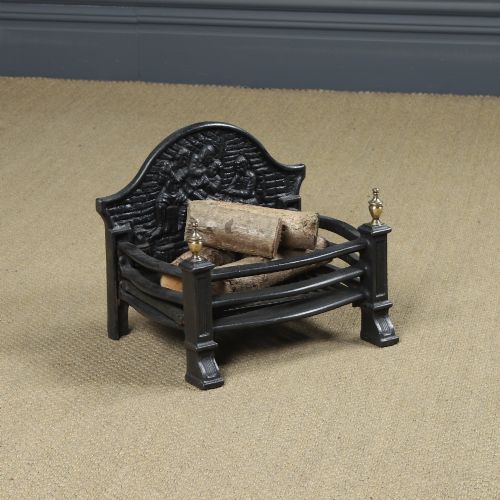
Most examples take the form of traditional andirons, standing upright on supportive feet with decorative fronts facing the room. Alongside straightforward pairs of dogs, the selection includes integrated fire grates, baskets, and companion sets sharing the hearth.
Originating largely from nineteenth-century workshops, these pieces combine functional iron billets with decorative brass fronts designed to catch the flickering light of the hearth.
How they were made
The construction of these pieces relies on a combination of cast brass, solid brass, and durable cast or wrought iron. Molten brass was poured into detailed moulds to create ornate front terminals, while structural shafts and billets required the strength of iron.
Many items incorporate mixed metals, pairing bright brass finials and feet with blackened cast iron fire baskets or grates. Individual components were often assembled with threaded fasteners or riveted joints to withstand the intense heat of daily fires.
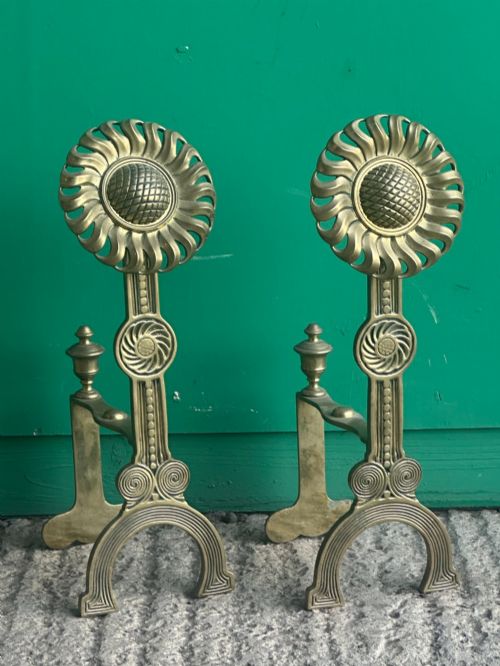
Sunflower motifs bloom permanently in solid brass, keeping summer alive beside the hearth.
What varies in quality
The distinction between standard production and top-tier pieces lies in the crispness of the casting and the depth of the chased detail. Finer examples display sharp relief work on motifs such as sunflowers, floral scrolls, and figural ornaments.
Weight and structural integrity also separate the grades, with superior pairs offering substantial metal thickness and balanced proportions. Lesser examples can feel lightweight or show simpler, less defined surface patterns from worn moulds.
William Tonks
The Cast Brass Fireplace Dogs Glossary
- Andirons
- Supports for logs in an open fireplace, consisting of a horizontal bar on legs with an upright decorative front. They are also widely known as fire dogs or firedogs.
- Chenet
- The French term for an andiron, frequently applied to decorative hearth supports influenced by continental rococo or baroque styles. These often feature elaborate gilt brass mounts and tool rests.
- Fire grate
- A metal basket or rack that holds burning fuel above the hearth floor to improve air circulation. Many period examples combine a cast iron grate body with polished brass decorative elements.
- Neoclassical
- A style drawing inspiration from the classical art and architecture of ancient Greece and Rome. Pieces of this design display symmetrical geometry, urn motifs, and restrained ornamentation.
- Arts and Crafts
- A design movement prioritising traditional craftsmanship and the visible character of materials over machine production. Objects from this origin often use hammered brass surfaces and simpler geometric lines.
Cast Brass Fireplace Dogs: Frequently Asked Questions
What are cast brass fireplace dogs used for?
These pieces serve a dual purpose in an open hearth, supporting logs to allow proper airflow beneath the fire while adding a decorative focal point to the room.
The upright fronts shield the hearth and reflect the ambient light from the flames, remaining an ornamental feature even during warmer months when the fireplace is empty.
How do I clean cast brass fireplace dogs?
Maintenance involves gentle dusting with a soft cloth to remove soot and surface debris accumulated from daily use.
Harsh chemical polishes should be avoided to preserve the aged patina that develops on nineteenth-century metal surfaces over decades.
Can I use these andirons in a working fireplace?
Most antique pairs are constructed from sturdy cast brass and iron, making them physically capable of supporting burning logs in an active hearth.
It is advisable to check that the iron billets at the rear are structurally sound and free from deep thermal cracking before lighting a fire.
How do I identify Victorian andirons?
Victorian examples frequently display heavy cast brass construction with stylistic influences ranging from Gothic Revival to Aesthetic Movement and ornate floral motifs.
They often appear alongside matching fire irons, fenders, or coal buckets manufactured in the same period workshop.
What is the difference between fire dogs and grates?
Fire dogs or andirons are standalone pairs designed primarily to hold logs directly on the hearth floor or across supporting iron bars.
A fire grate incorporates a built-in basket or container to hold coal or wood, sometimes framed by a decorative cast iron and brass fascia.