
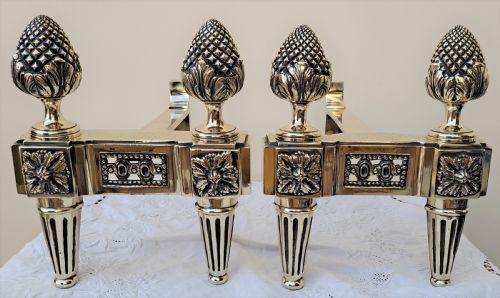
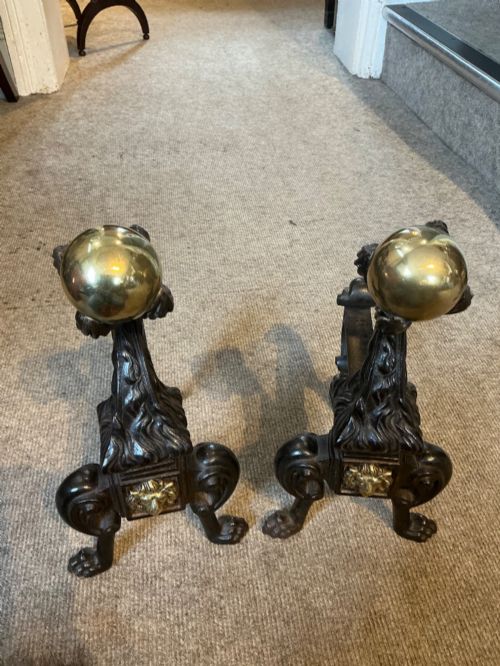


Cast Brass Firedogs
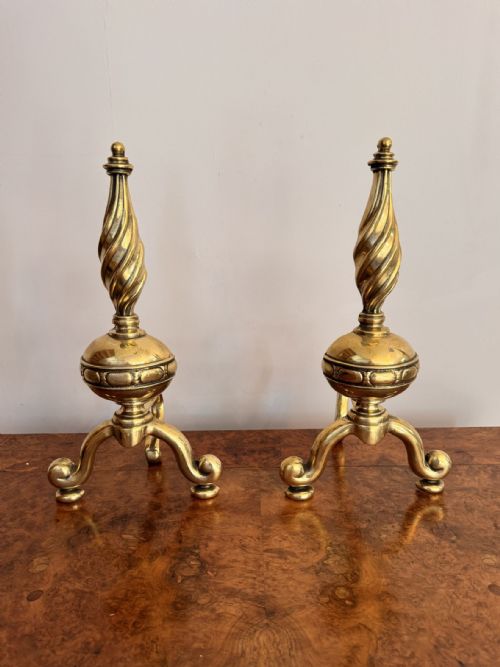
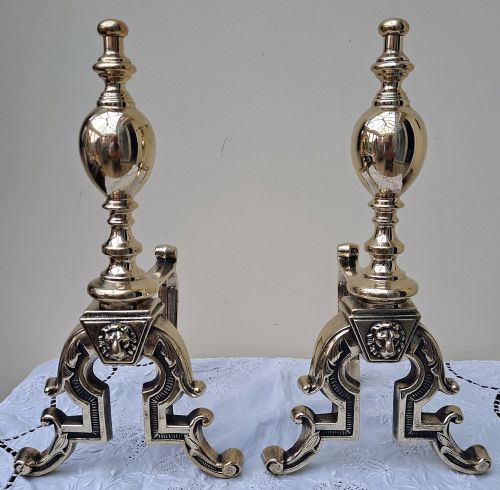
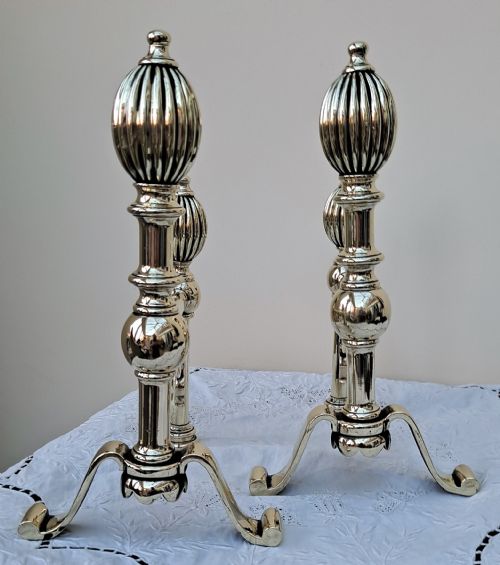
Cast brass firedogs hold the hearth with weight and shine, bringing sculptural form and warmth to a room even when unlit.
Cast Brass Firedogs
When you search for cast brass firedogs, you are looking at heavy metal supports designed to hold logs above the hearth floor for better airflow. These items serve a functional role in the fireplace while providing a distinct visual centrepiece for the room.
The versions you are most likely to meet on this page hail from the Victorian period, spanning the nineteenth and early twentieth centuries. They appear alongside iron supports and complete fire tool suites, often adopting historicist revivals such as Baroque, Rococo, or Gothic styles.
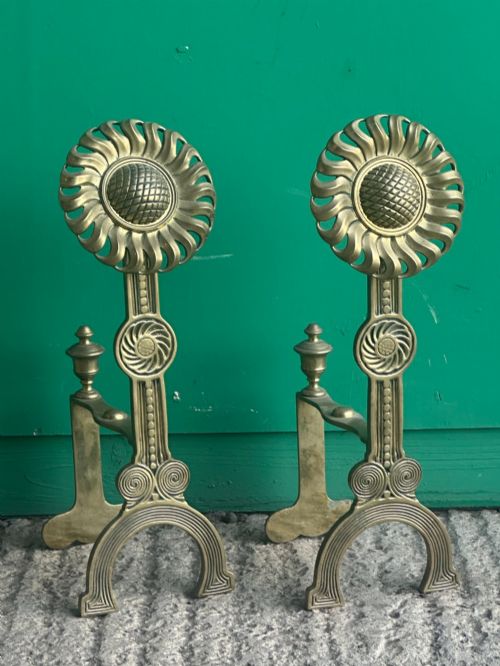
Makers often drew on earlier design traditions, producing pairs that range from plain utility forms to ornate sunflower motifs and classical revival shapes. English examples dominate the selection, accompanied by continental influences from Dutch and French design repertoires.
How they were made
Foundries produced these pieces primarily through metal casting, pouring molten brass into moulds to achieve solid structural bodies and decorative fronts. Iron and steel components frequently provided the underlying strength for the horizontal billets that actually supported the wood.
Surface finishing involved polishing the cast brass to a bright gleam, occasionally complemented by gilt highlights or cast iron integrations. Artisans chased the cooled metal by hand to sharpen details like floral petals, scrollwork, and classical motifs before final assembly.
The listings here span the nineteenth and early twentieth centuries, featuring brass, iron, and steel materials.
What varies in quality
The distinction between standard examples and the finest pieces lies in the crispness of the casting and the depth of hand-finishing. Superior items show sharp relief in ornamental details like sunflowers or Rococo scrolls, whereas lesser pieces exhibit softer edges from worn moulds.
Substantial weight and material thickness separate robust hearth furniture from lighter productions. The quality of the accompanying iron billets and the structural integrity of the joinery determine how well the piece endures the intense heat of a working fireplace.
Thomas Jeckyll·William Tonks
The Cast Brass Firedogs Glossary
- Firedog
- A metal support for logs in a fireplace, synonymous with an andiron. They usually consist of an upright decorative front and a horizontal bar extending backward.
- Andiron
- Another term for a firedog, often used interchangeably in antique listings. These objects work in matched pairs to cradle firewood.
- Billet
- The horizontal iron bar attached behind the decorative front of an andiron. This part takes the direct weight and heat of the burning logs.
- Chenet
- The French term for a firedog or andiron. These pieces frequently display ornate Rococo or Baroque scrollwork typical of continental hearth furniture.
- Aesthetic Movement
- A late nineteenth-century design style focusing on art for art's sake, seen here in specific floral motifs like sunflowers. This movement marked a departure from heavy classical revivals towards nature-inspired simplicity.
Cast Brass Firedogs: Frequently Asked Questions
What is the difference between firedogs and andirons?
There is no functional difference between firedogs and andirons, as both terms describe the matched metal supports used to hold logs in an open hearth. The choice of word typically depends on the regional preference of the maker or dealer.
In historical listings, you will find both words used to describe the exact same type of heavy brass or iron hearth furniture.
How do I identify Victorian cast brass firedogs?
Victorian cast brass firedogs generally date from the nineteenth century and often reflect revival styles such as Gothic, Baroque, or Rococo. They tend to be heavy, substantial pieces with detailed casting and sometimes accompany matching fire irons.
Looking closely at the motifs and the composition of brass fronts paired with iron billets helps confirm the period origins.
Can I use these firedogs in a working fireplace?
Most cast brass firedogs are robust enough for a working hearth, provided the iron billets are strong and structurally sound. They were originally built to hold burning logs and allow proper airflow underneath.
It is wise to check the condition of the metal and ensure the piece sits steadily before exposing it to high heat.
How should I clean antique brass firedogs?
Antique brass firedogs benefit from gentle dusting and occasional cleaning with a soft cloth to preserve their historical surface. Heavy chemical polishing can strip away age and desirable patination accumulated over decades.
Keeping them dry and free from soot buildup maintains the appearance of the metal without altering its character.