

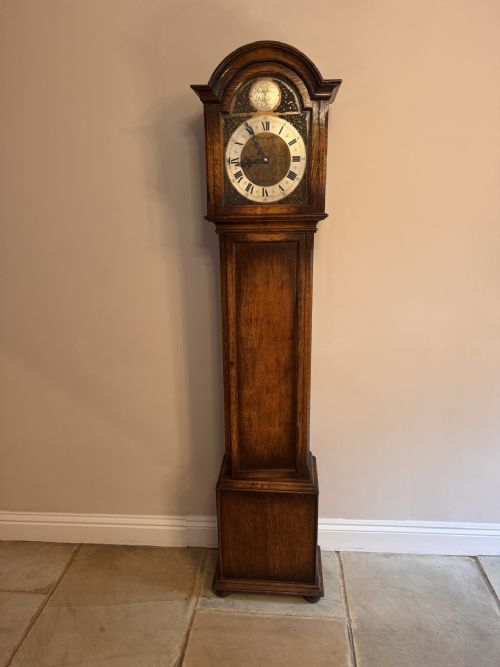
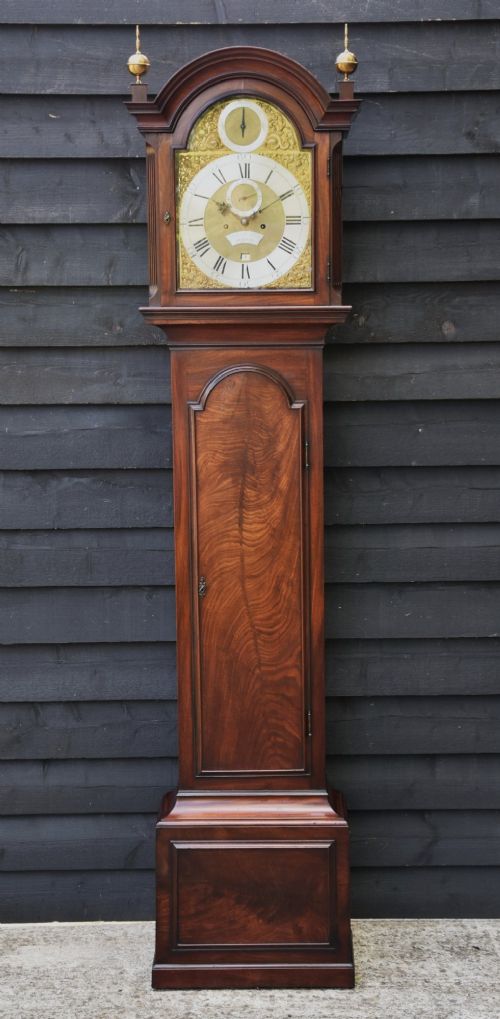
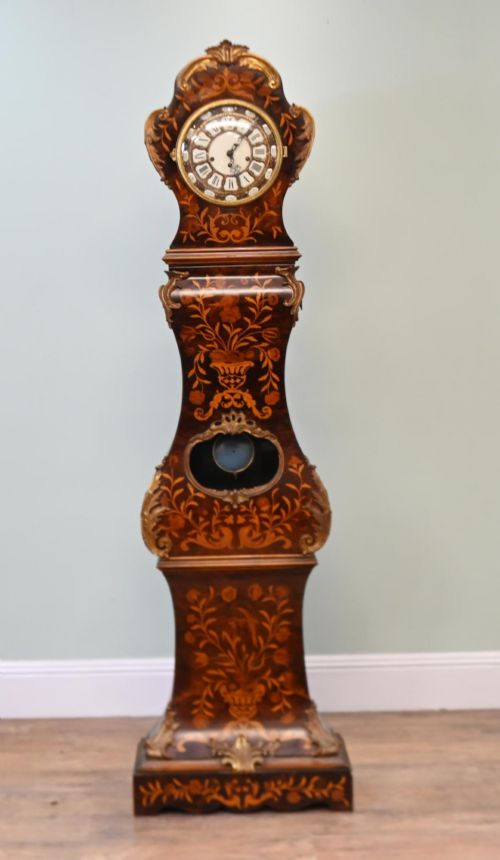
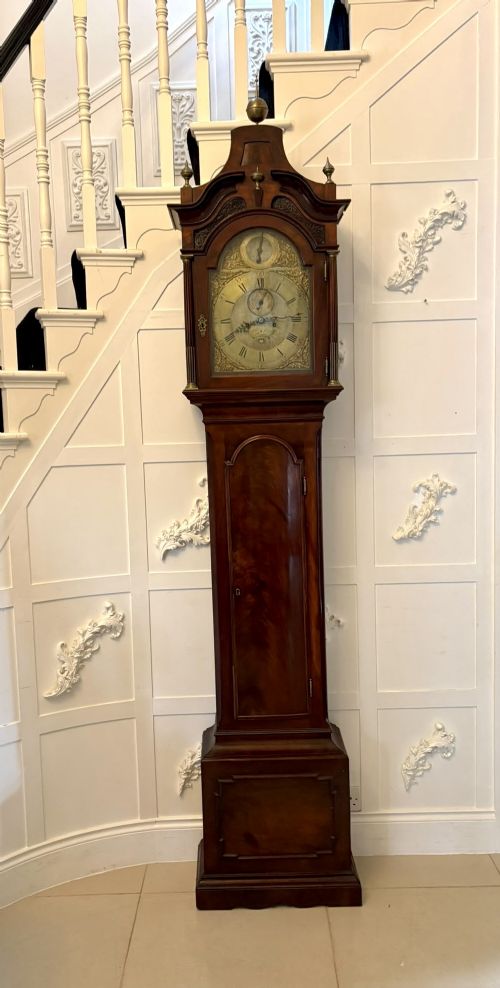
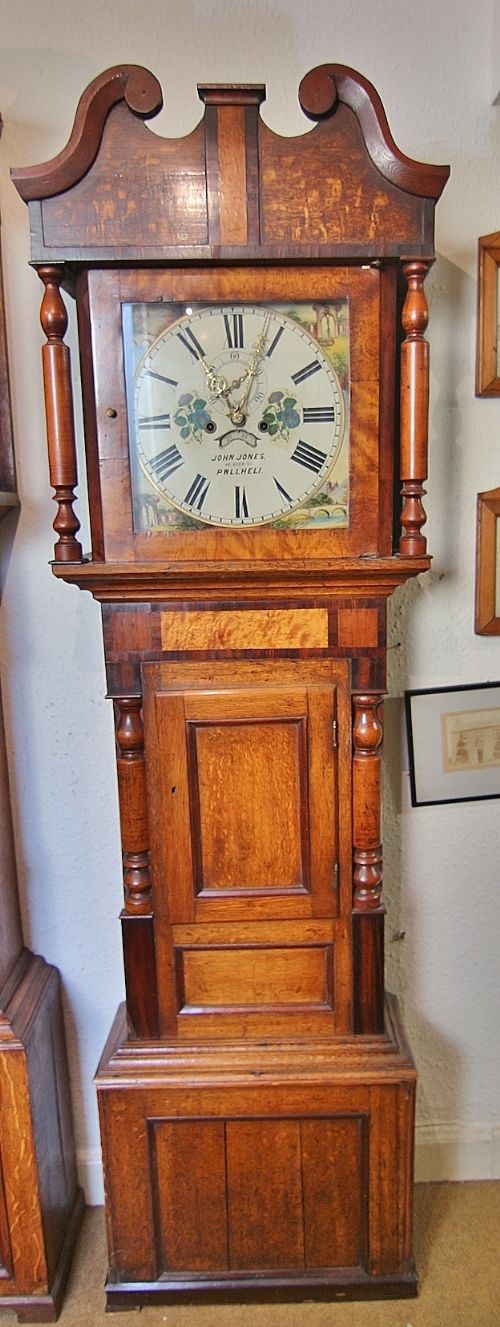
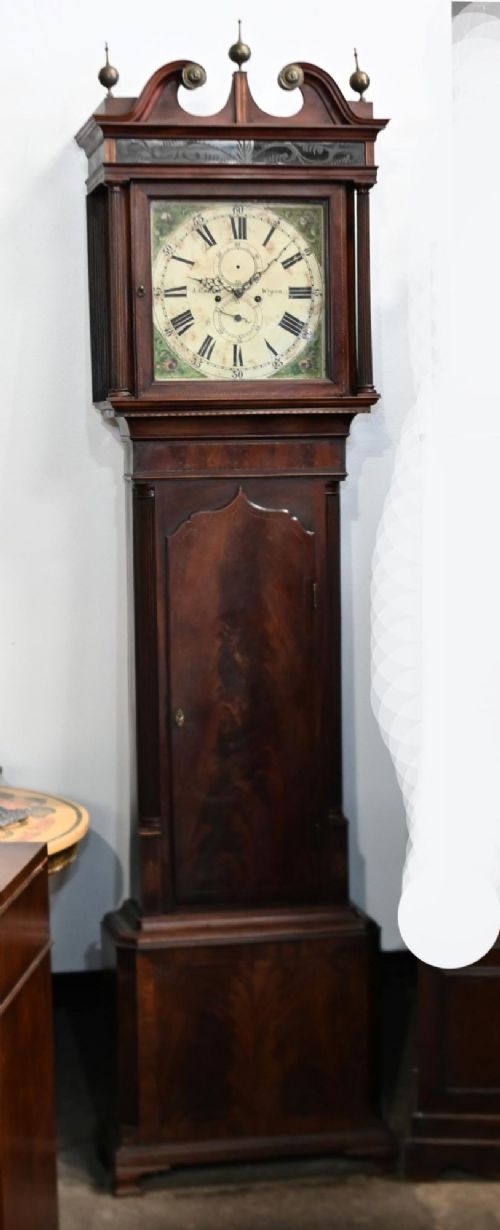
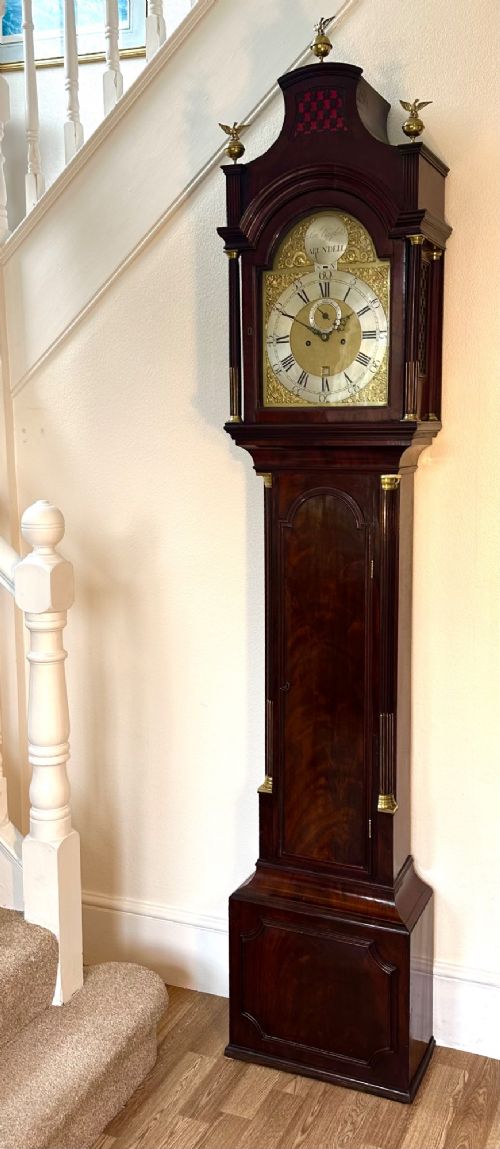
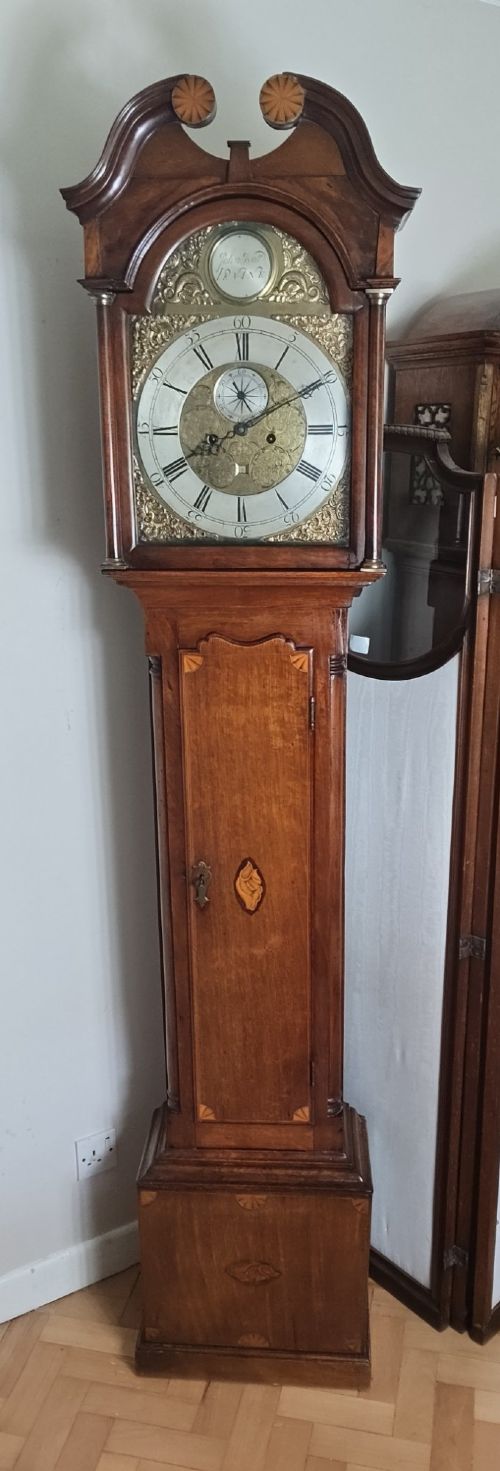
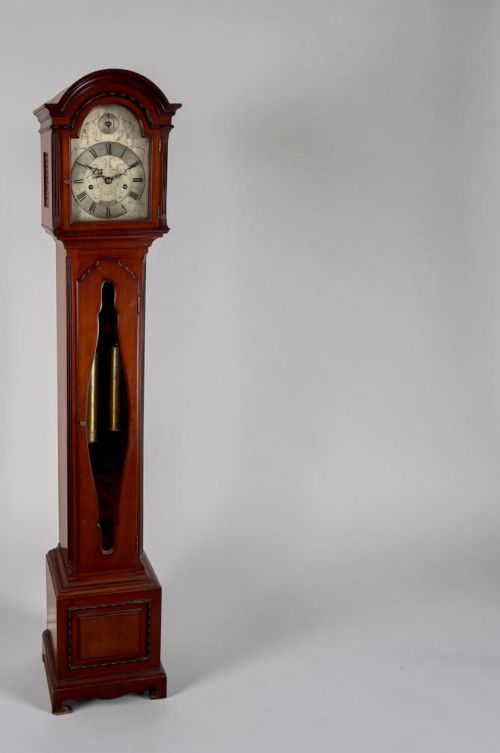
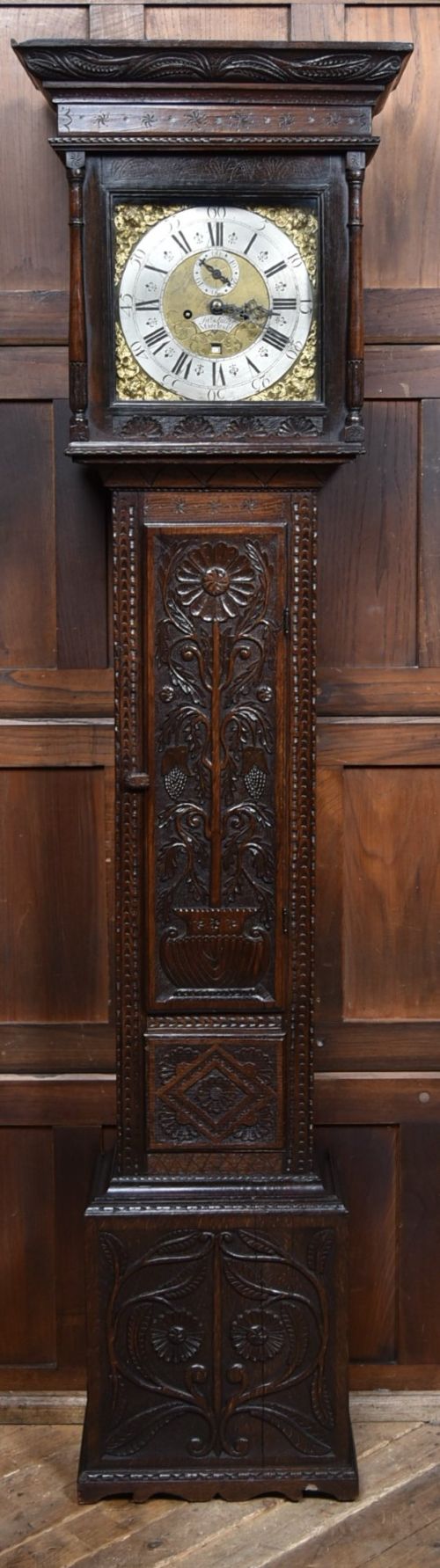
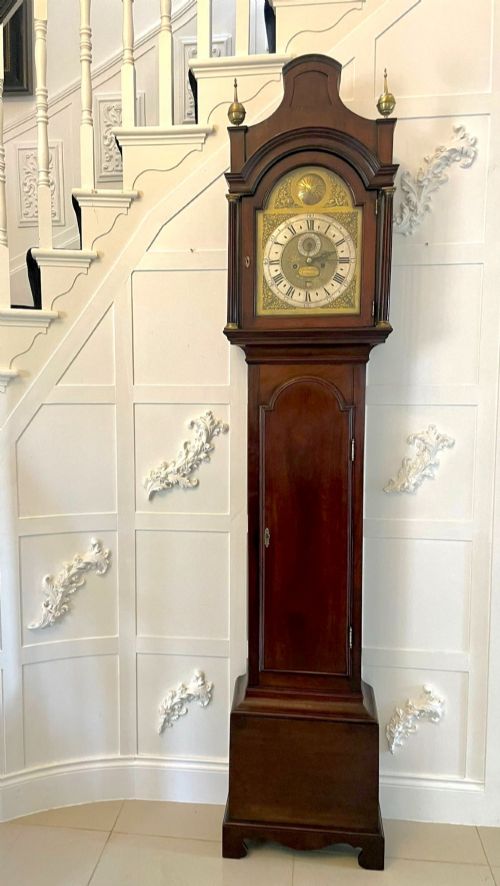
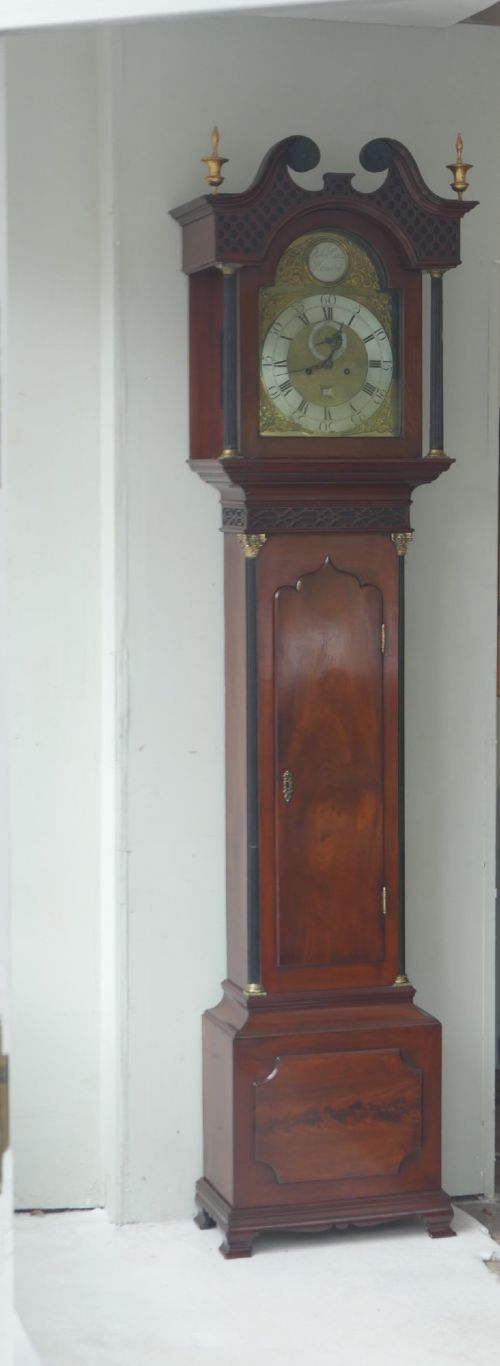
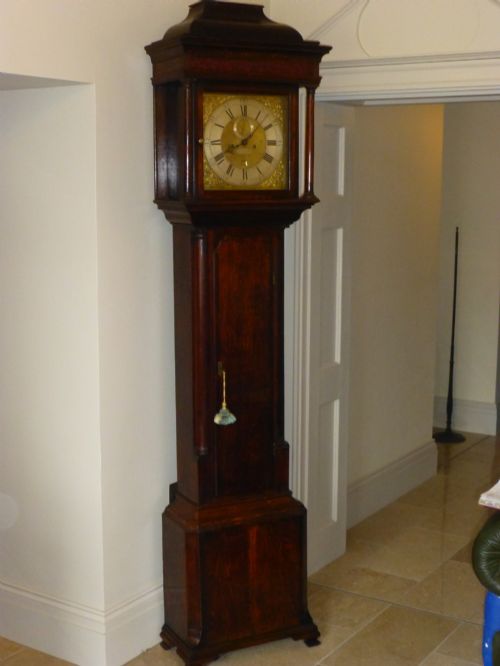
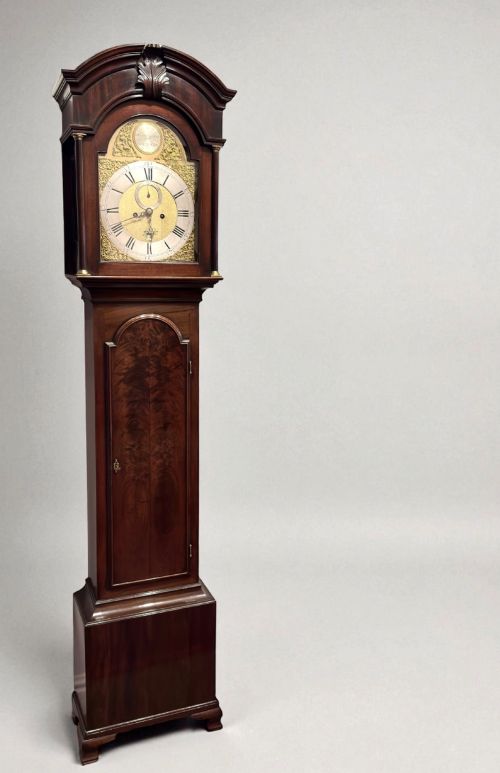
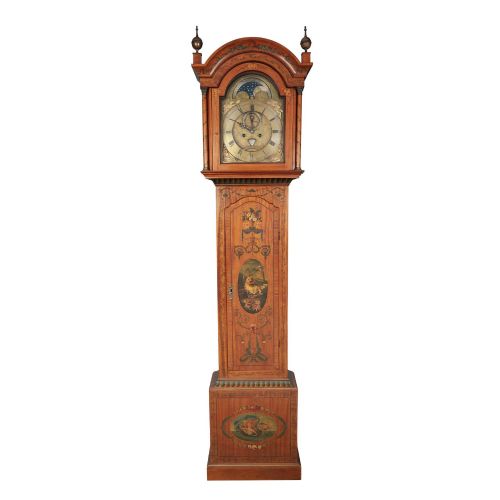
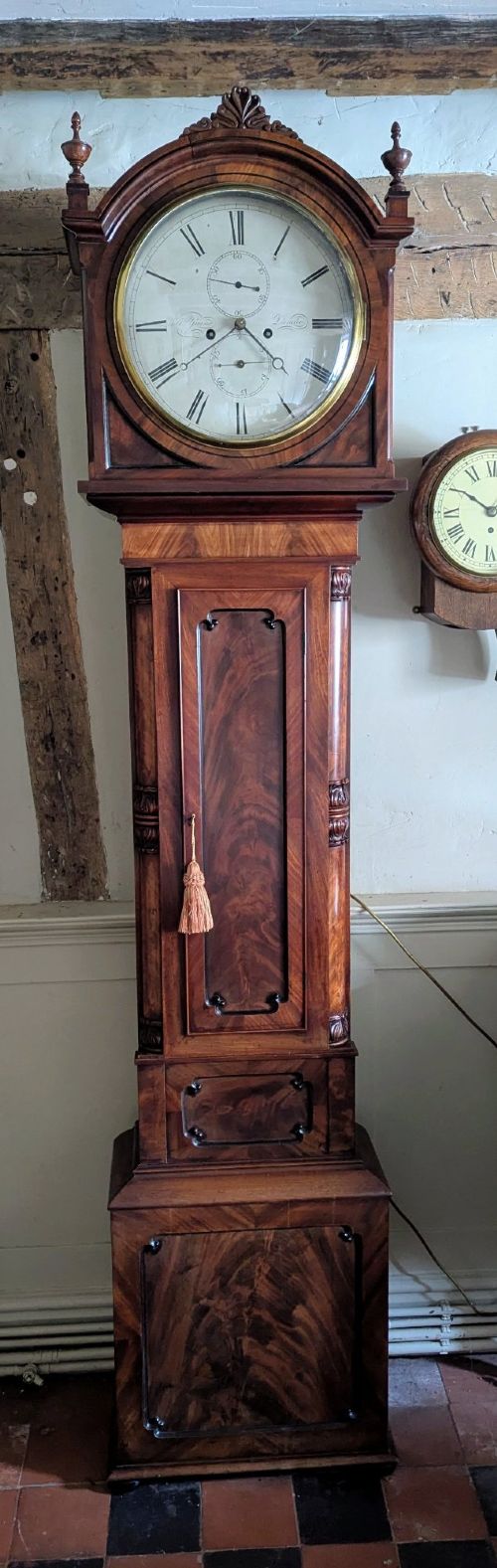
Cased Tall Clock
A cased tall clock brings the measured rhythm of the past into a room through heavy timber cases and intricate dial work.
Cased Tall Clock
A cased tall clock houses a weight-driven movement inside a tall wooden enclosure designed to stand directly on the floor. These upright timepieces appear in forms ranging from grand Georgian examples to smaller nineteenth-century variants.
The most common versions met here belong to the eighteenth and nineteenth centuries, constructed in regional British timbers like oak and mahogany. Tall cases house either full-sized longcase mechanisms or more compact domestic movements.
Makers often housed these mechanisms in architectural housings displaying period details such as crossbanding, patera inlay, or arched hoods. Regional variations span English provincial centres and Scottish workshops alike.
Materials and construction
Cabinetmakers utilised solid native and imported timbers, primarily oak, mahogany, and walnut, frequently selecting burr veneers for decorative hood and door panels. Brass formed the durable dials, chapter rings, and movement plates.
Movements relied on complex brass gear trains driven by hanging iron or lead weights, regulated by swinging pendulums enclosed safely within the trunk. Glass protected the delicate brass and painted dials set behind hinged bezel doors.
Cased Tall Clock Retail Price Guide 2026
Typical asking prices for cased tall clock among the pieces listed under this phrase on Sellingantiques today, from the lower quarter to the upper quarter. They describe what is for sale here now, not the wider market.
Several tall clocks include painted moon roller dials depicting distant phases of the moon alongside rural landscapes.
Judging quality in tall timepieces
Quality rests in the harmony between the cabinetwork and the mechanical movement signed upon the dial. Superior pieces display crisp dial engraving, substantial timber thickness, and well-proportioned hood mouldings.
The sophistication of the movement distinguishes standard production from exceptional work, particularly when incorporating moonphase rollers or strike-silent functions. Dial artistry, from silvered brass to hand-painted floral scenes, dictates overall merit.
John Taylor London·Edward White Birmingham·Charles Shuckburgh London·James Field of Hempstead·Richard Corless of Stockport·Gillett & Johnston of Croydon·James McCabe
The Cased Tall Clock Glossary
- Longcase clock
- A tall weight-driven timepiece housed in a protective wooden enclosure standing directly upon the floor. These instruments are frequently called grandfather clocks.
- Grandmother clock
- A smaller, more slender variant of the traditional tall clock produced in later periods. They fit comfortably in rooms with lower ceilings.
- Moonphase
- A dial mechanism tracking the lunar cycle through a rotating disk behind the face. This complication added considerable expense to original commissions.
Cased Tall Clock: Frequently Asked Questions
What is a cased tall clock?
A cased tall clock is an upright timekeeper consisting of a heavy movement housed inside a floor-standing wooden enclosure.
These pieces shelter swinging pendulums and hanging weights behind glazed dial doors and protective wooden trunks.
How do I wind the clock?
Weights inside the trunk must be drawn up periodically using a winding key inserted directly into holes on the dial face.
Careful handling ensures the internal brass gears and chains remain properly aligned during operation.
Where should I place it?
Tall clocks require a stable, dry floor surface against a solid wall to ensure the pendulum swings evenly without interference.
Placing the case away from direct heat sources prevents timber movement and protects the internal mechanics.
How do I date a tall clock?
Stylistic clues within the woodwork, such as bracket feet, mouldings, and inlay patterns, provide initial chronological markers.
Engraved signatures upon the brass or painted dial often link the instrument to specific recorded makers and working dates.