
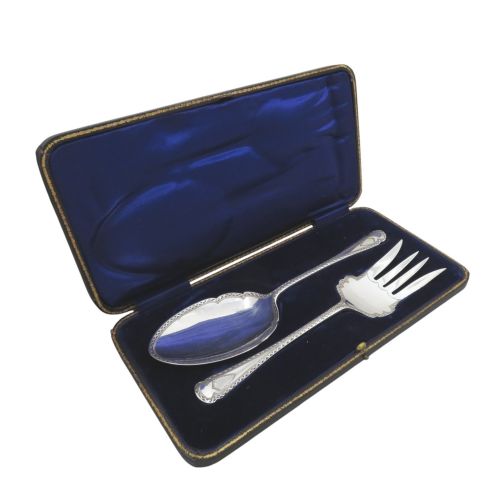
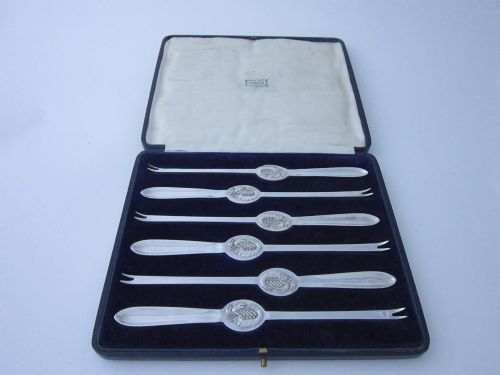
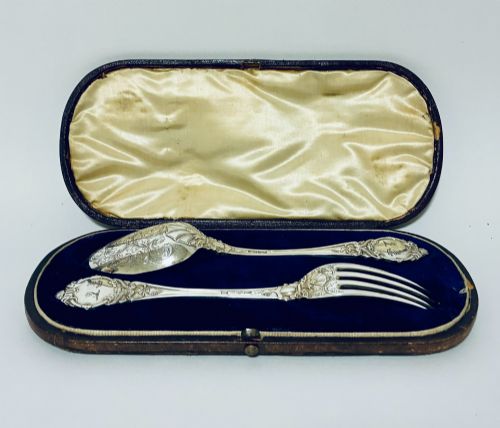


Cased Sterling Silver Forks
Cased sterling silver forks unite utility and protection, offering fitted presentation boxes alongside precious metal dining implements spanning from the Georgian era to the mid-century.

Cased Sterling Silver Forks
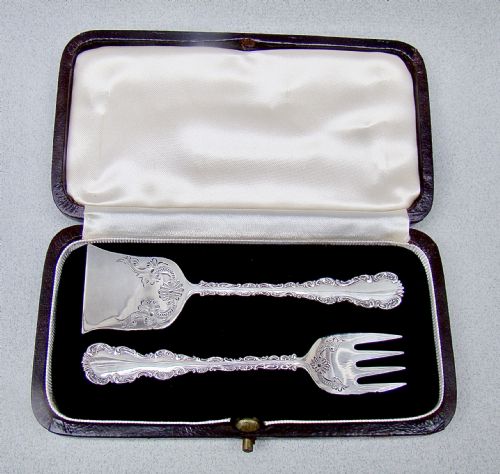
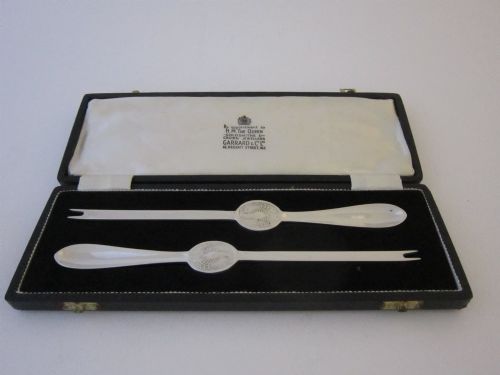
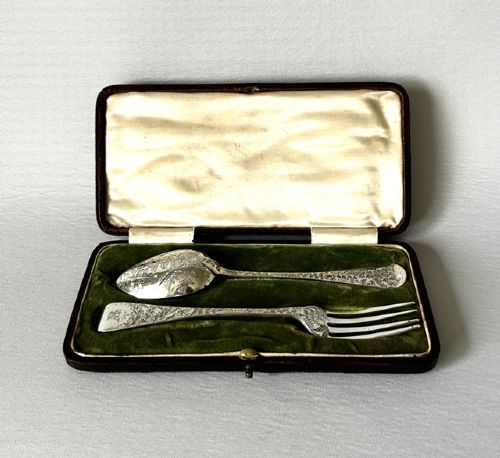
Cased sterling silver forks encompass a diverse range of fitted dining and serving implements housed in custom presentation boxes, spanning periods from the late Georgian era through Victorian, Edwardian, and mid-century modern designs. These sets frequently appear as specialised items such as cake and pastry forks, Christening sets, lobster picks, sardine servers, fish servers, and bread forks.
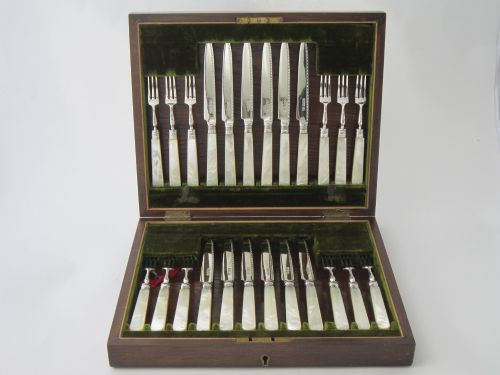
The assortment on this page leans heavily toward Victorian and Edwardian iterations alongside Art Deco and George V cake sets, reflecting the domestic habits of past centuries when specialised cutlery demanded secure storage. Boxes were lined to protect the metal and mother of pearl from tarnish and physical damage during decades of storage.
Buyers encountering these items will find complete sets of six or twelve pastry forks alongside single serving forks paired with knives or spoons. The presence of the original case adds historical context and ensures the tines remain undamaged by stray drawer contents.
Materials and construction
The forks themselves are fashioned from solid sterling silver, stamped with hallmarks indicating assay offices like Sheffield and Birmingham alongside maker marks, while handles occasionally incorporate natural mother of pearl. Silversmiths shaped the tines through forging and piercing, applying decorative motifs ranging from plain traditional patterns to elaborate Art Nouveau curves.
The protective cases are constructed from wood covered in durable leather, leatherette, or textured cloth, featuring fitted internal beds lined with softer textiles such as velvet, silk, satin, or flannel. Metal hinges and clasps secure the fitted lids, preserving the interior components over generations.
Materials recorded across the inventory include sterling silver, mother of pearl, velvet, silk, satin, wood, leather, and leatherette.
Judging quality and completeness
Quality in cased sterling silver forks rests upon the crispness of the hallmarks, the thickness of the silver gauge, and the structural integrity of both the implements and their original housing. Pieces exhibiting deep, legible stamps and unpolished tines retain their original factory form better than heavily worn examples.
The condition of the accompanying case heavily influences the overall standard, particularly the survival of original interior linings in velvet or silk and the proper functioning of latches and hinges. Complete sets matching every fork to the original fitted slots command greater interest than assembled groups placed in later boxes.
Henry Wilkinson·Garrard·William Devenport·John Round·Liberty and Co·The Cooper Brothers
The Cased Sterling Silver Forks Glossary
- Sterling silver
- An alloy containing 92.5 percent silver by mass and 7.5 percent other metals, usually copper, chosen to improve durability. This standard is indicated on British items by the lion passant hallmark.
- Hallmark
- A series of official marks stamped on precious metals in the United Kingdom, denoting the maker, standard of purity, assay office, and year of production. These stamps allow precise dating of antique cutlery.
- Mother of pearl
- An iridescent organic-inorganic composite material produced by mollusc shells, utilised extensively for decorative handles on Edwardian and Victorian cutlery. It provides a smooth, tactile grip contrasted against bright silver.
- Assay office
- A body charged with testing the purity of precious metal items and applying statutory hallmarks. Towns such as Sheffield and Birmingham operated prominent offices for the cutlery trade.
- Pastry fork
- A small dining fork featuring three or four tines, with one widened outer tine designed to function as a knife for cutting cake or pastry. These frequently appear in cased sets of six or twelve.
Cased Sterling Silver Forks: Frequently Asked Questions
What were cased forks used for?
These specialised implements served specific dining rituals, including the consumption of pastry, fish, seafood, and bread, or marked significant milestones through Christening presentations.
Their dedicated boxes kept the delicate tines and precious materials separated from everyday cutlery during storage.
How do I date my silver forks?
Dating relies upon the stamped assay office marks, maker's marks, and date letters found on the reverse of the silver handles or stems.
Matching these punch marks against published British hallmarking tables reveals the exact year and location of manufacture.
Why are some sets incomplete?
Individual pieces within larger sets were easily misplaced, damaged, or separated during decades of domestic use and inheritance.
Finding a complete matched set inside its original fitted velvet-lined case is therefore less common than discovering partial groups.