


Vintage Silver Dessert Forks
These vintage silver dessert forks bring period charm to the table, offering a tactile piece of dining history.

Vintage Silver Dessert Forks
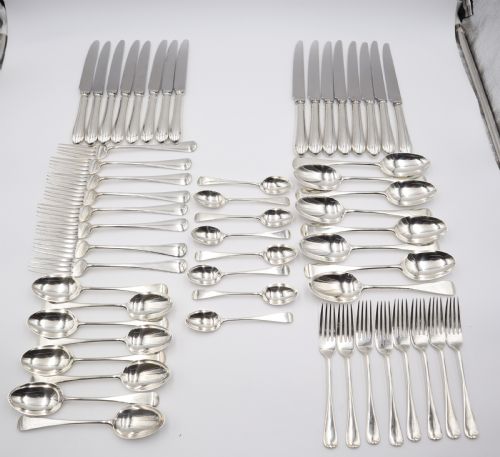
Vintage silver dessert forks comprise specialised dining implements created across multiple eras, including Victorian, Edwardian, and Art Deco periods. When buyers search for vintage silver dessert forks, they encounter individual pieces as well as complete boxed sets intended for formal dining or tea service.
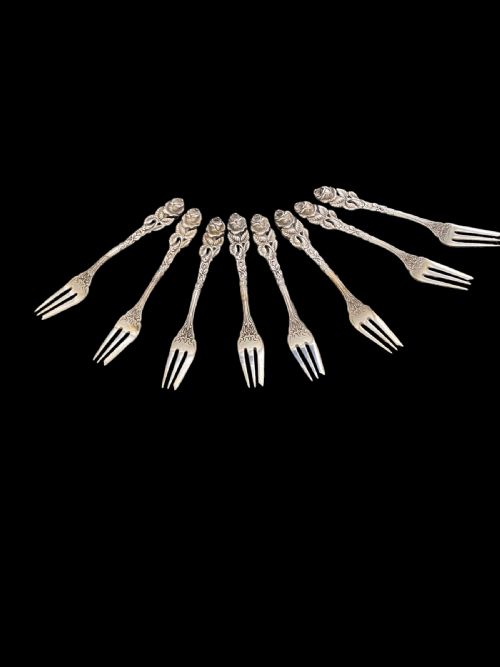
The assortment on this page includes sterling silver and German silver examples, often accompanied by matching knives or serving pieces. Many feature specific regional designs, such as German Hildesheim rose motifs, alongside traditional British styles from the nineteenth and twentieth centuries.
How they were made
Silversmiths utilised traditional metals like sterling silver and German silver to shape the tines and handles of these forks. Durability was enhanced through the integration of steel for working edges on related knives within fitted sets.
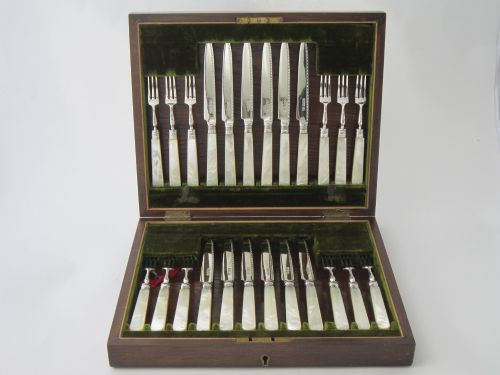
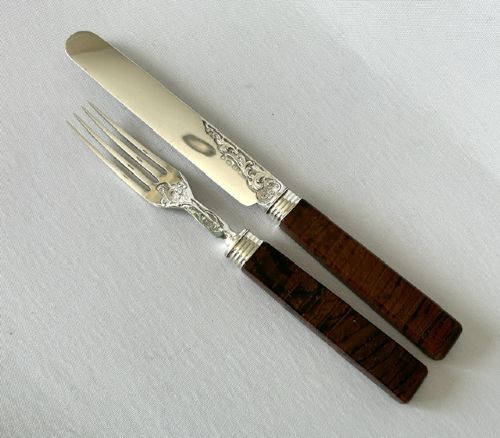
Handles frequently incorporated natural materials such as mother of pearl, agate, and wood, secured to metal shafts with pins. Presentation canteens utilised fitted wooden boxes lined with velvet to protect the polished cutlery.
Listings span from the early nineteenth century through to the mid twentieth century, featuring materials like agate, velvet, and mother of pearl.
What varies in quality
Quality in these forks rests on the purity of the metal and the craftsmanship evident in the handle materials. Sterling silver marks denote higher grade metal compared to standard plated or regional alloy alternatives.
The distinction between standard service pieces and superior items also lies in the accompanying presentation case. Fitted oak canteens with intact velvet linings elevate the overall standard of a set.
The Vintage Silver Dessert Forks Glossary
- Sterling silver
- A standard alloy consisting of a high proportion of pure silver combined with other metals for durability. This material appears frequently across Victorian and George V cutlery.
- Mother of pearl
- An iridescent inner layer of mollusc shell used for decorative handles on forks and knives. It provides a smooth, tactile grip.
- Canteen
- A fitted box or chest designed for storing a complete set of cutlery securely. These cases are often constructed from oak with textile linings.
Vintage Silver Dessert Forks: Frequently Asked Questions
How do I clean vintage silver dessert forks?
Wash the forks gently by hand in warm soapy water and dry them immediately with a soft cloth. Avoid abrasive cleaners that might damage the silver surface or delicate handle inlays.
Store the pieces in a dry environment or a lined canteen to minimise tarnishing between uses.
Can these forks be used for daily dining?
These forks function well for everyday meals, provided they receive careful hand washing rather than machine cleaning. Their sturdy construction suits regular dessert and cake service.
For pieces with organic handles like mother of pearl, gentle handling ensures longevity.
What is the difference between sterling silver and German silver?
Sterling silver contains a legally regulated high proportion of pure silver, usually marked with assay stamps. It represents a precious metal standard.
German silver is a copper alloy containing nickel and zinc with a silvery appearance but no actual precious silver content.
How can I tell the age of a set?
Dating relies on maker marks, hallmarks, and the prevailing style of the period, such as Art Deco or Victorian aesthetics. Box construction and handle materials also offer clues to the decade of manufacture.
Comparing the design against documented historical periods helps narrow down the origin.