
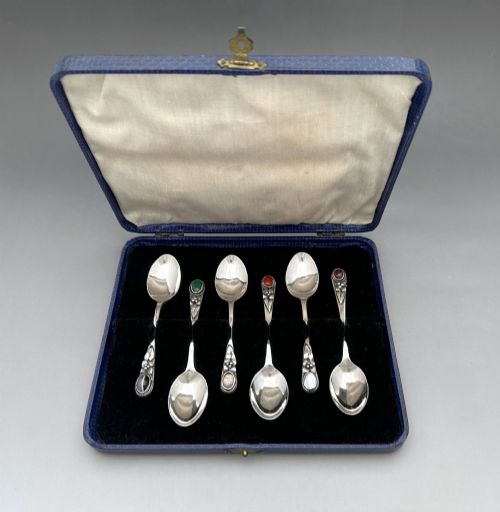
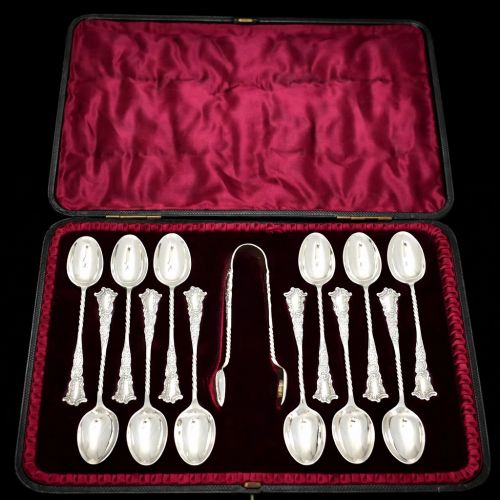


Cased Silver Teaspoon Set
A cased silver teaspoon set offers matching flatware protected in fitted boxes, bringing period elegance directly to the table.
Cased Silver Teaspoon Set
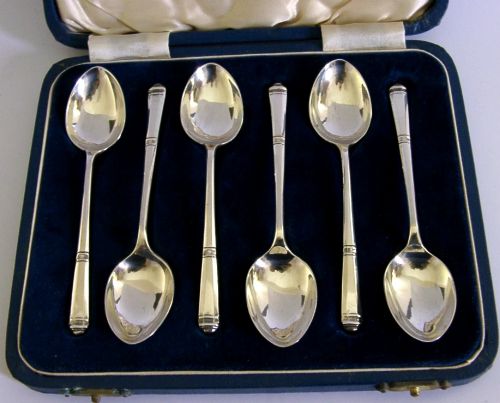
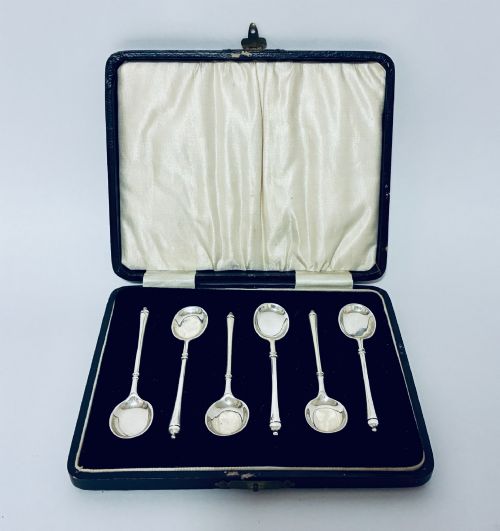
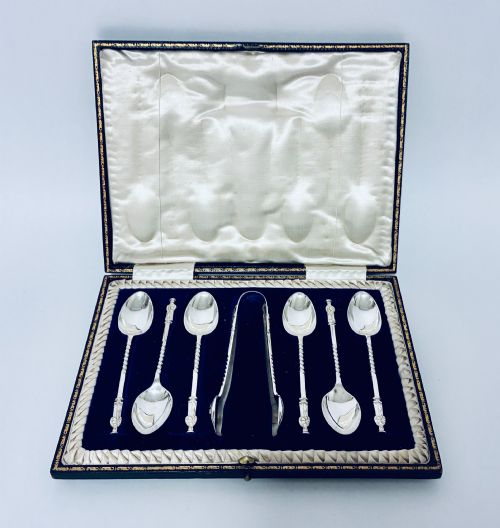
A cased silver teaspoon set comprises matching spoons, sometimes accompanied by sugar tongs, housed in a fitted protective box. These sets date across the Victorian, Edwardian, and twentieth-century periods, capturing styles from early Georgian items to geometric Art Deco designs.
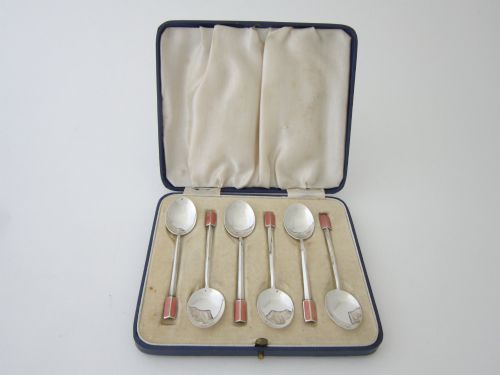
The versions most commonly met on this page include solid sterling silver and silver-gilt sets from the nineteen-thirties and nineteen-forties, often featuring colourful enamel work. Buyers also encounter apostle spoons, coffee spoons, and demi-tasse sets originating from British assay offices and international makers.
How they were made
Makers shaped sterling silver and silver gilt through casting and pressing, applying hallmarks to record the assay office and date. Enamelling techniques provided vibrant colour details to handle terminals, while semi-precious stones appeared in specific Arts and Crafts designs.
Protection for the flatware relied on purpose-built wooden outer shells lined inside with materials such as silk, velvet, satin, leatherette, or leather. These fitted interiors preserved the polished silver surfaces and delicate enamel work during storage.
What varies in quality
The calibre of a cased silver teaspoon set depends on the crispness of the handle ornamentation and the durability of the fitted box. Complete sets containing matching sugar tongs alongside the full complement of spoons retain higher desirability.
Condition of the interior lining and the preservation of any applied enamel significantly influence the overall standard. Sets retaining their original branded presentation boxes demonstrate superior original provenance.
P A W Bateman·David Andersen·Walker and Hall·Robert Stebbings·Cooper Brothers and Sons·Robert Pringle and Sons·Bruchmann and Sohne·Georg Jensen
The Cased Silver Teaspoon Set Glossary
- Sterling silver
- An alloy containing a high proportion of pure silver alongside other metals to ensure structural durability.
- Silver gilt
- Sterling silver that has received a thin microscopic coating of pure gold applied across the surface.
- Assay mark
- A stamped symbol indicating the official testing standard, town of origin, and year of manufacture for precious metals.
- Apostle spoon
- A spoon featuring the cast figure of a Christian apostle upon the terminal end of the handle.
- Guilloche enamel
- A decorative technique where translucent enamel covers a mechanically engraved metal background.
Cased Silver Teaspoon Set: Frequently Asked Questions
What is a cased silver teaspoon set?
A cased silver teaspoon set is a matched collection of silver spoons supplied within a dedicated fitted presentation box. They were produced for formal tea service and gifting.
These sets frequently include matching sugar tongs or coffee spoons. The fitted cases generally feature velvet, satin, or silk linings to protect the metal.
How do I know the date of my set?
Dating relies upon the hallmarks stamped directly onto the reverse of the spoon bowls or stems. These official marks correspond to specific British assay office date letters.
Stylistic cues also help identify the period, such as geometric Art Deco motifs from the nineteen-thirties or ornate Victorian scrollwork.
Were these sets meant for daily use?
These sets were primarily manufactured for special occasions, formal entertaining, and display within the dining room. The inclusion of protective velvet and satin cases kept the pieces secure between uses.
Many examples survive in pristine condition precisely because they remained stored away inside their original presentation boxes.
Why do some sets include sugar tongs?
Sugar tongs were included to complement the tea service by transferring sugar lumps into cups without handling. They matched the decorative pattern of the accompanying teaspoons.
Sets featuring both spoons and tongs together in their original case represent a complete serving ensemble from the period.