


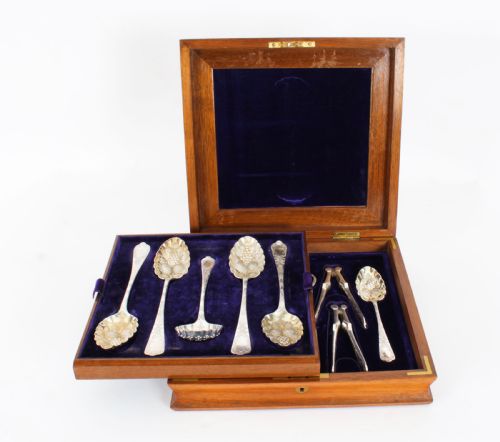
Cased Silver Serving Spoons
Cased silver serving spoons combine formal dining utility with fitted presentation boxes designed to protect and display high-status cutlery.
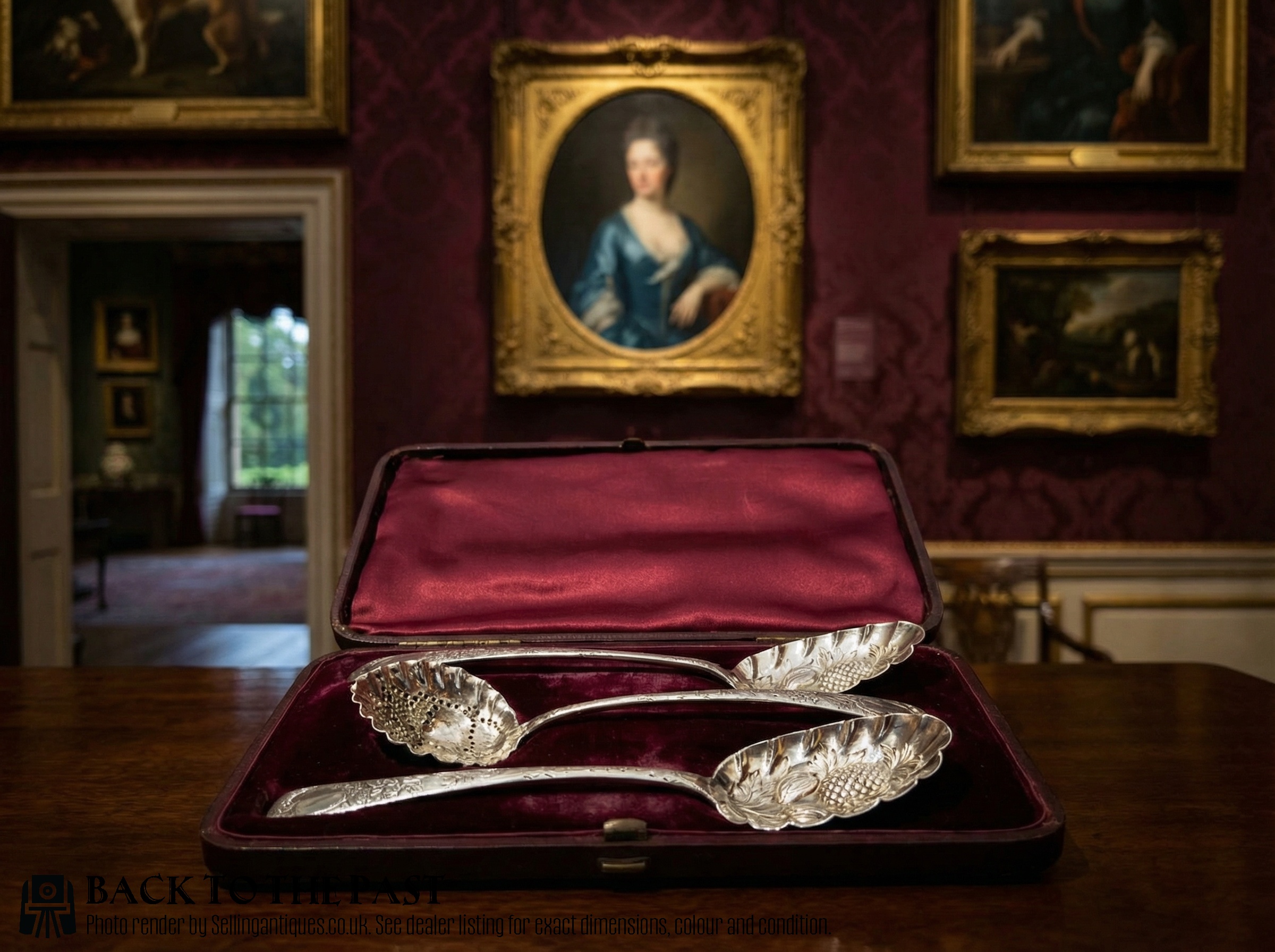
Cased Silver Serving Spoons
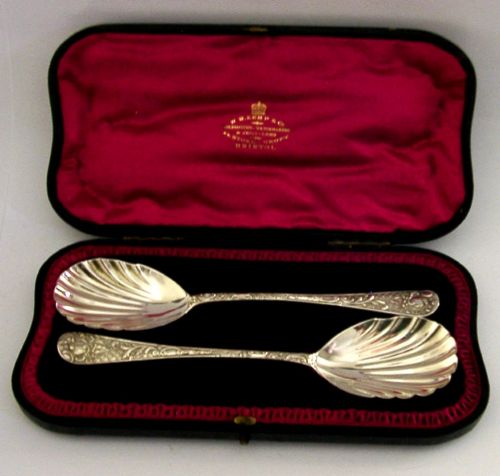
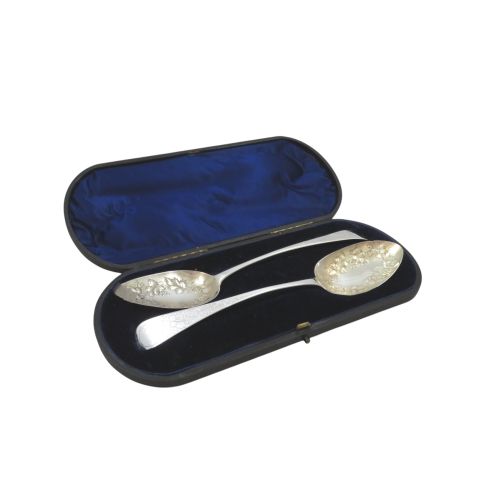
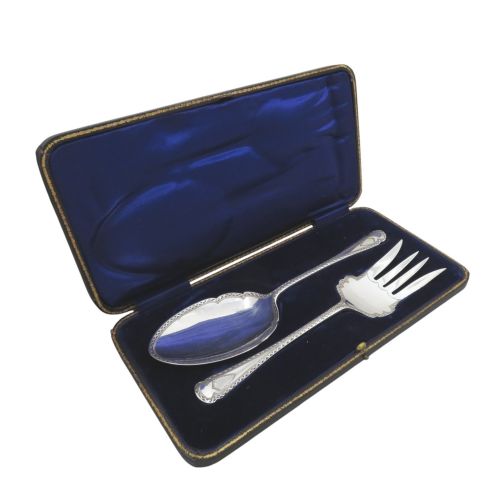
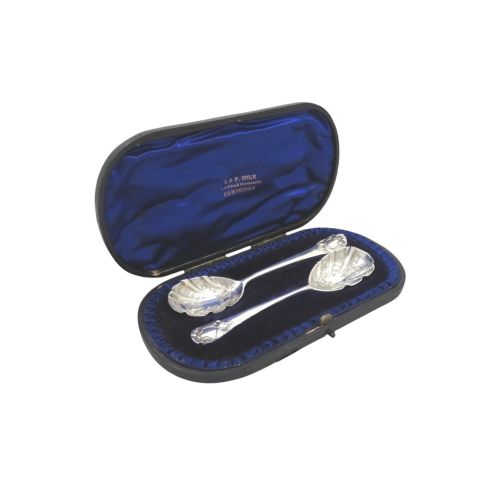
When searching for cased silver serving spoons, collectors typically encounter matched pairs or fitted sets housed in custom presentation boxes lined with protective fabrics. These items span periods from the Georgian era through the Victorian and Edwardian periods, reflecting changing dining habits and gift-giving customs.
The most common forms on this page include berry spoons with fruit-embossed bowls, apostle spoons featuring figural terminals, and specialised sets for jam, fruit, or sugar. Many of these implements were created for formal dessert courses or special domestic presentations rather than everyday family meals.
Makers utilised diverse regional styles, ranging from ornate English chasing to French horn and silver-gilt finishes. The survival of the original fitted case often indicates that the set remained a protected family possession through successive generations.
Materials and Techniques
Silversmiths predominantly shaped these implements from sterling silver, occasionally applying silver gilt for a rich gold-colored surface or combining the metal with horn and steel for specialised fruit and nut sets. The supporting cases utilised sturdy wooden frameworks covered in leatherette or textured paper, designed to shield the soft metal from tarnish and physical impact.
Interior protection relied on soft textiles such as velvet, satin, and silk, moulded to cradle the precise contours of the spoons and associated cutlery. Handles frequently displayed hand-engraved detailing, cast scrollwork, or pierced lace backs, demonstrating advanced silversmithing techniques executed in workshops across London, Sheffield, and regional assay offices.
The archive includes specialised serving formats such as apostle spoons, berry spoons, and multi-piece fruit and nut sets complete with matching grape scissors.
Quality Variations
Quality in these implements rests upon the crispness of the chasing, the thickness of the silver gauge, and the structural integrity of the fitted presentation box. Superior examples display deep, deliberate chasing on the bowl and handle without thinning of the metal from excessive historical polishing.
John Locker·Hukin & Heath·Josiah William & Co·Robert Stebbings
The Cased Silver Serving Spoons Glossary
- Berry spoon
- A large serving spoon featuring fruit-embossed or chased bowl decoration, typically retrofitted or manufactured during the Georgian and Victorian periods for dessert service.
- Silver gilt
- Sterling silver that has been coated with a thin layer of gold through an electrochemical or fire-gilding process, producing a rich dual-tone appearance.
- Assay office
- An official body charged with testing the purity of precious metals and stamping items with standard hallmarks, such as the leopard head for London or the crown for Sheffield.
- Chasing
- A metalworking technique where a silversmith depresses the front surface with punches and hammers to create raised decorative designs without removing material.
- Trefid pattern
- An early form of flatware featuring a three-lobed terminal handle, originating in the late seventeenth century and revived in later commemorative sets.
Cased Silver Serving Spoons: Frequently Asked Questions
What were cased silver serving spoons used for?
These implements were designed for serving specific foods during formal dining occasions, including fruit, berries, preserves, and desserts. Their decorative bowls and handles suited them for presentation at the table or as formal wedding and anniversary gifts.
The inclusion of a fitted case ensured that the pieces remained protected between uses, preserving the soft sterling silver and delicate gilding from domestic wear.
How should I store a cased set?
Store the fitted box in a stable environment away from direct sunlight, excessive heat, and high humidity, which can degrade the internal velvet and silk linings. Keeping the spoons inside their designated slots prevents the items from shifting and scratching against one another.
Avoid using rubber bands or plastic bags near the silver, as these materials release sulfur compounds that accelerate tarnish formation on the metal surface.
How do I identify the date of a set?
Dating relies primarily on the legible hallmarks stamped directly onto the reverse of the spoon handles, which typically include a maker's mark, a standard purity mark, an assay office mark, and a date letter. Comparing these official symbols against published hallmarking records reveals the exact year and city of manufacture.
Stylistic indicators such as the presence of Art Nouveau organic lines or Georgian chasing provide secondary clues to the period of production.
Are these spoons meant for daily dining?
While structurally sound enough for occasional celebratory meals, most collectors treat these cased sets as display items or reserve them for special seasonal gatherings. The thin gauge of silver on certain fruit or berry spoons makes them vulnerable to bending under heavy domestic use.
Gentle hand washing with warm soapy water and immediate drying preserves the delicate gilding and engraved details better than modern mechanical dishwashers.