



Cased Serving Flatware
These cased serving flatware sets are fitted boxes of silver and plated implements designed for discrete dining tasks, bringing formal elegance to the table.
Cased Serving Flatware
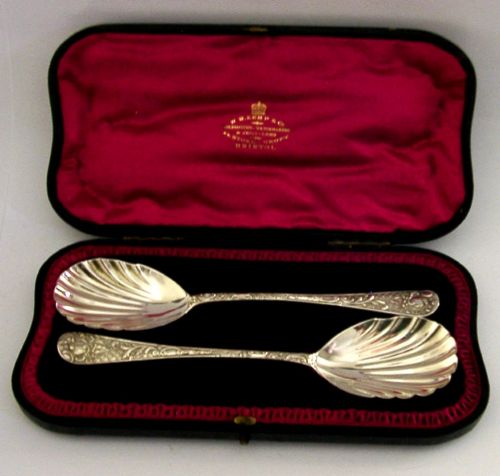
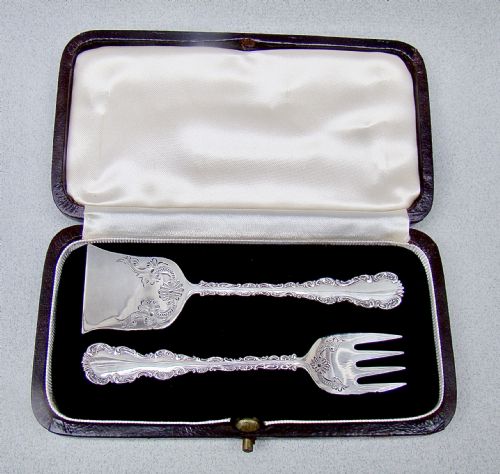
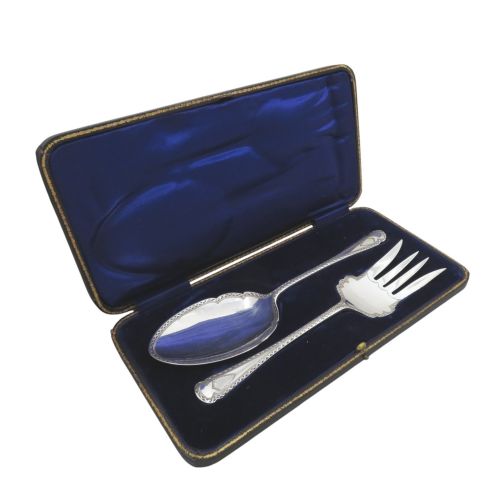
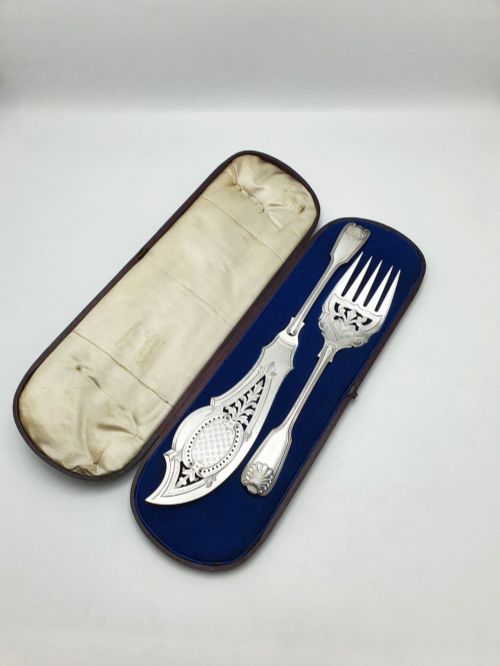
When you search for cased serving flatware, you encounter specialised utensils housed in fitted boxes designed to protect delicate dining implements between uses. These objects range from pairs of berry spoons and fish servers to grape shears, bread forks, and sardine servers.
The pieces on this page span several distinct eras, with Victorian and Edwardian examples appearing frequently alongside earlier Georgian items and later Art Nouveau or Art Deco designs. Most sets combine metal implements with fitted protective enclosures.
Form follows function closely in these groupings, as specific tools were invented for particular foods such as fruit, fish, butter, or pickles. The presence of the original case indicates that these items were treated as prized possessions intended for special occasions rather than daily service.
Materials and construction
Makers utilised sterling silver and silver plate for the metal implements, often working metals by hand or utilising early industrial techniques in manufacturing centres like Sheffield and Birmingham. Blades and tines frequently received detailed engraving, chasing, or pierced decoration to enhance their visual appeal.
Handles incorporate natural materials such as mother of pearl, horn, and bone, joined securely to metal shafts through pins or adhesives. Many implements feature cast silver blades or components combined with forged shafts.
The protective cases themselves are constructed from rigid materials covered in leatherette, velvet, silk, or satin linings designed to cradle each specific utensil securely. Fitted interiors lined with textile fabrics ensured the silver remained polished and free from scratches during storage.
Cased Serving Flatware Retail Price Guide 2026
Typical asking prices for cased serving flatware among the pieces listed under this phrase on Sellingantiques today, from the lower quarter to the upper quarter. They describe what is for sale here now, not the wider market.
Victorian diners required distinct tools for almost every food group, resulting in specialised cutlery for items as specific as sardines and bread.
Judging quality and execution
Quality in these sets depends upon the thickness of the silver gauge, the crispness of the chased or engraved ornamentation, and the integrity of the fitted case. Superior examples display deep, clear hallmarks and substantial weight in the metal.
The refinement of the fitted box also indicates grade, with finer sets featuring silk and velvet interiors tailored precisely to the contours of the spoons, forks, or shears. Intricate detailing on handles, such as carved mother of pearl or specialised casting, elevates the execution.
Henry Wilkinson·William Devenport·John Locker
The Cased Serving Flatware Glossary
- Sterling silver
- A silver alloy containing 92.5 percent pure silver and 7.5 percent other metals, usually copper, ensuring durability while maintaining a bright lustre.
- Silver plate
- A base metal, such as nickel silver or Britannia metal, coated with a thin layer of pure silver through electroplating or older Sheffield plating methods.
- Hallmark
- A series of official marks stamped on precious metal items in Britain indicating the maker, assay office, standard of purity, and year of assay.
- Berry spoon
- A large serving spoon, often dating from the Georgian period, retroactively decorated with fruit repoussé work and chasing during the Victorian era.
- Grape shears
- Specialised scissors designed specifically for cutting clusters of grapes at the table without bruising the fruit or scattering loose berries.
Cased Serving Flatware: Frequently Asked Questions
What are cased serving flatware sets?
These are matched or specialised collections of serving utensils housed in custom-fitted protective boxes. They were designed for serving specific foods like fish, fruit, berries, or bread during formal meals.
Most sets include items such as fish servers, berry spoons, or crumb scoops accompanied by fitted velvet or satin linings. The inclusion of the original case preserved the finish of the metal between uses.
How do I care for silver flatware?
Silver requires gentle cleaning using specialised polishes and soft cloths to maintain its reflective surface without wearing down thin plating or engraved details. Regular handling often prevents tarnish from accumulating in recessed areas.
When storing these items, keeping them inside their original fitted cases protects them from airborne pollutants and moisture. Avoid using harsh abrasive cleaners or modern dishwashers, which can damage organic handle materials like mother of pearl or horn.
How do I identify Victorian sets?
Victorian pieces often feature heavy ornamentation, including chased floral motifs, engraved scrollwork, and fitted cases lined with silk and velvet. Examining the hallmarks provides the exact year and assay office of manufacture.
Stylistic shifts during the nineteenth century moved from plain Georgian utility to highly decorative dining accessories. Makers frequently utilised sterling silver alongside silver plate and natural materials like mother of pearl.
Were these used daily?
These specialised serving pieces were generally reserved for formal dinner parties, holidays, or entertaining guests rather than everyday family meals. Each specific utensil corresponded to strict Victorian and Edwardian dining etiquette.
The presence of dedicated implements for fish, fruit, and butter highlights the structured nature of historic dining rituals. Because they were kept in cases, many survived in excellent condition.