


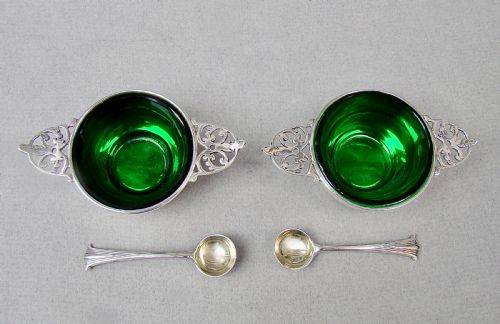


Cased Salt Cellars
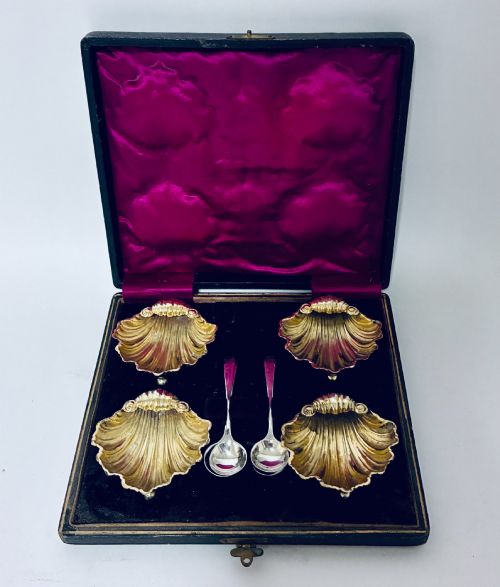
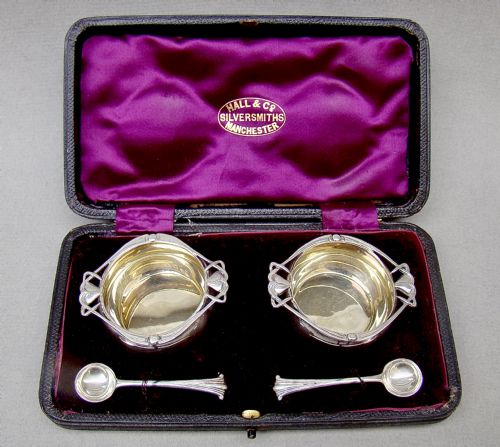
These cased salt cellars are fitted sets of small silver bowls nestled in velvet or satin-lined presentation boxes, prized for formal dining.
Cased Salt Cellars
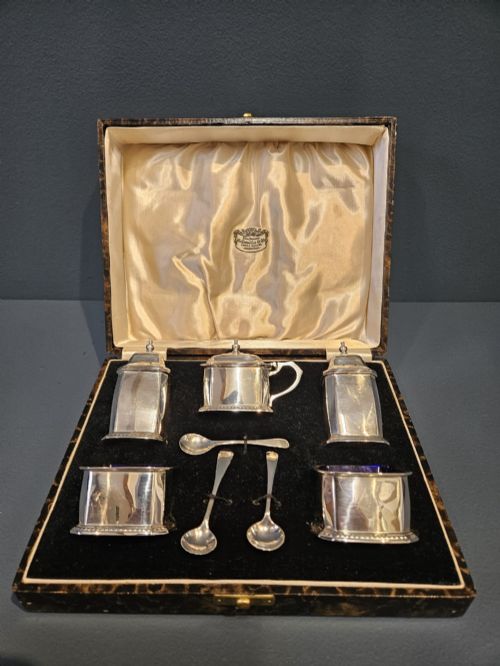
When you search for cased salt cellars, you encounter fitted presentation sets housing small open salt bowls, often accompanied by matched spoons and glass liners, designed to be set directly upon the dining table. The pieces span from the Victorian period through the Edwardian era and into the Art Deco style of the 1930s.
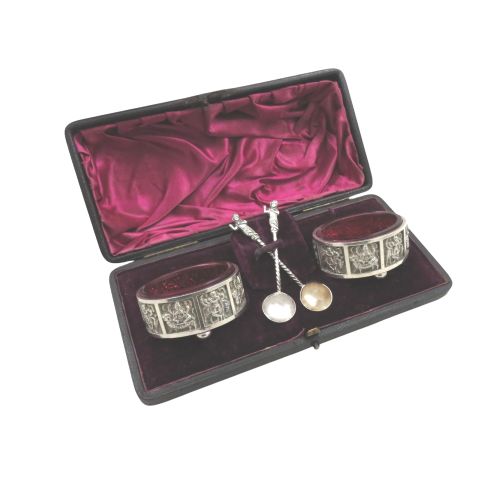
The most common version met on this page is the paired set or larger condiment assemblage in a hinged leather or cloth-covered box. These range from simple Victorian sterling silver bowls to novelties shaped like birds, quaichs, or embossed with Hindu deities, alongside geometric George V and Art Deco designs.
How they were made
The salt cellars are constructed from sterling silver or silver plate, shaped through casting, hammering, or embossing, with many examples featuring intricate chased surface details or colourful enamel work. Glass liners sit within the silver open bowls to protect the metal from the corrosive nature of salt.
The presentation cases are rigid structures typically covered in leather, cloth, or satin, and lined internally with fitted velvet or silk to cradle each individual salt cellar and its accompanying spoon securely.
Cased Salt Cellars Retail Price Guide 2026
Typical asking prices for cased salt cellars among the pieces listed under this phrase on Sellingantiques today, from the lower quarter to the upper quarter. They describe what is for sale here now, not the wider market.
What varies in quality
Quality rests upon the weight and gauge of the sterling silver used for the bowls, alongside the crispness of the chasing, embossing, or enamel work. Finer sets display distinct hallmarks and heavier metal that resists denting during daily use.
The condition and completeness of the original fitted case also dictate the standard of the piece, with intact velvet or silk linings and working clasps elevating the entire set.
William Neale·Josiah Williams & Co·Bricks & Sons·Wilmot Manufacturing Co·Viners
The Cased Salt Cellars Glossary
- Sterling silver
- A silver alloy containing 92.5 percent pure silver and 7.5 percent other metals, usually copper, ensuring structural durability for tableware.
- Cruet set
- A collection of small matching bottles, jars, or open bowls designed to hold condiments like salt, pepper, and mustard at the dining table.
- Liner
- A small glass insert placed inside an open silver salt cellar to prevent the salt from coming into direct contact with the metal.
- Quaich
- A traditional shallow two-handled drinking vessel, occasionally adapted in smaller dimensions for novelty salt cellars.
Cased Salt Cellars: Frequently Asked Questions
How were cased salt cellars used?
These sets were placed on dining tables during formal meals to hold loose salt, which guests would spoon onto their plates using the small spoons provided.
They were kept in their fitted boxes between meals to protect the polished silver from tarnishing and to store the delicate glass liners and spoons safely.
Are glass liners original to the set?
Many Victorian and Edwardian salt cellars retain their original blown or moulded glass liners, which are sized precisely to fit the interior curve of the silver bowl.
Replacement liners appear frequently due to breakage, so checking for a snug fit helps determine if the glass matches the period of the silver.
How do I identify the date of a set?
English silver carries hallmarks stamped directly onto the metal, indicating the assay office, the maker's mark, and a specific date letter corresponding to the year of manufacture.
Stylistic cues such as the ornate embossing of the Victorian era or the clean geometric lines of Art Deco pieces further narrow down the production period.