

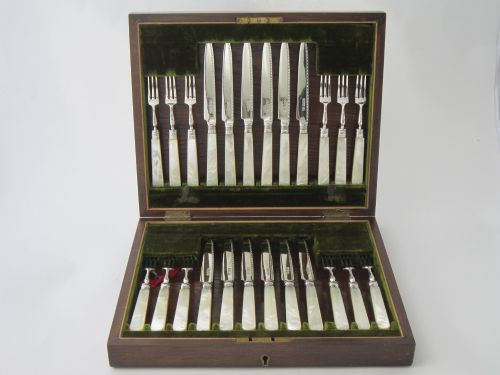


Cased Mother of Pearl Cutlery
These cased mother of pearl cutlery sets bring distinct lustre to the table, combining iridescent handles with fitted presentation boxes.
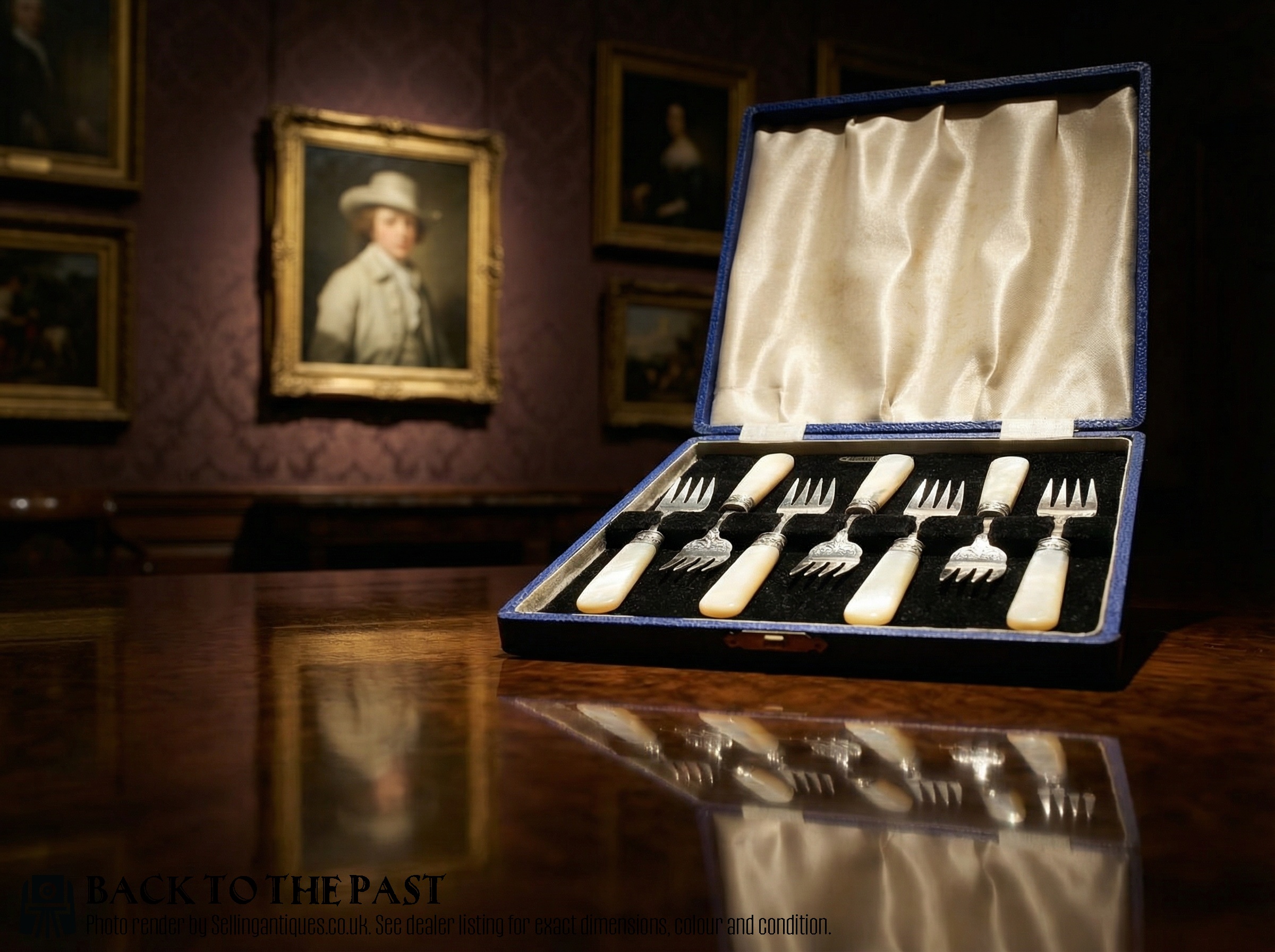
Cased Mother of Pearl Cutlery
When you search for cased mother of pearl cutlery, you encounter sets designed for specific dining tasks, ranging from dessert services to fish sets and bread forks. The examples found here span the Victorian, Edwardian, and George V periods, alongside earlier Georgian items from the nineteenth century.
Most sets arrive in fitted boxes lined with materials such as silk and velvet, often housed in wooden cantens made from oak. You will most frequently meet complete dessert or fish sets alongside individual serving pieces like fruit knives and cake knives.
The form of these objects reflects formal dining customs of the nineteenth and early twentieth centuries, where specialised utensils were employed for distinct courses. The inclusion of original fitted cases indicates that these sets were treasured possessions, preserved carefully by generations.
How they were made
The construction of these pieces relies on the pairing of delicate nacre handles with functional metal working parts. Blades and tines are formed from sterling silver, silver plate, or steel, secured to the natural shell handles with pins or collars.
The presentation boxes utilise sturdy woods like oak to protect the contents, whilst the interior trays are shaped to receive each individual knife or fork securely. Soft linings of silk and velvet cushion the metal and pearl components against damage during storage and transport.
Cased Mother of Pearl Cutlery Retail Price Guide 2026
Typical asking prices for cased mother of pearl cutlery among the pieces listed under this phrase on Sellingantiques today, from the lower quarter to the upper quarter. They describe what is for sale here now, not the wider market.
Materials recorded across the inventory include mother of pearl, sterling silver, silver plate, oak, velvet, and silk.
What varies in quality
The distinction between standard examples and finer pieces rests upon the uniformity of the nacre and the purity of the metal components. Better sets feature mother of pearl with deep, even iridescence and minimal natural flaws across every handle in the box.
The quality of the enclosing case also indicates the tier of the manufacture, with substantial oak boxes and intact silk or velvet linings commanding greater attention. Furthermore, matching sets bearing clear hallmarks for sterling silver demonstrate superior original investment compared to mixed or plated alternatives.
William Devenport
The Cased Mother of Pearl Cutlery Glossary
- Mother-of-pearl
- The iridescent inner layer of certain mollusc shells used for knife and fork handles. It provides a smooth, shimmering surface that reacts distinctively to light.
- Sterling silver
- A silver alloy containing ninety-two point five percent pure silver by mass, frequently used for the blades and tines of fine dining implements. It carries official assay office hallmarks.
- Silver plate
- A layer of silver applied to a base metal core, offering the appearance of solid silver at a different tier of production. Many twentieth-century utility sets utilise this technique.
- Canteen
- A fitted box or chest designed to hold a complete set of cutlery in dedicated slots or compartments. These containers frequently feature brass fittings and velvet or silk interiors.
- Nacre
- The biological term for mother-of-pearl, valued for its durability and optical depth. This substance forms the tactile grip on the majority of the pieces listed here.
Cased Mother of Pearl Cutlery: Frequently Asked Questions
What are cased mother of pearl cutlery sets used for?
These sets are designed for specific dining courses, such as desserts, fish, or hors d'oeuvres, rather than everyday dining use. They provide specialised utensils that protect delicate foods from metallic tastes while adding ceremony to the table.
Today, collectors often use them for special occasions or display them within their original wooden presentation boxes. The fitted velvet or silk linings ensure the pieces remain secure when not in active service.
How do I identify the date of my cutlery?
Dating relies primarily upon metal hallmarks stamped onto the silver blades or tines, which indicate the specific assay office and year of manufacture. Stylistic clues in the wooden cases and the shape of the handles also help distinguish Victorian examples from later Edwardian or George V pieces.
Earlier Georgian sets from the early nineteenth century often display distinct hand-wrought characteristics compared to mass-produced Edwardian equivalents. Comparing the box construction and interior silk linings offers further contextual clues to the period of origin.
How should I store these sets?
Keeping the items inside their original fitted wooden canteens provides the best protection against physical knocks and environmental changes. Ensure the storage area remains dry to prevent tarnishing of the silver components and degradation of the internal velvet or silk.
Avoid stacking unprotected pieces together, as the natural pearl handles can scratch if allowed to rub against one another. Using the dedicated slots in the original box preserves both the cutlery and the lining.
What periods do these pieces come from?
The inventory spans the nineteenth and early twentieth centuries, encompassing Victorian, Edwardian, and George V eras. You will also encounter occasional items originating from the early Georgian period around eighteen hundred.
Each period brings distinct manufacturing traits, from the heavier proportions of Victorian serving knives to the lighter Edwardian fish and dessert sets. The presence of original cases helps maintain the historical integrity of each grouping.