

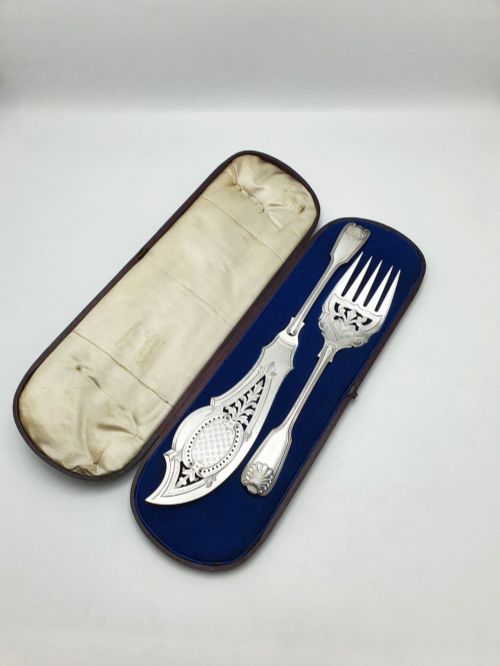


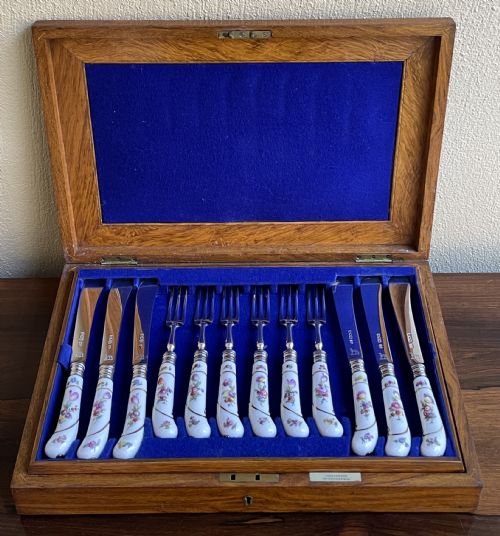


Cased Victorian Fork Set
A cased Victorian fork set delivers formal dining gear and christening presents housed within fitted velvet and leather boxes.
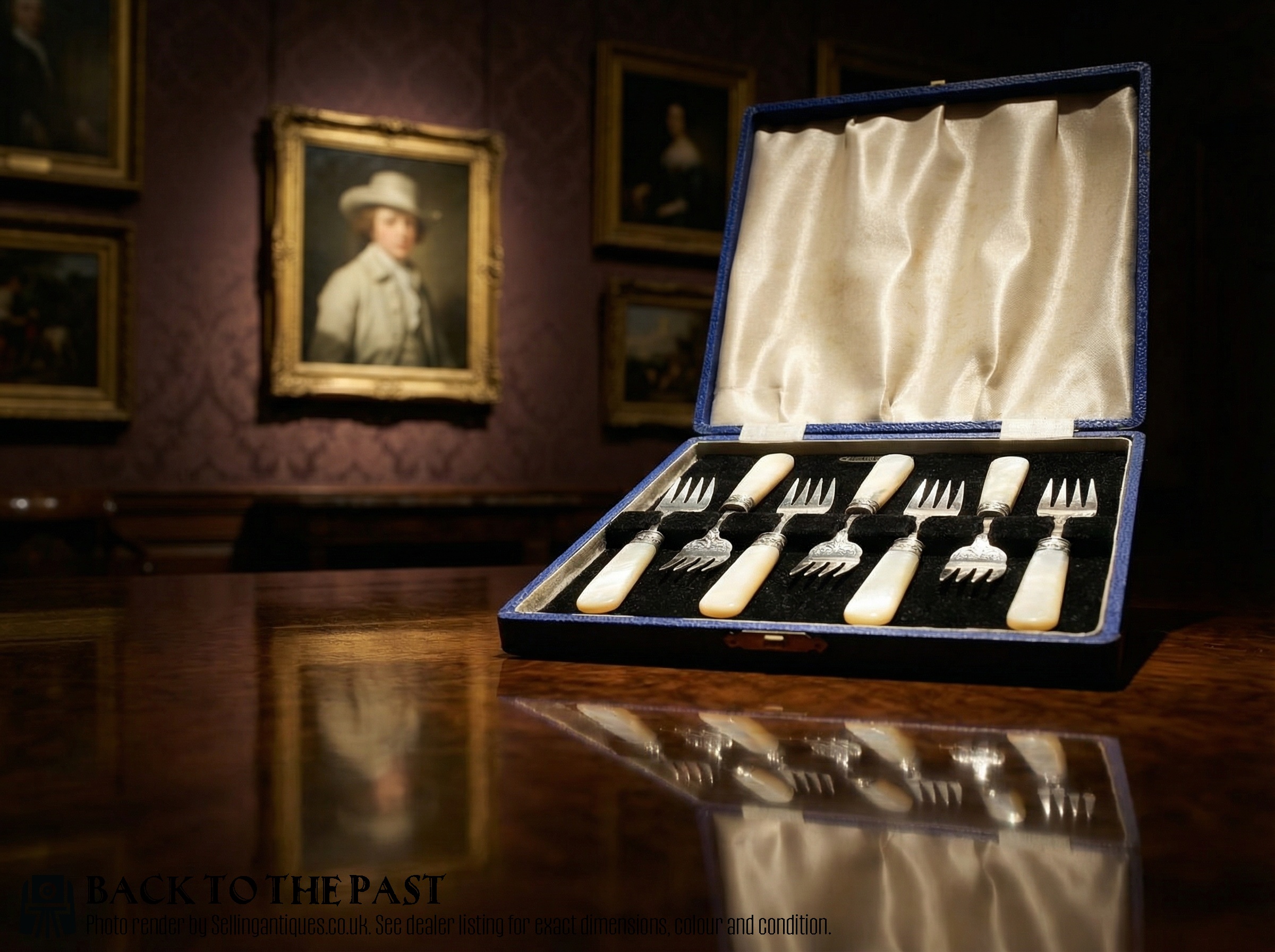
Cased Victorian Fork Set
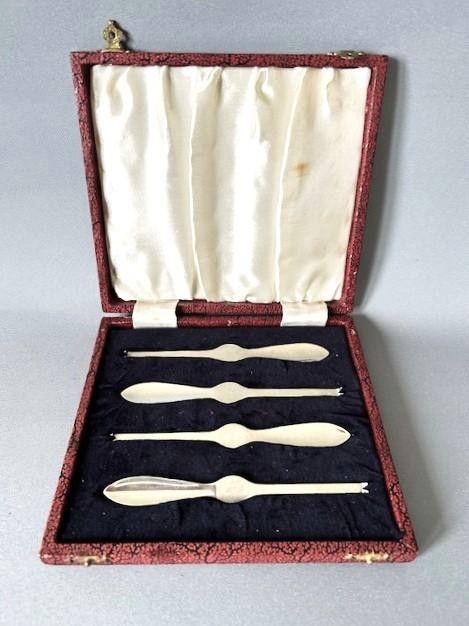
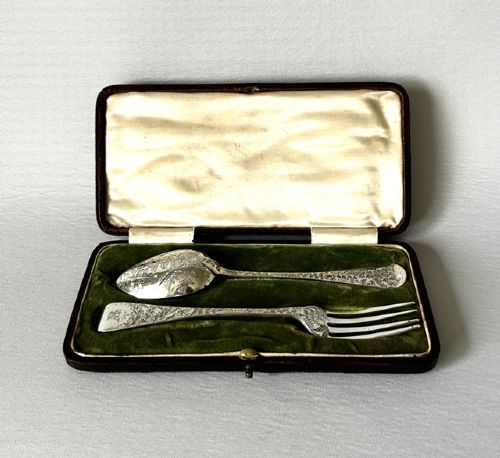
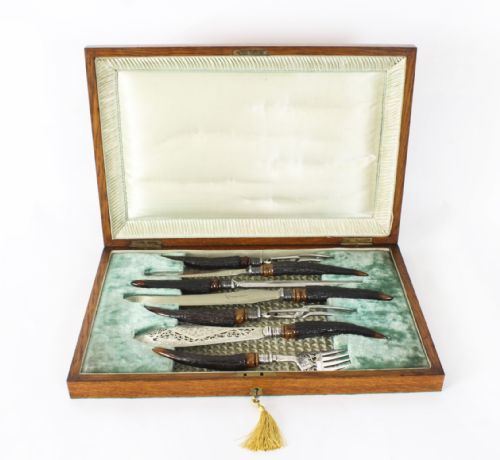
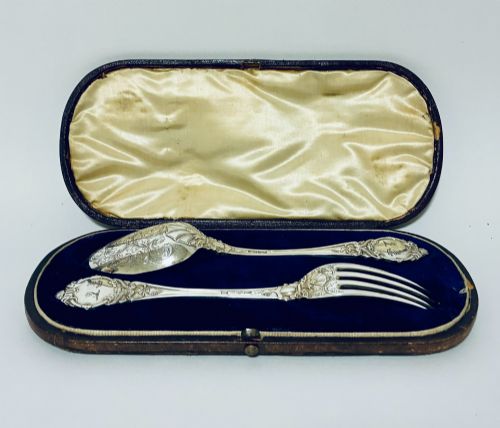
A cased Victorian fork set brings together matched eating utensils and serving tools arranged inside fitted boxes lined with velvet or silk. These sets span christening gifts, fish serving implements, dessert services, and carving collections originating across the nineteenth century.
Most examples appearing here date from the later decades of the era, particularly the 1880s and 1890s, alongside campaign pieces and Edwardian productions. The forms range from single child sets to large canteens and specialised hors d'oeuvres collections housed in oak, leather, or card boxes.
Materials and construction
Utensils utilise sterling silver and silver plate for blades and tines, paired with handles shaped from mother-of-pearl, horn, porcelain, and steel. Engraving and chasing decorate the metal surfaces with floral and hunting motifs.
Storage cases combine wooden carcasses or thick card covered in leather, lined internally with fitted slots trimmed in silk and velvet to secure each piece firmly in place.
Cased Victorian Fork Set Retail Price Guide 2026
Typical asking prices for cased victorian fork set among the pieces listed under this phrase on Sellingantiques today, from the lower quarter to the upper quarter. They describe what is for sale here now, not the wider market.
Several fish servers sport finely engraved hunting dogs, ensuring your baked salmon is guarded by miniature hounds.
Quality variations
The standard of metalwork distinguishes sets, moving from robust sterling silver to plated alternatives, alongside the fineness of hand-engraved detailing on blades and servers. The choice of handle material, such as unblemished mother-of-pearl or selected antler horn, marks the tier of the piece.
Housing also influences overall standing, with fitted velvet or silk linings and solid leather or oak outer cases showing greater care in production than simpler cardboard presentation boxes.
Carrington·John Round·Thomas Harwood and Co·Elkington & Co
The Cased Victorian Fork Set Glossary
- Christening set
- A small cutlery grouping presented as a traditional gift for an infant, typically comprising a knife, fork, and spoon in a fitted box.
- Fish servers
- A matched pair of a large knife and fork designed specifically for serving fish courses at the Victorian dining table.
- Campaign cutlery
- Portable dining implements made for travel and field use, often folding or packing into compact protective containers.
- Silver plate
- A base metal substrate coated with a thin layer of silver through electroplating or older Sheffield plating techniques.
- Horn
- An organic material sourced from animal horns, shaped and polished to form tactile, textured handles for carving and serving implements.
Cased Victorian Fork Set: Frequently Asked Questions
What was a cased Victorian fork set used for?
These sets served specific dining functions such as carving meats, serving fish, or eating dessert, while others functioned as presentation christening gifts for children.
The fitted cases kept delicate implements organised and protected between formal meals and family gatherings.
How do I date a cased fork set?
Dating relies upon hallmarks stamped onto the silver components, identifying the assay office, year letter, and maker. Stylistic clues like engraving patterns and the materials used for the handles also point to specific decades.
The construction and lining of the storage case provide additional contextual clues for the period of manufacture.
Are these sets safe to use today?
Most solid silver and silver-plated items remain functional for dining, provided they receive gentle hand washing without harsh abrasives. Pieces with hollow handles or organic materials like mother-of-pearl and horn require extra care to prevent damage.
Many collectors choose to reserve antique cutlery for special occasions rather than daily use.
How should I store a cased set?
Keep the utensils inside their original fitted box to prevent the tines and blades from scratching against each other. Store the case in a dry environment away from direct sunlight and extreme temperature fluctuations.
Using anti-tarnish strips inside the box helps maintain the finish of the silver.