



Antique English Cutlery Set
An antique English cutlery set brings historical silver, steel and mother-of-pearl to the dining table with enduring craftsmanship.
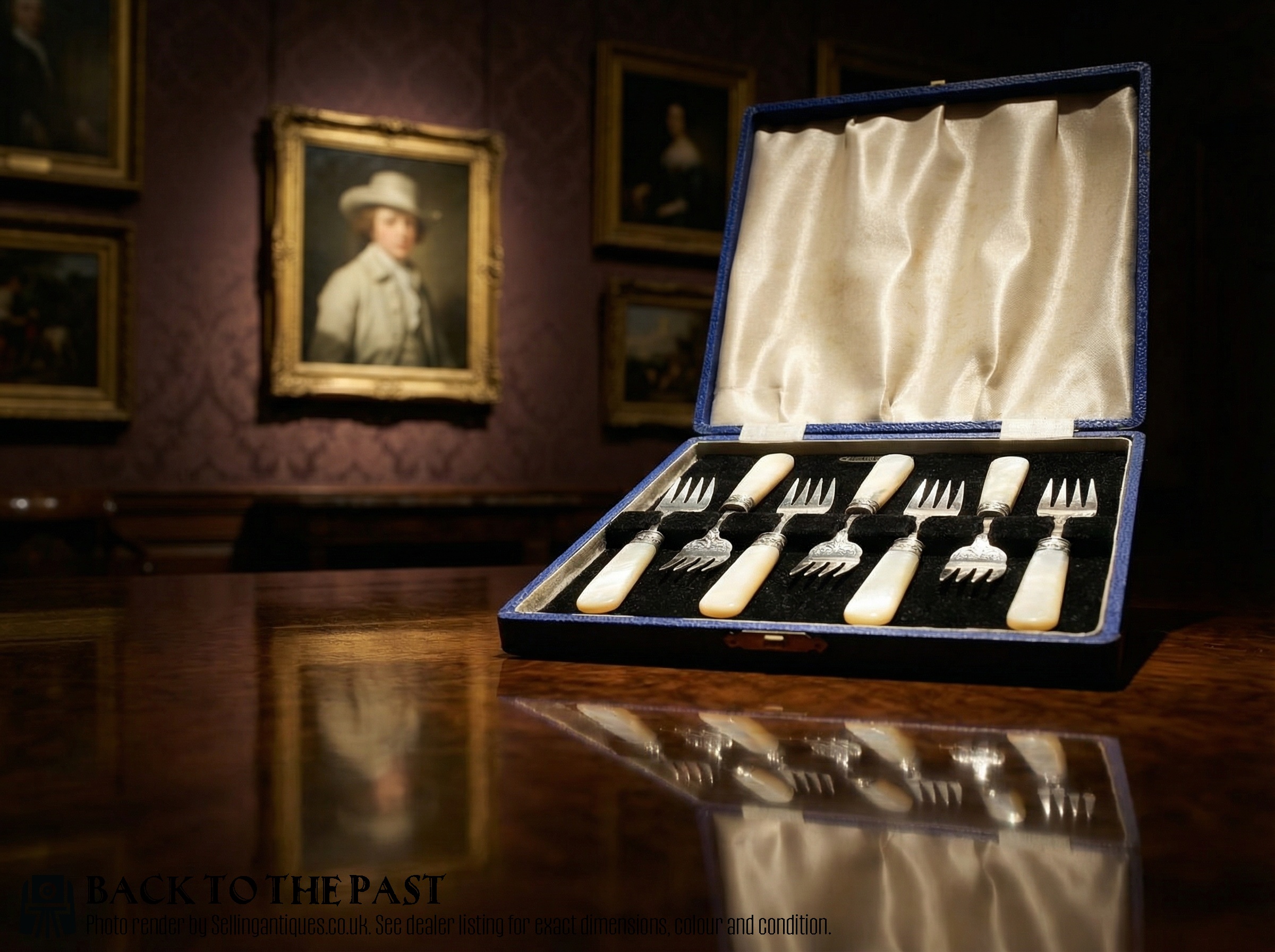
Antique English Cutlery Set
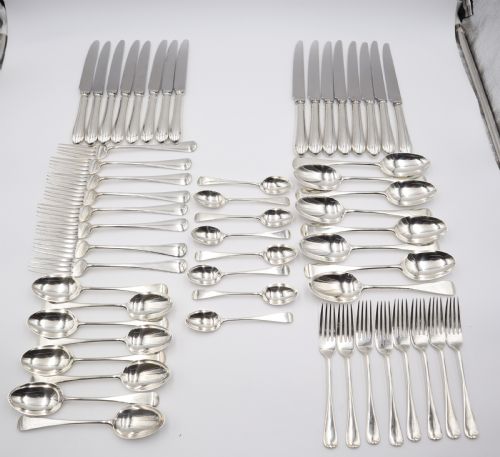
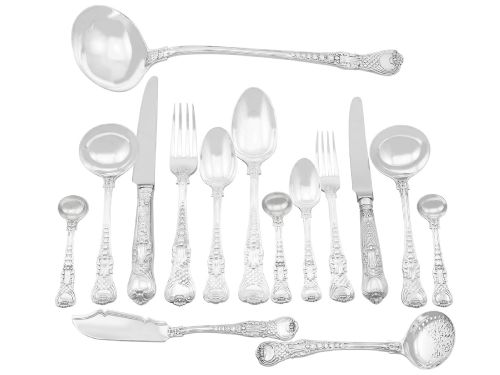
An antique English cutlery set encompasses cased canteens, boxed serving pieces, and matched collections spanning the Georgian, Victorian, and Edwardian periods. Buyers encounter everything from large silver-plated service sets for multiple settings down to smaller cased groups of teaspoons, berry spoons, and fish forks.
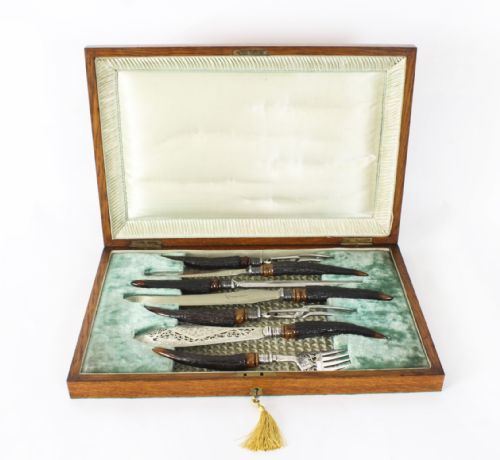
The materials reflect the domestic dining habits of past centuries, pairing sterling silver and silver plate with handles of mother-of-pearl, antler horn, and wood. Many pieces survive in their original fitted cases lined with velvet and fabric, protecting the cutlery when not in use.
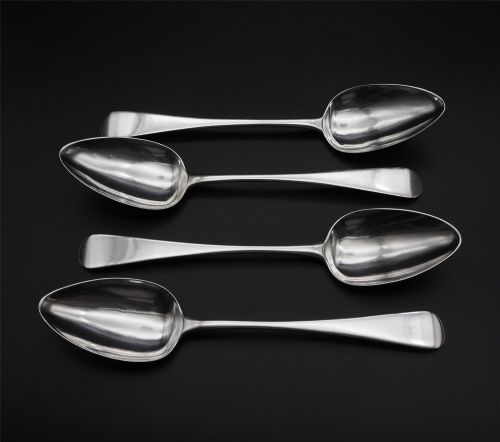
The forms range from early Queen Anne dognose tablespoons and George III silver tablespoons to Art Deco silvergilt spoons and specialised hors d'oeuvres forks. The evidence shows groupings created for specific tasks like carving, serving, and tea service.
How they were made
Cutlery sets rely on the combination of precious and base metals, utilising sterling silver, silver plate, and steel for blades, bowls, and tines. Silversmiths hammered, cast, and shaped these metals into traditional patterns such as Old English and Queens pattern.
Handles introduce organic textures, employing mother-of-pearl, wood, and antler horn shaped to fit the hand and pinned securely to metal tangs. Fitted storage boxes lined with silk or velvet complete the sets, tailored precisely to hold each individual spoon, knife, or fork.
Antique English Cutlery Set Retail Price Guide 2026
Typical asking prices for english cutlery set among the pieces listed under this phrase on Sellingantiques today, from the lower quarter to the upper quarter. They describe what is for sale here now, not the wider market.
Listings feature sterling silver, silver plate, steel, wood, velvet, and silk across Georgian, Victorian, Edwardian, and Art Deco periods.
What varies in quality
Quality rests upon the integrity of the metalwork and the preservation of the original fitted case. Complete sets with matching hallmarks and well-preserved maker marks demonstrate a higher degree of original conception than assembled groups.
The condition of organic handle materials like mother-of-pearl and antler horn, alongside the crispness of chased decoration on berry spoons or serving pieces, distinguishes superior examples from heavily worn service ware.
P A W Bateman·J Ladyman·Cooper Brothers and Sons·William Howe
The Antique English Cutlery Set Glossary
- Sterling silver
- A silver alloy containing 92.5 percent pure silver and 7.5 percent other metals, usually copper, used extensively for quality English cutlery.
- Silver plate
- A base metal foundation coated with a layer of silver, providing the appearance of solid silver at a different cost of production.
- Silvergilt
- Silver that has been coated with a thin layer of gold on its surface, creating a rich two-tone or entirely golden appearance seen on specific spoon sets.
- Dognose tablespoon
- An early eighteenth-century spoon style featuring a rounded terminal with a central notch, also known as a pied-de-biche pattern.
- Queens pattern
- A heavily ornamented Victorian cutlery pattern featuring shell and scroll motifs along the borders of the handle.
Antique English Cutlery Set: Frequently Asked Questions
How do I clean antique silver cutlery?
Silver requires gentle cleaning with specialised silver cloths or non-abrasive polishes to preserve the hallmarks and original surface detail.
Harsh chemical dips should be avoided, particularly on pieces with mother-of-pearl or horn handles which can be damaged by moisture and strong cleaning agents.
Are these sets suitable for daily use?
Many buyers choose to use their antique cutlery for special dinners and seasonal gatherings, treating the pieces with the same care given to modern tableware.
Hand washing is essential, as dishwashers will ruin organic handles and strip away silver plating over time.
How can I date my cutlery set?
Dating relies heavily upon the metal hallmarks stamped into the silver, which record the assay office, date letter, and maker's mark.
Stylistic indicators such as handle shape, case design, and engraving styles also help place the pieces within the Georgian, Victorian, or Edwardian eras.
What is the difference between silver and silver plate?
Solid sterling silver consists of the same precious metal throughout and carries official assay office hallmarks indicating its standard.
Silver plate utilises a base metal core covered by a thin exterior layer of silver, often marked with manufacturer initials rather than standard silver hallmarks.