




Cased Box Mirror
These cased box mirror items bring together compacts, dressing cases and vanity sets spanning the Victorian era through the Art Deco period.
Cased Box Mirror
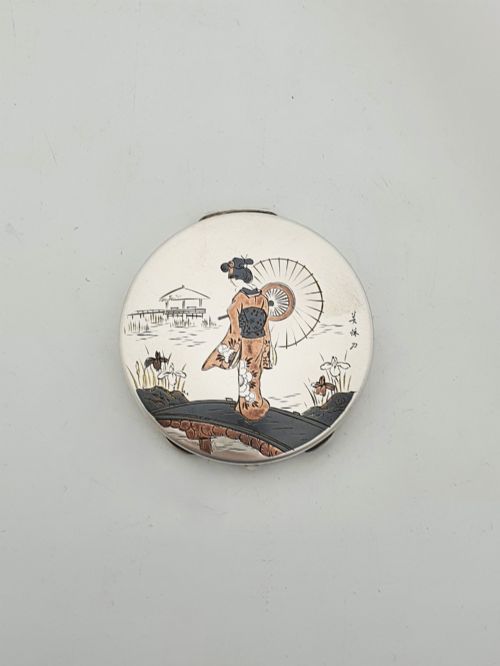
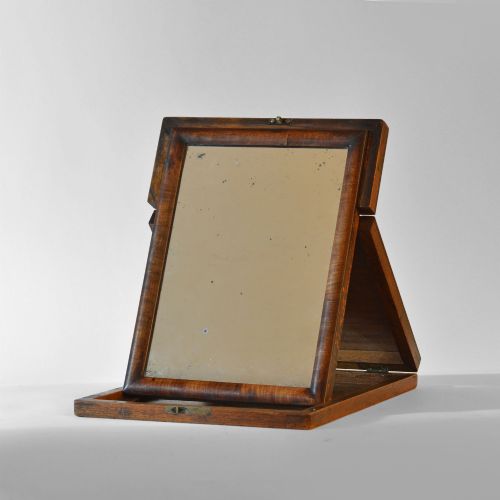
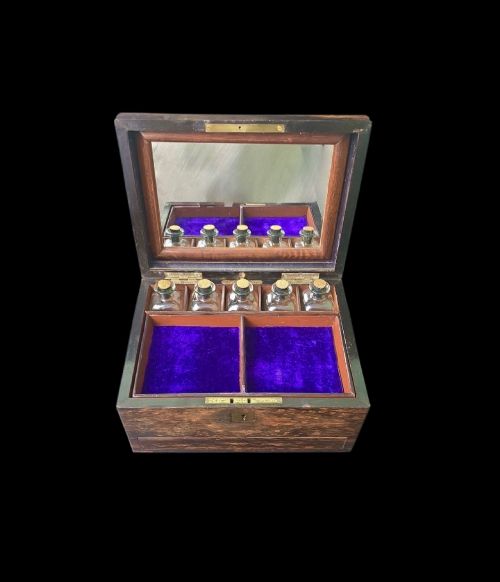
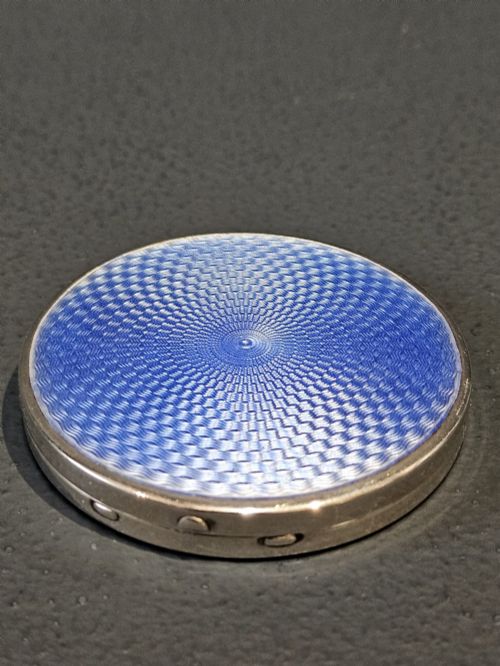
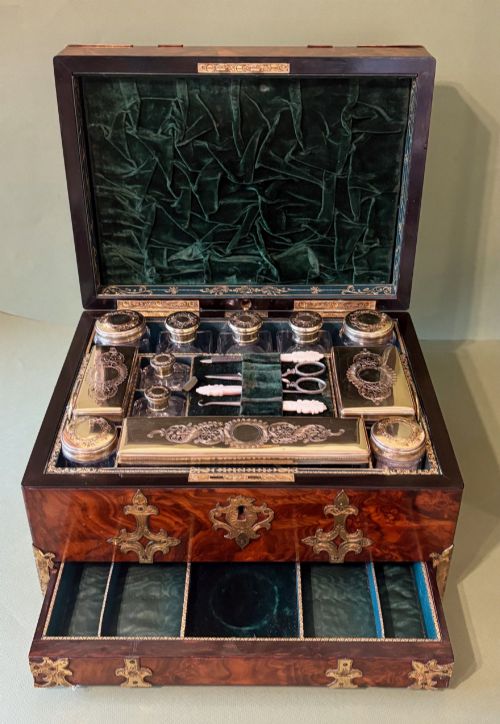
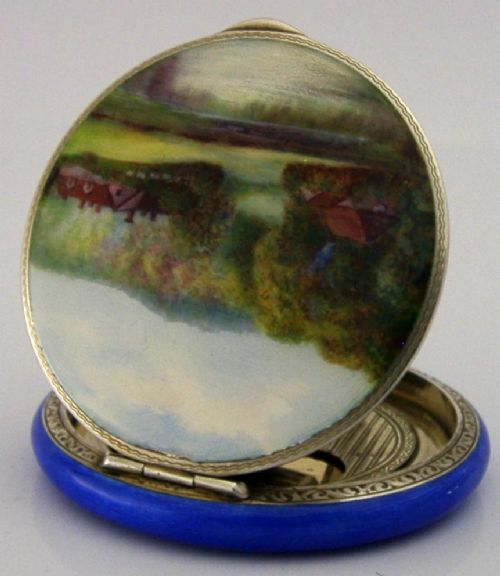
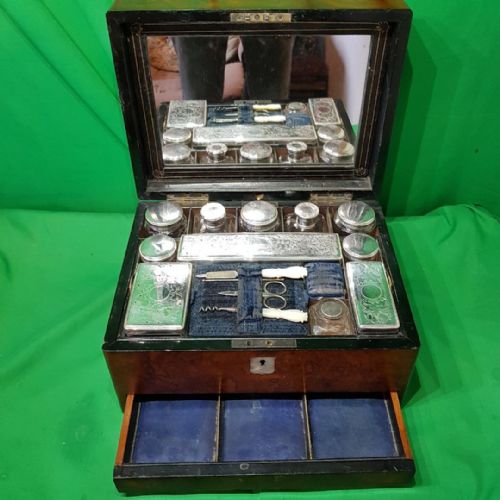
When you search for a cased box mirror, you are looking at portable dressing items, travel containers and vanity pieces that incorporate a mirror into their design. The selection includes Victorian burr walnut travelling sets and jewellery boxes alongside Art Deco silver and enamel powder compacts.
The version you are most likely to meet on this page is the compact or fitted dressing box from the early twentieth century or the nineteenth century. These objects served travellers and ladies at their dressing tables, housing mirrors alongside compartments for cosmetics, jewellery and grooming tools.
How they were made
Maker's workshops utilised hardwoods such as burr walnut and coromandel, often inlaid with marquetry or fitted with brass hardware for campaign durability. Interiors were lined with velvet, suede or silk to protect the contents and the glass mirrors housed within the lids.
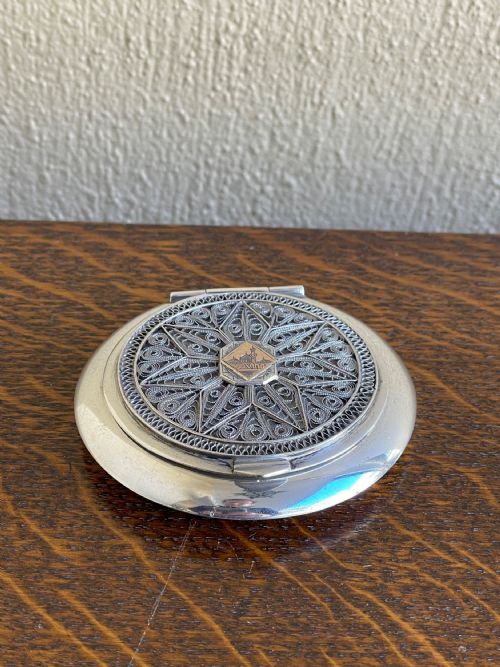
Metalwork involved sterling silver, silver gilt and brass, decorated with engine turning, guilloché enamel, filigree and hand-painted details. Glass and black glass formed structural components for specific technical sets and compacts.
Cased Box Mirror Retail Price Guide 2026
Typical asking prices for cased box mirror among the pieces listed under this phrase on Sellingantiques today, from the lower quarter to the upper quarter. They describe what is for sale here now, not the wider market.
Art Deco compacts occasionally hid clever two-face designs and combination lipstick holders for the quick-witted traveller.
What varies in quality
The standard of these objects depends upon the intricacy of the metalwork, the preservation of the enamel, and the completeness of the fitted interior. Pieces featuring fine guilloché patterns or hand-painted panels sit at the upper end of the scale.
Cabinetwork quality shows in the selection of burr walnut veneers, the tightness of the joinery, and the retention of original velvet linings and glass mirrors without degradation.
Henry Matthews·Richard Hudnut·Houbigant·Evans·John Lilley & Son
The Cased Box Mirror Glossary
- Guilloché enamel
- Enamel applied over a metal surface that has been machine-turned with an intricate geometric pattern. This technique creates a shimmering effect beneath translucent coloured glass.
- Engine turned
- A decorative technique produced by a machine that engraves precise geometric designs into metal. It provides a tactile, light-catching texture on silver compacts.
- Burr walnut
- Timber taken from a growth on a walnut tree, showing swirling grain patterns. It was favoured by nineteenth-century cabinet makers for luxury dressing boxes.
- Campaign kit
- Portable furniture and equipment built for military officers or travellers. These items featured robust brass corners and recessed handles for transport.
- Celluloid
- An early thermoplastic material used in Victorian and Edwardian vanity sets as a substitute for ivory or bone. It offers a smooth, pale finish to dressing implements.
Cased Box Mirror: Frequently Asked Questions
What is a cased box mirror?
A cased box mirror refers to portable containers, dressing cases and compacts that integrate a looking glass into their protective housing or lid. They were designed for personal grooming during travel or for use on a dressing table.
These pieces range from Victorian wooden travelling boxes with secret drawers to Art Deco silver pocket compacts containing mirrors and powder sifts.
How do I date a dressing box?
Dating relies on materials, construction methods and stylistic markers such as Victorian Gothic brasswork or Art Deco geometric enamel. Maker marks and silver hallmarks provide exact years through assay office records.
Wood choice also indicates era, with burr walnut and coromandel prevailing in the nineteenth century while base metals and coloured enamels dominate the nineteen thirties.
Were these items meant for travel?
Many of these pieces were engineered specifically for travel, described in period terms as travelling sets or campaign kits. They featured secure locking mechanisms, fitted compartments for bottles and secure mirror fixings to withstand movement.
Other examples, such as pocket compacts, served daily social use rather than long-distance transit, allowing women to refresh makeup away from home.
How should I clean silver compacts?
Silver components require gentle cleaning with a soft cloth to avoid scratching engraved or engine-turned surfaces. Enamel sections must be kept away from harsh chemical dips that can damage the glass coating.
Preserving the original velvet or suede linings inside the case requires dry dusting rather than moisture, protecting the integrity of the antique interior.