



Cased Bird Taxidermy Display
These cased bird taxidermy display pieces bring nineteenth and early twentieth century natural history directly into domestic interiors.
Cased Bird Taxidermy Display
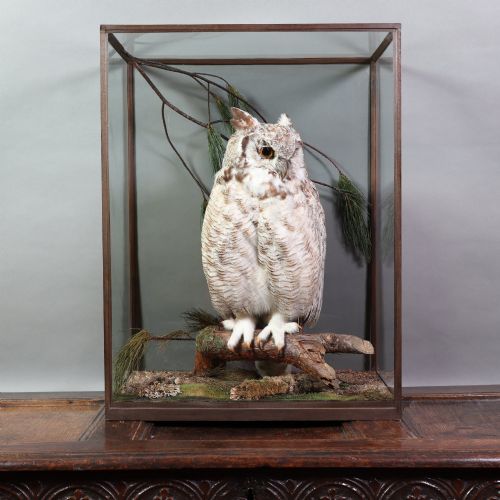
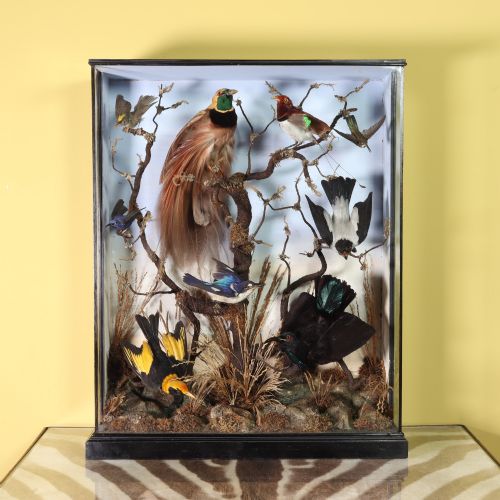
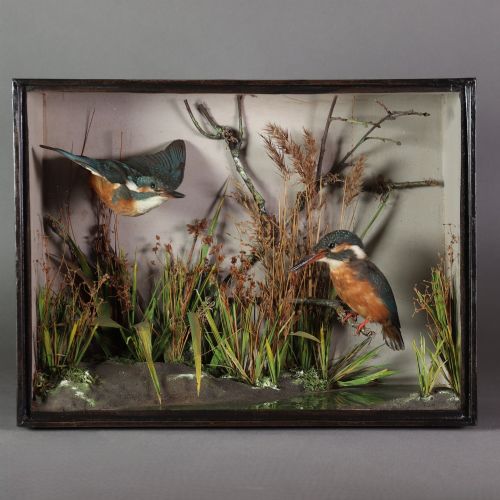
A cased bird taxidermy display presents preserved specimens within protective glass enclosures, ranging from single specimens like owls and kingfishers to complex multi-bird compositions. Buyers seek these pieces for their preservation of natural history and their distinct decorative presence within a room.
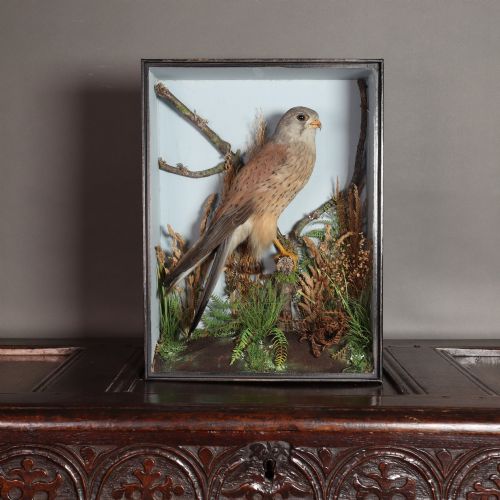
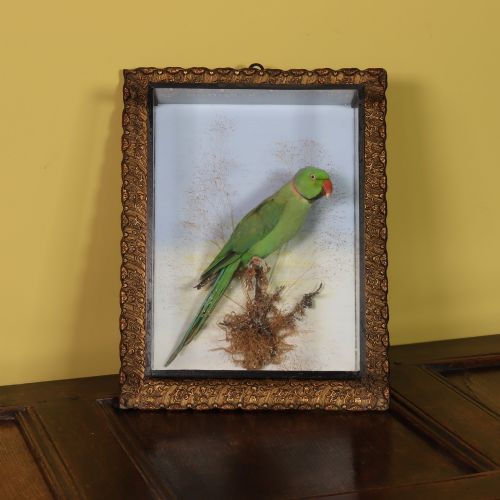
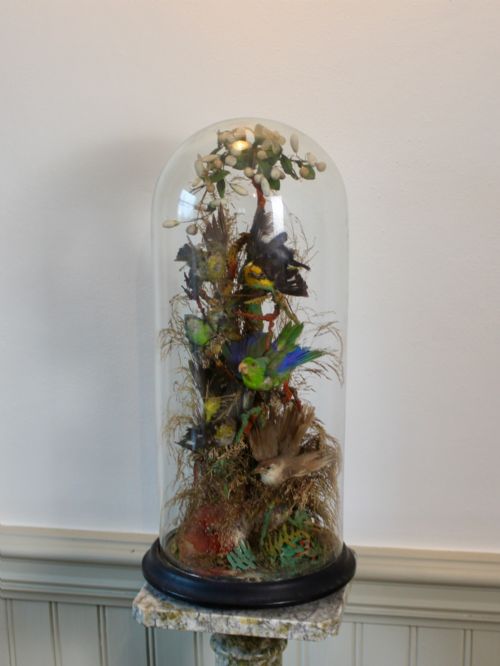
The most common examples on this page date from the Victorian period through to the early twentieth century. These include glazed wooden cases, shadow boxes, picture frame cases and glass domes containing individual birds or balanced pairs and trios.
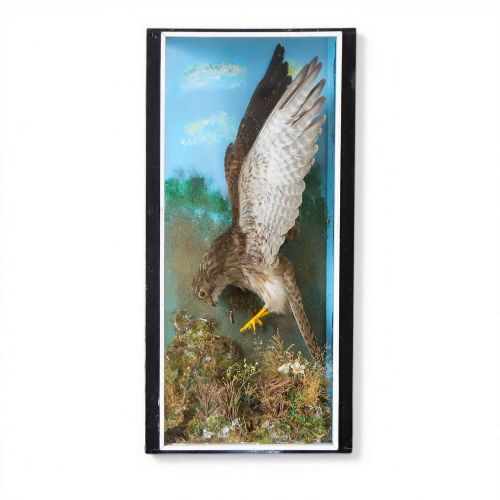
Compositions frequently incorporate painted backdrops, moss, paper and artificial snow scenes to mimic natural habitats. Specimens range from British birds such as kestrels, jays and pheasants to exotic parrots and hummingbirds originating from South America, New Guinea and Australia.
Materials and construction
Makers constructed enclosures primarily from wood and glass, frequently employing ebonised wood for frames alongside oak and painted timber. Interiors incorporated taxidermy specimens combined with preserved elements like moss, paper and natural flora to create convincing miniature landscapes.
Taxidermists utilised specialised mounting and stuffing techniques to shape bird skins over internal armatures, arranging feathers carefully to retain lifelike postures. Glazing protected the delicate plumage from dust, damp and handling while allowing clear visibility from multiple angles.
Object forms recorded here range from simple oak cases and picture frame boxes to flat-sided glass domes and detailed painted dioramas.
What determines quality
Quality rests significantly upon the skill of the taxidermist in capturing realistic anatomical proportions and natural alertness in the posed specimens. The complexity of the arrangement, from a solitary kestrel to a dense composition of mixed exotic birds, dictates the visual impact.
The craftsmanship of the housing itself matters greatly, distinguishing standard wooden boxes from ebonised frames, flat-sided glass domes or cases with detailed painted background scenes. Original components, including undamaged glass and undisturbed internal habitat materials, elevate the standing of a piece.
J Griffiths of Burford·Rowland Ward Ltd·T E Gunn·William Bazeley and Sons·James Gardner·W F Homer London
The Cased Bird Taxidermy Display Glossary
- Taxidermy specimen
- A preserved animal skin mounted over an artificial form to resemble the living creature. These form the primary focal point of every cased display.
- Ebonised wood
- Timber treated with a dark stain or finish to imitate ebony. This dark finish provides a formal, contrasting border around the glazed display cases.
- Dome
- A curved glass cover resting on a circular base used to enclose specimens. These offer an uninterrupted view of the taxidermy from all sides.
- Diorama
- A three-dimensional scene featuring preserved specimens set against a painted background. These create the illusion of birds inhabiting a natural environment.
Cased Bird Taxidermy Display: Frequently Asked Questions
How should I clean a glass taxidermy case?
Clean the exterior glass using standard glass cleaner applied to a cloth rather than directly to the surface, ensuring liquid does not seep into the joints. Avoid opening sealed historic cases, as internal humidity changes can damage fragile feathers.
Dust wooden frames gently with a dry, soft brush. Keep the display away from direct sunlight and damp environments to preserve the plumage and paper backdrops.
Where were these bird displays placed historically?
Victorian and Edwardian households positioned natural history cases in studies, libraries, and drawing rooms as conversation pieces and evidence of scientific curiosity. They reflected contemporary enthusiasm for ornithology and exploration.
Today, they serve a similar decorative role in domestic spaces, often displayed on sideboards, mantelpieces or mounted directly onto walls.
How do I identify a Victorian bird case?
Victorian examples frequently utilise ebonised wooden frames, heavy glass, and handwritten species labels pasted inside the case. The taxidermy style often incorporates simple painted backdrops or natural moss and twigs.
Later Edwardian and twentieth-century versions sometimes feature lighter oak frames, brighter painted scenery, or altered construction methods that distinguish them from nineteenth-century work.
Are single bird cases rarer than multi-bird displays?
Single specimens like owls, kestrels or kingfishers appear regularly, often mounted to showcase a specific British species in fine detail. Multi-bird compositions require complex grouping and balancing of several specimens within a single enclosure.
Both single subjects and large multi-bird cases were popular, with rarity depending more on the specific maker and condition than the quantity of birds inside.