






Carved Wooden Trolley
A carved wooden trolley serves tea, holds bottles, or displays dishes, bringing solid Victorian, Edwardian, and Georgian craftsmanship straight to your dining room.
Carved Wooden Trolley
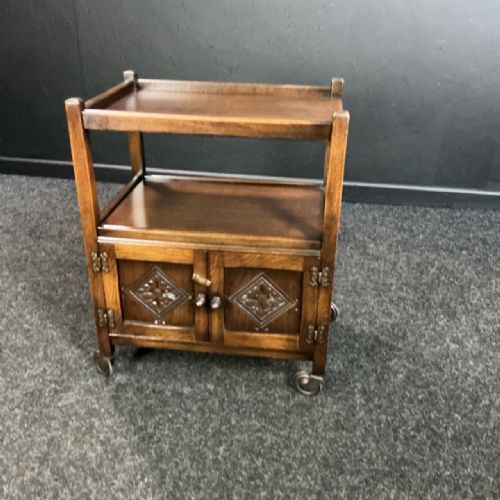
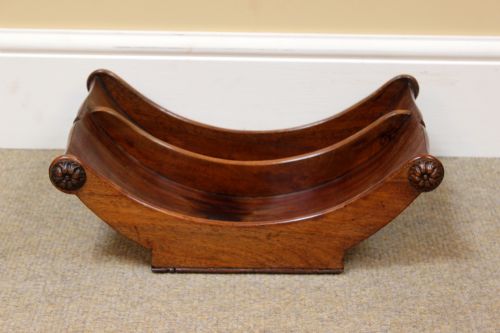
When you search for a carved wooden trolley, you encounter practical serving furniture ranging from Georgian cheese coasters to Victorian tiered stands and Edwardian afternoon tea trolleys. These pieces span several decades and styles, including Jacobean Revival, English Country, French Folk Art, Chinese Export, and Anglo-Indian designs.
The origins stretch across English workshops, French provincial settings, and international trade routes like Chinese export and Indian production. Each form reflects the specific domestic needs of its era, from formal dining room service to casual afternoon tea.
How they were made
Makers utilised dense timbers such as mahogany, oak, walnut, and exotic hardwoods to construct these serving pieces. Carpenters employed robust joinery techniques to support multiple tiers, lift-off trays, and movable wheels.
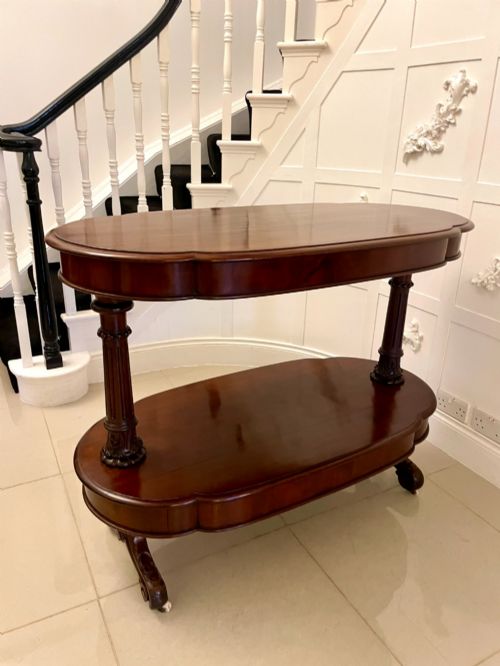
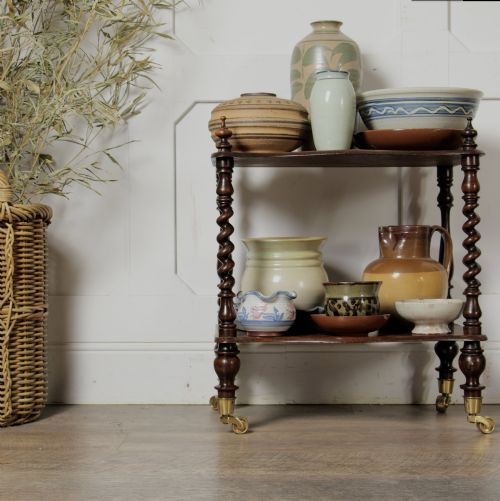
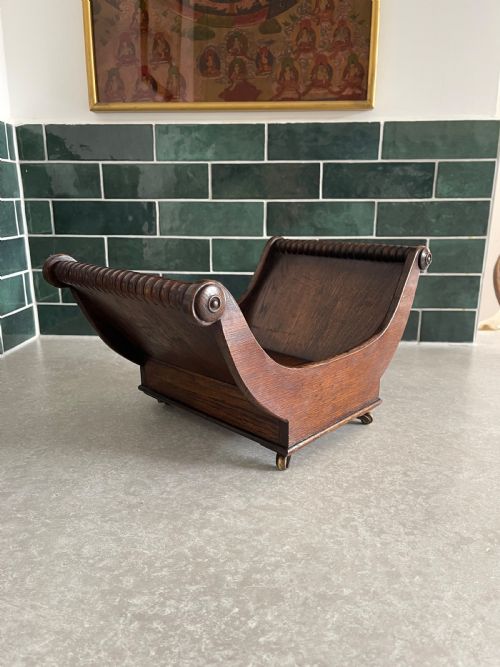
Carving defines the decorative surface work, appearing as barley twist supports, turned columns, and detailed foliage motifs. Brass castors, metal fittings, and glass inserts frequently complement the woodwork to ensure smooth mobility and practical utility.
Carved Wooden Trolley Retail Price Guide 2026
Typical asking prices for carved wooden trolley among the pieces listed under this phrase on Sellingantiques today, from the lower quarter to the upper quarter. They describe what is for sale here now, not the wider market.
A French butcher shop once utilised a rustic cow trolley for display, proving that antique wheels carry more than just tea.
What varies in quality
The calibre of timber selection and the depth of hand-carving separate standard pieces from exceptional examples. Dense, well-figured mahogany or richly grained walnut indicates a higher standard of production.
The execution of mechanical elements, such as rise and fall mechanisms, adjustable shelves, and the smooth movement of wheels on castors, dictates the tier of craftsmanship. Superior construction ensures stability across multi-tiered dumb waiters and tea trolleys alike.
Maple & Co
The Carved Wooden Trolley Glossary
- Dumb Waiter
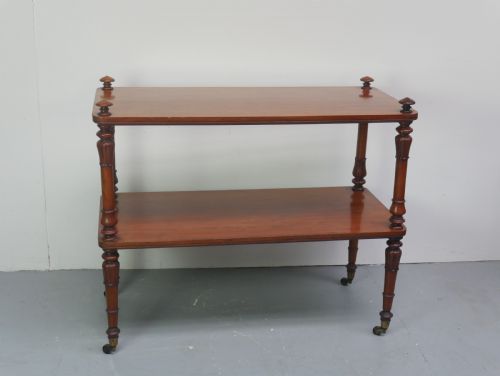
- A tiered serving stand designed to hold dishes or drinks without requiring a servant at the table. These freestanding pieces often feature two or three graduating shelves.
- Cheese Coaster
- A small, low tray or trolley, frequently in mahogany or oak, made to slide along a dining table for port and cheese service. Some examples include wheels or rollers.
- Barley Twist
- A turned wood column resembling a twisted rope, commonly seen on the upright supports of Victorian and Edwardian stands. This decorative woodworking technique adds distinct vertical texture.
- Lift-Off Tray
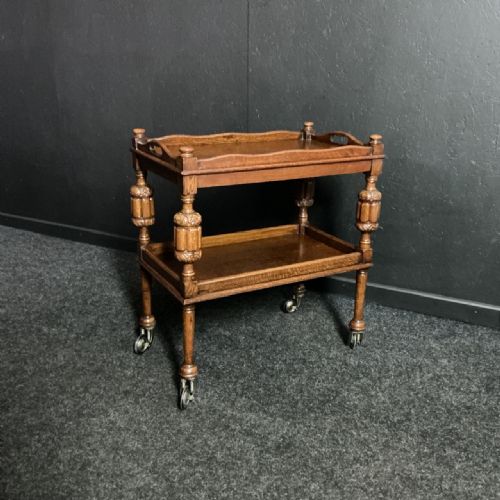
- A removable upper section of a trolley that functions as an independent serving tray. This practical feature allows users to carry items directly from the trolley to the table.
Carved Wooden Trolley: Frequently Asked Questions
What is a dumb waiter?
A dumb waiter is a multi-tiered stand used in dining rooms to hold dishes, glasses, or bottles. They allowed diners to serve themselves without staff present.
Most examples feature two or three graduating shelves supported by a central column or corner pillars.
How do I use a tea trolley today?
A tea trolley functions effectively as a mobile drinks cabinet, a bedside table, or a display surface for plants and books. Their wheels allow you to move them easily between rooms.
Model types with removable trays offer extra convenience when serving guests.
Are these trolleys sturdy enough for daily use?
Traditional pieces constructed from solid mahogany, oak, or walnut remain robust and functional. Their original joinery is designed to support heavy tableware and bottles.
Checking the tightness of the frame and the condition of the castors ensures safe movement across floors.
How do I identify the period of a trolley?
Dating relies on timber choice, carving styles, and hardware details like brass castors. Georgian and Victorian pieces show heavier woods and hand-carved motifs, while Edwardian versions lean towards lighter tea trolley designs.
Reference points include documented workshop labels and revival styles popular in specific decades.