
Carved Wooden Trestle Table
A carved wooden trestle table offers robust architecture and historic timber that anchor a dining room or hall with enduring utility.
Carved Wooden Trestle Table
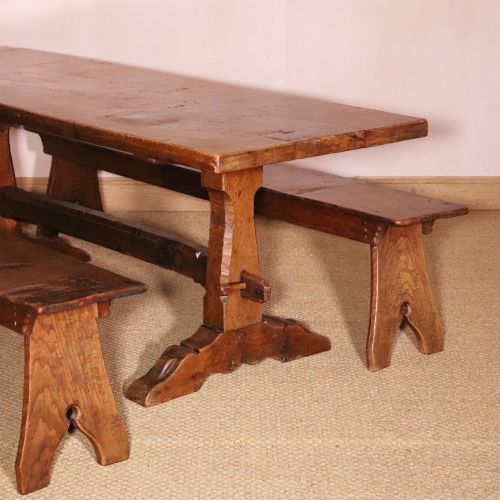
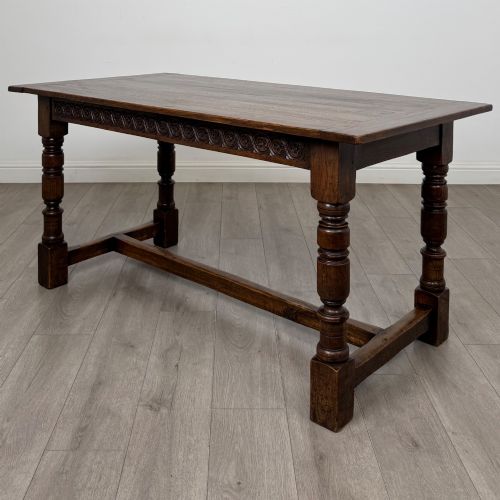
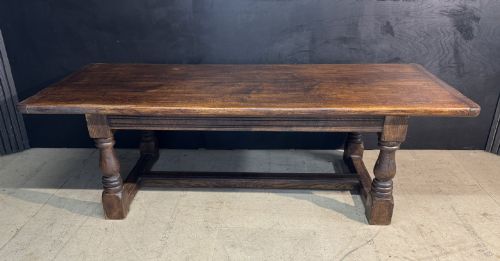
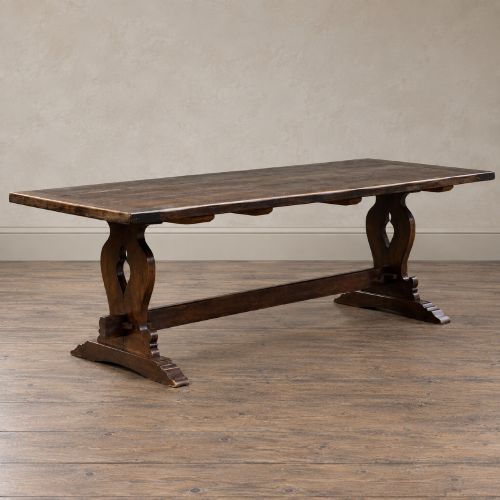
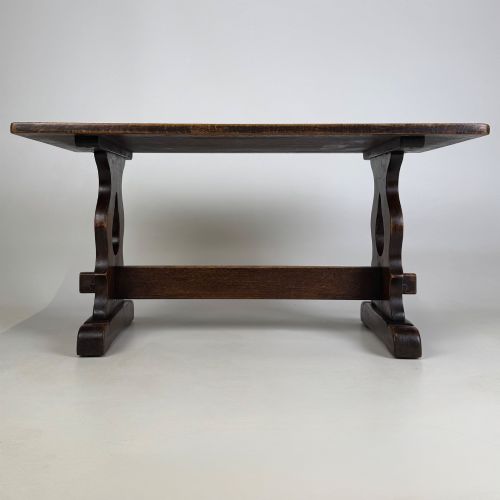
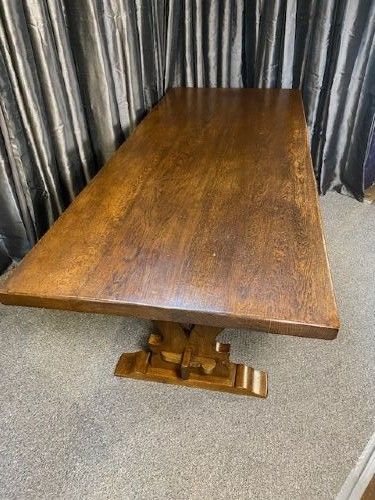
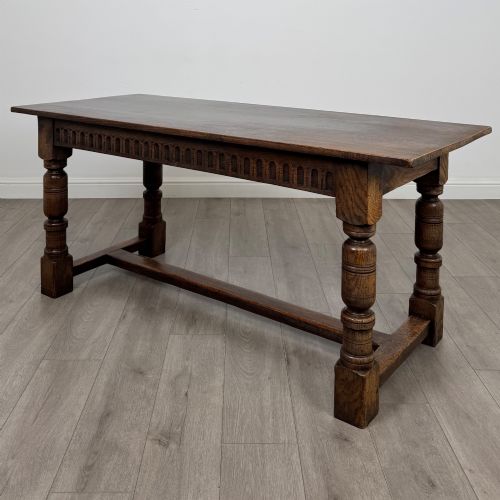
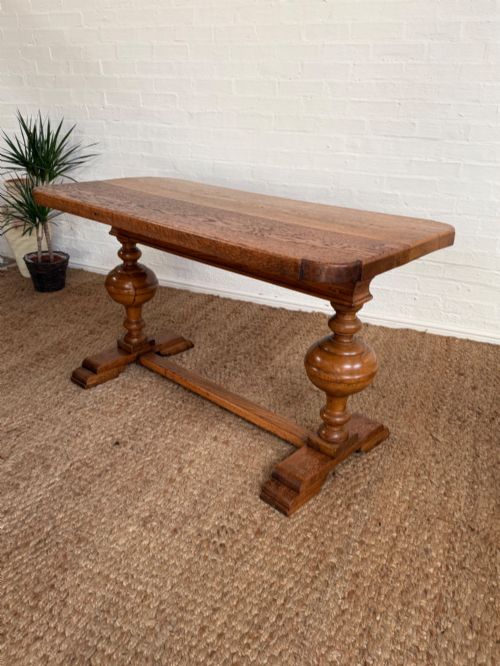
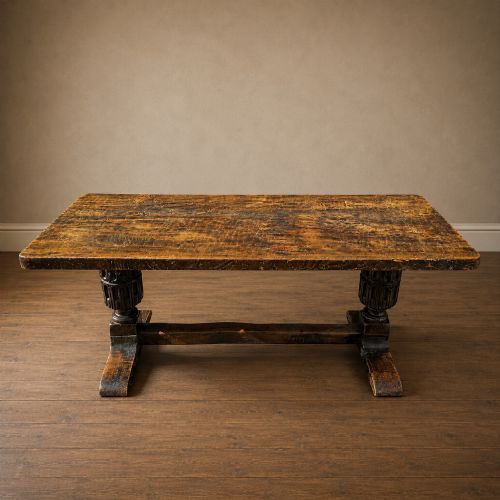
A carved wooden trestle table combines sturdy supporting uprights with a horizontal beam, creating an open base beneath a substantial planked top. Buyers searching for a carved wooden trestle table typically encounter refectory and farmhouse formats built primarily for communal dining or heavy daily use.
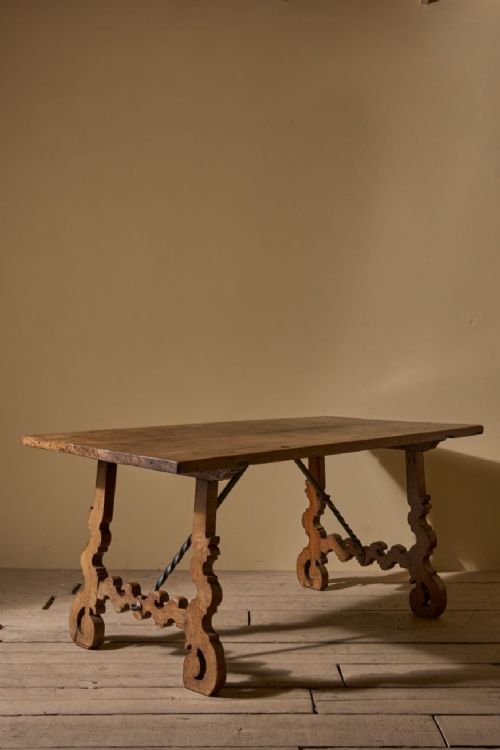
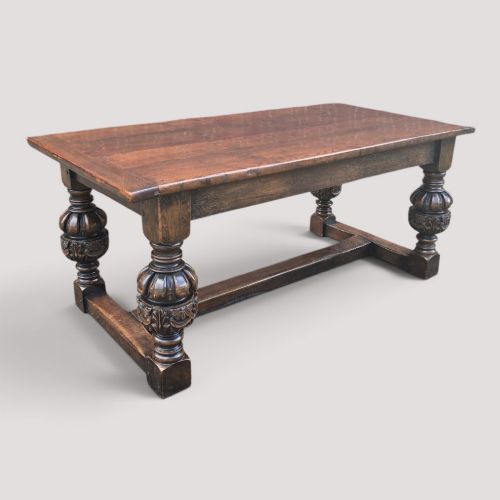
The selections span centuries from the seventeenth century through the Edwardian era, featuring regional variants such as Spanish walnut and English oak. Early examples display thick single-plank surfaces and hand-carved friezes, while later interpretations lean into Jacobean revival styles and rustic farmhouse traditions.
Formats range from large dining tables seating twelve down to compact coffee tables and console pieces. Oak dominates the selection, accompanied by walnut, pine, and elm, often retaining patinated surfaces developed through generations of domestic service.
Materials and construction methods
Makers relied on native hardwoods like oak and elm, joined by traditional pegged mortise and tenon framing that allowed timber to expand and contract naturally. Tabletops frequently utilise solid timber planks secured to robust trestle ends with wooden pins rather than modern metal fasteners.
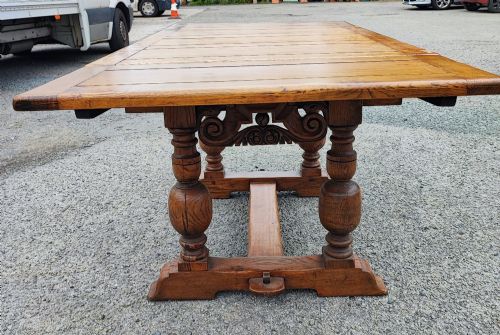
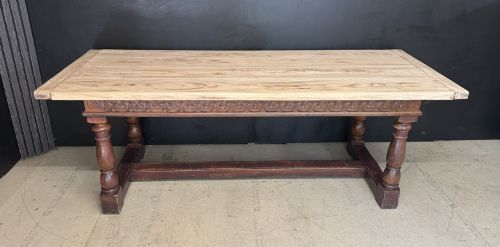
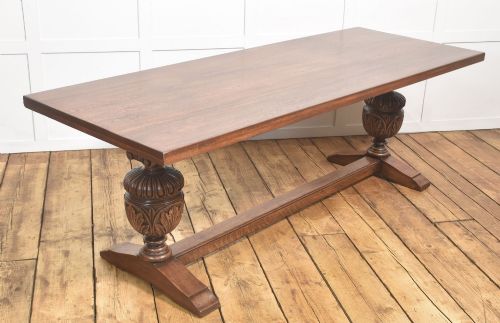
Carving was executed by hand using gouges and chisels directly into the structural rails and friezes, displaying geometric patterns, strapwork, or foliate motifs. Surface finishes were traditionally maintained with wax or oil, protecting the wood while building deep patination over decades of handling.
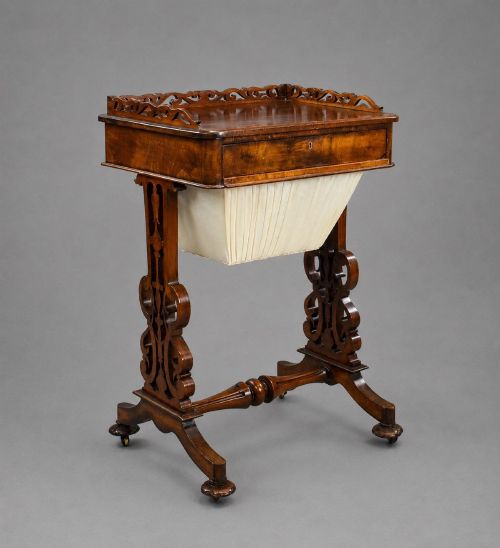
The inventory encompasses dining tables, coffee tables, benches, console tables, and games tables.
Assessing quality and authenticity
Quality rests primarily in the integrity of the timber and the retention of original components such as the top, base, and joining pegs. Tables that retain their original surface patination and early plank tops command greater attention than pieces assembled from mismatched historical timber.
The depth and crispness of the hand-carving distinguish superior examples from later revival pieces where decoration can appear mechanical or superficial. Structural stability depends on the tightness of the joinery and the weight of the timber utilised in the trestle supports.
Heals Of London
The Carved Wooden Trestle Table Glossary
- Refectory table
- A long dining table traditionally used in monastic refectories and later adopted for domestic dining rooms.
- Trestle ends
- Upright vertical supports connected by a central horizontal stretcher to distribute weight evenly beneath the tabletop.
- Plank top
- A surface constructed from two or more wide boards of solid timber joined edge-to-edge.
- Patina
- The lustrous surface sheen developed on wood through age, wear, and repeated polishing.
- Mortise and tenon
- An interlocking joint where a protruding tongue fits securely into a corresponding cavity.
Carved Wooden Trestle Table: Frequently Asked Questions
How do I seat guests around a trestle table?
The recessed position of trestle supports allows diners to sit along the entire length without obstruction from corner table legs.
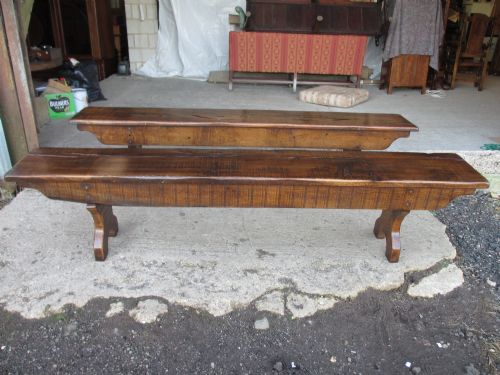
Benches are often paired with these tables to accommodate flexible seating arrangements in informal dining spaces.
Are these tables suitable for daily family use?
Hardwood construction in oak and elm provides exceptional durability that withstands heavy daily demands.
Regular waxing protects the surface moisture barrier while maintaining the historic finish of the timber.
How do I distinguish seventeenth-century oak from revival pieces?
Early pieces display distinct tool marks, hand-carved details, and shrinkage patterns unique to manual conversion methods.
Revival furniture produced during the nineteenth and twentieth centuries often exhibits uniform machine sawn timber dimensions.
What is the function of the central stretcher?
The horizontal stretcher locks the two vertical trestle ends together to prevent lateral movement and twisting.
This structural brace absorbs the downward pressure exerted on the tabletop during everyday use.