

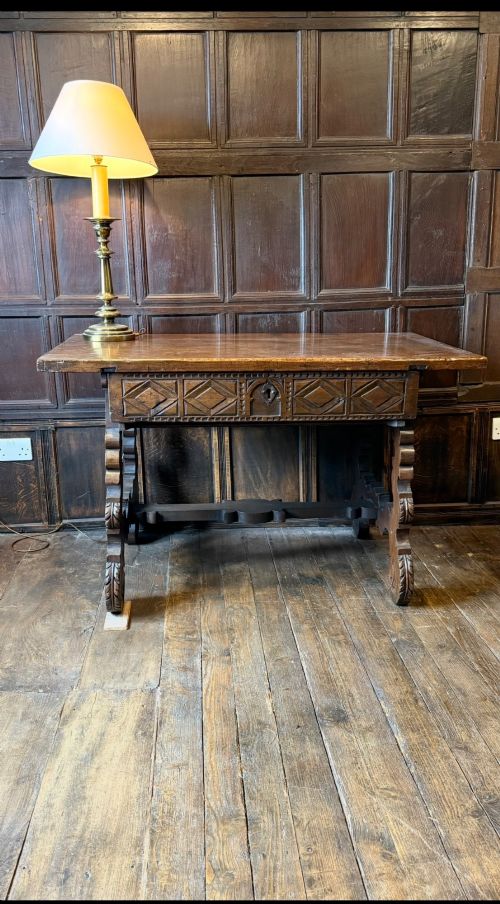

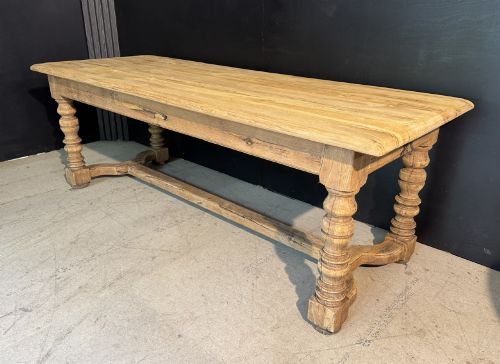


Carved Wooden Trestle Desk
These carved wooden trestle desk examples unite sturdy architectural supports with rich cabinet woods, offering a practical workspace rooted in centuries of furniture design.
Carved Wooden Trestle Desk
A carved wooden trestle desk brings together robust timber construction and traditional support frameworks, drawing on centuries of historical influence. When you search for this phrase, you encounter pieces that range from early walnut examples to later oak and mahogany interpretations.
The selections on this page span several key periods, notably the seventeenth, eighteenth, and nineteenth centuries, alongside Edwardian and nineteen-twenty pieces. Forms vary from sturdy refectory styles to library tables and writing tables equipped with practical drawers.
Spanish and French influences emerge frequently through walnut, fruitwood, and oak construction. The underlying support systems utilise trestle frames, X-frames, and heavy pillars rather than standard four-leg arrangements.
Materials and construction methods
Solid cabinet woods form the core of these pieces, with walnut, oak, mahogany, and fruitwood providing the primary structural strength and surface area. Artisans selected these hardwoods for their durability and capacity to hold deep carved detail along edges and supports.
Secondary materials such as wrought iron and leather appear selectively to reinforce joints or provide smooth writing surfaces. Joinery relies on traditional pegged joints, heavy stretchers, and sturdy trestle bases designed to bear significant weight.
Carved Wooden Trestle Desk Retail Price Guide 2026
Typical asking prices for carved wooden trestle desk among the pieces listed under this phrase on Sellingantiques today, from the lower quarter to the upper quarter. They describe what is for sale here now, not the wider market.
Listings feature woods spanning walnut, oak, mahogany, rosewood, fruitwood, pitch pine, and satinwood across the seventeenth to twentieth centuries.
Judging quality in construction and timber
The standard of a carved wooden trestle desk rests on the selection of timber and the depth of the hand-carved ornamentation. Denser grain patterns in walnut and oak indicate superior material choice.
Construction rigidity defines the upper tier, where heavy trestle supports and stretchers remain firm without excessive modern reinforcement. Original surface patination and honest signs of age separate finer survivals from heavily restored examples.
The Carved Wooden Trestle Desk Glossary
- Trestle desk
- A workspace supported by two or more upright frames connected by a horizontal stretcher beam. This design provides open legroom beneath the top surface.
- Patina
- The deep sheen and surface character developed by wood over centuries of handling and exposure. It indicates genuine age and use.
- Fruitwood
- Timber sourced from fruit-bearing trees such as pear or cherry, utilised by cabinetmakers for its dense grain and warm tone. It takes fine carving exceptionally well.
- Refectory
- A long, narrow table style originally designed for communal dining halls. These pieces feature substantial wooden stretchers near the floor for added stability.
- X-frame
- A structural base formed by two intersecting diagonal timbers shaped like the letter X. This configuration offers both lateral stability and visual distinction.
Carved Wooden Trestle Desk: Frequently Asked Questions
How do I care for an old wooden desk surface?
Maintain the timber by applying natural beeswax sparingly and buffing it with a soft cloth to preserve the finish. Avoid placing the desk near direct heat sources or strong sunlight to prevent timber splitting.
Keep liquids away from the bare wood and use protective pads beneath any metal objects or lamps placed on the top surface.
Can I use a historic table as a daily workspace?
Many solid timber writing tables and library tables suit modern computer or laptop use perfectly. Their generous proportions provide ample room for daily equipment while offering considerable aesthetic presence.
Verify the height and knee clearance against your chair to ensure comfortable seating during long working hours.
What distinguishes seventeenth-century furniture from Victorian pieces?
Seventeenth-century items generally display heavier solid walnut or oak construction with deeper, hand-chiselled linenfold or geometric carvings. Their structural joinery relies heavily on pegged tenons and thick stretcher rails.
Victorian interpretations often incorporate revival styles such as Gothic or Renaissance motifs, utilising mahogany, rosewood, or satinwood alongside machine-assisted precision.
How do I identify a trestle support structure?
A trestle structure consists of vertical end-supports connected by a long horizontal beam running near or along the floor. This architectural arrangement eliminates traditional corner legs to maximise legroom.
Look for pegged joints and heavy cross-bracing that lock the vertical pillars securely to the top surface.