
Carved Wooden Tallboy
A carved wooden tallboy provides substantial storage space while maintaining vertical elegance through tiered drawers and period craftsmanship.
Carved Wooden Tallboy
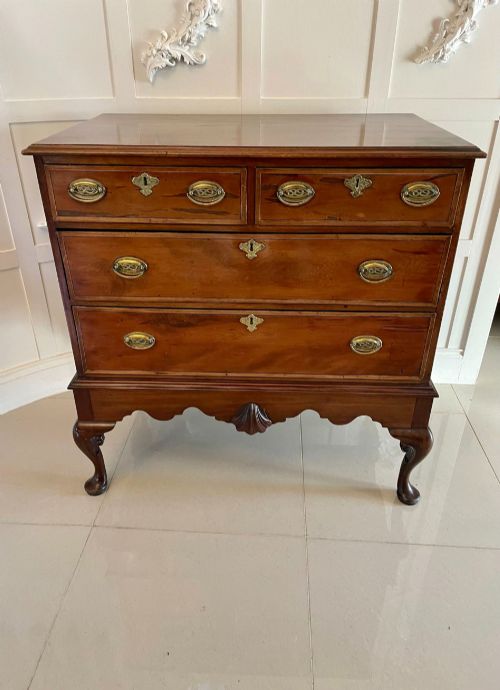
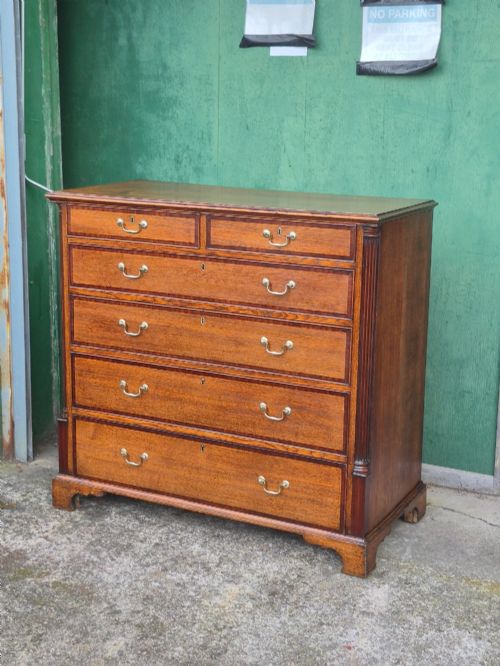
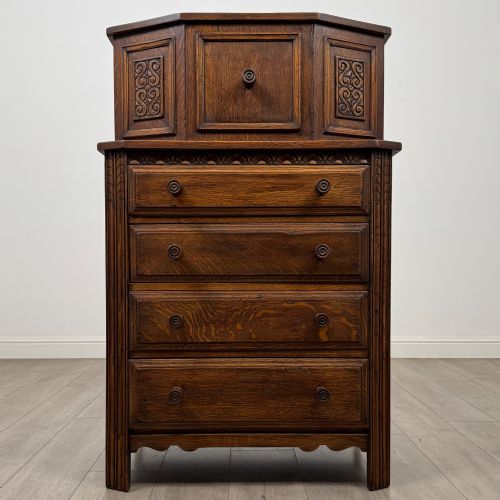
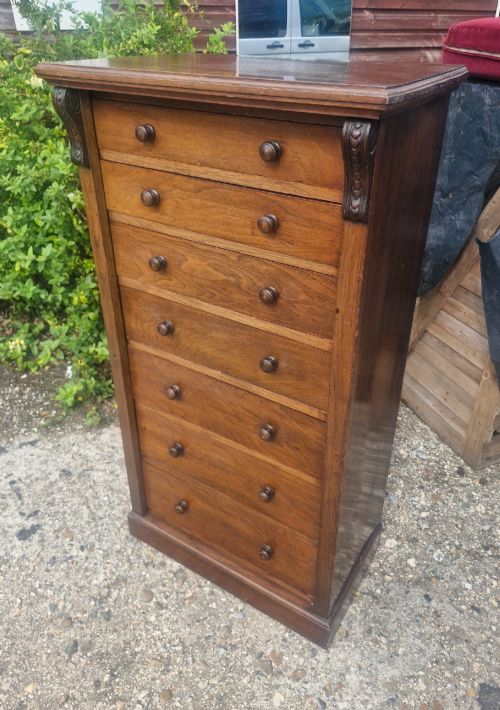
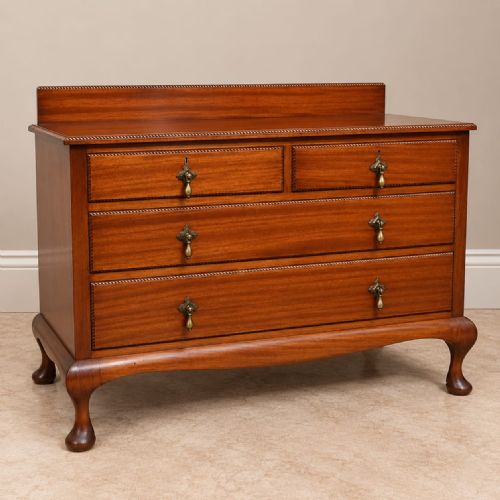
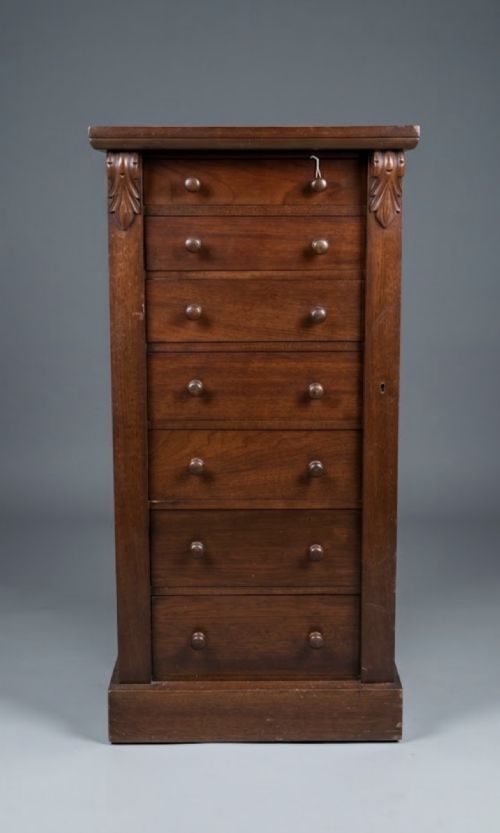
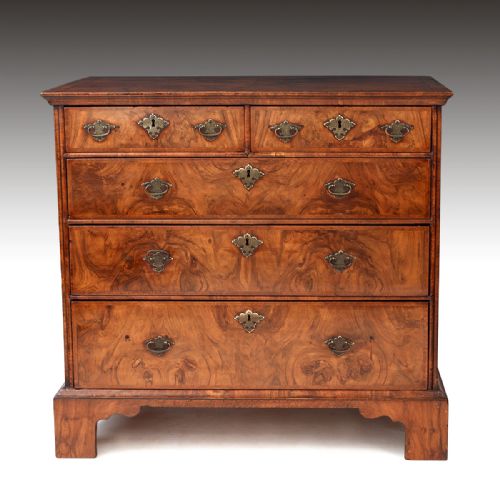
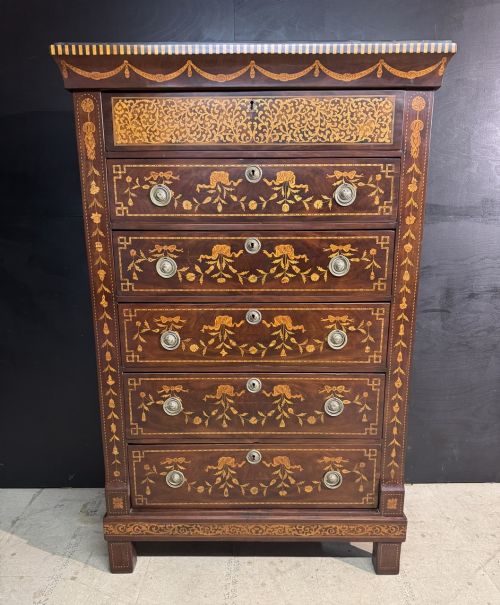
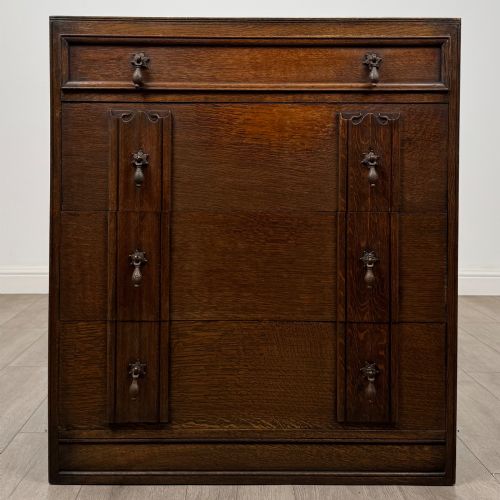
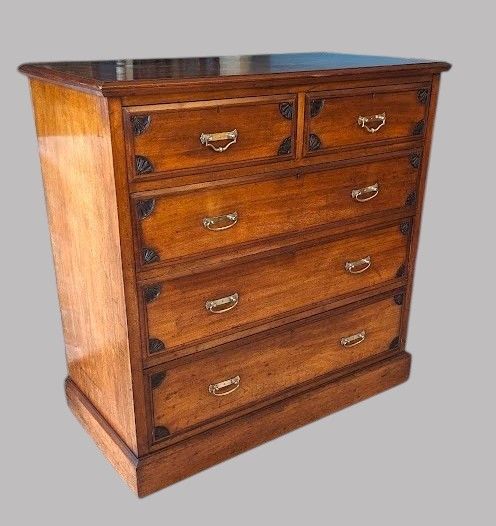
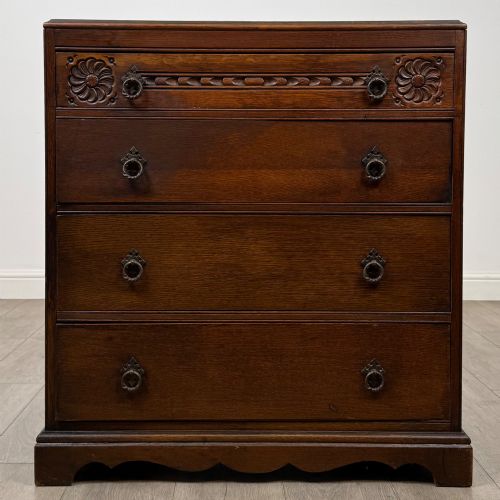
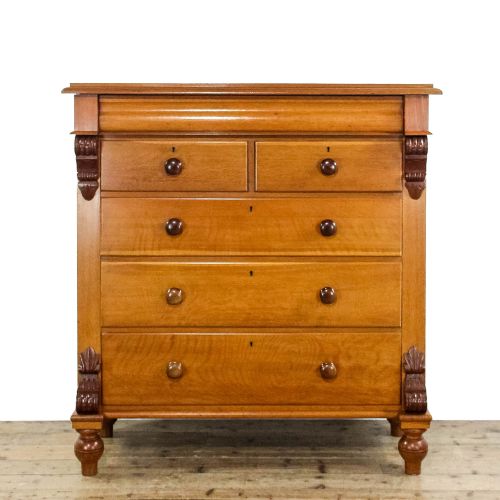
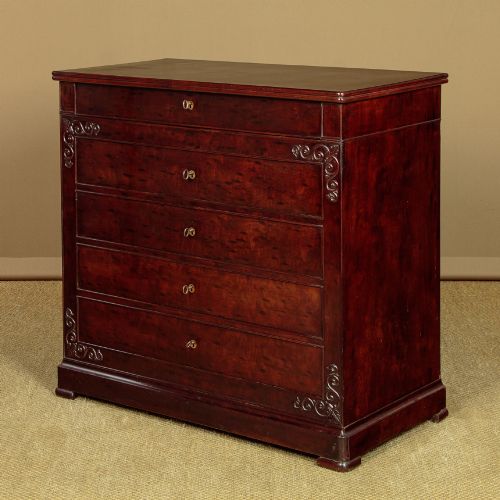
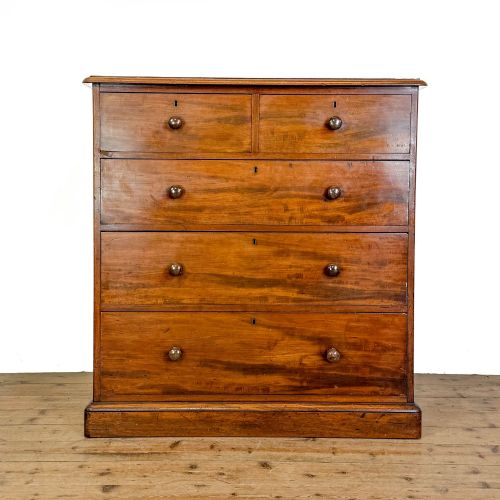
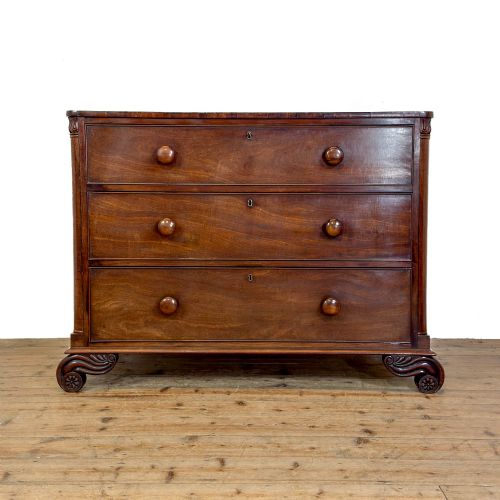
A carved wooden tallboy sits among chests of drawers and linen presses designed for vertical storage. The pieces seen here span Victorian, Edwardian, and eighteenth-century periods, showing regional variation across British, continental, and Scandinavian workshops.
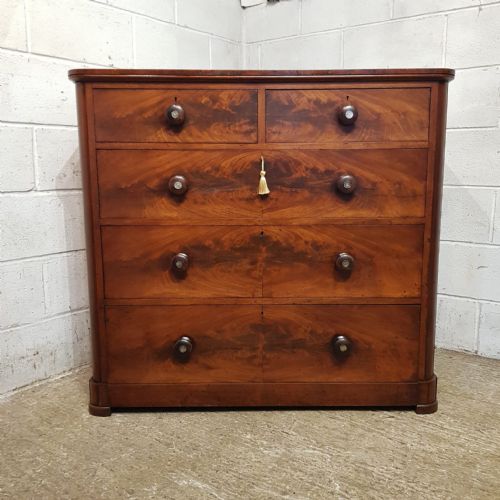
Buyers meet pieces fashioned from mahogany, walnut, and oak, often incorporating flame veneer, burr walnut, or satinwood surfaces. The forms range from straightforward chest configurations to linen presses and cabinets raised on stands or legs.
How they were made
Cabinet makers utilised solid hardwoods such as mahogany, oak, and walnut, frequently applying fine veneers to primary display surfaces. Carved details and moulded cornices required skilled hand-tool work to shape dense timber.
Drawer construction relied on traditional joinery techniques, paired with brass hardware and occasionally marble tops or marquetry inlays. Carved wooden elements were integrated directly into the structural frames or applied as decorative motifs.
Some tallboys hide secret compartments behind decorative mouldings, giving owners a private spot for small valuables.
What varies in quality
The degree of refinement in timber selection separates standard examples from exceptional ones, particularly when flame mahogany veneer, burr walnut, or satinwood figure prominently. Superior pieces display thoughtful grain matching across drawer fronts and harmonious proportions.
The crispness of carved wooden details and the integrity of the original hardware influence the overall standing of an item. Heavier construction and careful secondary wood use inside the drawer linings signal better workshop origin.
The Carved Wooden Tallboy Glossary
- Tallboy
- A tall chest of drawers, often constructed in two sections with multiple tiers to maximise vertical storage.
- Flame mahogany veneer
- A thin slice of mahogany timber cut from the fork of the tree to create a dramatic, flame-like grain pattern.
- Burr walnut
- Timber taken from a walnut tree growth that produces swirling, highly figured knot patterns across the surface.
- Marquetry
- Decorative veneer work arranged in pictorial or geometric patterns using various coloured woods.
- Bow front
- A cabinet or chest design featuring a gently curved, convex front facade.
Carved Wooden Tallboy: Frequently Asked Questions
Where should I put a tallboy?
A tallboy suits bedrooms, hallways, or living spaces where floor space is limited but vertical storage is required.
Ensure the room has sufficient ceiling clearance and keep the piece away from direct heat sources to protect the wooden structure.
How do I clean wooden surfaces?
Dust the timber regularly with a soft, dry cloth to prevent dirt accumulation on the carved details and polish.
Apply natural beeswax periodically to nourish the mahogany, oak, or walnut and maintain a protective finish.
Are these drawers suitable for daily use?
Period drawers function effectively for garment storage when handled with care and kept in stable humidity conditions.
Avoid overloading individual drawers to protect the traditional joints and base boards from strain.
How do I identify the period?
Examine the secondary woods, handle fixings, and overall silhouette to distinguish between Georgian, Victorian, and Edwardian styles.
Construction methods such as dovetailing and timber choice often provide clear indicators of the manufacturing era.