



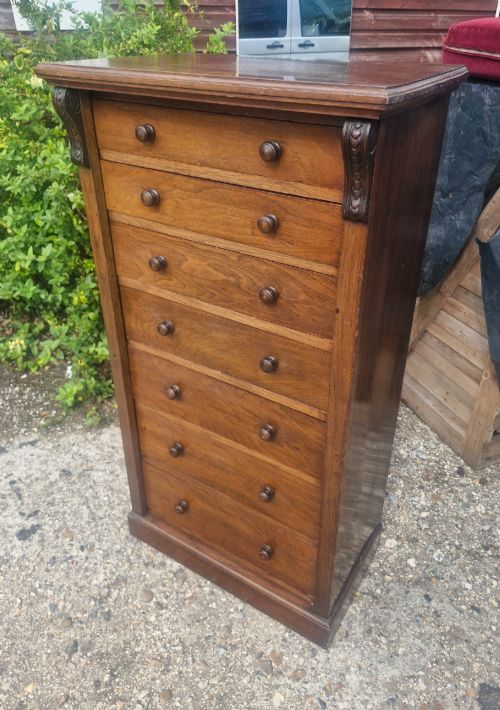
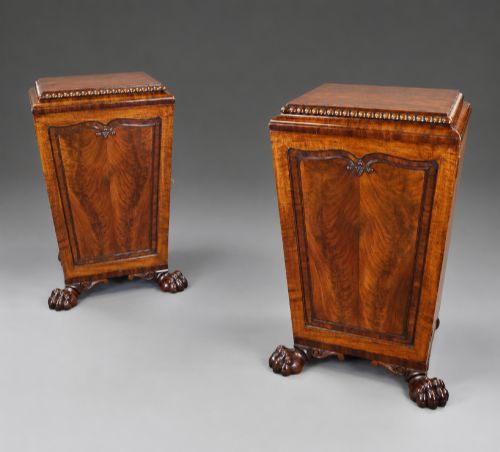
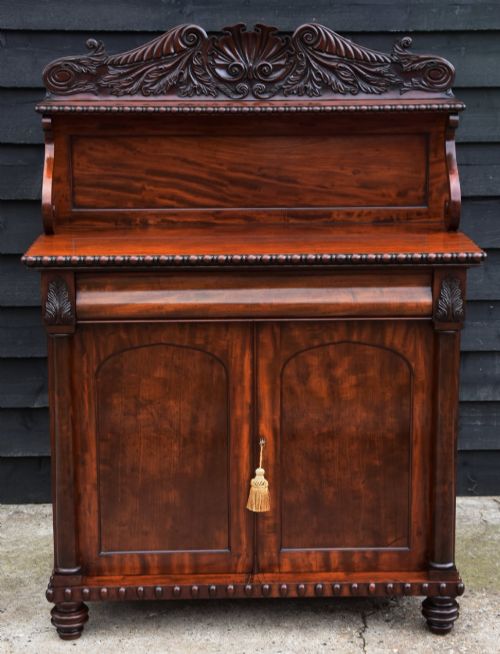

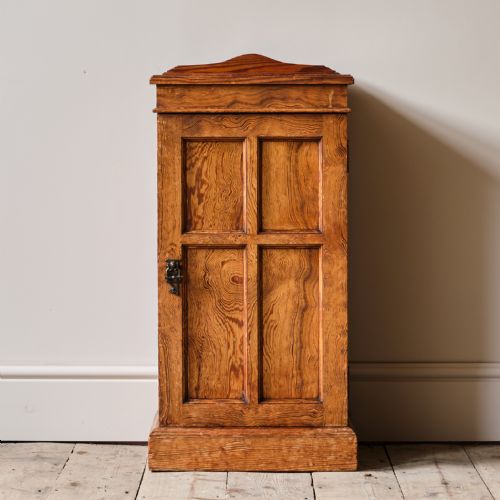
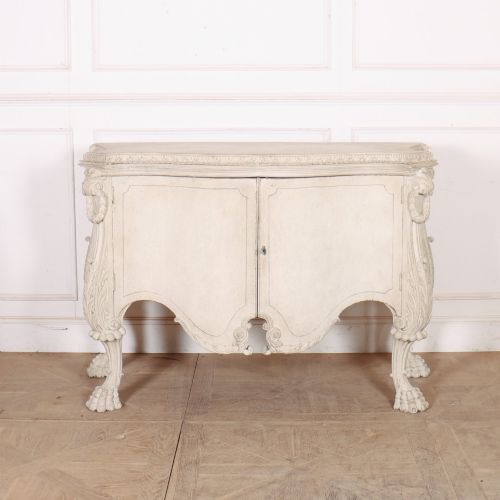
Carved Wooden Side Cabinet
A carved wooden side cabinet anchors a room with storage and presence, drawing the eye through solid timber and hand-chiselled detail.
Carved Wooden Side Cabinet
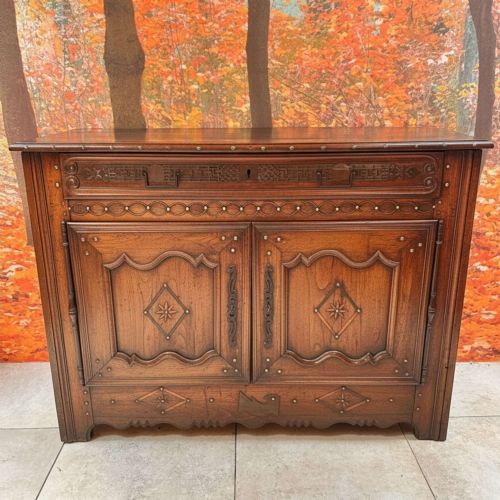
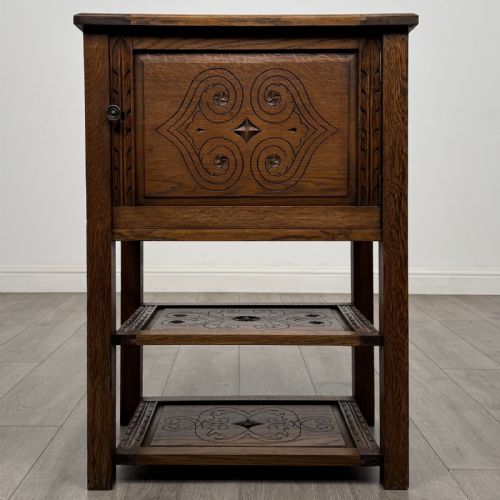
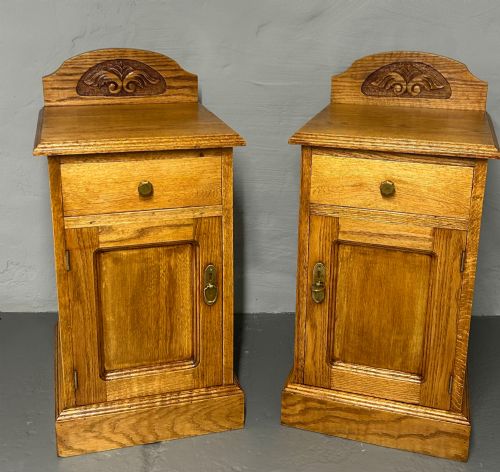
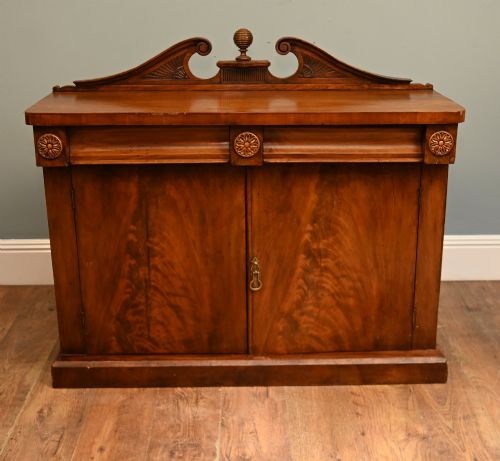
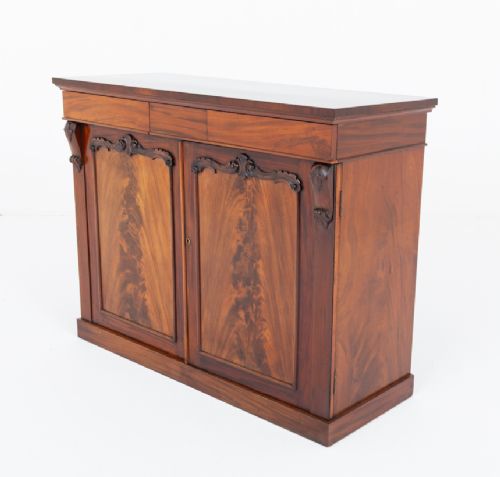
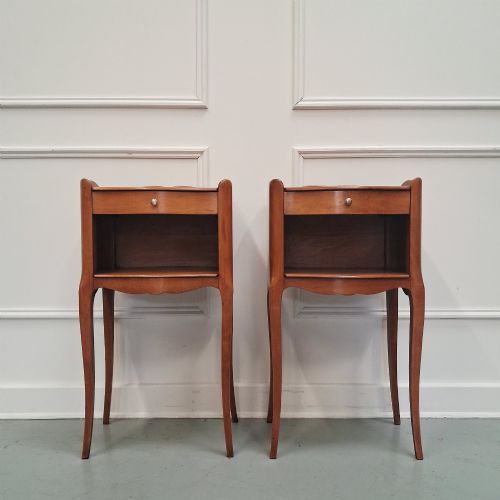
A carved wooden side cabinet encompasses a diverse group of storage furniture found across the nineteenth century and into the early twentieth century. These pieces range from compact bedside cupboards and lamp tables to substantial chiffoniers, pedestal cabinets, and low sideboards.
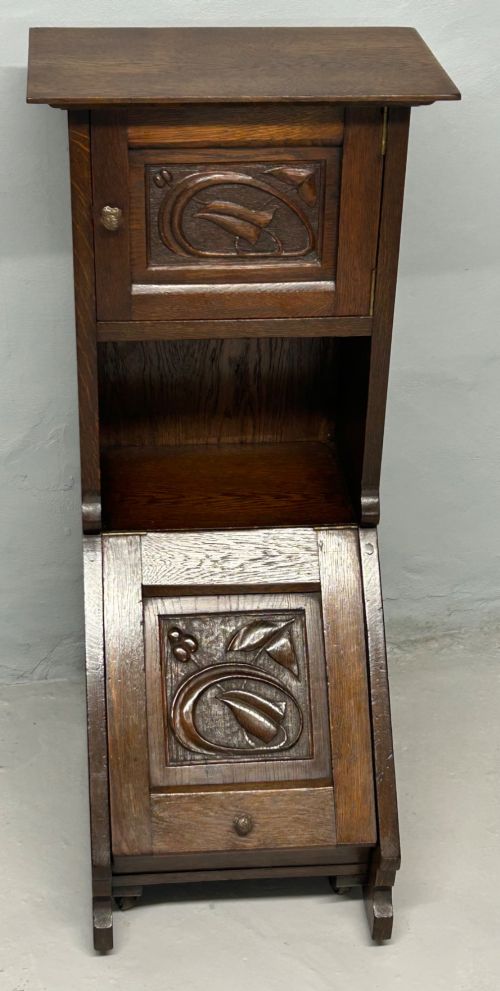
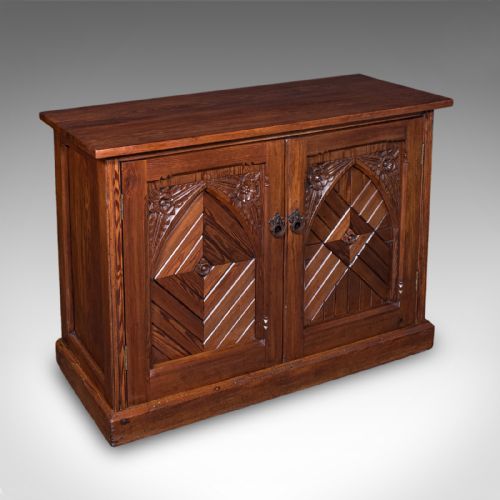
The versions most commonly met on this page include Victorian burr walnut and mahogany cupboards alongside oak pieces bearing Gothic Revival, Jacobean, or Arts and Crafts influence. Makers shaped them for specific domestic needs, resulting in variations like open shelves, drop-leaf surfaces, and enclosed two-door compartments.
Origins stretch across English workshops, French provincial centres, and Anglo-Indian production, bringing regional timber choices and decorative traditions into the category. Buyers select them to add character and functional surface area to hallways, bedrooms, and reception rooms.
Materials and technique
Cabinet-makers relied heavily on hardwoods such as mahogany, oak, and walnut, often selecting figured veneers like burr walnut or flame mahogany to cover primary surfaces. Pine and cedar appeared frequently in carcases and internal framing, while exotic timbers like satinwood and padauk surfaced in specialised Anglo-Indian commissions.
Carving formed the primary decorative vocabulary, executed directly into the solid timber or applied via separate mouldings in styles ranging from flamboyant Gothic to restrained Jacobean revivals. Joinery relied on traditional housing, dovetails, and mortise-and-tenon methods, paired with brass handles and hinges that completed the structural integrity.
Carved Wooden Side Cabinet Retail Price Guide 2026
Typical asking prices for carved wooden side cabinet among the pieces listed under this phrase on Sellingantiques today, from the lower quarter to the upper quarter. They describe what is for sale here now, not the wider market.
Listings feature woods like mahogany, oak, walnut, and pine across Victorian, Regency, and Arts and Crafts styles.
Design and execution
Quality separates along the ambition of the carving and the selection of the timber. Top-tier pieces display crisp, deep relief work carved directly into dense hardwoods rather than cast composition ornaments pinned to softer woods.
The choice of veneer dictates visual richness, with book-matched burr walnut or figured mahogany commanding greater presence than plain stock. Secondary woods, drawer linings, and the smoothness of internal construction further distinguish standard utility pieces from exceptional studio or cabinet-maker output.
Gabriel Viardot
The Carved Wooden Side Cabinet Glossary
- Chiffonier
- A low sideboard or cabinet equipped with enclosed lower storage and frequently a raised shelf tier above the top surface. It emerged as a popular dining or drawing room piece during the Regency and Victorian eras.
- Burr walnut
- A prized timber veneer harvested from the irregular growth excrescences of the walnut tree. It produces a dense, swirling grain pattern sought after for decorative cabinet facades.
- Gothic Revival
- A nineteenth-century design movement inspired by medieval architecture. Pieces in this style utilise pointed arches, tracery, and heavy chamfered mouldings.
- Padauk
- A dense tropical hardwood known for its deep colouration and fine grain. It appeared in elaborate nineteenth-century Anglo-Indian and colonial furniture.
Carved Wooden Side Cabinet: Frequently Asked Questions
Where should I place a side cabinet?
These compact pieces suit entrance halls, tight landings, or beside a bed where surface space and enclosed storage are both required. Their modest footprints allow them to fit against walls that cannot accommodate a full-size sideboard.
Matching the timber tone to existing furniture helps the piece anchor a room without overwhelming surrounding decor.
How do I identify a Victorian piece?
Victorian examples often feature dense timbers like mahogany and burr walnut, accompanied by deep-relief carving or symmetrical panel doors. Look for hand-cut dovetails inside drawers and traditional timber backboards rather than modern plywood.
Period hardware, including brass escutcheons and turn-latches, provides further clues to a piece's age and manufacturing origin.
What is the difference between a chiffonier and a side cabinet?
A chiffonier typically includes a raised superstructure or shelf tier supported by small pillars above the main surface. Side cabinets offer a flat top surface and a strictly box-like form dedicated to internal shelf or drawer storage.
Both serve similar functional roles in domestic settings but reflect different stylistic fashions across the nineteenth century.
How do I care for antique wood?
Keep wooden surfaces away from direct heat sources and strong sunlight to prevent the timber and delicate veneers from drying out or splitting. Dust regularly with a dry cloth and apply a quality beeswax periodically to nourish the grain.
Avoid silicone-based polishes that can build up a cloudy residue over old French polish or wax finishes.