

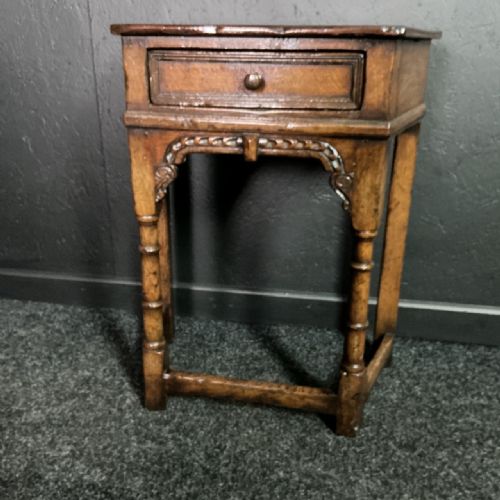


Jacobean Style Bedside Table
These jacobean style bedside table pieces bring heavy timber and historic character to a bedroom.
Jacobean Style Bedside Table
When you search for a jacobean style bedside table, you meet sturdy timber furniture rooted in early twentieth century revivals. The pieces on this page primarily date from the 1920s and 1930s, capturing the heavy proportions of earlier English design.
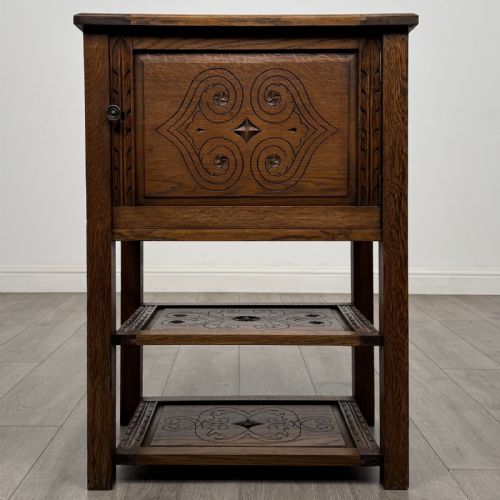
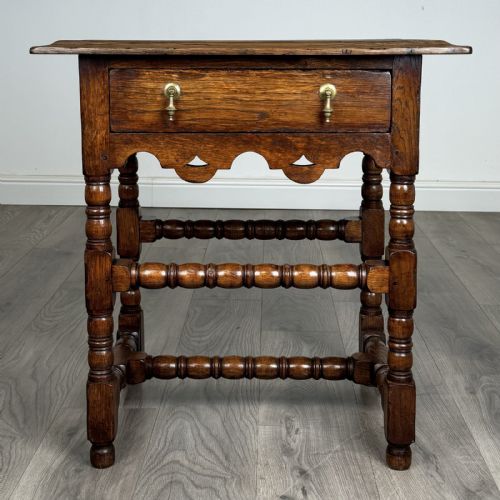
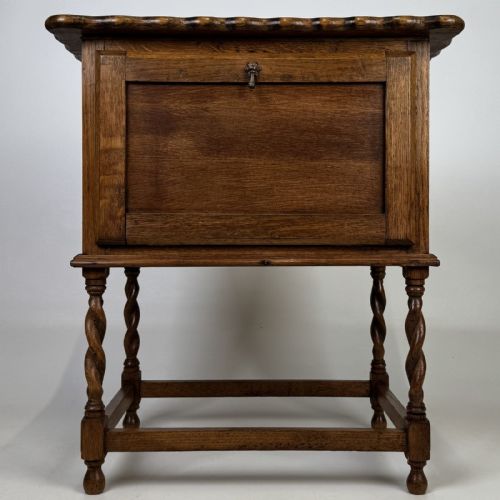
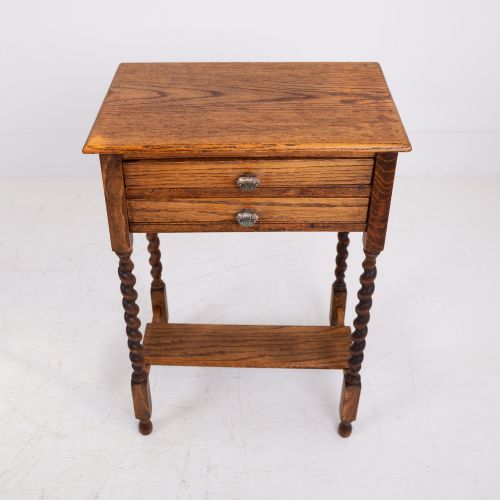
Most examples take the form of small side tables, bedside cabinets, or compact side cupboards. These items offer practical bedside storage whilst channelling historic English country aesthetics through dark wood and panelled construction.
Makers of this era frequently incorporated carved friezes, drawers, and raised stands into their domestic cabinets. Pairs appear alongside single pieces, giving buyers options for matching bedroom layouts.
Materials and Construction
Oak dominates the construction of these items, providing the solid carcass and heavy grain characteristic of the revival style. Cabinet makers utilised this durable hardwood for both structural frames and decorative panels.
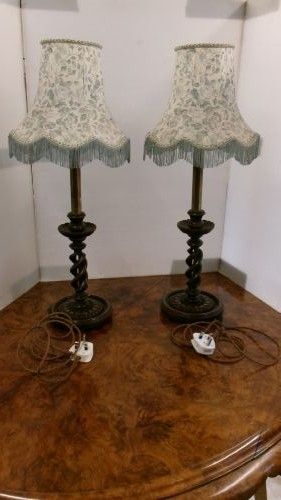
Metal fittings such as brass and iron appear on handles, hinges, and structural brackets. Selected pieces also incorporate fabric and fringe details, particularly on associated lighting or soft furnishings.
Jacobean Style Bedside Table Retail Price Guide 2026
Typical asking prices for jacobean style bedside table among the pieces listed under this phrase on Sellingantiques today, from the lower quarter to the upper quarter. They describe what is for sale here now, not the wider market.
Some cabinets hide carved friezes just beneath the top surface, offering a quiet historic detail for daily use.
Assessing Quality and Craftsmanship
The distinction between standard production and finer pieces lies in the depth and execution of the carved decoration. Crisp hand-carving on a frieze or drawer front elevates a basic cabinet into a more ambitious revival piece.
Proportion and timber selection also divide the range, with well-figured oak grain and balanced dimensions marking out better examples. The integrity of the original joints and the weight of the timber determine the enduring sturdiness of the cabinet.
The Jacobean Style Bedside Table Glossary
- Jacobean Revival
- A nineteenth and twentieth century style that imitates the architectural and furniture forms of the early seventeenth century. It relies heavily on dark oak and geometric carving.
- Frieze
- The horizontal decorative band running along the upper portion of a cabinet or table. Carvers often ornamented this area with stylized foliage or guilloche patterns.
- Cupboard on Stand
- A cabinet form elevated on legs rather than resting directly on the floor. This style lifts storage space to a more accessible height in a bedroom setting.
- English Country
- A vernacular design tradition prioritising utility and robust local timbers. Pieces in this idiom often display simpler lines than high-style urban furniture.
Jacobean Style Bedside Table: Frequently Asked Questions
What is a jacobean style bedside table?
A compact wooden cabinet or small table designed for bedside use during the twentieth century. It draws on seventeenth century English motifs like dark oak and carved panels.
These items provide surface space for a lamp and enclosed storage for nighttime essentials within a historically inspired format.
How old are these bedside tables?
The examples on this page date predominantly from the 1920s and 1930s. They belong to the interwar revival period when historic furniture styles enjoyed renewed popularity.
Makers utilised older design vocabulary while building functional pieces for modern homes of that era.
What wood is used?
Oak is the primary timber found across these listings. Its prominent grain and dense weight suit the revival aesthetic.
Hardware elements in brass and iron complement the dark timber construction.
How do I style one in a bedroom?
Place the cabinet beside the bed to anchor the room with dark wood texture. The top surface accommodates a lamp, while the cupboard or drawers hold personal items.
Pair matching tables for symmetry or use a single cabinet as an accent piece.