


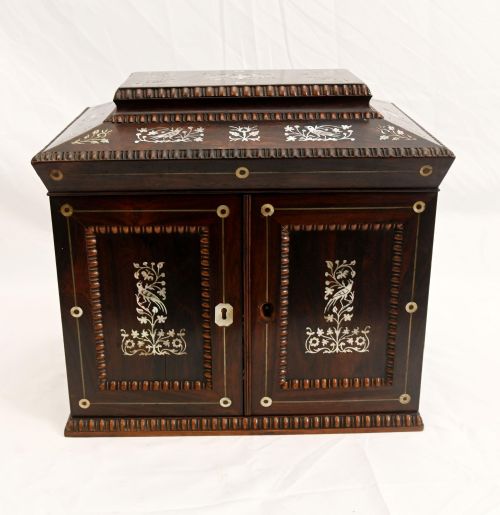


Carved Wooden Sarcophagus Box
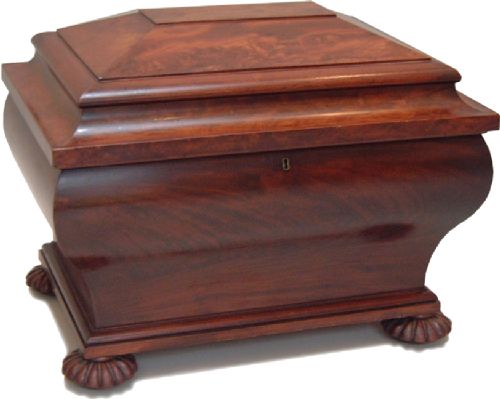
These carved wooden sarcophagus box items are substantial containers shaped like ancient tombs, built to hold tea, wine, or valuables with architectural gravity.
Carved Wooden Sarcophagus Box
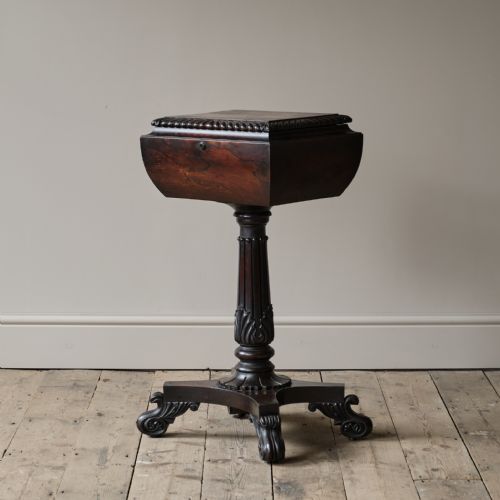
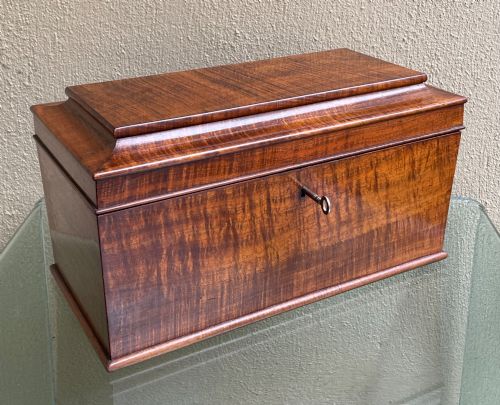
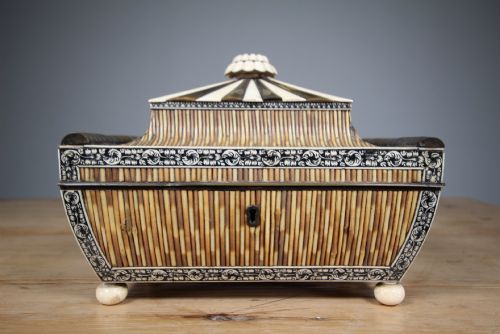
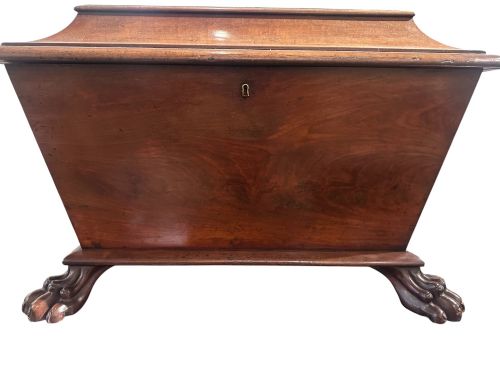
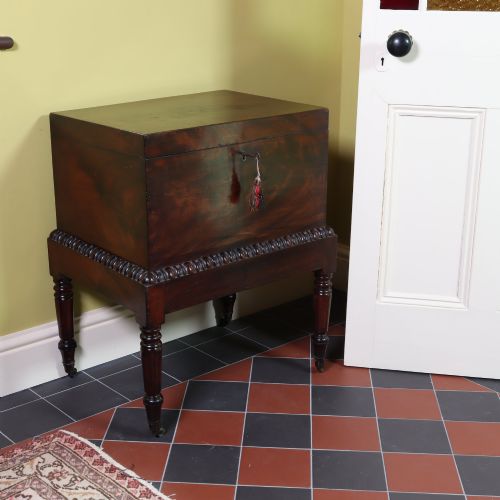
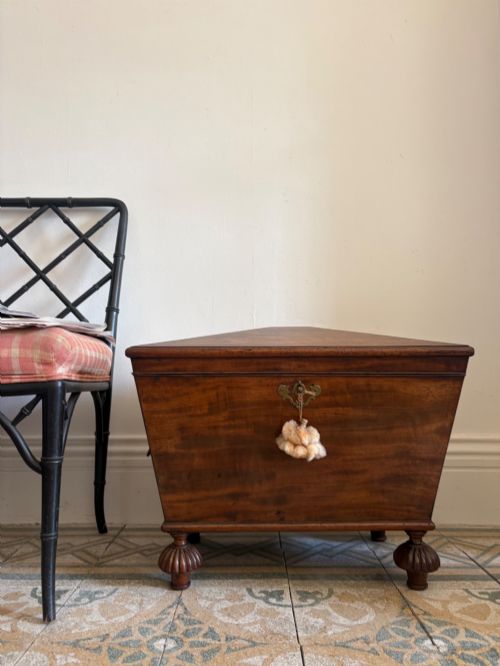
A carved wooden sarcophagus box takes the form of a stepped, lidded tomb derived from classical architecture, appearing frequently across the Regency, Georgian, and Victorian periods. Buyers encounter these primarily as cellarettes, wine coolers, and tea caddies designed to sit on floors, sideboards, or dedicated stands.
The objects serve functional domestic roles from the late eighteenth century onward, housing dry tea leaves, bottled wine, or personal trinkets. Makers executed these forms in substantial proportions, often resting the container upon paw feet, bracket bases, or turned pedestals.
Materials and Construction
Cabinetmakers constructed these pieces using dense timbers such as mahogany, rosewood, walnut, and burr elm, occasionally incorporating exotic hardwoods like ebony and sandalwood. Construction relied on robust joinery to support heavy timber lids and fitted interiors lined with lead, velvet, or bone compartments.
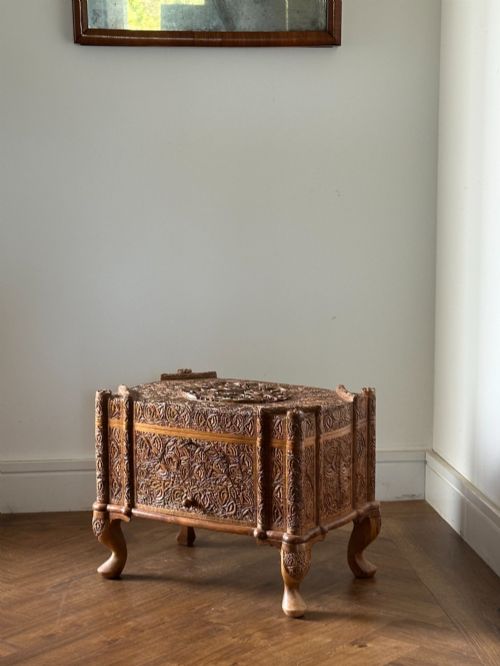
Surface ornamentation involved contrasting stringing, brass inlay, mother-of-pearl, and deeply carved classical motifs executed by hand. Artisans utilised flame and figured grain patterns to accentuate the sweeping architectural curves of the sarcophagus profile.
A surprising number of these miniature tombs spent their lives guarding nothing more morbid than breakfast tea.
Design and Execution
Quality separates objects by the depth of carved detail, the selection of timber veneers, and the integrity of internal fittings such as original lead linings or compartmentalised trays. Pieces displaying crisp carving, balanced proportions, and well-figured mahogany or rosewood sit at the upper end of the range.
The refinement of brass hardware, secret locking mechanisms, and secondary timbers like oak or pine inside the carcase indicate superior workshop standards. Finer examples maintain crisp architectural mouldings without distortion across the heavy lid assemblies.
Freemans of Norwich·T.Feetham·Gillows
The Carved Wooden Sarcophagus Box Glossary
- Cellarette
- A lockable container used for storing wine bottles in the dining room, often fitted with internal partitions or lead linings.
- Teapoy
- A freestanding table with a lidded box on top, designed to hold multiple varieties of tea leaves.
- Caddy
- A small box constructed for storing loose tea, typically featuring internal lidded compartments to keep the contents dry.
- Sarcophagus
- An architectural form shaped like a stone coffin, featuring a steep gabled lid and a tapered body popular in classical revival furniture.
Carved Wooden Sarcophagus Box: Frequently Asked Questions
What were these wooden boxes originally used for?
These containers served specific domestic storage purposes in the dining room, parlour, or bedroom. Cellarettes and wine coolers held bottles near the table, while smaller boxes managed dry tea leaves or jewellery.
Interior compartments kept expensive commodities secure and organised. Many included lead linings to hold melting ice for wine or fitted wooden lids inside tea caddies to preserve aroma.
How do I date a sarcophagus box?
Dating relies on timber choice, construction methods, and stylistic details associated with Georgian, Regency, and Victorian periods. Earlier pieces often employ solid flame mahogany with restrained brass mounts.
Later Victorian examples frequently utilise rosewood or walnut with elaborate mother-of-pearl inlay or heavier carved ornament. Feet also change over time, moving from delicate paw designs to plinth bases.
Where should I place one in my home?
Large cellarettes function effectively as freestanding tables or beside seating areas where their architectural proportions remain visible. Smaller tea caddies and jewellery boxes suit sideboards, console tables, or desk surfaces.
Placing them away from direct heat sources protects the timber veneers and prevents splitting in the polished surfaces. The flat tops of cellarettes also allow them to carry decorative objects.
Are the interiors usually original?
Interiors vary significantly, with many surviving examples retaining their original lead liners, divisions, or velvet-lined trays. Some pieces have undergone alterations or replacement of internal compartments during their working lives.
Original tea caddy mixing bowls, glass jars, and internal lids add historical completeness to the object. Examining the secondary woods inside helps determine whether the fittings belong to the original period of manufacture.