

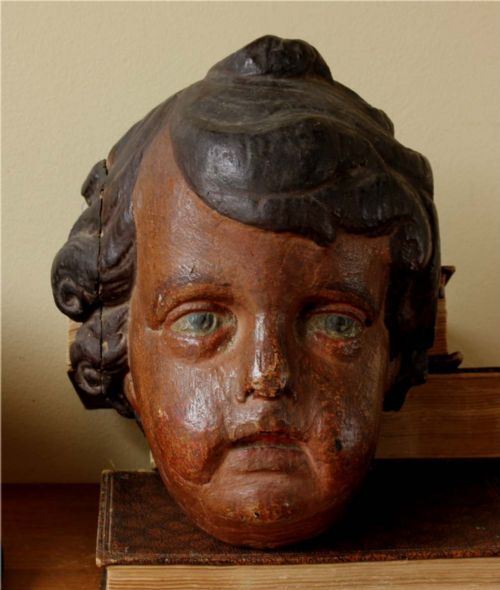
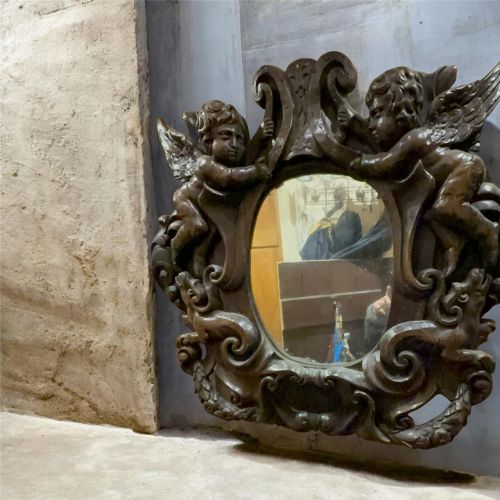
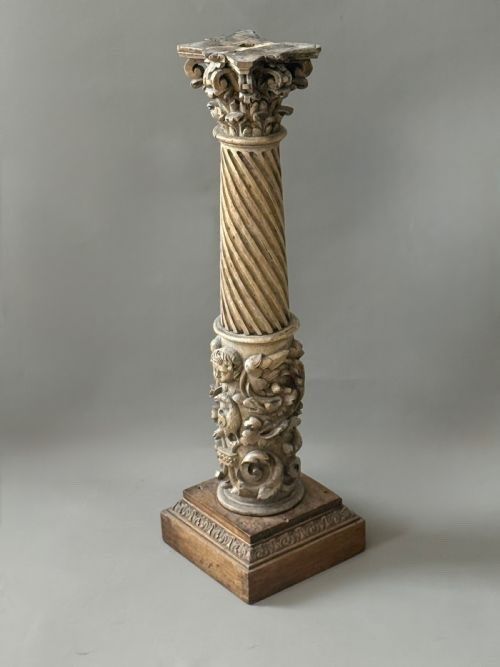
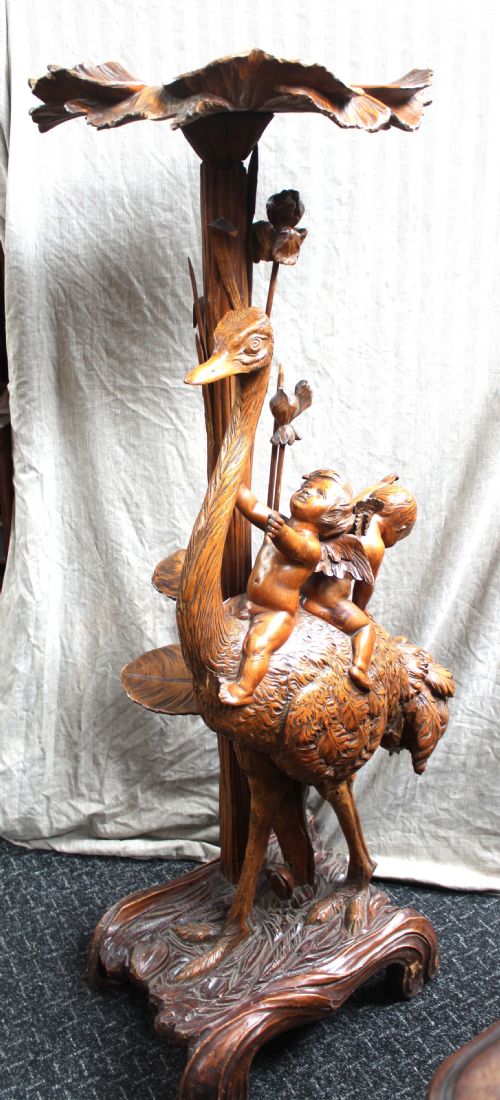
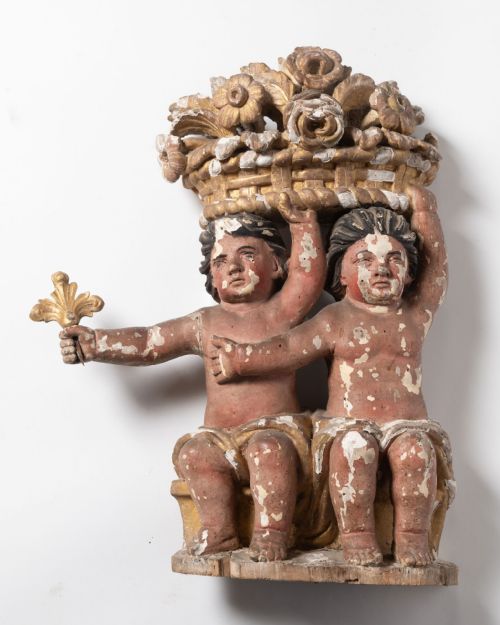


Carved Wooden Putto
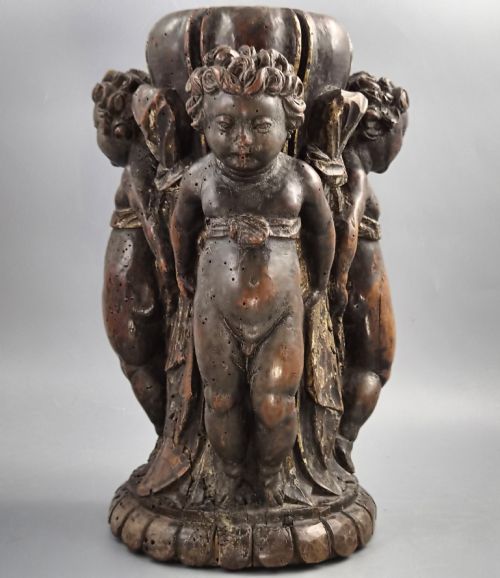
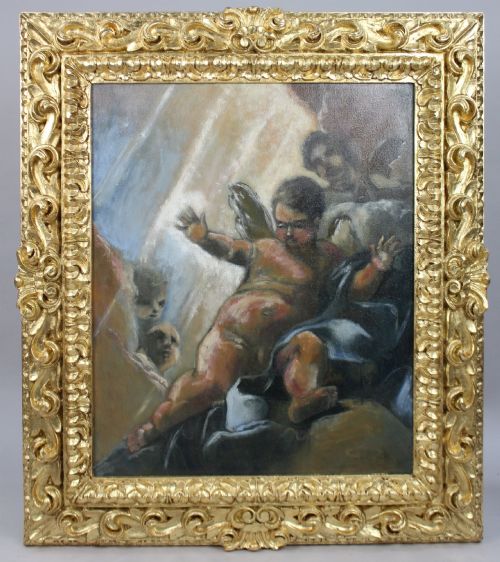
A carved wooden putto brings the spirited movement and ornate presence of the Baroque into a room.
Carved Wooden Putto
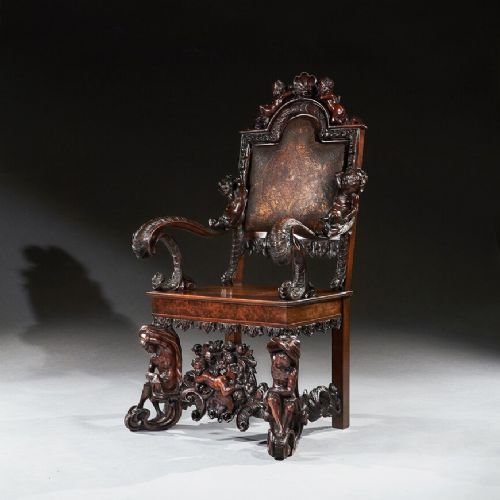
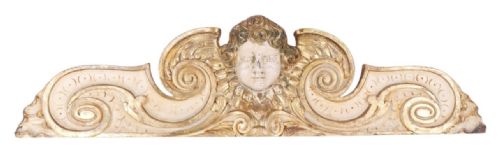
The selections on this page lean heavily toward Italian and French interpretations, moving from authentic seventeenth-century Baroque works to later nineteenth-century revivals. Buyers often find single cherub heads, paired figures perched on clouds, or complete sculptural groups integrated into furniture and architectural fragments.
Many examples reflect religious devotional contexts, such as altar angels and church figures, while others derive from secular furnishings and domestic wall decor. The enduring appeal lies in the expressive carving of youthful energy translated into timber.
Materials and Construction Techniques
Carvers shaped these figures from dense hardwoods such as oak, walnut, lime wood and boxwood, utilising the natural grain to achieve intricate anatomical details. Timber selection dictated the depth and permanence of the relief, with walnut and oak favoured for structural resilience in architectural panels and torchiere bases.
Surface treatments frequently involve gesso grounds layered beneath gold leaf, silvering or polychrome paint applications. These finishes provided both protective sealing and rich visual drama, catching candlelight in domestic interiors and ecclesiastical settings alike.
Listings feature timbers including oak, walnut, lime wood and boxwood, alongside applied gesso, gold leaf and polychrome paint.
Distinctions in Quality and Execution
The distinction between ordinary workshop production and master craftsmanship rests in the fluidity of the carving and the anatomical conviction of the figure. Superior examples display deep undercut work where limbs and drapery detach cleanly from the background, creating genuine three-dimensional volume rather than flat relief.
The integrity of the original surface finish heavily influences the character of a piece. Retained traces of early polychrome or genuine gold leaf over undisturbed gesso indicate a surface that has survived centuries without aggressive stripping or unsympathetic modern repainting.
Andrea Brustolon·Steiner
The Carved Wooden Putto Glossary
- Putto
- A representation of a plump, naked male child, often winged, derived from classical art and heavily utilised in Renaissance and Baroque design. These figures populate panels, frames and standalone sculptures.
- Giltwood
- Timber that has been coated with a thin layer of gold leaf over a prepared gesso ground. This technique creates a luminous, reflective surface common on decorative mirrors and wall brackets.
- Polychrome
- The practice of decorating architectural elements and sculptures in multiple colours. Artisans applied pigments over wood or gesso to impart lifelike hues to flesh, hair and garments.
- Gesso
- A white paint mixture consisting of a binder mixed with chalk, gypsum or pigment. It served as a smooth preparation layer for subsequent gilding and painting.
- Torchiere
- A tall ornamental stand or floor lamp base, often carved in wood with figural supports. Baroque examples frequently incorporate multiple putti into the structural composition.
Carved Wooden Putto: Frequently Asked Questions
What is a carved wooden putto?
A carved wooden putto is a sculptural depiction of a winged infant or cherub rendered in timber. These pieces range from isolated wall heads to figures supporting architectural elements and furnishings.
Originating largely from European decorative traditions, they reflect the theatrical sensibilities of the Baroque and its later revivals.
Where were these pieces originally placed?
Many figures belonged to ecclesiastical settings such as church altars, choir stalls and over-door architectural panels. Others formed decorative components of domestic wall mirrors, torchieres and grand armchairs.
Their placement was designed to draw the eye upward and add dynamic movement to interior spaces.
How do I care for antique carved wood?
Maintain stable indoor humidity levels and keep pieces away from direct heat sources and strong sunlight to prevent the timber from splitting. Dust gently with a dry, soft brush rather than using liquid polishes that might damage historic finishes.
Unfinished woods and gilded surfaces require particularly careful handling to preserve fragile gesso layers.
How can I tell the period?
Dating relies on stylistic markers such as the muscular exaggeration of seventeenth-century Baroque work versus the lighter, more delicate touch of eighteenth-century French carving. Tool marks, timber shrinkage patterns and the composition of underlying gesso layers also offer clues to age.
Earlier pieces generally display hand-adzed backing and denser wood species appropriate to their regional workshops.