
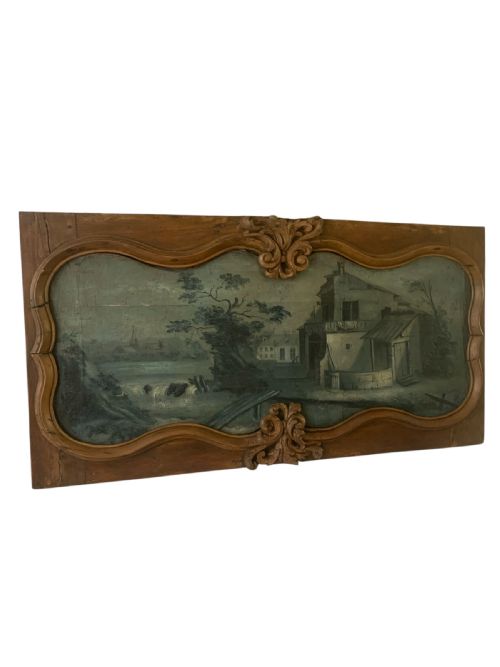


Carved Wooden Overdoor Panel
A carved wooden overdoor panel brings architectural depth and classical presence to a room, fitting neatly above a doorway or resting along a high wall.
Carved Wooden Overdoor Panel
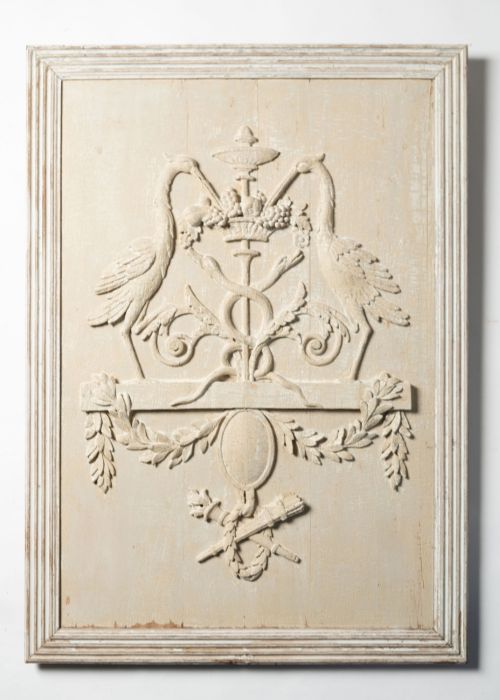
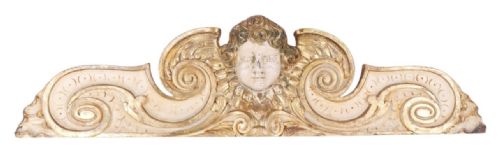
A carved wooden overdoor panel sits above a doorway, carrying sculptural weight and decorative framing into domestic spaces. These pieces emerge from centuries of interior design, serving as architectural salvage or dedicated wall carvings.
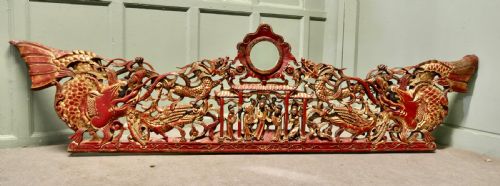
The selections span the seventeenth, eighteenth, and nineteenth centuries, showing continental European origins alongside English pieces. French chateau styles, Italian baroque, and Chinoiserie temple pediments dominate the forms available here.
Makers shaped timber into large panels, pediments, and wall reliefs that often feature cherubs, hunting scenes, or classical motifs. Oak, walnut, and painted wood provide the physical foundation for these substantial architectural elements.
How they were made
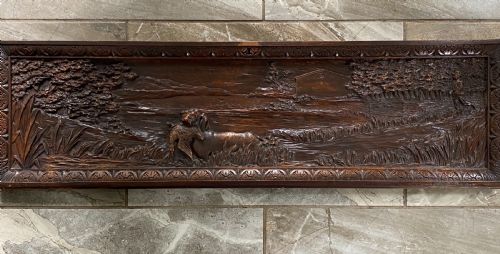
Carvers shaped solid timber, utilising oak and walnut for deep relief work that withstands structural shifts over centuries. Chisel marks and hand-carved details reveal the manual labour involved in bringing figures and scrolls to life.
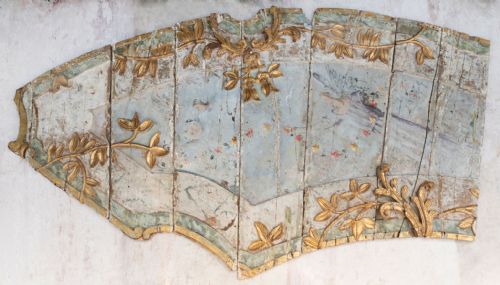
Many surfaces received layers of gesso, paint, or gold leaf to enhance the visual drama of the carving under interior candlelight or daylight. These applied finishes interact with the underlying wood grain, creating rich textures across pediments and panels.
Look closely for the carved wooden dog keeping watch over a Black Forest hunting panel.
What varies in quality
Original surface treatments, such as untouched gold leaf or historic paint layers, elevate a panel above stripped or heavily restored examples. The integrity of the underlying timber, free from severe warping or crude structural repairs, anchors the lasting value.
Edward Pearce
The Carved Wooden Overdoor Panel Glossary
- Gesso
- A plaster-like mixture applied to wood as a smooth base for paint or gold leaf gilding. This ground layer allows for fine, crisp detailing before finishing.
- Architectural salvage
- Building elements rescued from older structures for reuse in interior decoration. These pieces retain the scale and history of their original domestic or public settings.
- Chinoiserie
- European interpretations of Chinese and East Asian artistic traditions, popular in decorative panels and pediments. This style introduces exotic motifs and asymmetrical compositions to traditional woodwork.
- Relief
- Sculptural work where figures or designs project from a flat background. High relief involves elements standing far out from the backing board.
Carved Wooden Overdoor Panel: Frequently Asked Questions
Where should I hang an overdoor panel?
These panels sit naturally in their original context directly above a doorway, framing the threshold with architectural weight.
Alternatively, mounting one as a standalone wall relief on a high-ceilinged wall allows the carved details to function as primary artwork.
How do I identify the period of a carved panel?
Stylistic cues like Italian baroque scrolls, French chateau motifs, or Chinoiserie compositions offer the clearest indication of origin.
Tool marks, timber species such as oak or walnut, and the presence of historic gesso or paint further anchor the date of manufacture.
Are these panels heavy?
Solid timber construction in oak and walnut makes these substantial architectural pieces genuinely heavy.
Proper wall fixings anchored directly into studs or masonry are essential for secure installation.
Can these panels be cleaned?
Gentle dusting with a soft, dry brush preserves the delicate surfaces of gold leaf, gesso, and historic paint.
Moisture and chemical cleaners should be avoided to protect the aged wood and original finishes.