
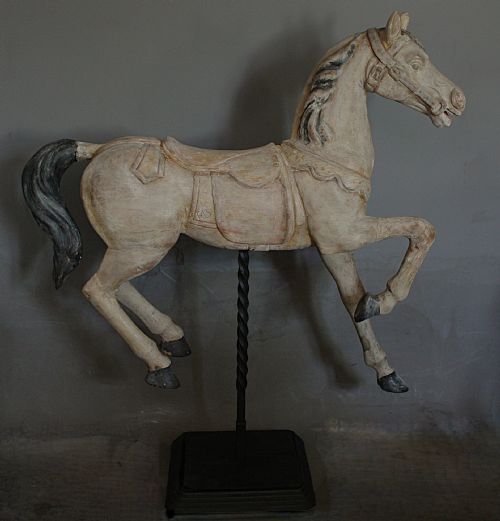


Carved Wooden Horse Figure
A carved wooden horse figure brings a striking sculptural presence to a room through centuries of global folk tradition.

Carved Wooden Horse Figure
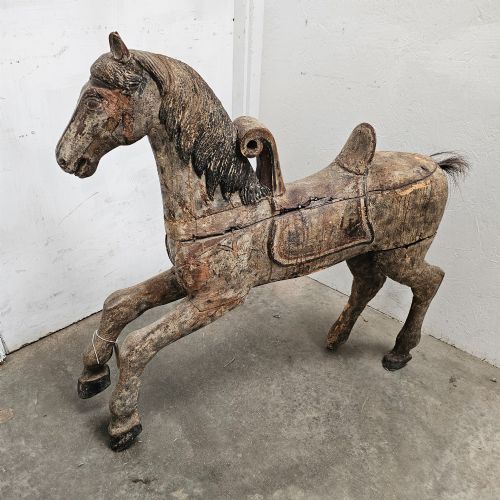
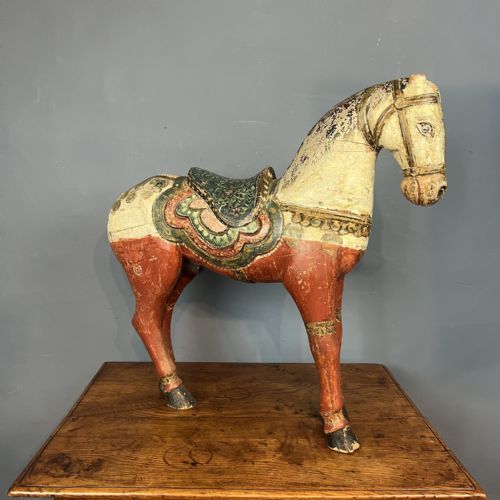
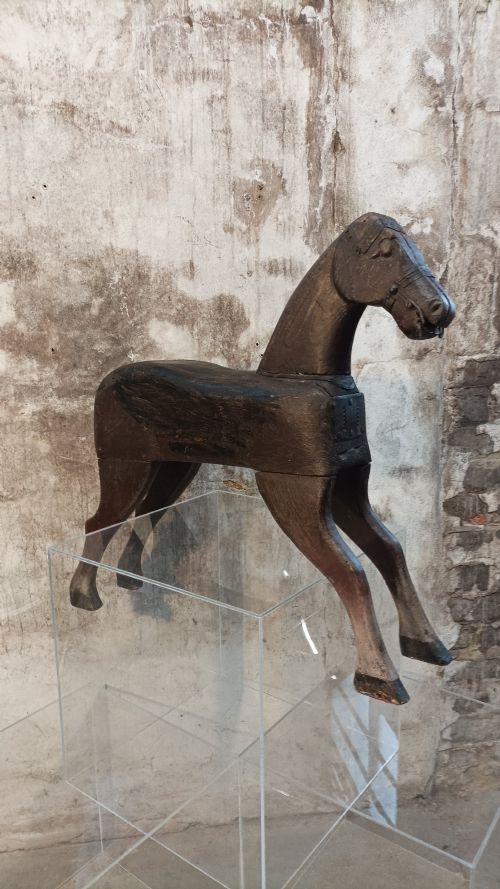
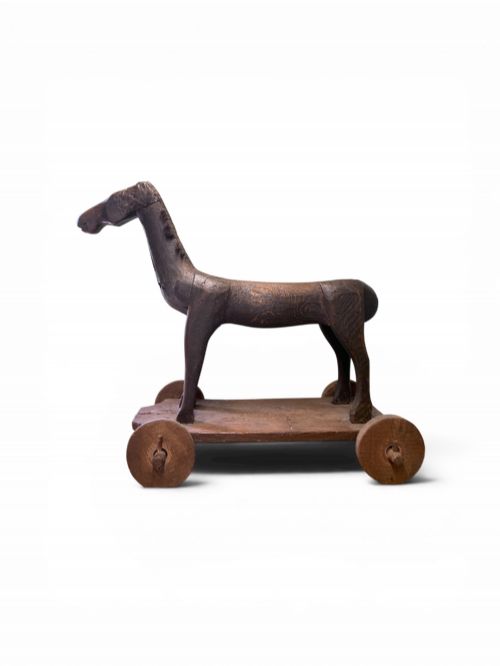
A carved wooden horse figure encompasses a broad sweep of global animalier and folk art traditions, ranging from early European toys to large fairground and carousel pieces. Collectors encounter diverse regional interpretations, including Indian, Chinese, Japanese, and Russian works alongside French and British examples.
The selections on this page lean heavily towards folk art, naive sculptures, and architectural elements like corbels, alongside carousel and rocking horses from the nineteenth and early twentieth centuries. Pieces vary dramatically in scale, from miniature boxwood netsuke to life-size processional figures and draught horse studies.
How they were made
Carvers shaped these figures from timber, hardwood, and boxwood using traditional hand tools, often incorporating applied paint, leather elements, and horsehair manes to complete the form. Iron fixings and internal wooden frameworks appear in larger structural pieces such as carousel animals and architectural corbels.
Makers utilised straightforward carving techniques for naive and folk art objects, while more naturalistic sculptures, such as draught horse studies and artists' models, rely on detailed anatomical shaping and layered surface painting.
Bogorodskoe carvers traditionally used soft linden wood to create mechanical toys that bob up and down when pulled.
What varies in quality
Quality rests upon the strength of the carving and the vitality captured in the animal's posture, separating stiff mechanical reproductions from spirited hand-carved studies. The handling of anatomical detail and surface texture dictates whether a piece holds strong sculptural presence.
The integrity of original painted surfaces and patination heavily influences a piece, where untouched historic pigment or natural wear adds depth. The scale and ambition of the carving, from miniature netsuke to life-size figures, also separate standard decorative objects from superior works.
Masayuki·Bogorodskoe Carving
The Carved Wooden Horse Figure Glossary
- Carousel horse
- A carved wooden figure created for fairground rides, often distinguished by dynamic poses and decorative harness details. These objects frequently display remnants of bright historic paint layers.
- Folk art
- Utilitarian or decorative items made by self-taught or traditional craftsmen rather than academy-trained sculptors. Such pieces prioritise expressive character over strict academic proportions.
- Netsuke
- A small Japanese toggle carved from materials like boxwood, used to secure small pouches to traditional garments. These miniature carvings often depict figures mounted on animals.
- Corbel
- A structural piece of stone or timber projecting from a wall to support a weight, frequently carved into figurative or animal forms. Early examples showcase robust architectural woodwork.
- Animalier
- Art works that realistically depict the physical characteristics and movement of animals. This style spans various European and international sculpture traditions.
Carved Wooden Horse Figure: Frequently Asked Questions
How do I date a carved wooden horse figure?
Dating relies on examining tool marks, timber types, and the composition of underlying paint layers. Wear patterns and construction methods also help place an object within periods like the nineteenth or early twentieth century.
Comparing regional styles, such as French carousel carvings or Indian folk pieces, provides further context for a specific era.
Where should I place a large horse sculpture?
Large sculptures such as carousel figures or processional horses demand floor space where their scale can anchor a room. They sit well against plain walls or within open architectural settings.
Smaller studies and toys suit tabletop display or shelving amongst books and ceramics.
How do I care for painted wood surfaces?
Maintain painted and carved surfaces by keeping them away from direct sunlight and steady heat sources that cause timber to split. Dust gently with a dry, soft cloth rather than using liquid cleaners.
Preserving original patination requires avoiding aggressive polishes or restoration that strips historic pigment.
What is the difference between folk art and studio carvings?
Folk art figures are made by traditional or naive carvers focusing on expressive character rather than academic precision. They often display charming irregularities in proportion and form.
Studio models or academic animalier sculptures adhere strictly to anatomical accuracy and refined finishing techniques.