







Carved Wooden Hall Armchair
These carved wooden hall armchairs bring commanding presence to an entryway, combining structural timber with deep relief work.
Carved Wooden Hall Armchair
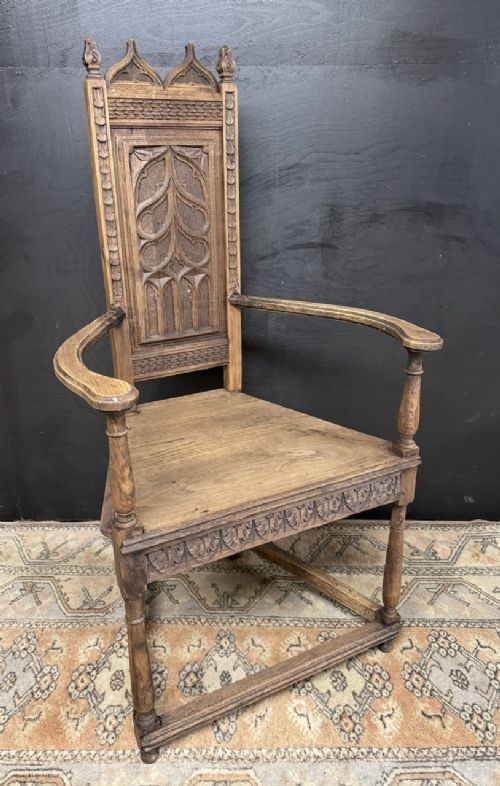
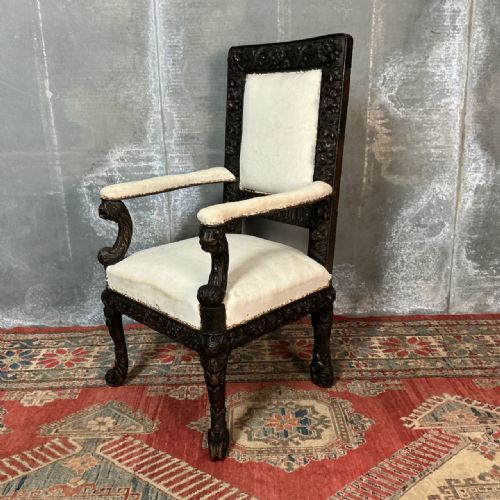
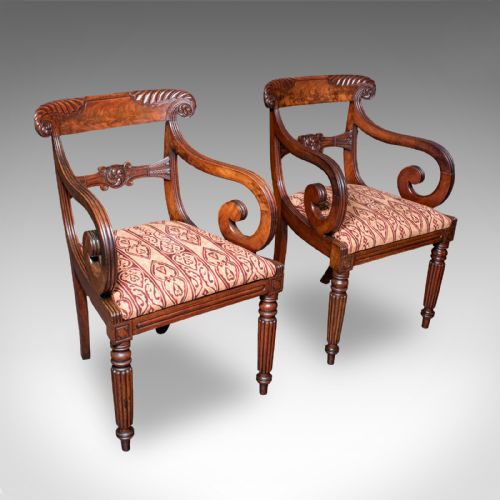
A carved wooden hall armchair is a substantial seating form designed historically for entranceways, reception rooms, and grand hallways. When exploring this phrase, buyers encounter robust wooden framing, high backs, and prominent armrests intended to display craftsmanship rather than offer deep domestic comfort. These chairs frequently incorporate revivals of earlier eras, drawing heavily upon historical motifs.
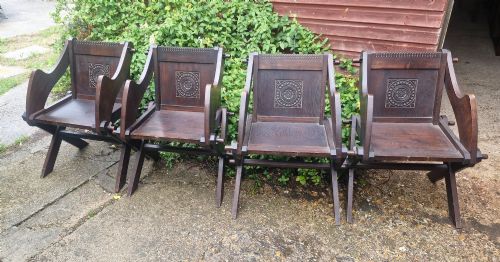
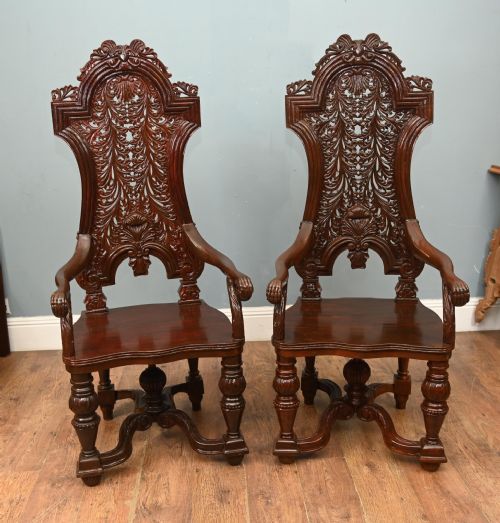
The selections span multiple periods, most notably the nineteenth century, Victorian era, and Edwardian times, alongside occasional seventeenth-century examples and later interpretations. Oak dominates the material record, frequently carved with deep relief panels, armorial crests, and Gothic or Jacobean Revival details. Variants range from sturdy wainscot chairs to Glastonbury designs and imposing throne chairs.
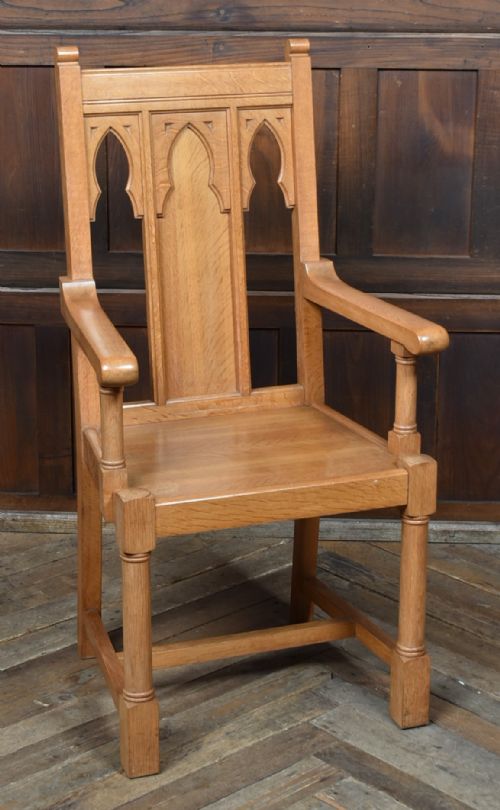
Buyers are most likely to meet nineteenth-century oak adaptations featuring Gothic Revival or Jacobean styling on this page. These pieces often exhibit high panelled backs, solid wooden seats, and turned supports rather than upholstered cushions. Their scale varies from compact elbow chairs to large throne seats designed to anchor a hallway.
Materials and Construction Methods
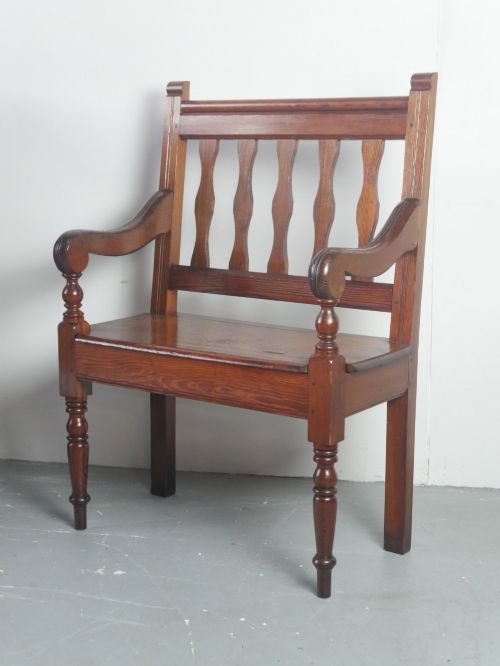
Solid timber forms the foundation of every carved wooden hall armchair, with oak appearing most frequently alongside pitch pine, mahogany, walnut, and fruitwood. Carpenters utilised mortise and tenon joinery to construct rigid frames capable of withstanding heavy daily use in busy entrance halls. Supplementary materials such as leather panels, brass hardware, and textile elements occasionally appear on padded seats or backs.
Carving technique defines the surface character of these seats, executed entirely by hand using gouges, chisels, and parting tools. Craftsmen rendered strapwork, foliage, and figural carvings directly into the dense grain of the wood, creating strong chiaroscuro effects across panels and crest rails. Turning lathes shaped the upright posts and stretchers, producing robust structural supports that matched the weight of the upper sections.
Carved Wooden Hall Armchair Retail Price Guide 2026
Typical asking prices for carved wooden hall armchair among the pieces listed under this phrase on Sellingantiques today, from the lower quarter to the upper quarter. They describe what is for sale here now, not the wider market.
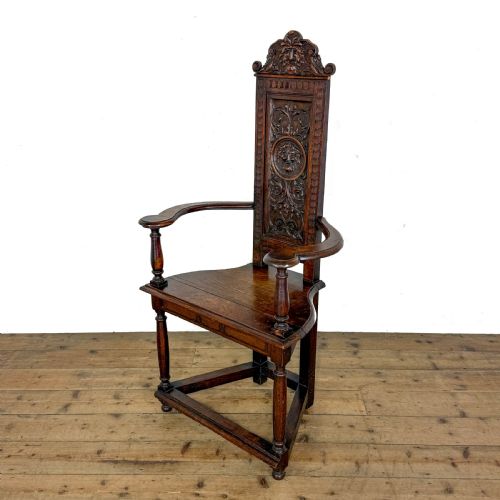
A nineteenth-century chair bearing a Green Man carving brings ancient foliate mythology directly into the hallway to watch over arriving guests.
Distinctions in Quality
Quality in a carved wooden hall armchair rests upon the crispness and depth of the hand carving rather than the mere presence of decoration. Superior examples display sharp undercutting, confident lines, and well-proportioned figural or geometric motifs that maintain symmetry without mechanical rigidity. Lesser pieces rely on shallow, rounded stamping or hurried machine routing that lacks three-dimensional impact.
The selection of timber and the integrity of the joinery further separate grades of manufacture. Premium chairs utilise dense, quarter-sawn oak with straight grain and minimal patching, joined with tight pegs that hold the heavy frame square over centuries. Poorer examples show inferior secondary woods, loose joints requiring modern stabilization, or heavy applied mouldings masking weak structural bonds.
White, Allom & Co.
The Carved Wooden Hall Armchair Glossary
- Wainscot chair
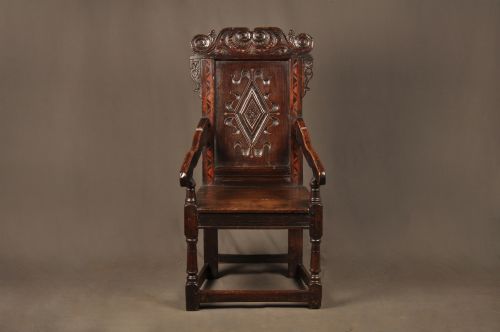
- A heavy wooden armchair constructed primarily from panelled oak, originating in the sixteenth and seventeenth centuries. These pieces feature solid wooden seats and high backs.
- Glastonbury chair
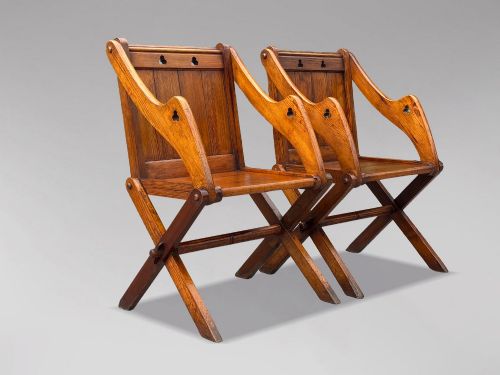
- A distinctive nineteenth-century ecclesiastical armchair design with X-framed legs and a sloping panel back, heavily associated with the Gothic Revival movement. It folds on a central pivot.
- Jacobean Revival
- A nineteenth-century stylistic movement copying seventeenth-century English furniture characteristics. It is marked by geometric panelling, turned spindle supports, and strapwork carving.
- Caquetoire
- A lightweight sixteenth-century conversational armchair featuring a trapezoidal seat and a high, narrow back. The form allowed women wearing voluminous skirts to sit comfortably.
- Elbow chair
- A traditional term for a wooden armchair with supportive armrests, frequently utilised in hallways and reception spaces. These seats balance architectural presence with domestic utility.
Carved Wooden Hall Armchair: Frequently Asked Questions
What is a wainscot chair?
A wainscot chair is an early form of wooden armchair constructed with panelled framing and a solid wooden seat. These heavy seats were built to withstand drafts in large, open halls.
They often feature carved backs displaying geometric strapwork or floral motifs. Their sturdy timber construction ensured survival across multiple centuries.
How do I identify a Glastonbury chair?
A Glastonbury chair is recognised by its intersecting X-frame legs and sloping panelled backrest. This design was revived during the Victorian era following medieval ecclesiastical models.
The structural framework allows the chair to be disassembled or folded easily. Most examples are rendered in solid oak or pitch pine with Gothic detailing.
Where should I place a hall armchair?
A carved wooden hall armchair suits entrance halls, wide landings, or reception rooms where architectural presence matters. They function primarily as statement seating rather than lounging chairs.
Pairing one with a matching bench or console table anchors an empty hallway. Their upright backs encourage correct posture.
How do I tell Victorian Gothic from original seventeenth century?
Victorian Gothic Revival chairs utilise nineteenth-century machining alongside hand carving, often featuring softer oak and standardised joinery marks. Original seventeenth-century pieces show hand-riven timber and irregular tool marks.
Wear patterns and timber shrinkage also help distinguish the two eras. Nineteenth-century interpretations often exhibit heavier, cleaner decorative relief.