
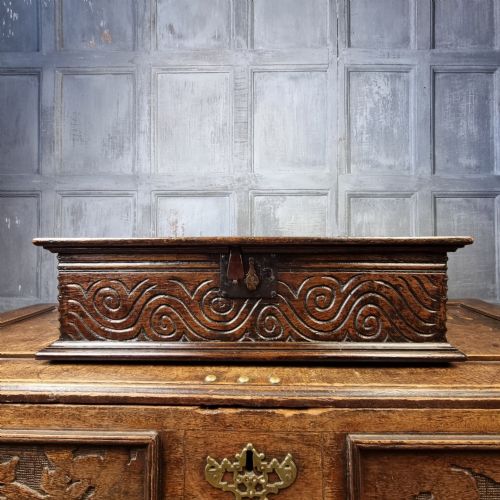


Carved Wooden Document Chest
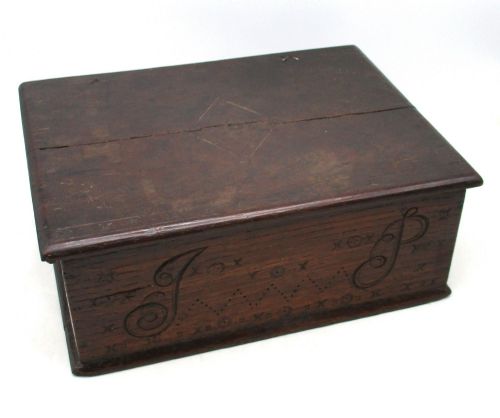
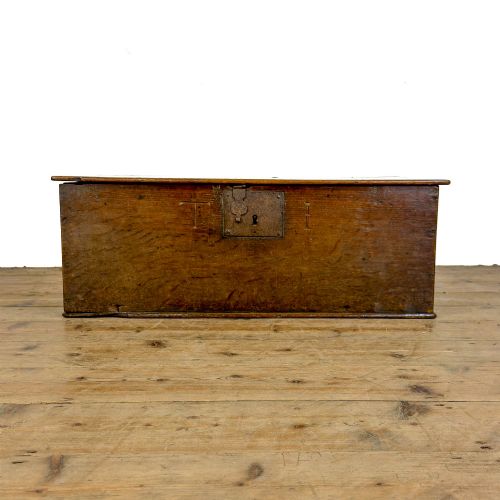
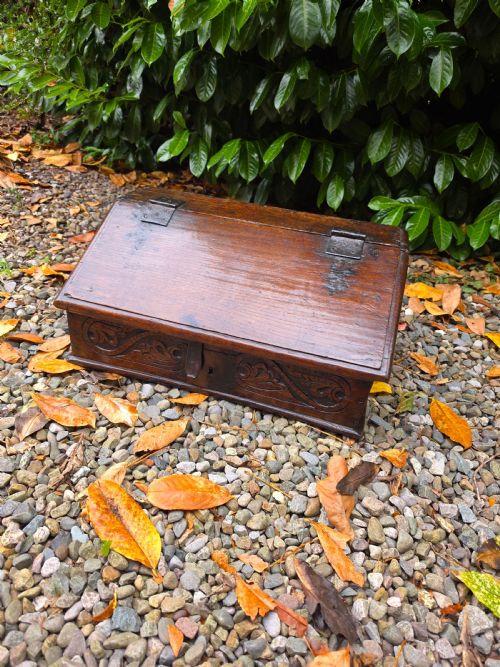
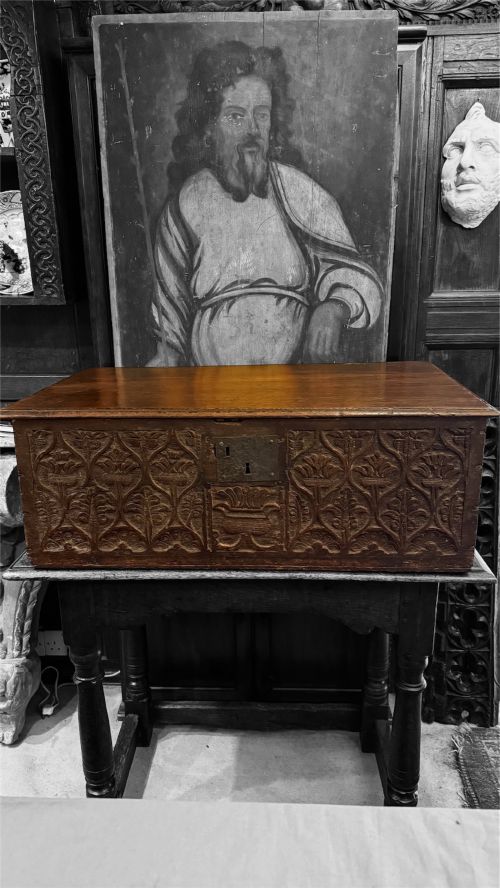
A carved wooden document chest is a sturdy receptacle for papers and valuables, prized for its period joinery and hand-carved surface detail.
Carved Wooden Document Chest
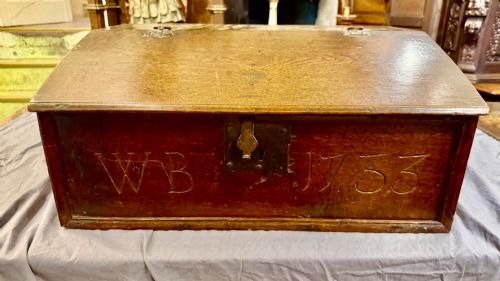
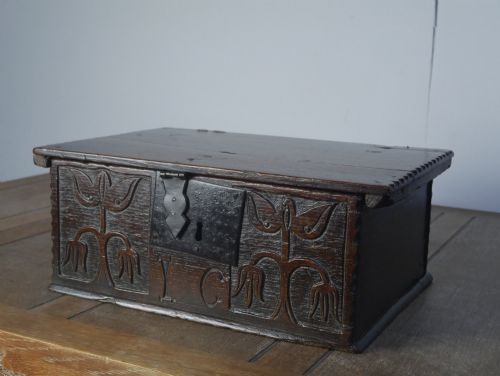
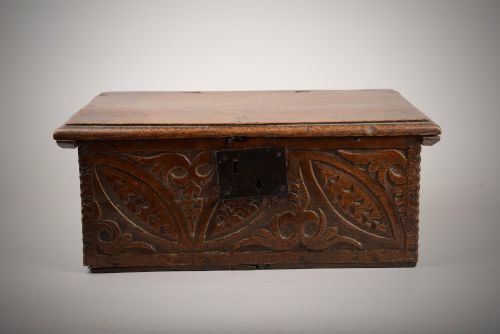
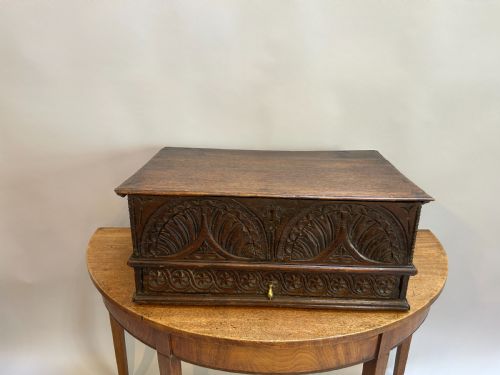
When you search for a carved wooden document chest, you encounter sturdy receptacles designed to store deeds, letters and valuables securely. The examples on this page span several centuries, with the seventeenth and eighteenth centuries strongly represented.
You meet forms ranging from small Bible boxes and slant-front desk boxes to larger deed containers and filing cabinets. Oak is the primary timber, complemented by mahogany, ebony, walnut, and chestnut.
Regional variations appear frequently, including English, Welsh, Anglo-Indian, and French origins. These pieces offer practical desktop storage while displaying historic carving techniques and period hardware.
How they were made
Joiners and cabinetmakers constructed these chests predominantly using solid oak, mahogany, and ebony, often joined by pegged mortise and tenon joints or dovetails. Surfaces received hand carving, chip carving, or floral marquetry, sometimes accented with holly and bog oak inlay.
Hardware played a functional and structural role, with forged iron hinges, brass escutcheons, and swing handles securing the lids and drawers. Interiors frequently incorporated small compartments and internal drawers for organised storage.
Listings feature oak, mahogany, ebony, and chestnut across seventeenth-century, eighteenth-century, and Victorian periods.
What varies in quality
Quality rests in the crispness of the hand carving and the integrity of the timber construction. Pieces displaying deep, well-defined chip carving or intricate marquetry stand apart from simpler utilitarian boxes.
Original hardware, untouched surfaces with deep patina, and intact internal drawers elevate a piece's standing. Later alterations or replaced panels shift an item away from its original period integrity.
The Carved Wooden Document Chest Glossary
- Bible box
- A small desk-top box originally used to hold a family Bible and important documents. These pieces often feature sloping lids and internal compartments.
- Deed box
- A secure container designed for legal papers, title deeds, and contracts. They typically incorporate robust locks and iron carrying handles.
- Marquetry
- The art of applying pieces of veneer to a structure to form decorative patterns. Floral motifs and geometric designs appear frequently on seventeenth-century examples.
- Chip carving
- A technique where small chips are removed from the surface of timber to create geometric or floral patterns. This method defines many regional seventeenth-century boxes.
Carved Wooden Document Chest: Frequently Asked Questions
What is a Bible box?
A Bible box is a small portable chest with a sloping lid, originally made to protect large family Bibles and important manuscripts. They sat upon tables and desks to provide a slanted writing surface.
Over time, owners utilised them for general correspondence and valuable papers. Their compact form makes them practical for tabletop display today.
How old are these document chests?
The pieces span from the seventeenth century through the Victorian era and into the early twentieth century. Seventeenth-century examples in oak form a substantial portion of the selection.
Later Victorian and Edwardian variations incorporate exotic hardwoods and different regional styles. Dates are determined by construction methods, timber types, and contemporary styling.
Where were these boxes made?
Makers constructed these chests across Britain, including regional English and Welsh workshops. International pieces also appear, originating from France, China, Burma, and Anglo-Indian makers.
Local timber availability and regional carving traditions dictate the distinct appearance of each geographic group. This variety reflects global trade and local craftsmanship over several centuries.
How do I use one at home?
These chests function well as desktop storage for modern stationery, letters, and small valuables. Their flat or sloping tops allow them to sit comfortably on side tables, desks, or chest of drawers.
Internal compartments and drawers help organise modern items while keeping surfaces tidy. They provide secure, enclosed storage that hides clutter.