





Carved Wooden Divider
These carved wooden divider pieces bring architectural structure and hand-carved detail to a room, offering both function and rich craftsmanship.
Carved Wooden Divider
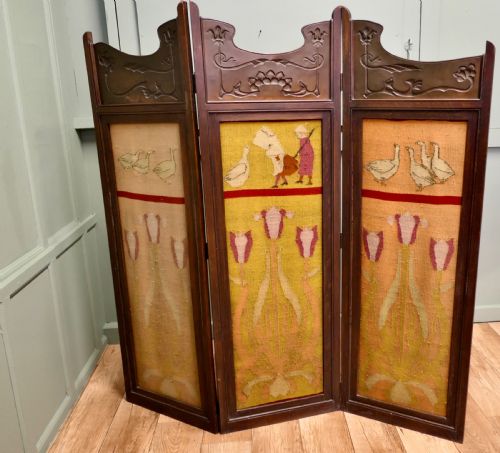
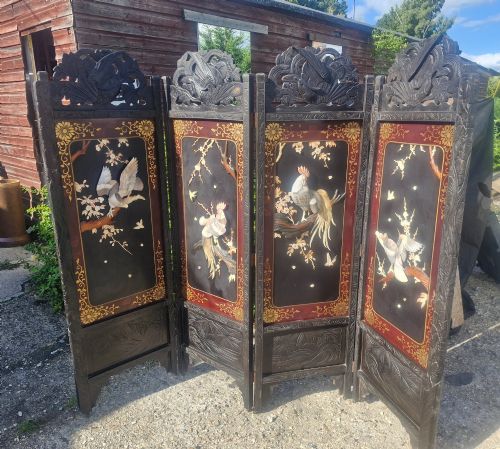
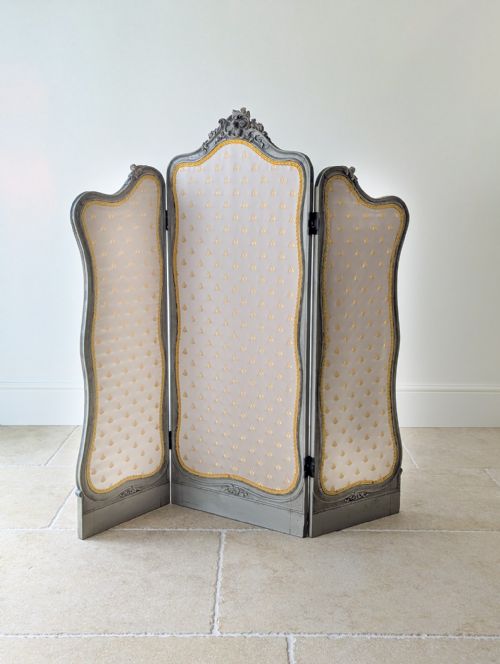
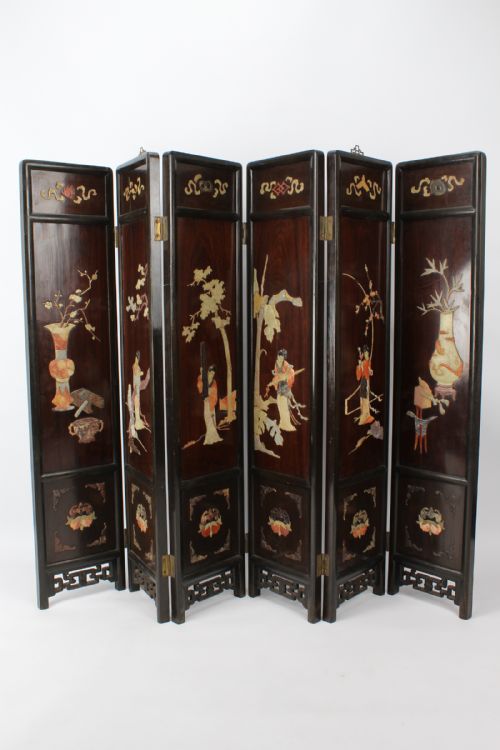
A carved wooden divider typically takes the form of a multi-fold screen or folding screen used to segment interior spaces or frame a corner. The selection spans 19th Century and early 20th Century examples, featuring styles from Chinese Traditional and Qing Dynasty to Anglo-Indian and French Rococo Revival.
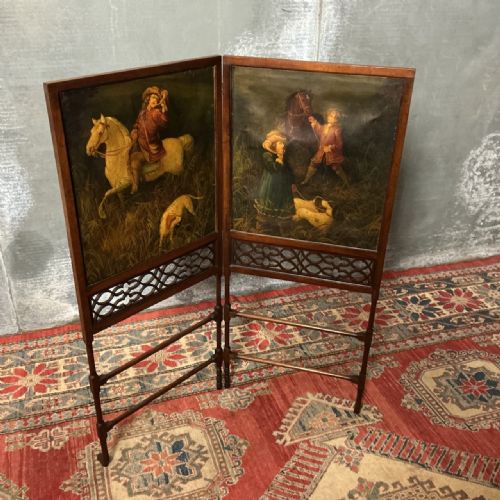
Beyond standard room dividers, related forms like table screens, fire screens, and modesty screens appear across the inventory. Woods such as mahogany, walnut, padauk, and hardwood form the primary structure for these architectural partitions.
Makers and workshops across Britain, France, and Asia produced these pieces to serve practical zoning needs within large rooms. The folding format allows them to be easily repositioned or stored flat against a wall when not in use.
How they were made
Construction relies on solid timbers like mahogany, walnut, and rosewood joined into hinged panel frames. Carvers utilised deep relief carving, fretwork, and bone inlay to ornament the wooden surfaces.
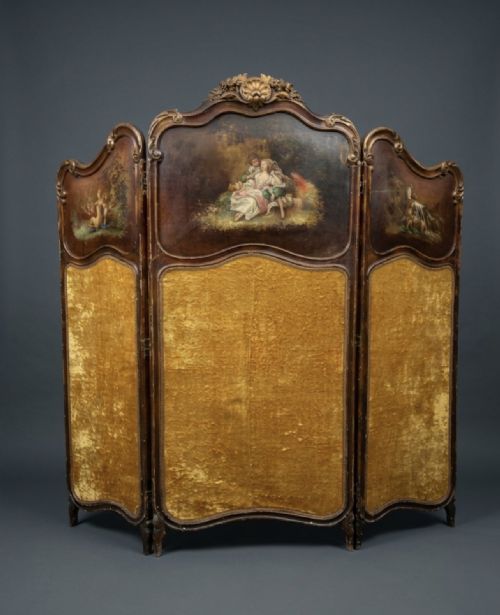
Surface finishes include black lacquer, coromandel lacquer, and oil paint applied directly to wooden or fabric panels. Brass hardware and hinges secure the folds together while allowing smooth articulation.
Carved Wooden Divider Retail Price Guide 2026
Typical asking prices for carved wooden divider among the pieces listed under this phrase on Sellingantiques today, from the lower quarter to the upper quarter. They describe what is for sale here now, not the wider market.
Object forms include folding screens, room dividers, fire screens, table screens, modesty screens, and canterburys.
What varies in quality
Quality rests primarily on the depth and crispness of the hand-carving across the wooden panels. Finer examples display intricate, undercut relief work rather than shallow or mechanical stamping.
The integrity of the structural joinery and the original quality of the lacquer or oil painting determine the upper tier of pieces. Multi-fold screens with matching grain, intact original hinges, and well-preserved painted pastoral or oriental scenes command greater distinction.
Gillows of Lancaster
The Carved Wooden Divider Glossary
- Coromandel lacquer
- A Chinese incised lacquer technique where motifs are carved into a dark ground and filled with coloured pigments. This creates a rich, textured surface seen on folding screens.
- Mashrabiya
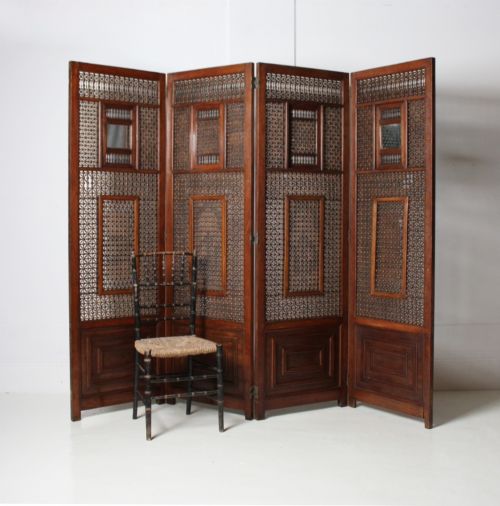
- A traditional type of projected wooden window screen or architectural partition characterised by intricate lattice turning. It provides privacy and air circulation.
- Canterbury
- A low wooden stand with slatted partitions, originally designed for holding sheet music or books. Several variations appear alongside screens in this category.
- Table screen
- A smaller decorative screen mounted on a wooden stand, designed for placement on a desk or tabletop. These often feature detailed carving or painted panels.
- Fretwork
- Ornamental perforated or pierced woodwork created by cutting patterns through thin timber boards. It adds lightness and intricate detail to screen panels.
Carved Wooden Divider: Frequently Asked Questions
How do I use a folding screen?
Folding screens work well to divide a large room into cosy zones or to hide areas that need privacy.
You can also stand one flat against a wall as a decorative backdrop behind furniture.
Are these screens heavy?
Weight depends entirely on the timber used and the number of panels in the frame. Hardwoods like padauk and mahogany add substantial weight to larger multi-fold screens.
Smaller table screens or modesty screens remain light enough to move easily by hand.
How do I care for lacquered wood?
Keep lacquered and painted wooden surfaces away from direct sunlight and excessive heat sources to prevent cracking. Dust gently with a dry, soft cloth without using harsh chemical polishes.
Maintaining a stable room temperature protects the delicate finishes and wood joints.
What is a modesty screen?
A modesty screen is a smaller historic partition historically used to shield individuals from drafts or to provide visual privacy in a room.
These pieces often feature painted panels or decorative fretwork rather than heavy structural zoning.