
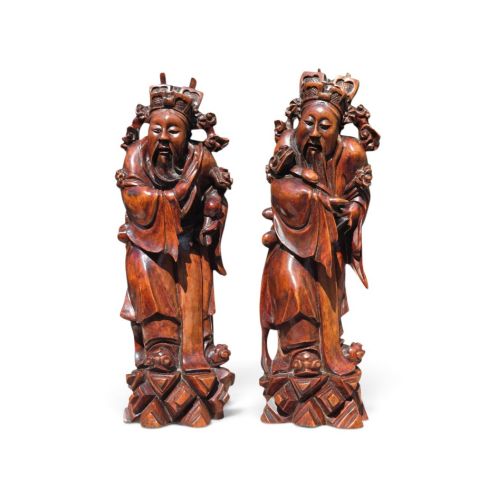
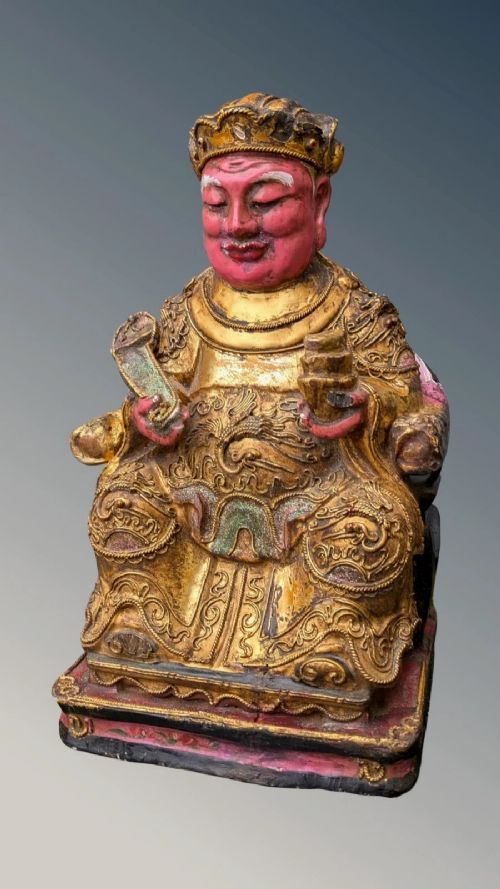
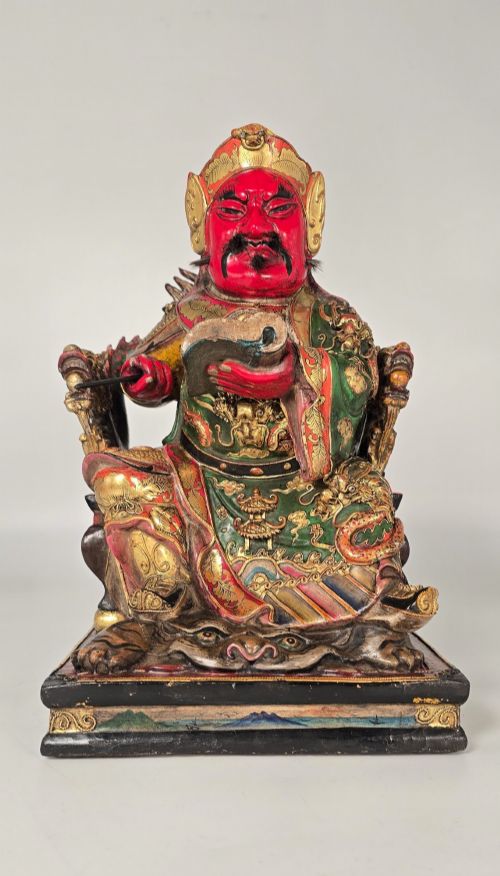


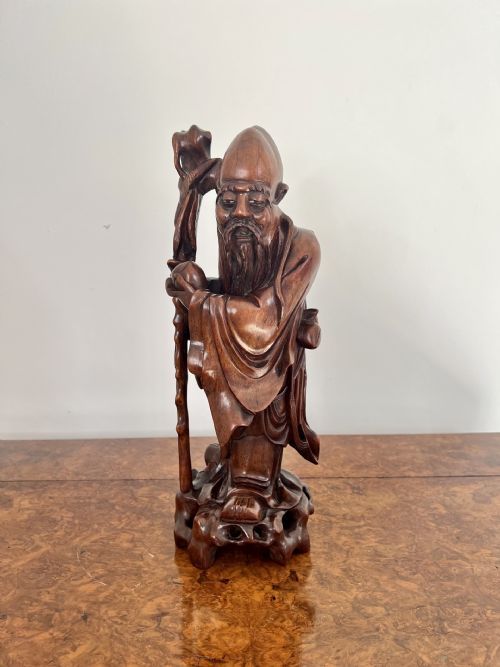
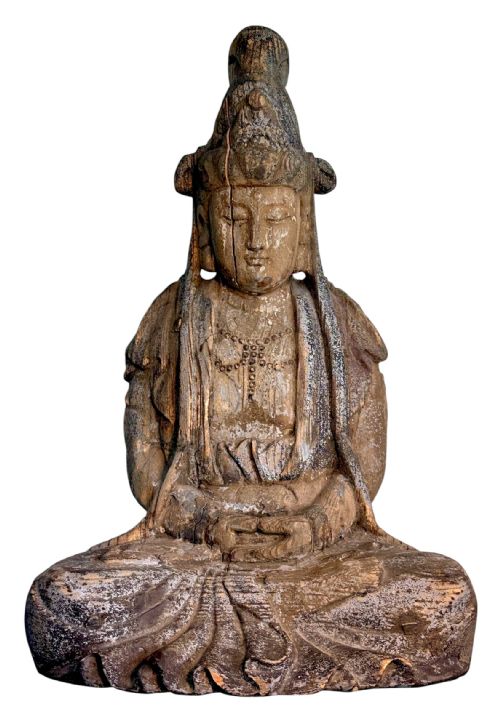


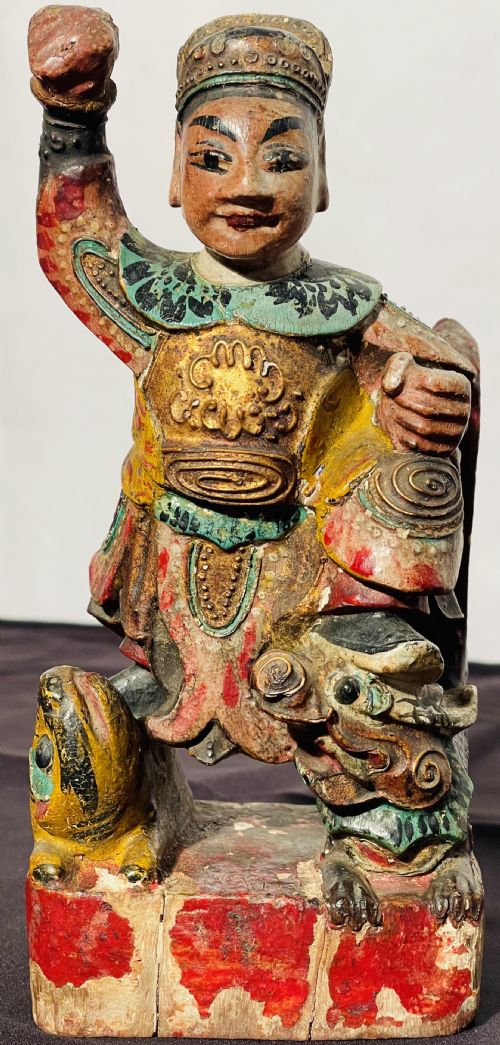
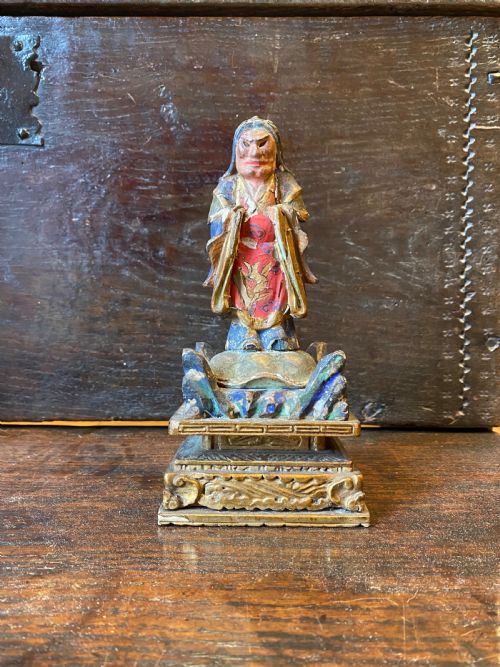

Carved Wooden Deity Figure
A carved wooden deity figure brings centuries of ritual history and sculptural devotion directly into your interior.
Carved Wooden Deity Figure
A carved wooden deity figure represents spiritual and cultural traditions from across Asia and Europe, spanning periods from the eighteenth century to the early twentieth century. You will frequently encounter Chinese Qing dynasty works alongside Balinese, Indian, and Japanese examples.
The forms range from monumental temple guardians and Daoist immortals to smaller figures of scholars, Buddhas, and Hindu deities such as Parvati, Vishnu, and Quan Yin. These sculptures often served in religious settings, domestic shrines, or architectural schemes before entering the antique market.
Architectural carvings and root carvings also appear within this category, demonstrating the diverse ways artisans shaped timber into sacred and mythological representations. Each piece carries the distinct regional aesthetic of its period of origin.
Materials and construction
Carvers utilised various timbers, predominantly dense hardwoods alongside boxwood and root wood, shaping the material with hand chisels and gouges. The natural grain and weight of the wood dictated the depth and intricacy of the drapery and facial expressions.
Many surfaces received layers of gesso, lacquer, or gold leaf to enhance the visual presence of the subject. Pigments were frequently applied to create polychrome finishes, adding colour to robes, hair, and attributes.
Listings feature items from the 18th, 19th, and early 20th centuries, executed in various hardwoods, boxwood, and gilt wood.
Judging quality and execution
The preservation of original surface treatments such as gilding, polychrome pigment, and lacquer substantially influences the integrity of a piece. Traces of ancient wear and weathering often reveal the genuine ritual function and age of the sculpture.
The Carved Wooden Deity Figure Glossary
- Polychrome
- Painted in several colours. This surface treatment is frequently found on temple figures to denote garments and skin tones.
- Gilt wood
- Wood that has been coated with gold leaf or gold paint. It reflects light and signifies sacred status.
- Okimono
- A Japanese ornamental carving designed for display. These figures often depict deities, folklore figures, or immortals.
- Root carving
- A sculptural form that utilises the natural twists and shapes of tree roots. Artisans incorporated the organic contours into the final subject.
- Gesso
- A plaster mixture applied to wood as a base for paint or gilding. It provides a smooth ground for decorative detailing.
Carved Wooden Deity Figure: Frequently Asked Questions
Where were these figures placed originally?
Many of these sculptures stood in domestic shrines, family altars, or major religious temples as objects of veneration and protection.
Others formed part of larger architectural schemes or were commissioned for scholar spaces and private collections.
How do I care for wooden statues?
Keep wooden sculptures away from direct sunlight, radiators, and rapid humidity changes to prevent the timber from splitting.
Dust gently with a dry, soft brush and avoid using liquid cleaners or polishes that might damage ancient gesso or pigment.
How can I tell the period?
Dating relies on stylistic markers associated with specific reigns, dynasties, or artistic movements such as the Meiji period or Qing dynasty.
Tool marks, timber shrinkage, and the ageing of underlying gesso or lacquer also offer clues to the age of the carving.
Why do some figures have worn paint?
Centuries of exposure to incense smoke, handling, and ritual use naturally soften and wear down original polychrome pigments and gilding.
This surface degradation is typically expected on authentic temple figures and contributes to their historical character.