
Carved Wooden Container
A carved wooden container holds small treasures, dry goods or fuel, shaped by hand from oak, fruitwood and exotic hardwoods across the centuries.
Carved Wooden Container
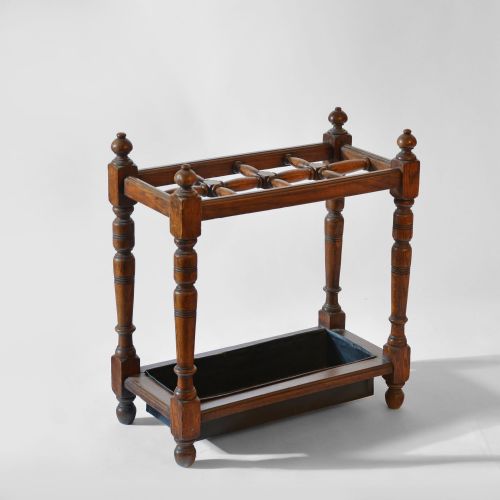
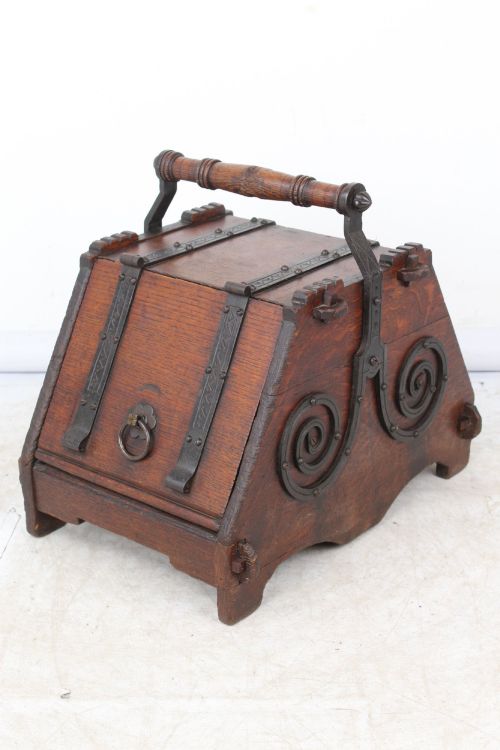
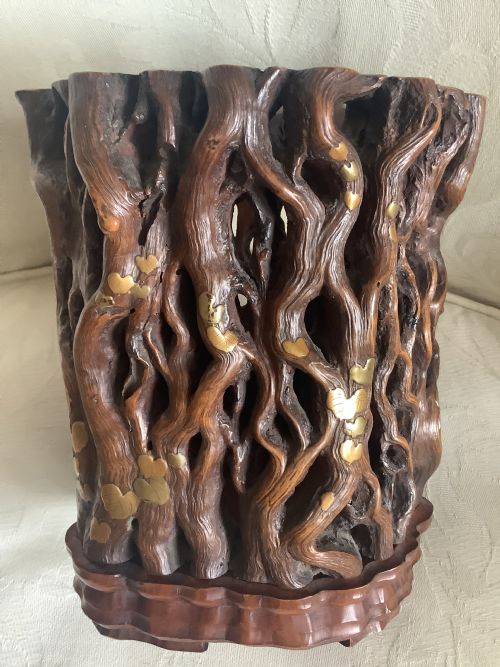
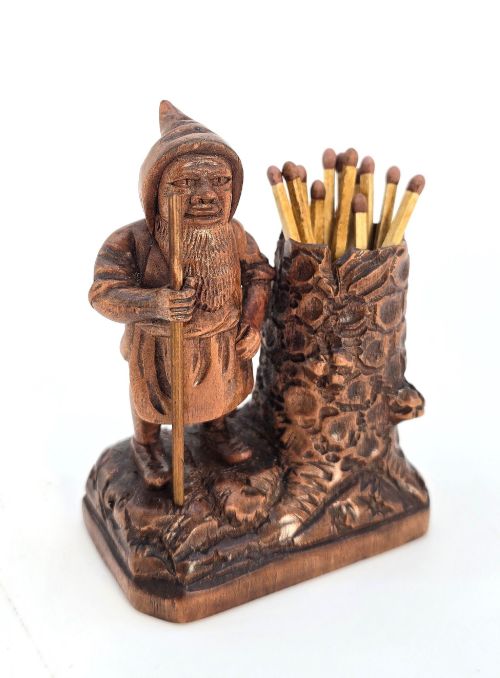
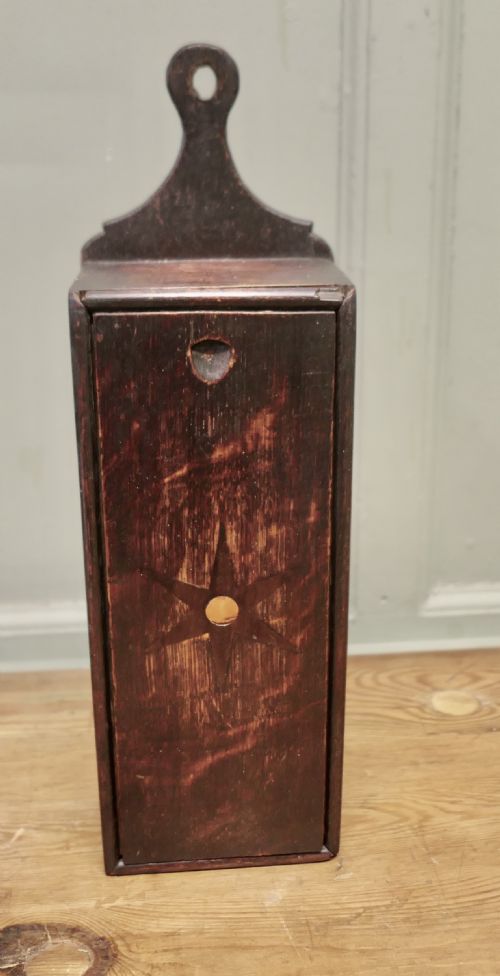
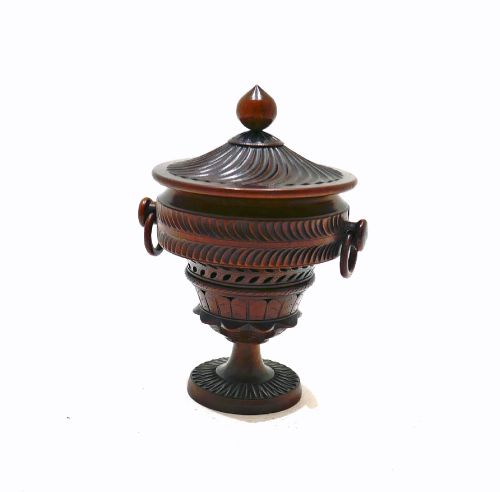
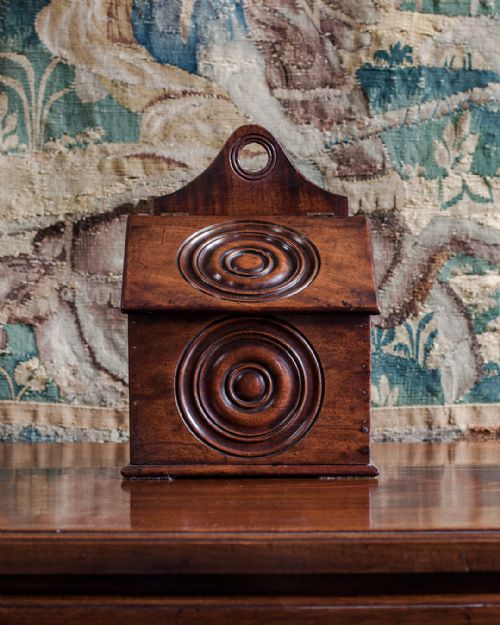
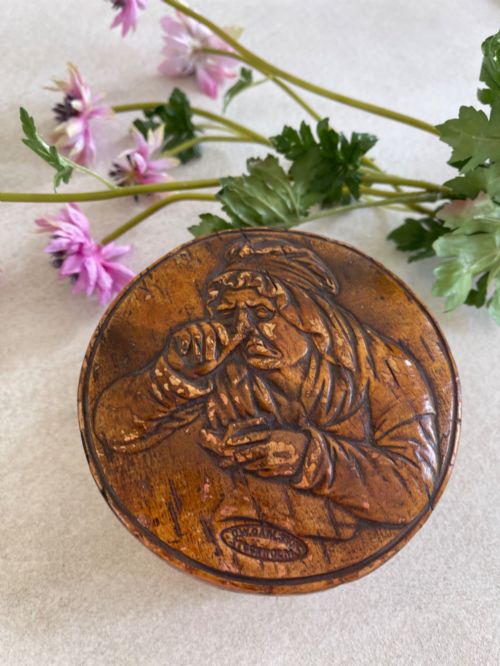
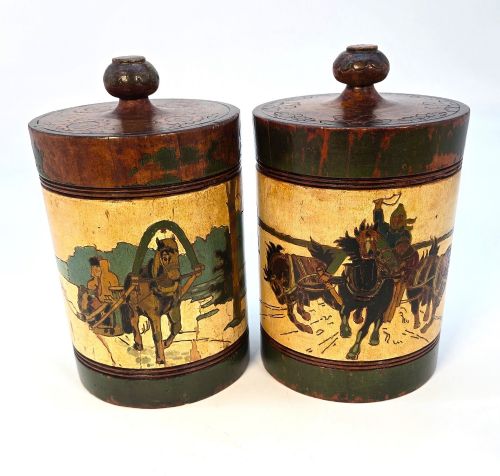
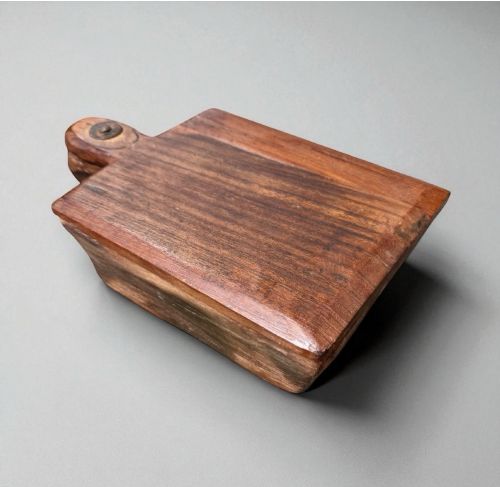
When you search for a carved wooden container, you enter a diverse field spanning domestic utility pieces and small personal items. The selection ranges from wall-hanging candle boxes and salt boxes to figural tobacco jars, snuff boxes and substantial coal scuttles.
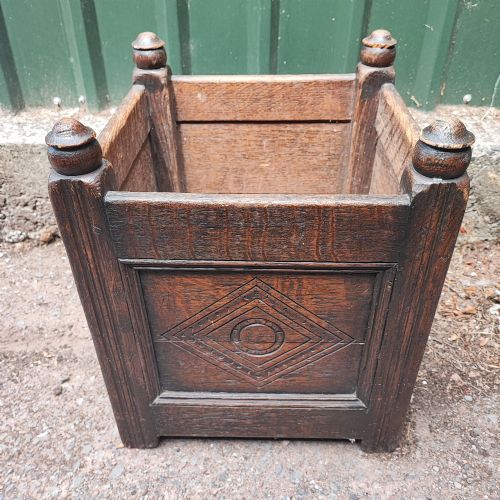
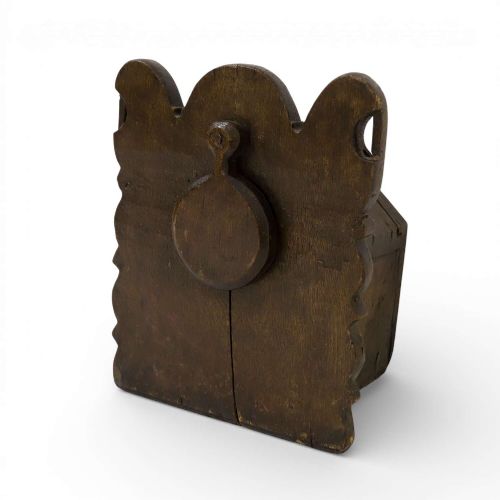
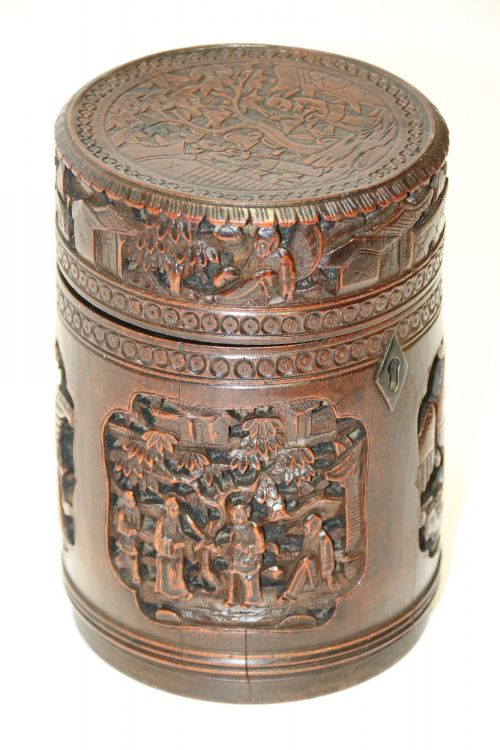
The domestic oak and mahogany examples reflect everyday life in 17th, 18th and 19th-century homes, often featuring hanging slots or original iron hardware. Meanwhile, intricately carved fruitwood, linden wood and bamboo items from Black Forest, Chinese and European workshops serve more decorative or personal functions.
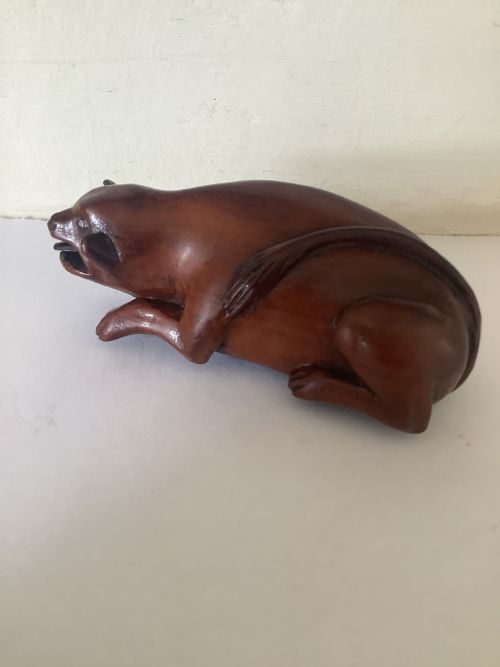
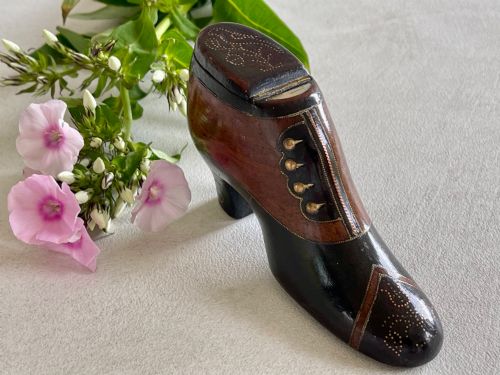
Buyers frequently encounter utilitarian oak containers alongside whimsical figural pieces like snuff shoes, gnomes and bears. These objects demonstrate both the plain necessity of historic storage and the playful skill of vernacular carvers.
Materials and construction
Makers relied on native timbers like oak, elm, mahogany and fruitwood, alongside imported hardwoods and bamboo, selecting each for grain and workability. Simple domestic wall boxes were joined with pegged or dovetailed construction, while figural items and snuff containers involved patient hand-carving and turning.
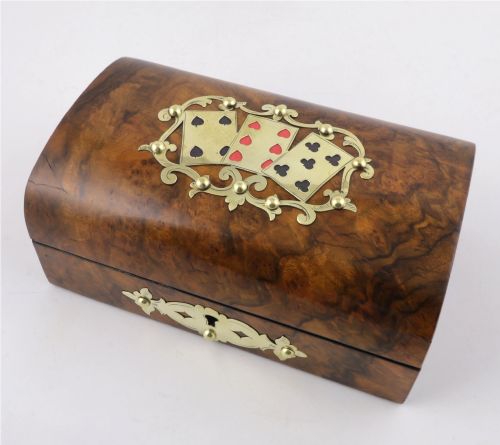
Surface treatments range from plain waxed finishes to traces of historic red paint, brass pique work, and inlaid details. Hardware such as hinges, handles and liners typically incorporate brass and iron, fixed securely to withstand daily handling.
Listings feature oak, mahogany, fruitwood and elm, spanning periods from the 17th century to the Edwardian era.
Distinctions in quality
The hierarchy of these objects rests on the crispness of the carving and the integrity of the timber. Sharp, deeply undercut details in linden wood or fruitwood elevate figural boxes, whereas softened, worn details suggest heavy handling or over-cleaning.
Originality of surface and hardware dictates value among collectors. Pieces retaining their original iron hinges, brass fittings, liners or traces of early paint outrank those stripped down or refitted with modern replacements.
Christopher Dresser·Gillows
The Carved Wooden Container Glossary
- Treen
- Small handmade wooden objects for domestic or personal use. This broad category includes snuff boxes, turned cups, shoe-shaped containers and small treen vessels.
- Snuff box
- A small lidded container designed to hold powdered tobacco. These items frequently display ingenious double openings, sliding lids or carved figural motifs.
- Purdonium
- A dedicated type of Victorian coal box designed for domestic hearths. They usually feature a sloping front lid and an interior metal liner to catch debris.
- Salt box
- A wall-mounted storage container with a hinged lid and a high back panel pierced for hanging. These were essential kitchen fixtures in 17th and 18th-century homes.
- Pique work
- A decorative technique involving tiny points of gold or brass inlaid into wood, shell or tortoiseshell. It often appears on geometric or floral motifs upon snuff containers.
Carved Wooden Container: Frequently Asked Questions
What were wall hanging candle boxes used for?
These domestic oak or pine containers hung near doorways or hearths to keep tallow dips and wax candles safe from pests and dust. Their hinged lids and high pierced backs allowed easy access and secure wall mounting.
Over generations, regular handling imparted a rich warm patina to the timber. They remain practical for small household storage today.
How do I date a wooden snuff box?
Dating relies on combining the timber species, the style of carving, and the method of construction. Georgian and 18th-century examples often employ pressed maple or dense fruitwoods with simple, elegant sliding lids.
Victorian and later pieces frequently show more complex figural carving, mechanical hinges or brass inlay. Examining the wear inside the well also helps indicate age.
How do I care for antique treen and wooden boxes?
Keep wooden containers away from direct sunlight and rapid temperature changes to prevent the timber from splitting or warping. Occasional application of a microcrystalline wax helps nourish the historic surface.
Avoid using modern liquid polishes or soaking the items in water. Gentle dusting with a dry cloth is sufficient for maintenance.