



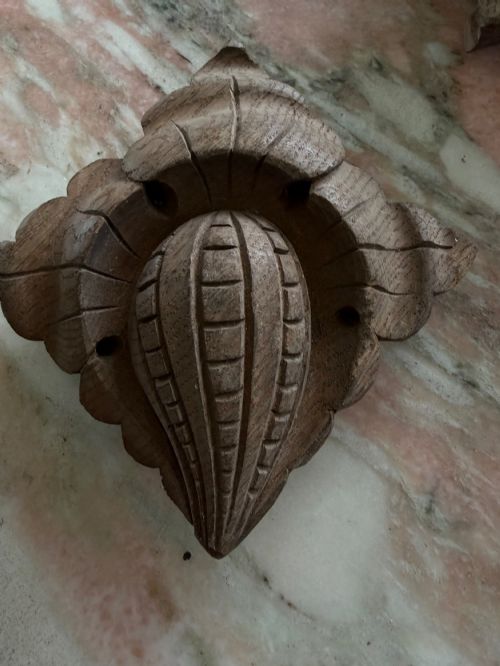


Carved Wooden Ceiling Pendant
A carved wooden ceiling pendant brings warmth and hand-carved texture to a room, offering an atmospheric focal point above a dining table or hallway.
Carved Wooden Ceiling Pendant
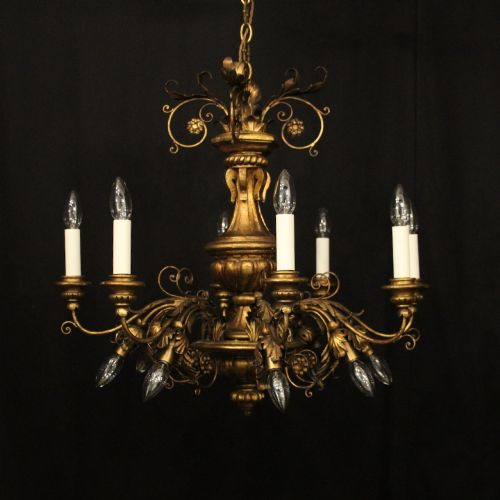
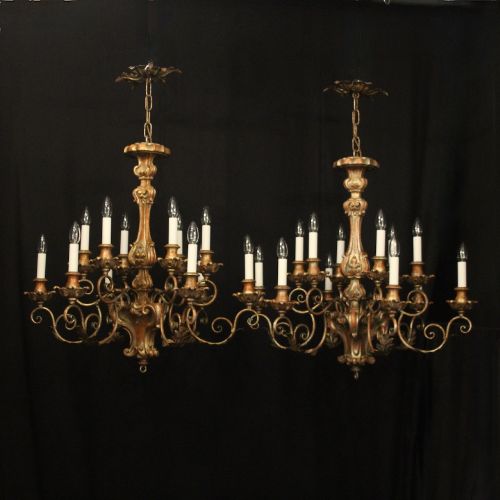
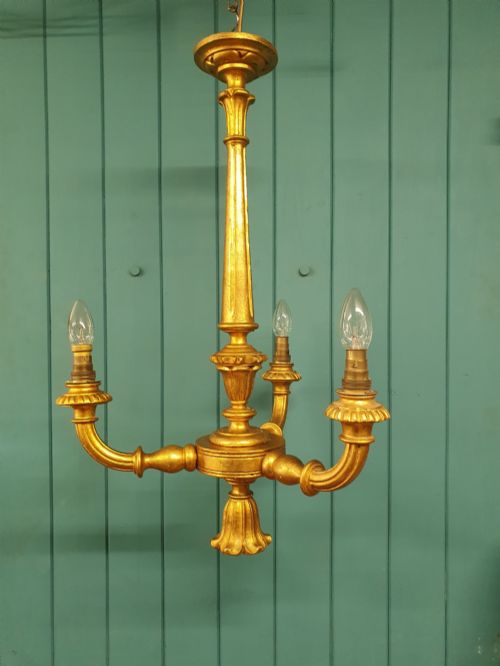
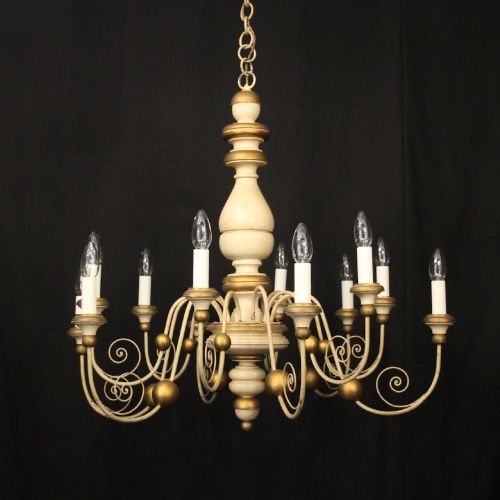
When you search for a carved wooden ceiling pendant, you encounter multi-armed chandeliers and architectural elements fashioned from timber. These pieces span centuries of craftsmanship, ranging from eighteenth-century oak ceiling boss panels to twentieth-century Florentine and French chateau lighting.
The versions most commonly met on this page include elaborate giltwood and polychrome chandeliers originating from Italy and France. They merge structural woodwork with metal arms and delicate gold leaf finishes to create distinct overhead illumination.
How they were made
Maker's hands shaped these pieces primarily from solid wood, often layering gesso over the carved timber to provide a smooth surface for gilding. Artisans applied gold leaf by hand to catch the light, while others utilised polychrome paints to achieve colourful, decorative schemes.
Structural stability relied on the integration of wrought iron and other metals for the internal wiring and arms that support the lights. Oak was also utilised in architectural panels, carved directly into heavy relief without surface metallic leaf.
Carved Wooden Ceiling Pendant Retail Price Guide 2026
Typical asking prices for carved wooden ceiling pendant among the pieces listed under this phrase on Sellingantiques today, from the lower quarter to the upper quarter. They describe what is for sale here now, not the wider market.
The listings span periods from the 18th century through the Edwardian era up to 1930, using materials including giltwood, gesso, wrought iron, and polychrome wood.
What varies in quality
The depth and crispness of the carving dictate much of the visual distinction between examples. Pieces that display confident, deep relief work in the timber demonstrate superior craftsmanship compared to softer, shallower moulding.
The application of the finish also creates a clear hierarchy. Hand-applied gesso and genuine gold leaf age with a rich patina, whereas inferior decorative surfaces lack the complex tonal depth seen in fine eighteenth-century and nineteenth-century work.
The Carved Wooden Ceiling Pendant Glossary
- Giltwood
- Wood that has been covered with a thin layer of gold leaf. This technique provides a luminous metallic finish that reflects candlelight and electric illumination alike.
- Gesso
- A plaster mixture applied to wood as a base for gilding or painting. It allows carvers to achieve sharp details before applying gold leaf.
- Polychrome
- Decorated in multiple colours. This finish is frequently found on Italian Florentine fixtures to add vibrant visual texture.
- Ceiling boss
- A decorative projection that conceps the junction where a ceiling fixture meets the architectural structure. These wooden panels often feature central carved motifs.
Carved Wooden Ceiling Pendant: Frequently Asked Questions
How do I hang a heavy wooden chandelier?
These fixtures require secure anchoring into ceiling joists rather than plaster alone. Due to the weight of solid wood, gesso, and metal arms, professional installation by an electrician ensures safe support.
Position the pendant at a height that clears household traffic while remaining a visual centrepiece in the room.
How do I clean giltwood safely?
Dust gently using a dry, soft brush or a feather duster to protect the delicate gold leaf layers. Avoid liquid cleaners and chemical sprays, which strip the historic gesso and metallic surfaces.
Regular maintenance prevents dust accumulation without risking abrasion to the hand-finished wooden details.
What rooms suit a Florentine chandelier?
Dining rooms and high-ceilinged entrance halls accommodate the scale and ornate presence of Florentine lighting best. The carved wooden arms and polychrome details complement traditional architectural proportions and neutral wall colours.
Pairing these fixtures with dimmer switches allows you to control the atmosphere and highlight the gilding.
Are these fixtures wired for modern use?
Many antique pieces have been rewired for contemporary electrical standards during their lifetime. You should still have an electrician inspect the internal wiring before final installation to ensure local safety compliance.
Bulbholders are typically adapted to accept standard modern candles or small lamps while retaining the original candle tubes.