
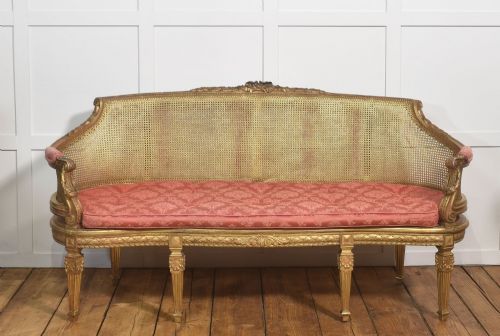


Carved Wooden Canape
A carved wooden canape brings French elegance to a room, offering generous seating framed in finely shaped timber.
Carved Wooden Canape
When you search for a carved wooden canape, you encounter formal multi-seat sofas shaped in classical European traditions. These pieces reflect historical periods including the eighteenth and nineteenth centuries, alongside later revival movements.
You are most likely to meet French designs on this page, particularly those following Louis XV and Louis XVI styles. Makers carved these frames from walnut or giltwood, often complementing them with painted surfaces or exposed cane panels.
The selection extends to George III and Regency pieces alongside Swedish and Italian forms. They appear in forms ranging from two-seat settees to larger salon sofas and parlour suites.
How they were made
Craftsmen carved structural frames from solid timbers such as walnut and beech, applying gilt leaf or paint directly to the wood. Joinery relied on traditional framing techniques to support long seats and heavily carved backrests.
Upholstery methods involved textile coverings like linen, velvet, and fabric secured over padding. Certain examples incorporated woven cane panels into the back or seat structure for lighter support.
Listings feature walnut and giltwood alongside painted finishes and textile upholstery across eighteenth and nineteenth-century periods.
What varies in quality
The crispness of the hand-carving defines the upper tier of these pieces, showing deep relief and clean floral or scroll motifs. Lesser examples feature softer detail and simpler moulding.
Proportion and frame integrity distinguish the finer pieces from standard production. Well-balanced frames with original gilt or painted surfaces hold greater visual clarity.
The Carved Wooden Canape Glossary
- Giltwood
- Timber treated with a thin layer of gold leaf applied over a prepared gesso ground. This finish appears frequently on formal eighteenth and nineteenth-century seating.
- Louis XV Style
- A design movement characterised by asymmetrical curves, cabriole legs, and naturalistic floral carvings. It emerged during the mid-eighteenth century and saw revivals later.
- Bergere
- An enclosed upholstered armchair or settee with solid upholstered sides. The wooden frame remains largely exposed around the padded elements.
Carved Wooden Canape: Frequently Asked Questions
What is a canape sofa?
A canape is an upholstered settee with an ornamental wooden frame, traditionally designed for formal European reception rooms. These pieces combine decorative carved woodwork with padded seating for multiple people.
They function as principal seating arrangements in drawing rooms and large halls. Their decorative backs mean they often stand against walls or within spacious interior layouts.
How do I date a wooden sofa?
Dating relies on stylistic markers, construction methods, and the type of wood employed. Eighteenth-century pieces display hand-carved details and specific joinery, whereas nineteenth-century revival items adopt heavier proportions or machine-assisted shaping.
Comparing the decorative motifs against known historical periods clarifies the origin. Details such as cabriole legs or straight tapered supports align with distinct design eras.
Are these settees comfortable?
Comfort depends on the depth of the seat and the padding style utilised within the frame. Many period pieces offer firm support suited for formal sitting rather than lounging.
Upholstery materials range from traditional horsehair padding to modern fillings depending on restoration work. Checking the seat depth helps determine daily usability.
Where should I place a canape?
These sofas anchor formal living spaces, large bedrooms, or wide hallways as statement seating. Their decorative frames look best when positioned with adequate surrounding space to show the carved woodwork.
Pairing them with period armchairs or matching salon suites creates a cohesive room layout. Placing them away from direct sunlight protects vulnerable fabrics and gilt finishes.