


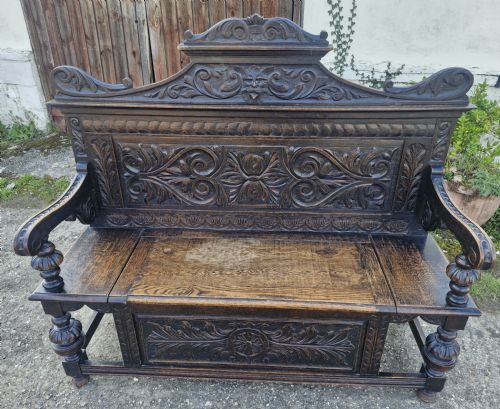

Carved Wooden Box Settle
A carved wooden box settle combines high-backed seating with secure under-seat storage, offering robust utility and traditional presence for halls and living spaces.
Carved Wooden Box Settle
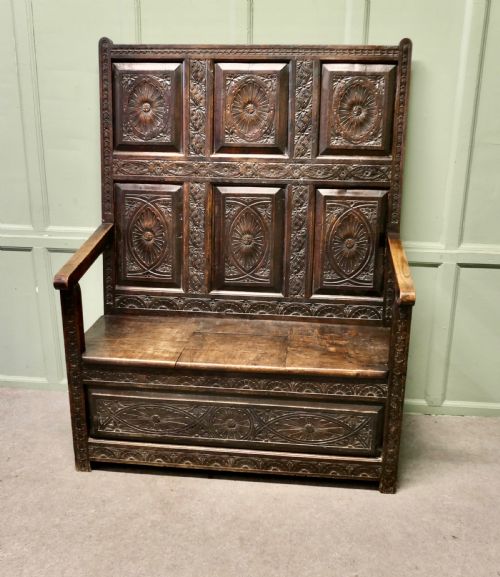
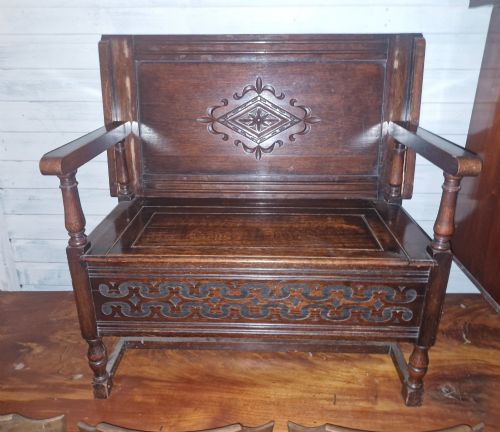
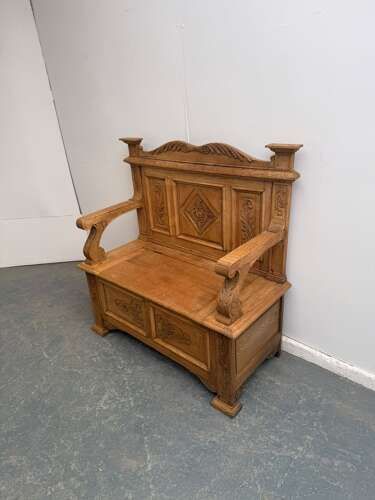
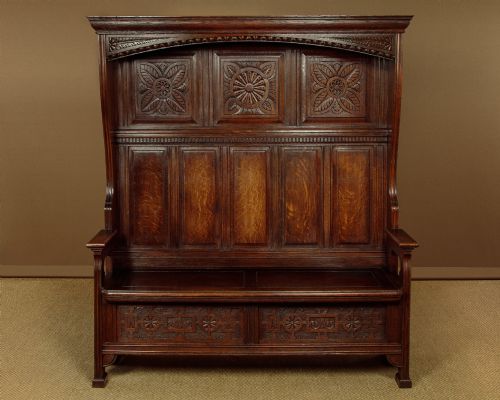
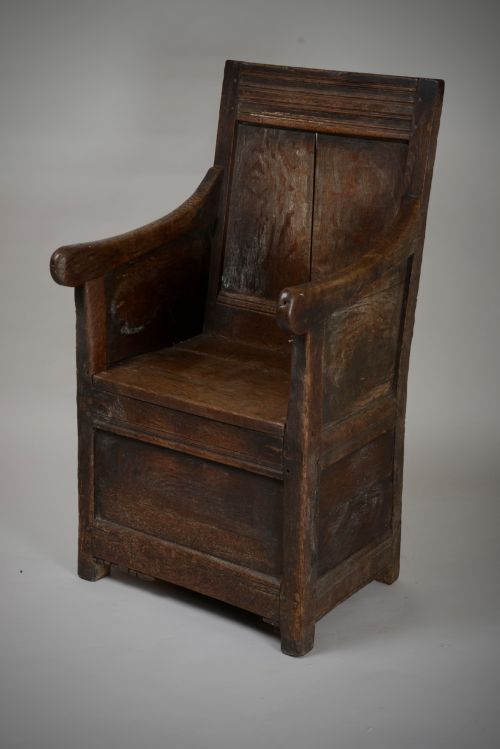
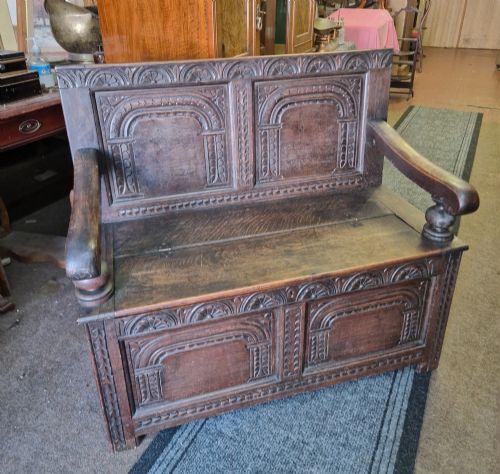
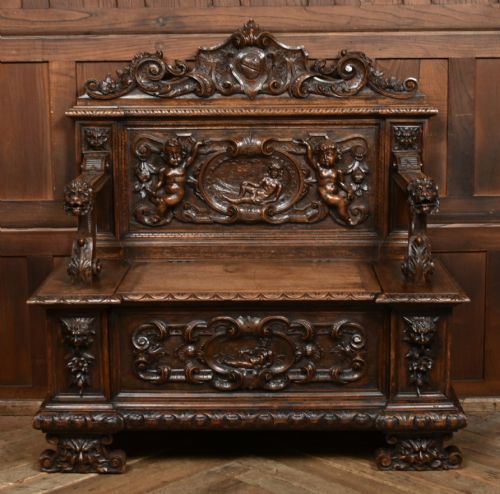
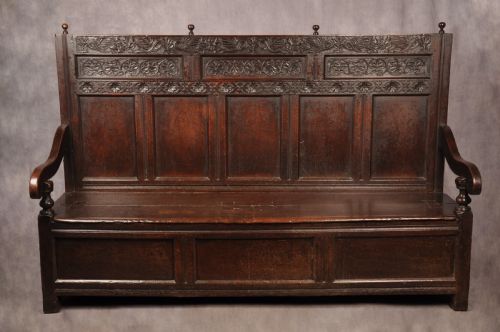
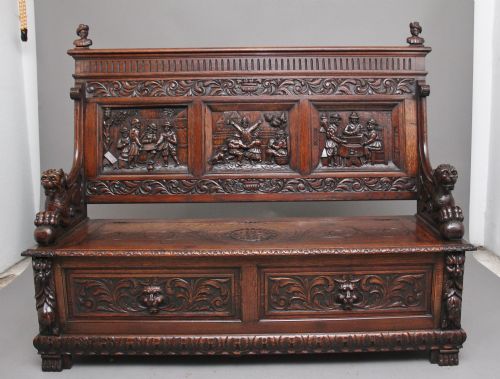
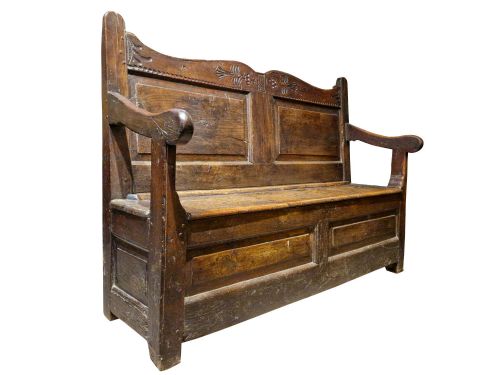
When you search for a carved wooden box settle, you encounter sturdy seating forms spanning several centuries from the sixteenth century onwards, with oak dominating the selection alongside walnut and mahogany. These pieces range from high-backed seventeenth-century regional examples to compact early twentieth-century hall seats featuring lift-up lids and panelled construction.
The layout typically incorporates a solid backrest, enclosed arms, and a hinged seat base opening to a deep storage cavity. Shorter half-seaters and canopy-topped variants also appear, alongside continental forms like the Italian Renaissance Revival cassapanca bench.
Early periods supply substantial oak frameworks with deep relief carving, while later Victorian and Edwardian interpretations utilise lighter waxed or stripped finishes. Regional British styles sit alongside French and Italian examples, creating considerable variety within the broad category of enclosed wooden seating.
How they were made
Cabinetmakers constructed these frames primarily from solid oak, walnut, and mahogany, utilising sturdy joinery methods suited to heavy daily use. Panels were typically inset into grooved framing to accommodate natural wood movement over time.
Carving was executed directly into the timber by hand, ranging from shallow geometric motifs to elaborate figurative relief on backs and arm supports. Iron hinges and straps frequently secure the lifting lids and fold-over top mechanisms.
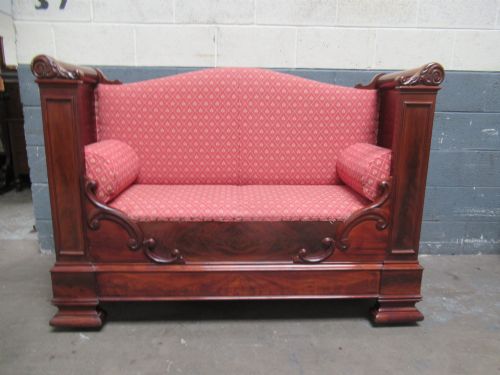
Surfaces received various treatments across different eras, from traditional wax polishes that built up deep patinas to later stripped golden oak finishes and flame mahogany veneers.
Early designers added high wooden wings and enclosed storage boxes primarily to trap body heat and keep farmhands from lingering too long by the hearth.
What varies in quality
The calibre of a carved wooden box settle rests on the crispness of its hand-carving and the integrity of its structural timber. Pieces retaining their original panelled construction and matching hardware stand apart from heavily restored or later assembled variants.
Proportion and scale also dictate distinction, with balanced regional proportions and untouched patination commanding greater appreciation. The selection of timber, such as quarter-sawn oak displaying prominent medullary rays, signals superior material choice by the original maker.
The Carved Wooden Box Settle Glossary
- Box settle
- A wooden bench featuring an enclosed storage compartment beneath a hinged seat, often designed to keep draughts away from the sitter.
- Cassapanca
- An Italian chest-bench combining a seated bench with a large storage chest base, frequently ornamented with carved details.
- Canopy top
- An overhead wooden projection or roof structure attached to the upper back of a settle to trap warmth and block cold air.
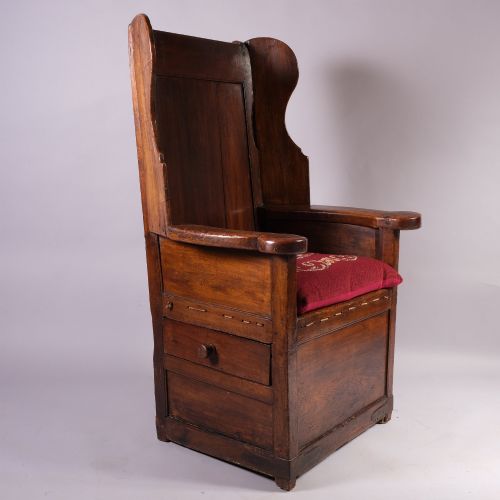
- Lambing chair
- A specialised regional seat featuring hooded sides to shield the occupant from drafts, often equipped with an under-seat compartment.
- Medullary rays
- Natural ribbon-like cellular markings visible in quarter-sawn oak that indicate stability and high timber selection.
Carved Wooden Box Settle: Frequently Asked Questions
What is a box settle used for?
These pieces served historically in entrance halls and living quarters to provide comfortable seating while keeping blankets, garments, or household goods stored securely out of sight beneath the lid.
The enclosed high back and solid armrests additionally helped deflect cold drafts in large, unheated rooms before central heating existed.
How do I date an oak settle?
Dating relies on examining construction marks, joinery techniques, and the style of the hand-carving present on the framework. Seventeenth-century examples typically show pegged mortise and tenon joints with simpler, deeper relief, whereas later revival pieces from the Victorian and Edwardian eras employ more uniform machine-assisted shaping alongside hand detailing.
Timber type and hardware also offer clues, as hand-forged iron hinges appear on earlier pieces while later versions utilise brass or modern steel fittings.
Where should I place a box settle at home?
A hallway or large landing provides a traditional setting where the bench offers a practical spot for putting on shoes while utilising the internal storage space.
They also function well in generous living rooms or kitchens against a blank wall, where the high wooden back creates a distinct architectural focal point.
Are all box settles made of oak?
While oak remains the predominant timber across seventeenth and eighteenth-century examples, later pieces utilise alternative woods including walnut, mahogany, and flame mahogany veneer.
Continental variants and twentieth-century interpretations also introduce regional woods and occasional fabric upholstery elements on associated seat cushions.