

Carved Wooden Bedding Chest
These heavy storage vessels bring centuries of domestic history into a room, offering robust utility wrapped in centuries of carved timber.
Carved Wooden Bedding Chest
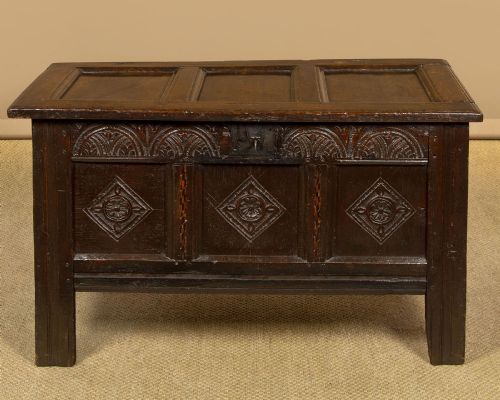
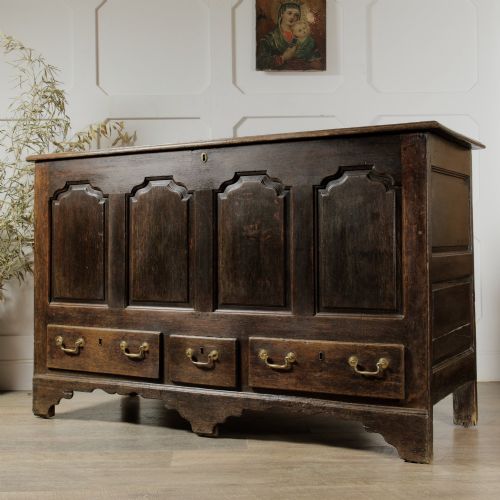
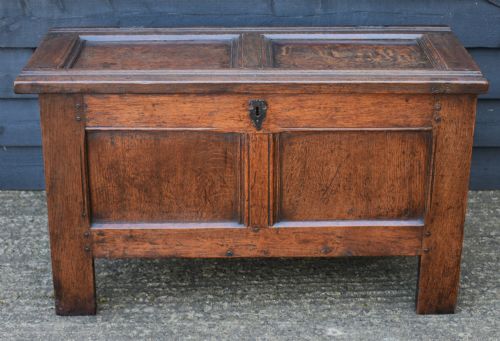
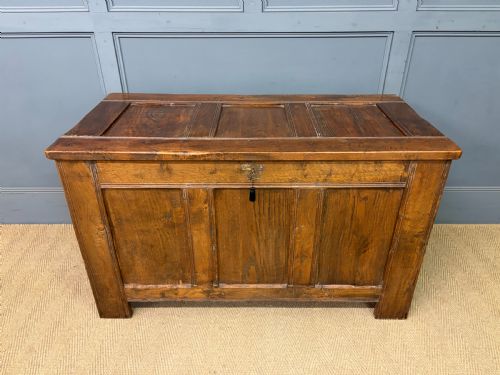
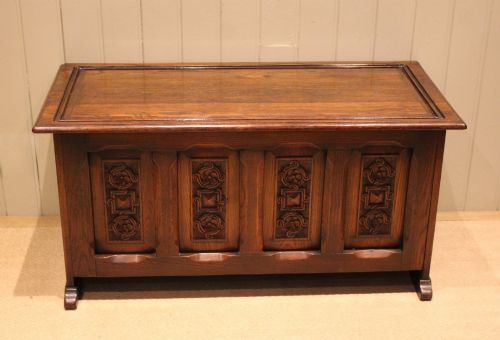
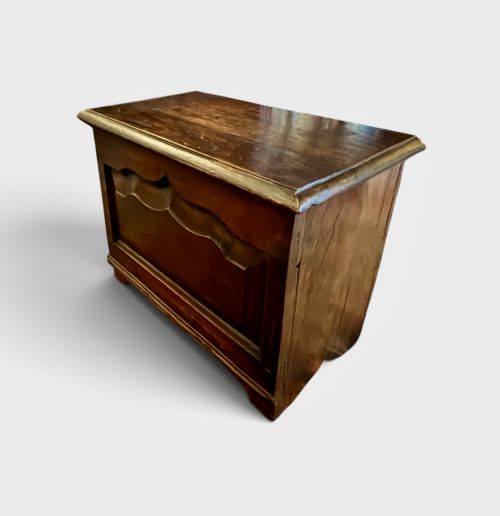
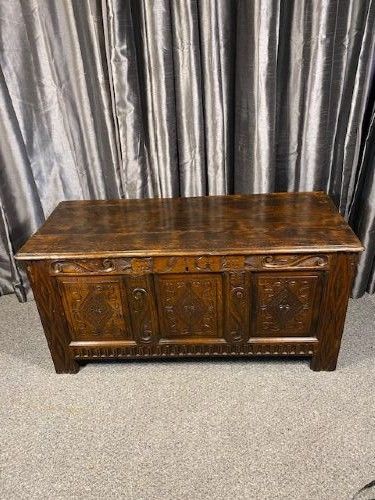
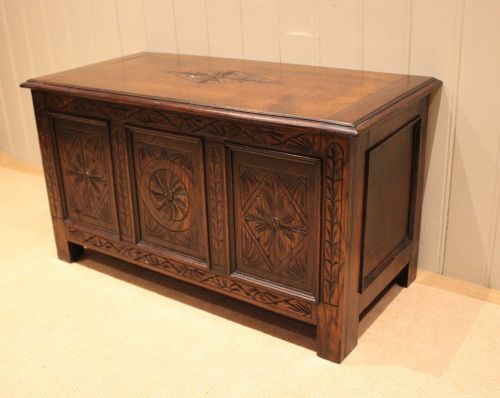
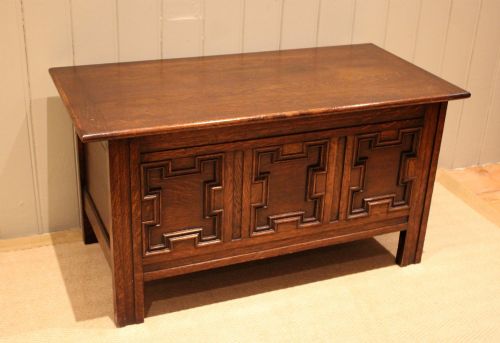
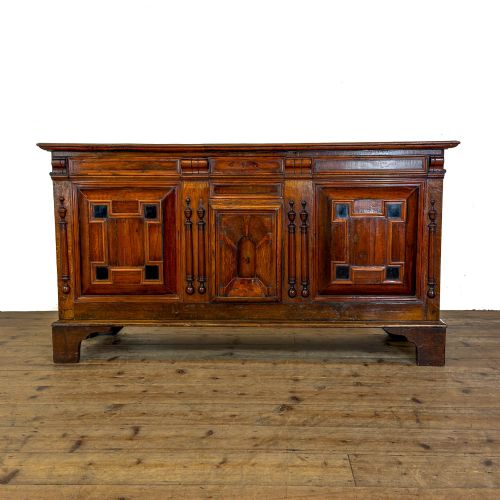
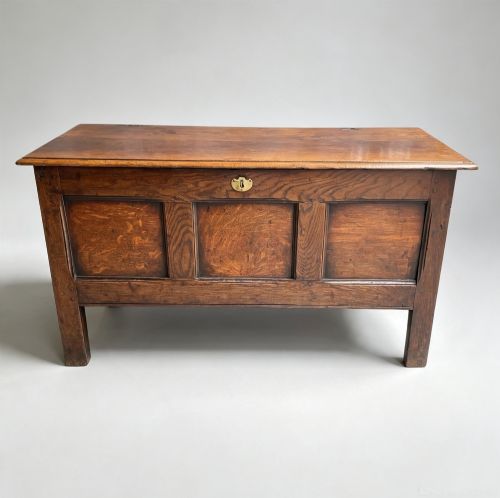
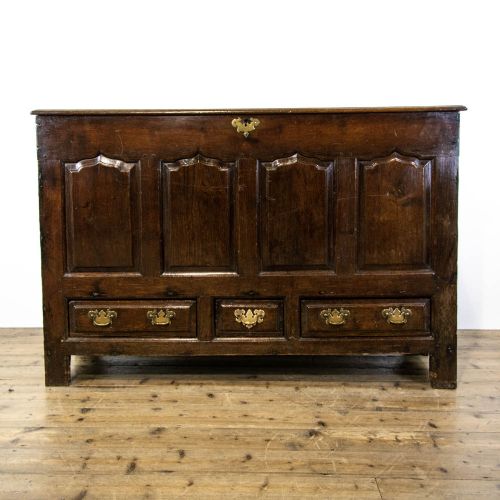
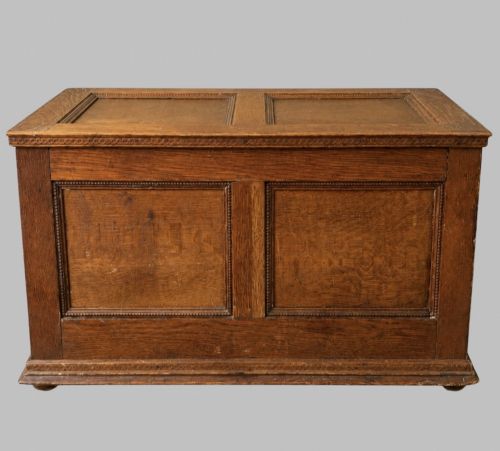
A carved wooden bedding chest serves as a sturdy receptacle for linens, blankets, and garments, often functioning as a bench or table top in older domestic interiors. These pieces appear primarily as heavy oak coffers, blanket boxes, and mule chests spanning the seventeenth and eighteenth centuries, alongside later revival iterations.
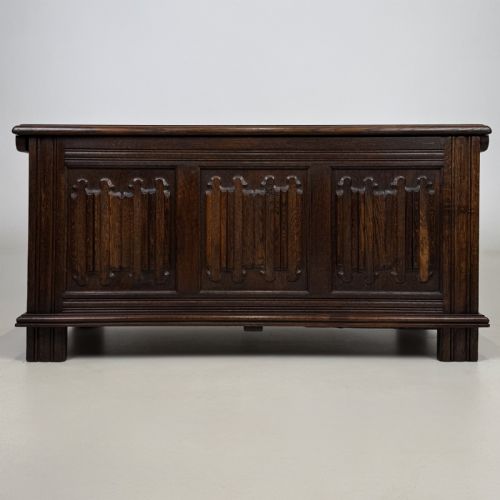
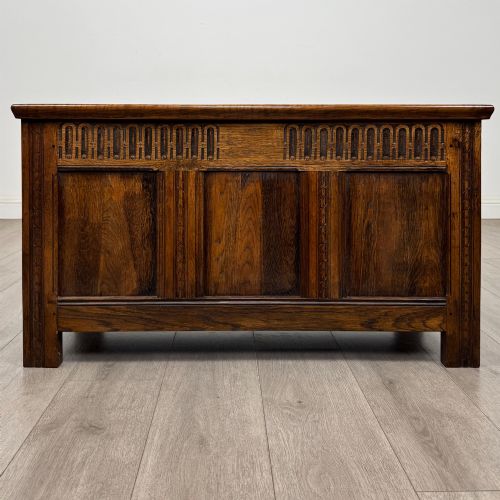
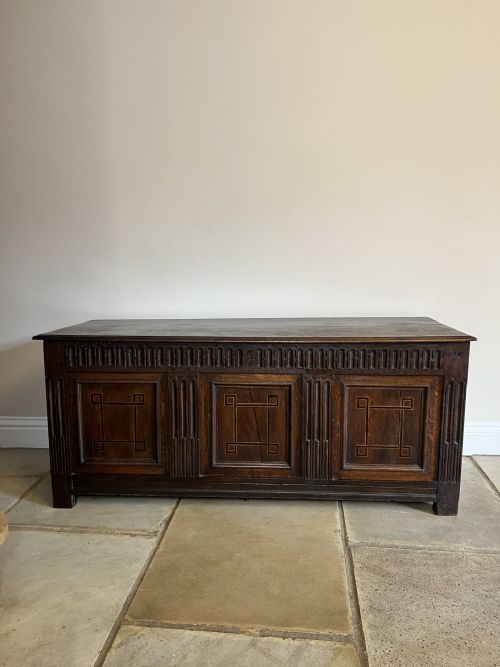
The form is defined by a rectangular timber box with a hinged lid, frequently embellished with panelled fronts and intricate chisel work. Buyers encounter seventeenth-century originals featuring deep geometric or figural carvings, as well as eighteenth-century Georgian variants and early twentieth-century revival pieces.
How they were made
Joiners constructed these chests predominantly from solid oak, utilising pegged mortise and tenon joints to secure the heavy panels together. This traditional frame-and-panel construction allowed the timber to expand and contract naturally with seasonal humidity changes without warping the main structure.
Metalwork played a functional role in assembly and operation, incorporating wrought iron or brass hinges, latches, and occasional carrying handles. Selected examples received surface treatments including ebonising, painting, or gilding to enhance the visual depth of the carved motifs.
Carved Wooden Bedding Chest Retail Price Guide 2026
Typical asking prices for carved wooden bedding chest among the pieces listed under this phrase on Sellingantiques today, from the lower quarter to the upper quarter. They describe what is for sale here now, not the wider market.
Many seventeenth-century coffers still smell faintly of centuries-old beeswax and dry timber when you lift the heavy lid.
What varies in quality
The crispness and depth of the chisel work dictate much of the visual merit, distinguishing confident period carving from later, shallower mechanical replication. Master joiners achieved balanced compositions where the relief ornament integrates harmoniously with the structural stiles and rails.
The integrity of the timber and the retention of original hardware, including hinges and internal till boxes, heavily influence the standing of a piece. Survival of untouched surfaces and honest patina demonstrate how gently a chest has aged through centuries of domestic use.
The Carved Wooden Bedding Chest Glossary
- Coffer
- A large wooden chest traditionally used for storing valuables, documents, or textiles. These sturdy boxes often sat at the foot of a bed.
- Mule chest
- A storage chest featuring one or more drawers beneath the main lift-top compartment. This form evolved by combining the traditional coffer with the utility of a chest of drawers.
- Kist
- A regional term of Scandinavian origin used primarily in Scotland and northern England for a wooden chest or box. They served identical domestic storage functions to southern coffers.
- Stile and rail
- The vertical and horizontal framing members of a panelled chest. This construction method provides rigid structural support while trapping the floating centre panel securely.
- Marquetry
- The art of applying decorative veneer pieces to a structure to form intricate geometric or pictorial designs. It appears on select storage chests to provide contrast against solid oak surfaces.
Carved Wooden Bedding Chest: Frequently Asked Questions
What did people store in a carved wooden bedding chest?
These vessels held household textiles, heavy woolen blankets, winter garments, and valuable family linens that needed protection from dust and pests.
Because houses lacked built-in closets, the chest served as the primary wardrobe for personal belongings and valuable fabrics.
How do I date an antique oak coffer?
Dating relies on examining the construction methods, joint types, tool marks left by the joiner, and the evolution of the carved decorative motifs. Seventeenth-century examples typically display hand-split oak panels and pegged frames, whereas later revival pieces show uniform machine-sawn timber.
Hardware styles and the presence of shrinkage cracks also help specialists place the chest within its correct century.
Where should I place a heavy wooden chest in my home?
A chest fits naturally at the end of a bed for holding spare bedding, or acts as a low coffee table in a living room. Their flat lids provide a stable surface for lamps, books, or decorative objects.
Keep them away from direct heat sources and strong sunlight to prevent the historic timber from drying out and splitting.
What is the difference between a coffer and a mule chest?
A standard coffer consists solely of a deep top-opening box resting on floor rails or short legs. A mule chest incorporates one or more drawers built into the base beneath the main storage compartment.
This drawer addition marked a transitional step toward the modern chest of drawers.