


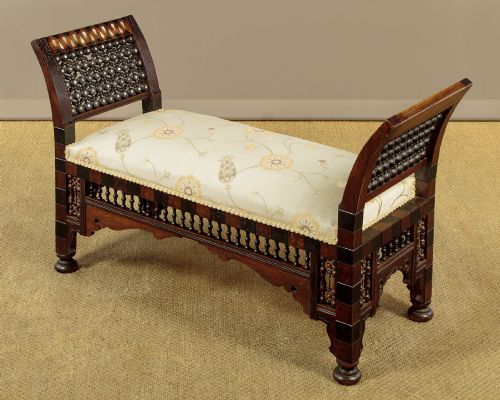

Carved Wood Window Seat
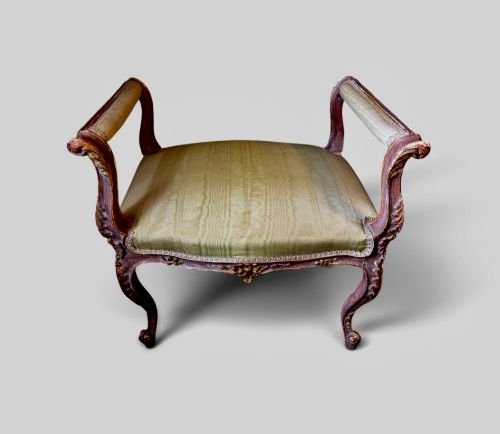
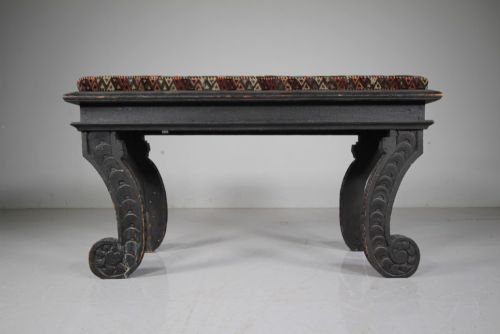
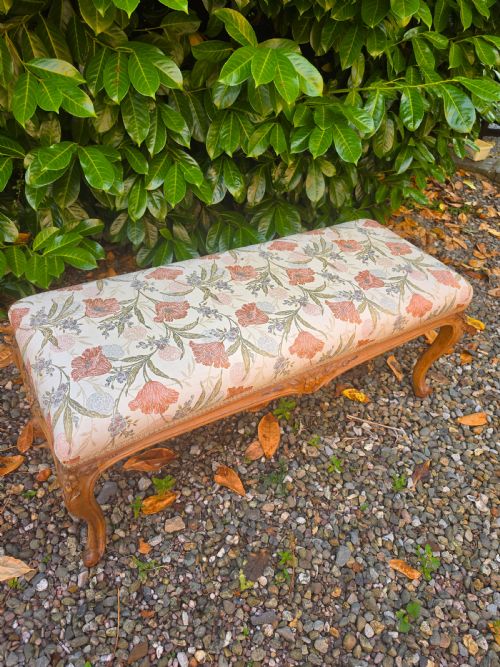
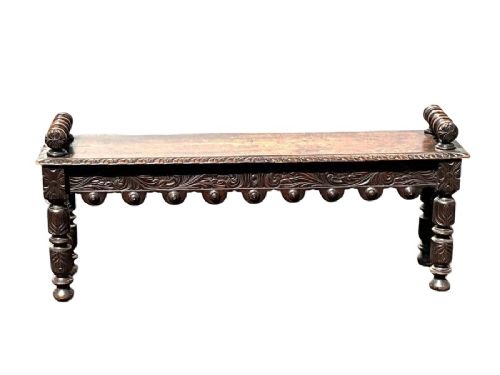
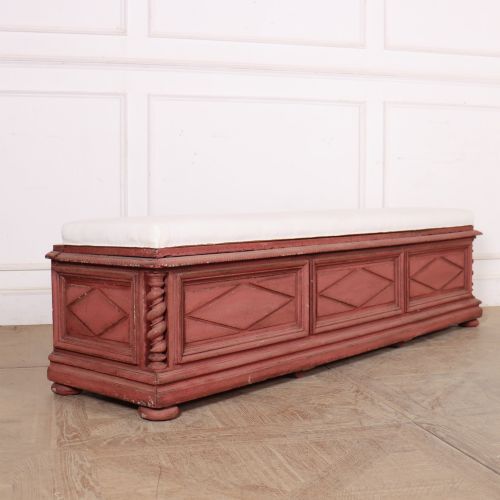
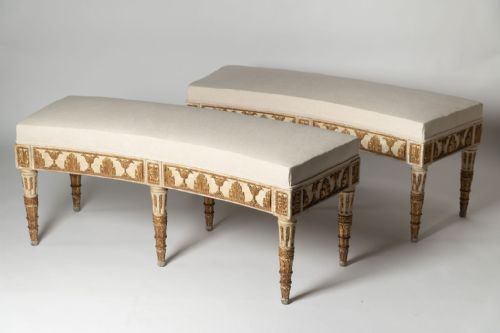
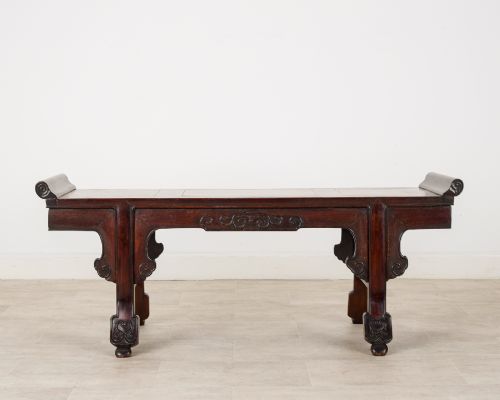
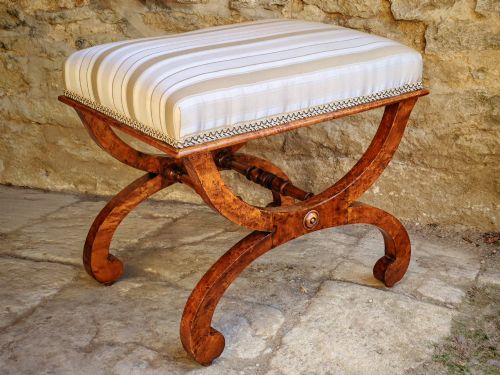
These carved wood window seat examples bring nineteenth-century frames and textile tops together for low-profile seating beneath a casement.
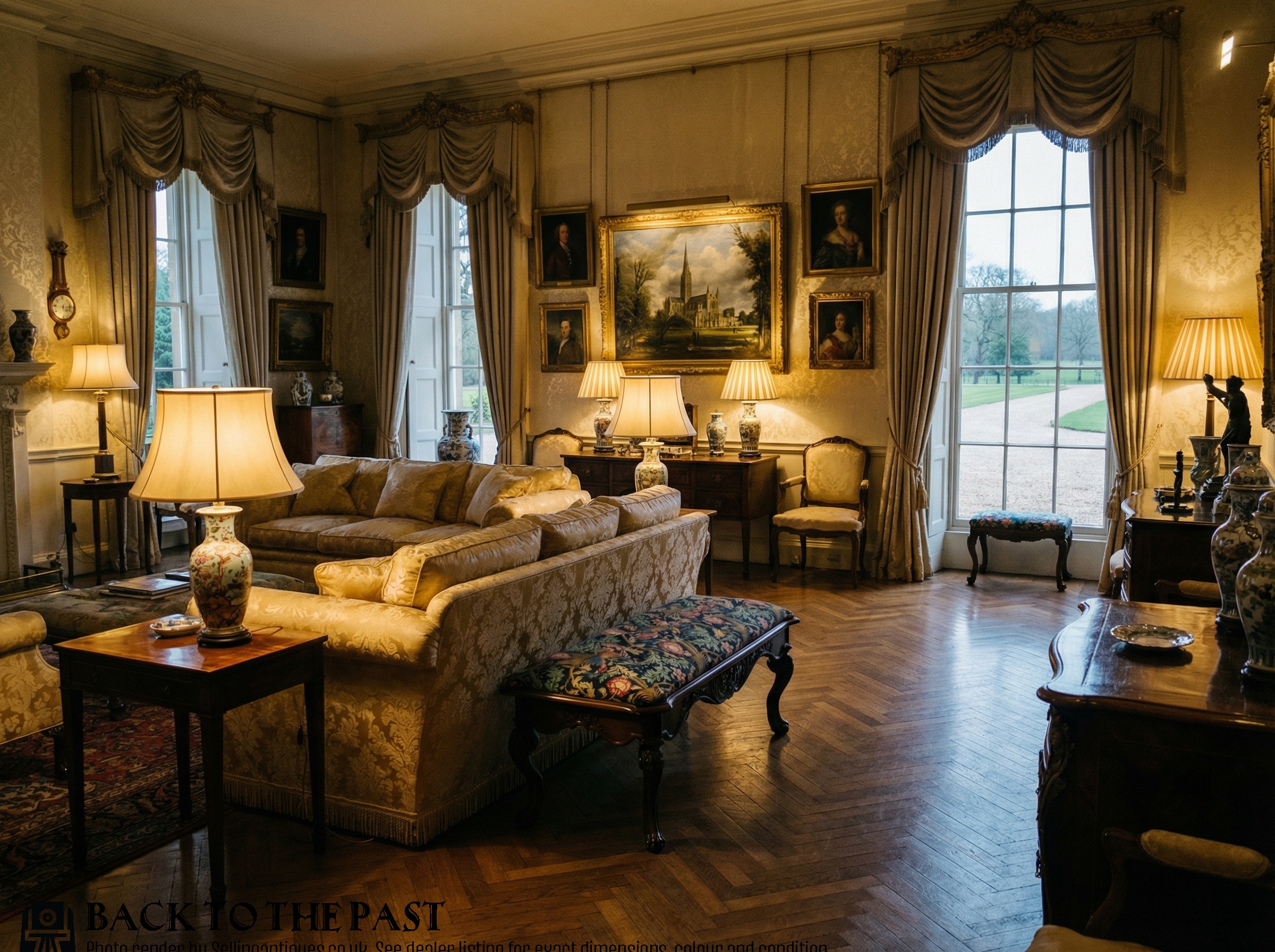
Carved Wood Window Seat
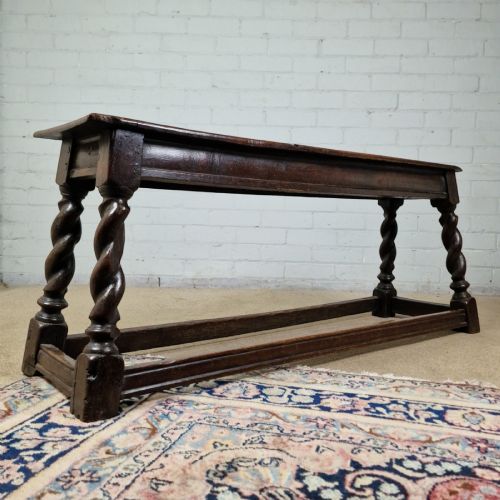
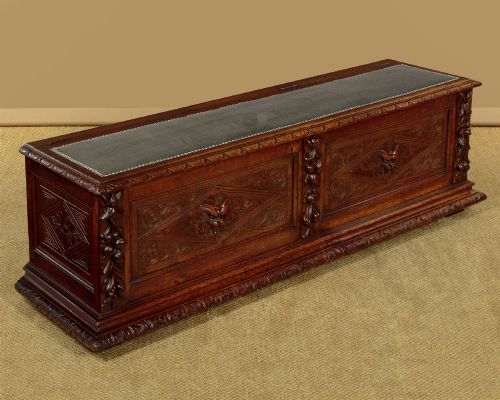
A carved wood window seat spans long benches, curule stools, and upholstered ottomans designed to sit low beneath sills. The selection draws primarily from nineteenth-century workshops, alongside eighteenth-century oak pieces and early twentieth-century revivals.
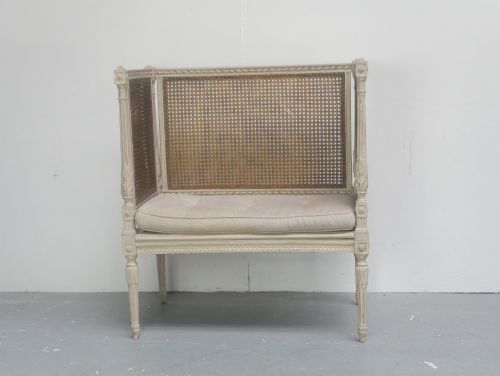
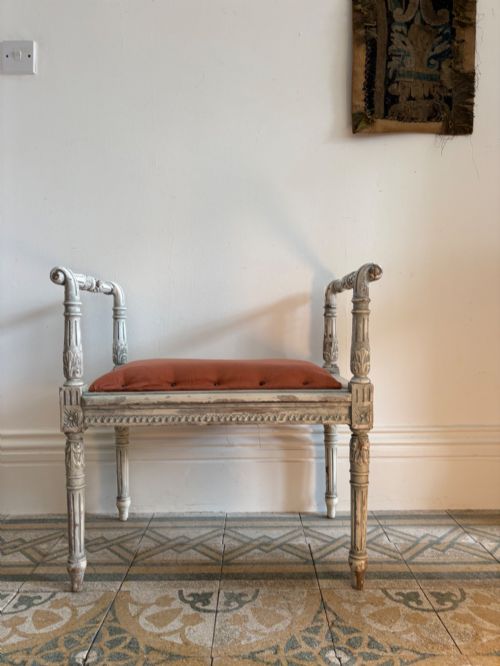
Makers shaped these forms in diverse regional vocabularies, pairing English mahogany and oak with French giltwood, Italian neoclassical painted pine, and Chinese hardwood. Many survive as single long benches or matched pairs intended for hallways and reception rooms.
Materials and construction methods
Carpenters relied on dense hardwoods including mahogany, oak, walnut, and rosewood to support carved decoration such as cabriole legs, ball and claw details, and gilded gesso surfaces. Softer pine and structural timber served frames destined for heavy paint or gesso finishes.
Upholstery completed the form, utilising silk, velvet, tapestry, and fabric secured over horsehair or padding, while specialised variants incorporated hinged compartments, pearl inlay, or woven cane panels.
The listings span mahogany, oak, giltwood, and painted pine across periods from the eighteenth century to the twentieth.
Distinctions in execution and material
The standard of carving defines the tier of a piece, separating sharp, deep relief work on solid hardwood frames from softer, mechanical shaping on later or lesser items. Crisp details on giltwood, gesso, and rosewood indicate skilled workshop production.
Structural integrity and originality of surface finish determine long-term merit. Pieces retaining their primary gilding, patinated oak, or period upholstery fabrics hold greater integrity than those stripped or heavily altered by later restorations.
The Carved Wood Window Seat Glossary
- Curule stool
- A form featuring intersecting X-shaped supports derived from classical Roman folding chairs. These frames often appear in giltwood or mahogany.
- Giltwood
- Timber coated with a thin layer of gold leaf over a prepared gesso ground. This finish is characteristic of neoclassical and revival seating.
- Cabriole leg
- A furniture leg that curves outward at the knee and tapers inward at the ankle, ending in a pad or claw foot. It is frequently seen on eighteenth and nineteenth-century examples.
- Huali
- A fragrant Chinese hardwood prized for its dense grain and used in Qing Dynasty seating. Pieces in this material display distinct reddish-brown tones.
Carved Wood Window Seat: Frequently Asked Questions
Where should I place a window seat?
These long benches suit narrow hallways, the foot of a bed, or beneath low casement windows where standard chairs obstruct the view.
Their compact height allows them to function as occasional seating or low display surfaces without dominating a room.
How do I identify a period frame?
Examine the timber species, joinery methods, and the crispness of the hand-carved ornament to judge the age of the frame.
Nineteenth-century pieces often combine machine-sawn components with hand-finished details, whereas earlier eighteenth-century examples display entirely hand-cut joinery and dense, oxidised oak.
Can I reupholster an antique stool?
Reupholstering is common and often necessary to preserve the usability of pieces with worn or fragile historical textiles.
Retaining the original webbing and underlying padding during the process helps maintain the correct profile of the seat.
What styles are most common?
Victorian, Regency, and French revival styles dominate the available selection, reflecting nineteenth-century tastes for historicism.
Italian neoclassical and Chinese hardwood forms also appear, offering contrasting regional interpretations of low bench seating.