



Carved Wood Umbrella Rack
A carved wood umbrella rack provides a practical and sculptural focal point for an entrance hall, designed to hold wet sticks and heavy coats.
Carved Wood Umbrella Rack
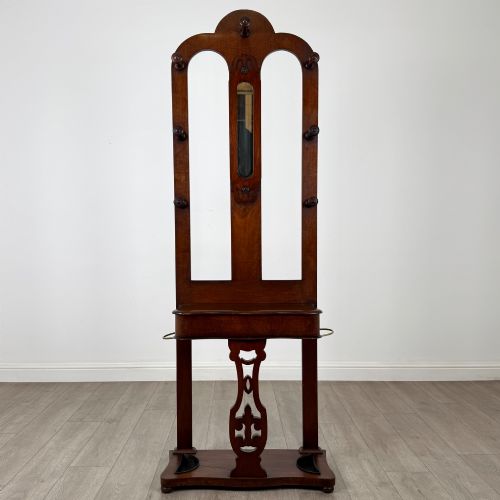
When you search for a carved wood umbrella rack, you enter a category dominated by nineteenth-century and early twentieth-century hall furniture. These pieces combine umbrella and stick storage with hooks for coats and hats, often incorporating mirrors and marble shelves.
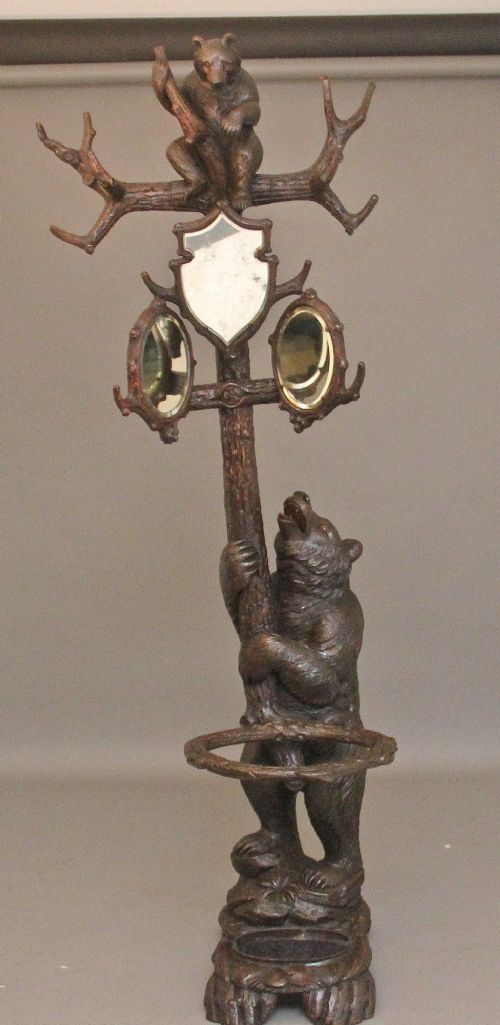
The most common examples you will encounter on this page are substantial Victorian and Edwardian hall stands carved from oak, mahogany, and walnut. Alongside these, Black Forest pieces featuring carved bears and woodland animals appear frequently.
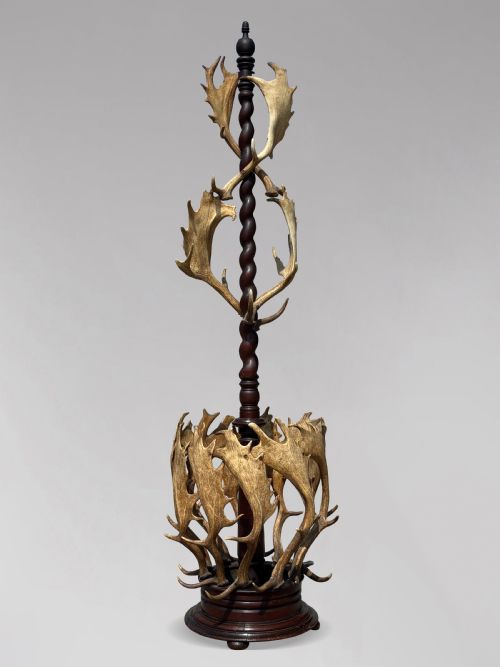
Makers and workshops across the nineteenth century produced these stands to suit grand townhouses and modest domestic interiors alike. Their forms range from narrow wall-mounted racks to large exhibition pieces integrating cast iron drip pans and brass fittings.
How they were made
Joiners and cabinet makers utilised solid hardwoods such as oak, mahogany, and walnut, shaping the structural frames with mortise and tenon joints. Carvers worked directly into the timber to create foliage, Greenman masks, and animal figures.
Metal components were integrated to handle daily utility, including brass hooks for garments and cast iron trays at the base to catch water from umbrellas. Glass mirrors were frequently set into the central backboards, secured with wooden moulding.
Several stands feature carved bears peering out from the hallway woodwork.
What varies in quality
Depth and precision of the carving separate standard production furniture from ambitious exhibition pieces. Crisp execution in Black Forest bear figures or detailed oak foliage indicates skilled workshop output.
The choice of primary timber and secondary fittings dictates the standing of the piece. Substantial mahogany or figured walnut frames paired with original brass hardware and fitted marble shelves represent the upper tier of manufacture.
J Parker of Woodstock
The Carved Wood Umbrella Rack Glossary
- Hall Stand
- A large piece of furniture designed for an entrance hallway, combining umbrella storage, coat hooks, and frequently a mirror or shelf.
- Black Forest
- A nineteenth-century style of carved woodwork originating from the mountain region of central Europe, typically depicting bears, foxes, and natural foliage.
- Greenman
- A sculptural architectural ornament consisting of a face made of or completely surrrounded by leaves and vines, often seen on Victorian oak furniture.
- Drip Pan
- A removable metal or cast iron tray placed at the base of a stick stand to catch moisture from wet umbrellas.
Carved Wood Umbrella Rack: Frequently Asked Questions
How do I spot a Black Forest umbrella rack?
Black Forest stands are distinguished by deep, naturalistic carvings of animals such as bears, foxes, and eagles integrated into the wooden structure. The timber is usually dark walnut or limewood, shaped to resemble tree trunks and branches.
These pieces often have a distinct whimsical quality, featuring animals climbing the frame or holding carved brackets for hats and coats.
Where should I place a wooden hall stand?
These tall pieces require a sturdy wall and adequate floor space in an entrance hall or boot room, where they can function as intended for coats and umbrellas. Ensure the location allows enough clearance to view any integrated mirror and access the coat hooks easily.
Keep wooden stands away from direct heat sources and damp external doors to protect the carved timber and prevent warping over time.
What is the difference between Victorian and Edwardian stands?
Victorian stands tend to be heavier and more ornate, featuring dark mahogany or carved oak with dense foliage, Greenman masks, and large mirrors. They were built to make an imposing statement in a nineteenth-century entranceway.
Edwardian examples often display a lighter aesthetic, utilising simpler geometric lines or Arts and Crafts influences while maintaining practical storage for sticks and hats.
How are umbrella stands kept clean?
Maintenance involves dusting the carved wood regularly with a soft cloth and treating the surface with appropriate furniture wax to preserve the finish. The metal drip trays at the base should be emptied and dried periodically to prevent rust.
Check the stability of the frame and tighten any structural joints or brass hooks gently as needed to accommodate the weight of heavy winter coats.