




Carved Wood Umbrella Holder
A carved wood umbrella holder keeps hallways tidy while bringing substantial timber presence and sculptural character to an entrance.
Carved Wood Umbrella Holder
When you search for a carved wood umbrella holder, you are looking at functional hallway furnishings designed to store wet sticks and umbrellas. These pieces range from dedicated stick stands to larger hall stands incorporating mirrors, shelves, and umbrella compartments.
The versions you are most likely to meet on this page hail from the nineteenth century and the Edwardian era. They appear in regional British and continental European forms, frequently utilising dense hardwoods.
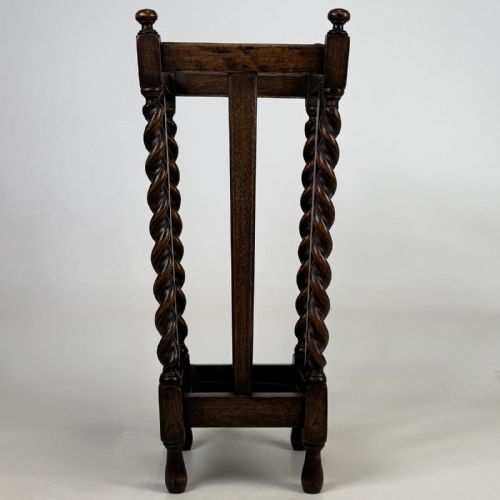
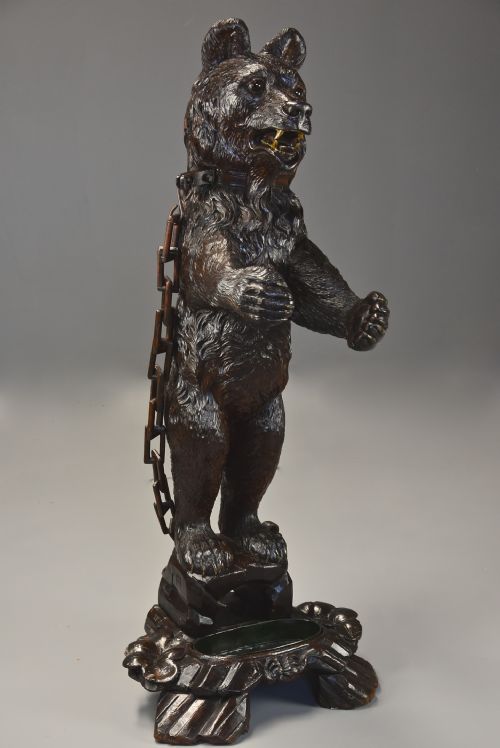
The selection encompasses specific styles including Black Forest animal carvings, Arts and Crafts oak designs, and Victorian Gothic or Italian walnut pieces. Each variety offers a distinct visual weight suited to period and traditional interiors.
How they were made
Carved wood umbrella holders rely on solid timbers such as oak, walnut, mahogany, and lindenwood. Craftsmen shaped these sturdy materials using hand-carving techniques, particularly evident in the detailed animal figures and foliage found on continental pieces.
Many examples integrate structural metal elements, including brass rails, wirework, or removable metal drip pans to catch moisture from wet umbrellas. Heavier hall stands often combine carved wooden panels with glass mirrors and marble shelves.
Carved Wood Umbrella Holder Retail Price Guide 2026
Typical asking prices for carved wood umbrella holder among the pieces listed under this phrase on Sellingantiques today, from the lower quarter to the upper quarter. They describe what is for sale here now, not the wider market.
Several carved wooden bears stand guard in the hallway, perpetually ready to hold your walking stick.
What varies in quality
The distinction between ordinary and exceptional examples lies in the depth and ambition of the carving. Master carvers achieved remarkable anatomical realism and expressive detail in animal figures, whereas lesser pieces feature repetitive, shallow foliage.
Material selection and structural scale dictate the hierarchy of these items. Large exhibition-quality pieces hewn from substantial oak or walnut trunk sections command attention through their sheer presence and superior timber selection.
The Carved Wood Umbrella Holder Glossary
- Black Forest
- A nineteenth-century decorative style originating from Brienz in Switzerland, characterised by realistic animal carvings in lindenwood or walnut. Bears holding sticks or standing against tree trunks are particularly typical.
- Hall stand
- A large piece of hall furniture combining coat hooks, a mirror, a glove drawer, and integrated umbrella wells with drip pans. They dominated grand nineteenth-century entranceways.
- Lindenwood
- A pale, fine-grained wood favored by European carvers for its cooperative texture and lack of pronounced grain. It allows for intricate, deep-relief carving without splintering.
- Drip tray
- A removable metal basin fitted into the base of a stick stand to protect wooden floors from moisture. They are essential functional components of period umbrella holders.
Carved Wood Umbrella Holder: Frequently Asked Questions
How do I protect the wood from wet umbrellas?
Period umbrella holders typically feature metal drip pans or zinc liners at the base to catch water. Ensure these liners remain intact and dry them regularly to prevent moisture damage to the surrounding wood.
For pieces without original metal inserts, modern waterproof trays can be discretely placed inside the base to protect the vintage timber from standing water.
Where should I place a hall stand?
These pieces belong in entrances, porches, or spacious hallways where their scale can be appreciated. They require adequate clearance so that coats and umbrellas can be accessed without crowding the passage.
Keep them away from direct heat sources such as radiators to prevent the solid hardwoods from drying out and splitting over time.
How do I identify Black Forest carvings?
Black Forest carvings are distinguished by naturalistic subjects, most commonly bears, rendered with textured fur and lifelike postures. They often incorporate natural tree forms, branches, and rustic bark textures into the woodwork.
Most pieces date from the nineteenth century and originate from Swiss or German workshops specialising in animal sculpture for the tourist and export markets.
What is the difference between an umbrella stand and a hall stand?
An umbrella or stick stand is a compact, dedicated holder designed solely for vertical storage of walking sticks and umbrellas. They occupy a small footprint against a wall.
A hall stand is a much larger multi-functional furniture item that incorporates umbrella wells alongside coat hooks, a central mirror, and sometimes a shelf or glove box.