
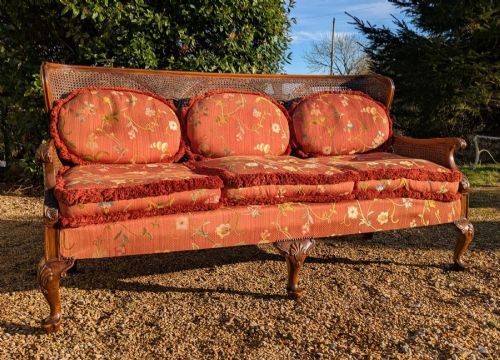
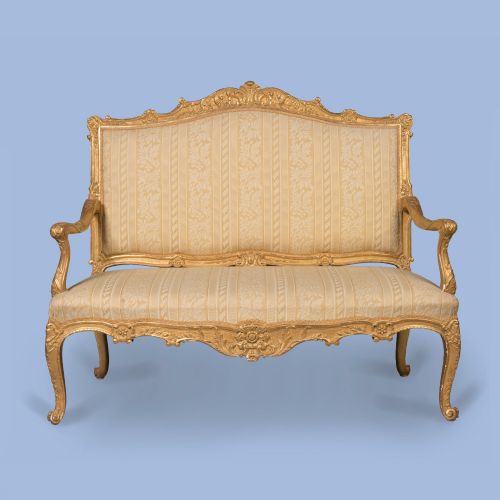
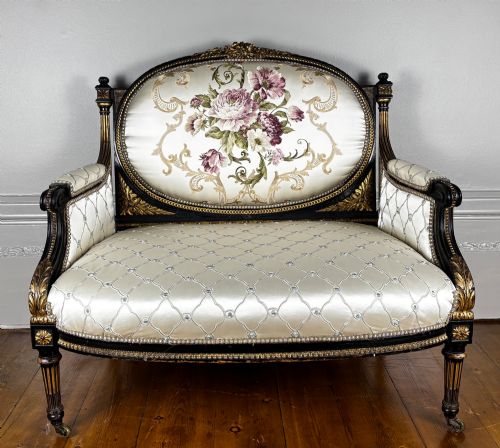
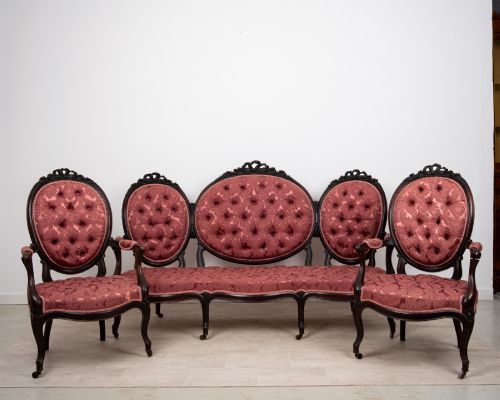


Carved Wood French Settee
A carved wood french settee brings substantial presence to a room, offering generous seating rooted in historic design traditions.
Carved Wood French Settee
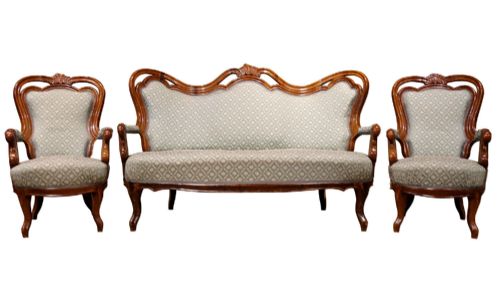
A carved wood french settee is a traditional upholstered seat designed for multiple occupants, surfacing frequently in nineteenth-century interpretations and revival aesthetics. Buyers searching for a carved wood french settee encounter variations ranging from compact two-seat corbeille frames to larger salon suites and daybeds. These pieces reflect continental seating traditions spanning the eighteenth through the early twentieth centuries, with a strong emphasis on nineteenth-century craftsmanship.
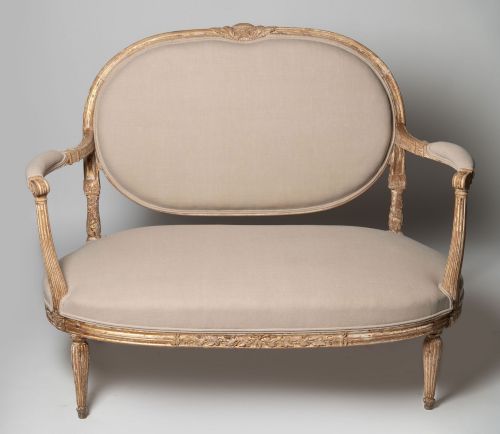
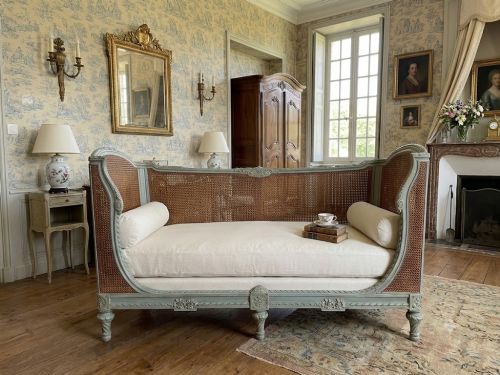
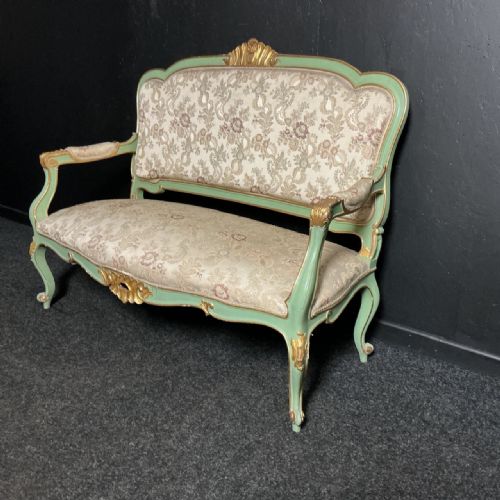
The dominant forms follow established French design idioms, notably Louis XV and Louis XVI styles, alongside Rococo and Victorian revivals. Common configurations include open arm sofas, caned daybeds, and gilded two-seat settees intended for formal reception rooms and parlours. Such seating combines carved wooden framework with textile upholstery, velvet trim, or woven cane panels.
Materials and Construction
Frameworks rely primarily on hardwoods such as walnut, beech, and mahogany, shaped through manual carving to produce flowing curves and structural members. Giltwood finishes, painted surfaces, and ebonised details are applied to the wood substrate to achieve decorative depth and surface sheen. Structural assembly relies on traditional joinery techniques suited to supporting upholstered weights and frequent daily use.
Upholstery methods incorporate textile coverings, velvet trim, deep buttoning, leather elements, and feather cushions supported by internal webbing and spring systems. Caned panels appear on select frames, utilising natural woven materials inserted directly into channels routed within the wooden structure. Gilt decoration often involves the application of thin metal leaf over a prepared base, while painted finishes layer pigments directly onto the carved timber.
Current selections encompass nineteen-century production alongside pieces dating from the late eighteen hundred through nineteen thirty, employing walnut, beech, and giltwood.
Evaluating the Craftsmanship
Quality in a carved wood french settee resides in the depth and crispness of the hand-carved ornamentation across the wooden frame. Superior examples demonstrate fluid relief work where floral motifs, scrollwork, and structural moulding integrate harmoniously without mechanical stiffness. The definition within acanthus leaves, cabriole legs, and crest rails distinguishes skilled artisanal carving from simplified or mass-produced alternatives.
The integrity of the underlying timber frame and the precision of joinery dictate long-term stability and resilience under weight. Finer pieces maintain tight joints at stress points such as arm supports and leg junctions, preventing structural wobble. Additionally, the quality of the original gilding or the application of historic paint finishes contributes significantly to the visual weight and historical authenticity of the piece.
The Carved Wood French Settee Glossary
- Canapé
- A traditional French settee or sofa featuring an exposed wooden frame and upholstered seat and back. Canapés often reflect specific royal design periods such as Louis XV or Louis XVI.
- Giltwood
- Timber coated with a thin layer of gold leaf or metallic powder applied over a prepared gesso and bole ground. This finish provides a reflective, luminous surface characteristic of formal European seating.
- Bergère
- An enclosed armchair or settee featuring upholstered sides integrated into the padded backrest and seat. These pieces frequently include loose feather or down cushions for added comfort.
- Corbeille
- A French term describing a basket-shaped seating form where the backrest curves continuously around into the arms. This enveloping silhouette provides a snug, enclosed seating experience.
- Louis XVI Style
- A neoclassical design aesthetic characterised by straight lines, symmetrical geometry, and fluted legs. It contrasts with the preceding curved ornamentation of the Rococo movement.
Carved Wood French Settee: Frequently Asked Questions
How do I identify a Louis XV style settee?
Look for asymmetrical scrollwork, sweeping cabriole legs, and organic floral motifs carved directly into the wooden frame. These pieces emphasise curved lines and flowing contours rather than straight geometry.
Check the stretcher placement and the shaping of the crest rail, which typically tilts backward for relaxed posture. The overall silhouette avoids sharp angles in favour of naturalistic, undulating forms.
What is the difference between a settee and a sofa?
A settee generally refers to a lighter, two-seat wooden-framed piece designed for secondary rooms or conversational groupings. Sofas traditionally offer wider proportions and heavier upholstery suited for primary lounging.
In historical French furniture, terms like canapé and settee overlap considerably depending on the workshop and period. Both formats utilise exposed carved timber frames, differing mainly in scale and seating capacity.
Can I use a antique settee in a modern living room?
These seating pieces integrate effectively into contemporary interiors by providing a contrasting historic focal point against neutral walls. Their carved wooden frames and upholstered textures introduce visual warmth and artisanal detail to minimalist spaces.
Position the settee away from direct heat sources and strong sunlight to protect the fragile timber finish and textile upholstery. Adequate clearance around the piece ensures the carved framework remains visible from multiple angles.
How do I care for giltwood frames?
Dust giltwood surfaces gently with a soft, dry ostrich feather duster to remove surface particles without abrasive friction. Avoid applying liquid cleaners, waxes, or chemical polishes, which can lift or dissolve historic gold leaf layers.
Maintain stable indoor humidity levels to prevent the underlying wood and gesso preparation from expanding or cracking. Professional conservation is recommended for any areas experiencing flaking or structural separation.