



French Carved Seat Furniture
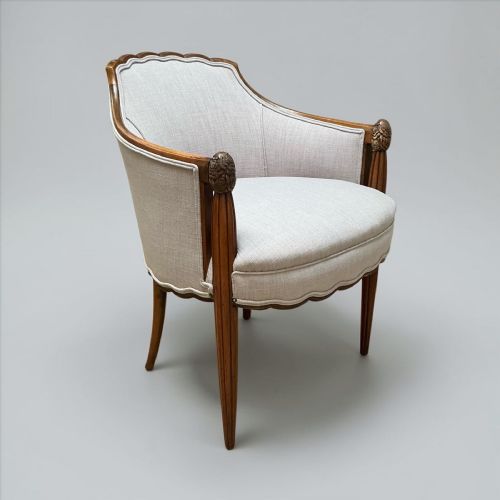
French carved seat furniture brings classical Continental elegance to a room, offering finely worked woodwork and period upholstery that elevate any interior.
French Carved Seat Furniture
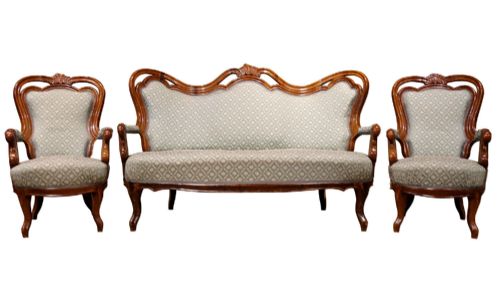
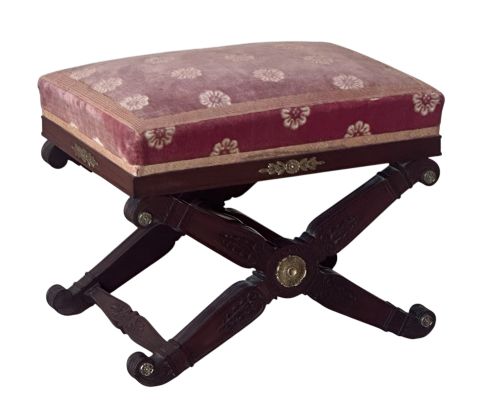
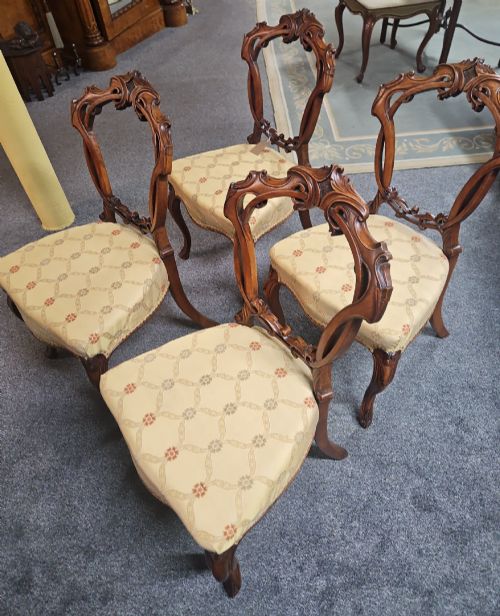
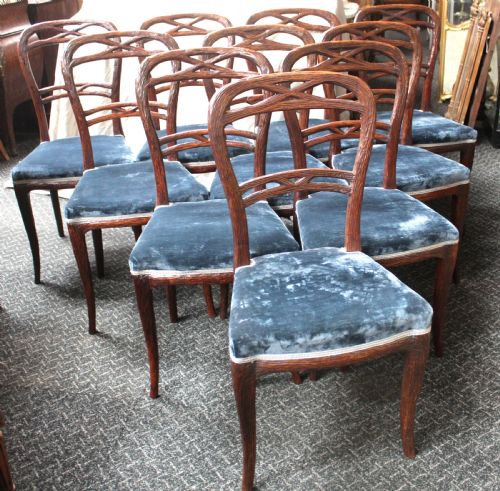
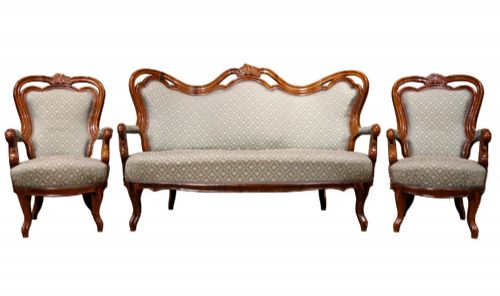
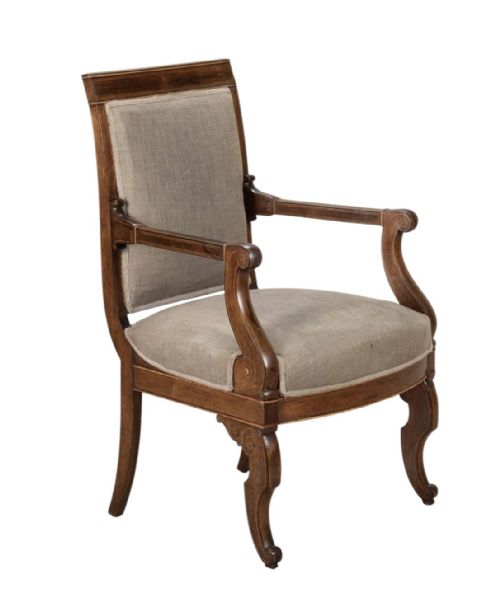
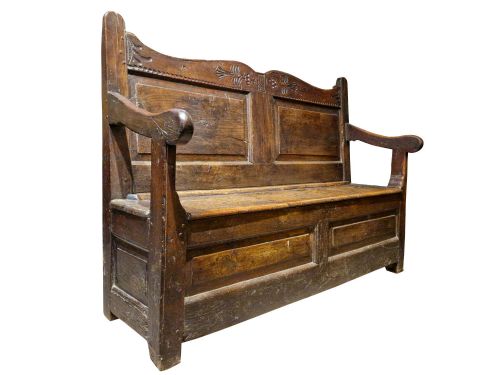
French carved seat furniture encompasses an array of seating options ranging from robust oak settles and ladder-back dining chairs to grand giltwood armchairs and complete salon suites. Buyers seeking these pieces encounter items spanning the eighteenth century through to the early twentieth century, with nineteenth-century revivals and Empire styles predominating.
Materials and construction
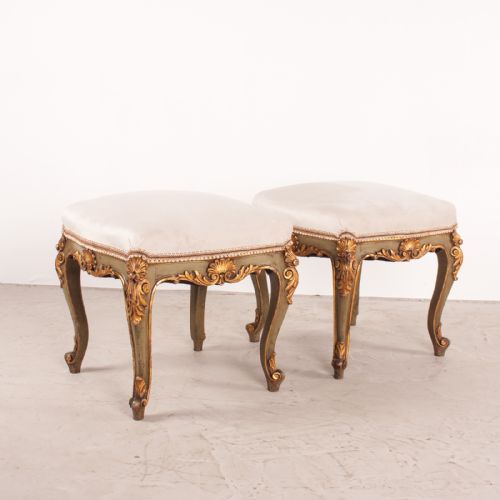
Cabinet makers utilised dense hardwoods such as walnut, oak, beech, and fruitwood to carve intricate structural frames that could support complex ornamental motifs. Giltwood surfaces applied to pine or hardwood bases provided rich metallic lustre, while simulated bamboo and painted finishes introduced varied textures.
Upholstery techniques combined traditional webbing and padding with tactile coverings in velvet, leather, and assorted textiles, often complemented by brass detailing or caned panels. Frame construction relied on sturdy joinery to endure centuries of daily use while maintaining delicate decorative proportions.
Walnut and giltwood dominate the wood and finish options found across nineteenth-century seating listings on this site.
Quality differences
The standard of carving distinguishes superior examples, where hand- chiselled floral and scrollwork shows crisp depth and naturalistic movement rather than shallow, mechanical repetition. Wood selection also dictates grade, with dense, finely figured walnut and pristine original giltwood commanding greater appreciation than plain secondary timbers.
Integrity of the frame and authenticity of the upholstery scheme determine lasting merit. Pieces retaining period cane work, original gilding, or appropriate historic textiles demonstrate superior preservation compared to those altered by heavy modern restorations.
Holland & Sons·Louis Majorelle·A.M.E. Fournier
The French Carved Seat Furniture Glossary
- Giltwood
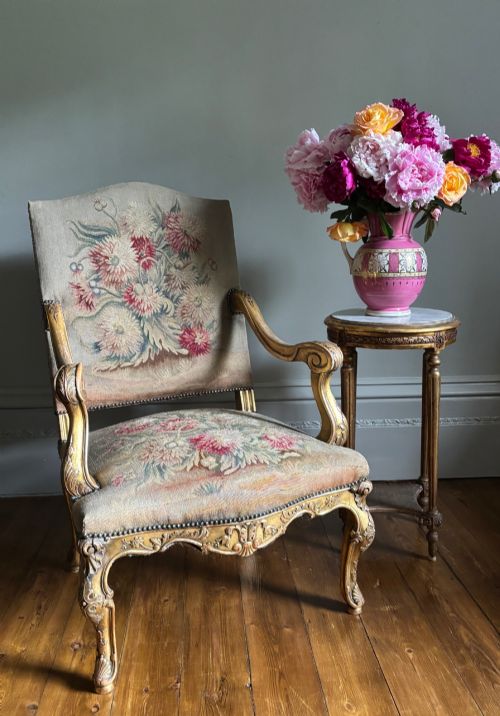
- Timber coated with a thin layer of gold leaf over a prepared gesso ground. This technique creates a luminous, reflective surface often seen on formal nineteenth-century salon chairs.
- Bergere
- An enclosed upholstered armchair featuring wooden sides and a padded seat. The back and arms are frequently filled with woven cane or tight upholstery.
- Gilded
- Covered with a thin layer of gold paint or metallic leaf to simulate solid gold. It adds decorative brilliance to chair frames and mirror surrounds.
- Caned
- Woven rattan or split cane panels utilised for chair seats and backs. This method offers lightweight flexibility and decorative ventilation.
French Carved Seat Furniture: Frequently Asked Questions
How do I clean antique giltwood?
Dust surfaces gently with a soft, dry ostrich feather duster to remove surface particles without disturbing the delicate gold leaf layer.
Avoid using water, chemical sprays, or abrasive cloths entirely, as moisture strips the gesso and exposes the underlying wood.
Can I use salon chairs daily?
Most antique parlour and salon seating handles normal sitting if placed on even floors and approached with reasonable care.
Heavier everyday dining or lounging requires sturdy frames like oak or walnut rather than delicate giltwood or brittle cane.
How do I identify Louis XVI style?
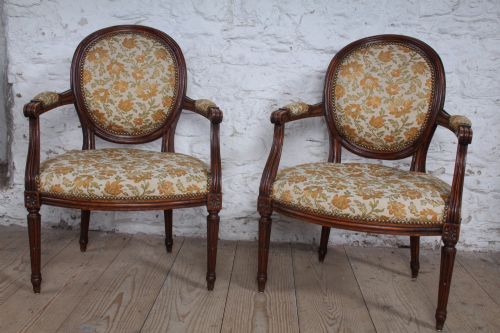
Look for straight tapered fluted legs, neoclassical symmetry, and rectangular or oval chair backs inspired by ancient Roman geometry.
Ornaments typically include carved ribbons, acanthus leaves, and beaded mouldings rather than the swirling curves of earlier Rococo designs.
Are cane seats strong?
Woven cane panels offer surprising resilience and slight give when manufactured with quality materials and proper tension.
Sharp punctures and heavy kneeling must be prevented to avoid snapping the natural plant fibres.