




Carved Wood Footrest
A carved wood footrest brings solid timber frames and soft period upholstery together for everyday comfort.
The Nature of Carved Wood Footrest
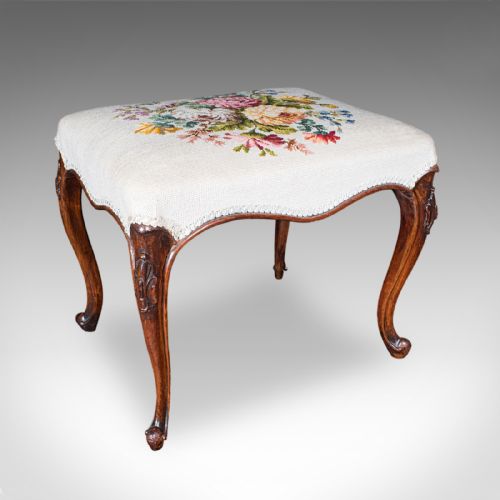
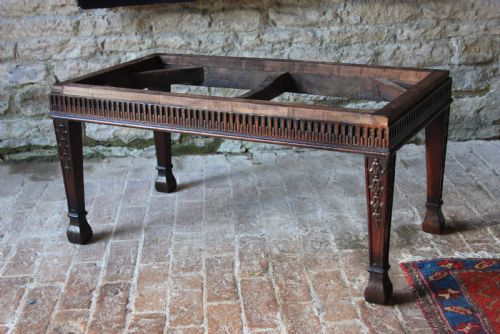
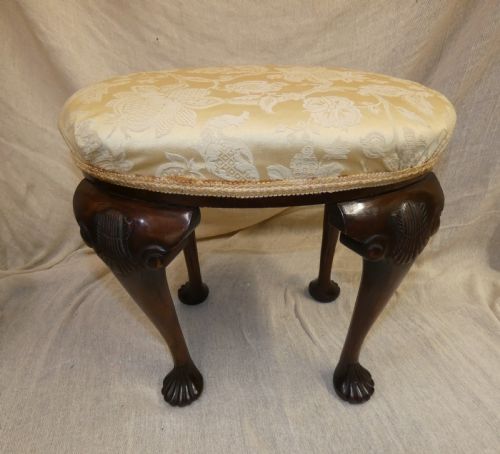
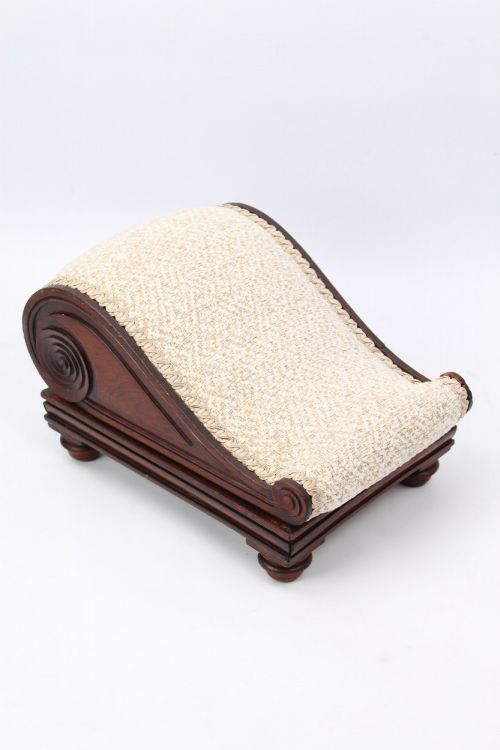
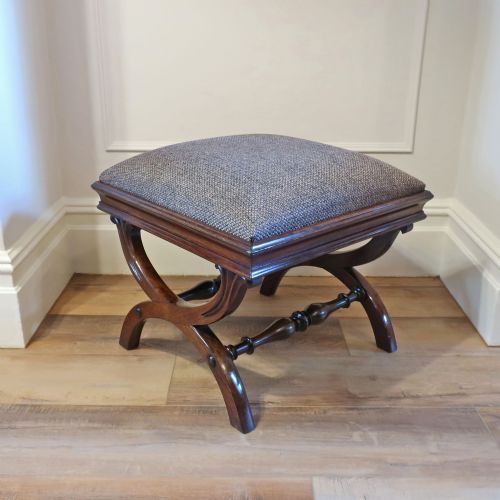
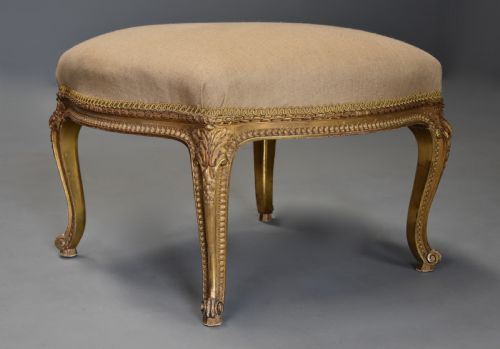
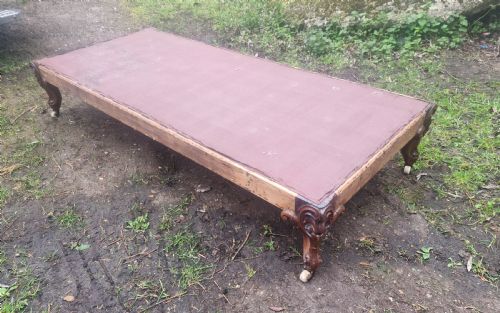
A carved wood footrest comprises a timber frame paired with upholstered surfaces designed to support the feet while seated. Pieces appearing here span the Regency, Victorian, and later periods, capturing traditional seating forms from small stools to ottomans.
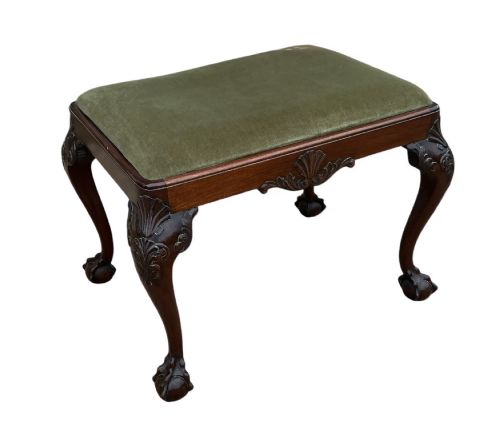
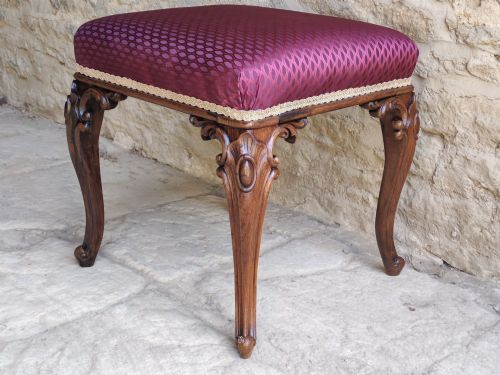
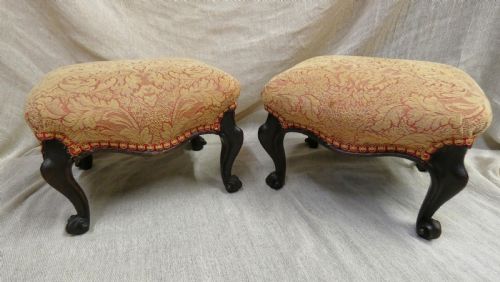
The prevailing examples on this page utilise walnut or mahogany frames, frequently enriched with hand-carved details. Common styles range from Victorian Rococo Revival and Chippendale Revival to French Empire and French Louis XV designs.
Makers fashioned these works as freestanding stools, window seats, and dressing stools. Their varied origins and forms reflect domestic seating habits across the nineteenth and early twentieth centuries.
Materials and Construction
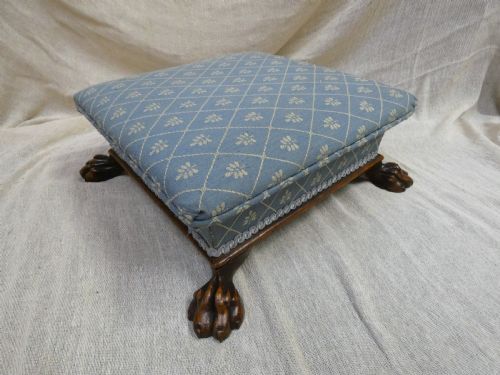
Makers built the primary structures using solid walnut, burr walnut, and mahogany, shaping the timber through hand-carved ornamentation. Selected pieces incorporate brass hardware and lions paw feet to elevate the design of the frame.
The upper surfaces rely on textiles, velvet, textile braid, and wool tapestry to provide a soft resting place. Traditional padding techniques secure these materials over the wooden foundations.
Retail Price Guide 2026
Typical UK retail prices for carved wood footrest, calculated from the Sellingantiques database of over a million retail prices indexed since 2003. This retail price guide relies exclusively on Sellingantiques data; no external sources or auction records are used, so the figures do not describe the wider market.
Current listings feature items from the Regency and Victorian periods, constructed primarily in walnut and mahogany with velvet and wool tapestry upholstery.
Distinctions in Quality
Quality rests upon the depth and precision of the hand-carved woodwork across the frame. Elaborate motifs such as those found on Victorian Rococo Revival or French Empire pieces require skilled joinery and carving expertise compared to plain frames.
The selection of materials also dictates the tier of the piece, with burr walnut and figured mahogany sitting alongside detailed wool tapestry or velvet upholstery. Integrated brass elements and distinct foot designs further separate standard examples from finer items.
The Carved Wood Footrest Glossary
- Regency
- A British design period spanning the early nineteenth century defined by classical restraint and influences from ancient Greece and Rome. Pieces from this era often feature dark timbers like mahogany.
- Victorian Rococo Revival
- A mid-nineteenth-century style characterised by exuberant, asymmetrical carved ornamentation inspired by the French eighteenth century. It frequently employs curved walnut frames and floral motifs.
- French Empire
- A monumental style of the early nineteenth century marked by classical dignity and rich decorative elements. This aesthetic informs the grander ottomans and window seats.
- Burr Walnut
- A highly prized timber veneer sourced from walnut tree growths that produces intricate, swirling grain patterns. It adds rich visual texture to cabinetwork and furniture frames.
- Wool Tapestry
- A heavy, durable woven fabric featuring pictorial or geometric designs. It serves as a traditional upholstery covering for period footstools and ottomans.
Frequently Asked Questions
What periods do these footstools come from?
The available pieces span the Regency and Victorian eras, alongside items from around eighteen eighty and nineteen twenty. These dates reflect traditional manufacturing periods recorded in the current inventory.
Each era contributes distinct decorative vocabularies, ranging from classical Regency lines to elaborate Victorian carving styles.
What woods are used in the frames?
Primary timbers include mahogany and walnut, with select items incorporating burr walnut for decorative grain patterns. These hardwoods provided the structural integrity needed for carved ornamentation.
Craftsmen often polished these woods to highlight their natural figures, sometimes pairing them with brass details.
How were these footrests originally used?
These items served as functional domestic furnishings, positioned before chairs and sofas to support the feet during rest. Larger examples also functioned as window seats or dressing stools.
Their varied forms, from small footstools to ottomans, suited different rooms within period homes.
What upholstery materials appear on the pieces?
Upholstery treatments utilise velvet, wool tapestry, and standard textiles secured with textile braid. These fabrics provided both comfort and decorative contrast against the dark wood frames.
Many examples retain traditional fabric types that complement their specific historical style.