





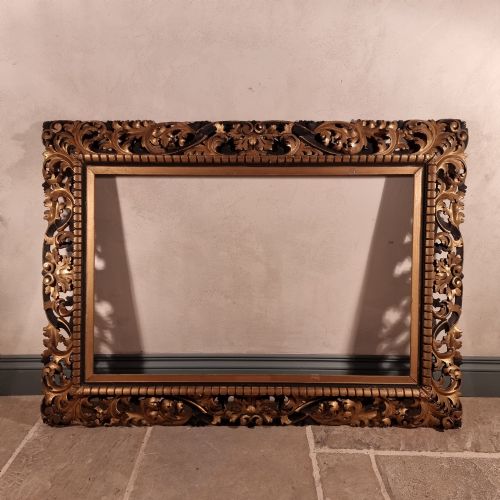

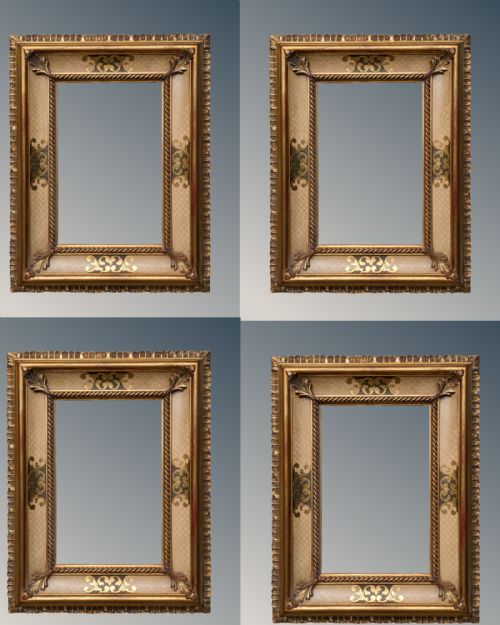


Carved Wood Florentine Frame
A carved wood florentine frame brings intense Italian gilding and pierced ornamentation to a room, offering rich historical character for any wall.
Carved Wood Florentine Frame
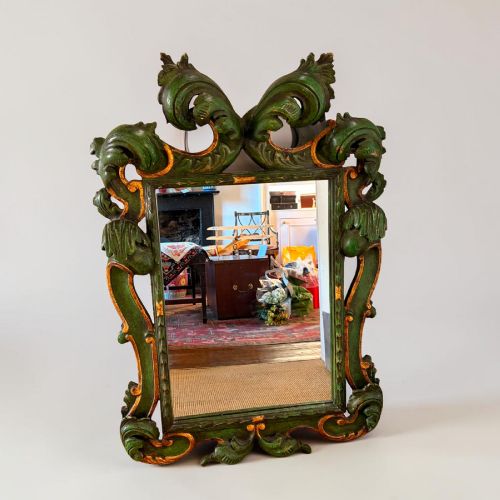
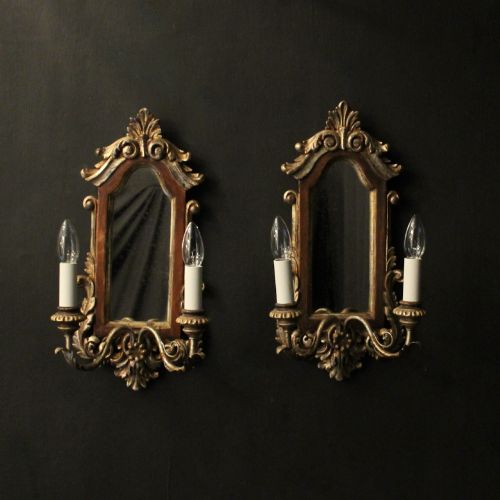
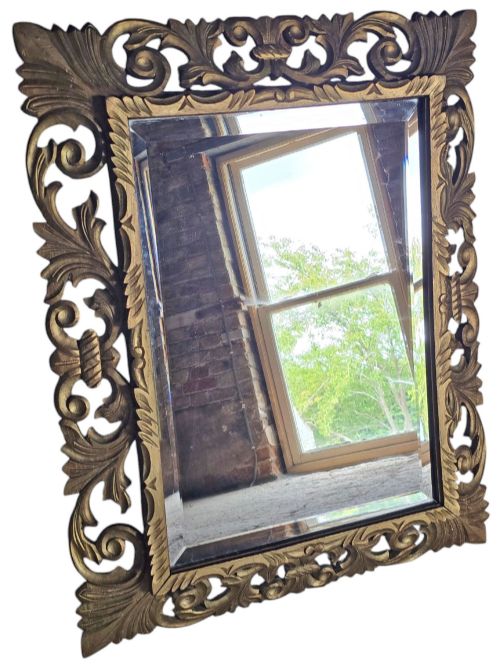
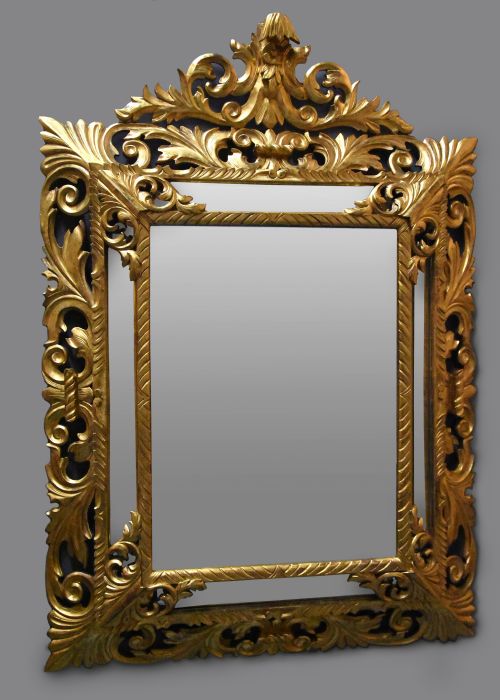
A carved wood florentine frame embodies ornate Italian craftsmanship, taking the form of wall mirrors, picture frames, girandoles, and fine art miniatures. These pieces emerge predominantly from the nineteenth century alongside later twentieth-century iterations.
The most common formats on this page are wall mirrors and picture frames finished in rich giltwood. Buyers encounter rectangular, oval, cushion, and overmantle shapes shaped by Florentine, Baroque, and Rococo stylistic traditions.
Origins trace directly to Italy, where workshops produced heavily carved wooden surrounds finished with applied gold leaf. Surviving examples range from small decorative frames to large statement pieces designed for prominent interior spaces.
How they were made
Makers shaped structural wooden foundations through detailed hand carving before applying layers of gesso to smooth the surface. This preparation created the precise relief needed for intricate scrollwork and foliage.
Workers then gilded the prepared surfaces using gold leaf to achieve a brilliant metallic sheen. Some pieces also incorporated hand-painted elements alongside the carved giltwood decoration.
Carved Wood Florentine Frame Retail Price Guide 2026
Typical asking prices for carved wood florentine frame among the pieces listed under this phrase on Sellingantiques today, from the lower quarter to the upper quarter. They describe what is for sale here now, not the wider market.
Some nineteenth-century makers hid their joinery so cleverly that the entire frame appears carved from a single, impossible tree.
What varies in quality
The depth and crispness of the hand carving separate simpler mouldings from superior pieces. Stronger examples exhibit deep undercut foliage and scrollwork rather than shallow surface impressions.
The quality of the gilding and the preservation of the original gesso foundation heavily influence the character of the piece. Finer items retain consistent gold leaf coverage that ages gracefully over the centuries.
The Carved Wood Florentine Frame Glossary
- Giltwood
- Wood covered with a thin layer of gold leaf. This finish provides the characteristic metallic brilliance seen on traditional Italian frames.
- Gesso
- A plaster mix applied to wood as a base for gilding and fine carving. It allows artisans to model sharp decorative details before applying gold leaf.
- Girandole
- A branched wall fixture holding candles, often incorporating a mirror. These pieces combine lighting utility with ornate carved frames.
- Overmantle
- A large mirror designed to hang above a fireplace mantel. Such pieces act as architectural focal points within a room.
Carved Wood Florentine Frame: Frequently Asked Questions
Where should I hang a florentine mirror?
These frames suit prominent locations such as above a fireplace mantel or in a hallway where their reflective glass and carved detail can catch the light.
Ensure the wall anchors can support the weight of solid wood and gesso construction.
How do I clean a giltwood frame?
Dust the carved surfaces gently with a soft, dry brush to prevent accumulation in the recesses.
Avoid using liquid cleaners or abrasive cloths that can damage delicate gold leaf and gesso.
Are these frames original to the eighteenth century?
Most surviving pieces date from the nineteenth century or later revivals, though earlier styles heavily influence the carved ornamentation.
Examine the construction methods and wood ageing to understand the true period of manufacture.
What is the difference between a girandole and a standard mirror?
A girandole incorporates attached arms designed to hold candles alongside the central reflective glass.
Standard mirrors focus purely on the framed glass panel without lighting attachments.