





Carved Wood Figures Pair
These carved wood figures pair items bring sculptural presence and regional character into a room, spanning centuries of global craftsmanship.
Carved Wood Figures Pair
A carved wood figures pair comprises matching sculptural works shaped from various timbers across multiple global traditions and domestic workshops. These dual objects function as freestanding decorative sculptures, architectural supports, bookends or architectural salvage.
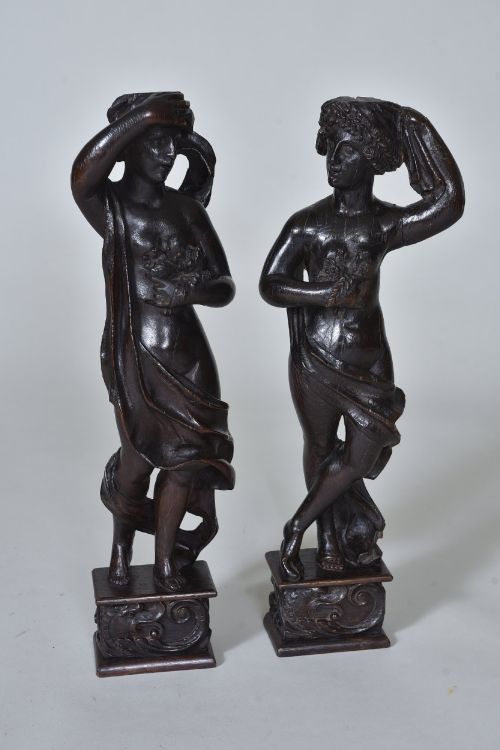
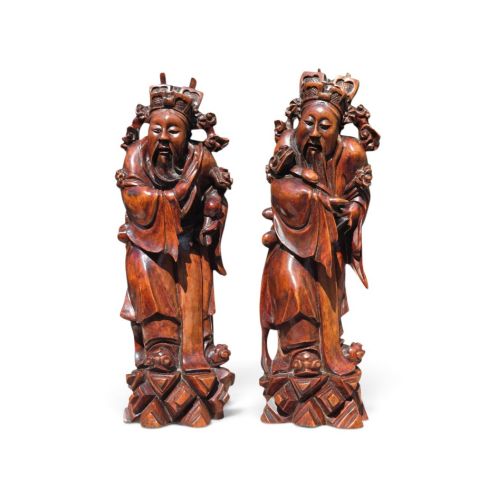
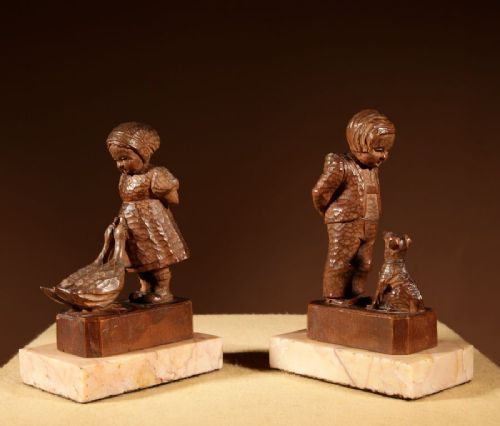
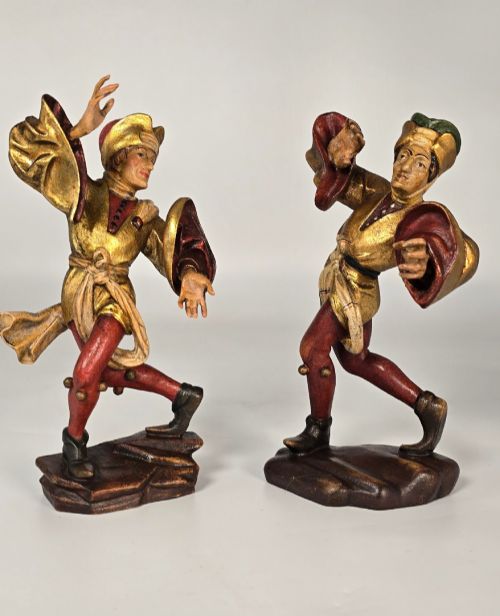
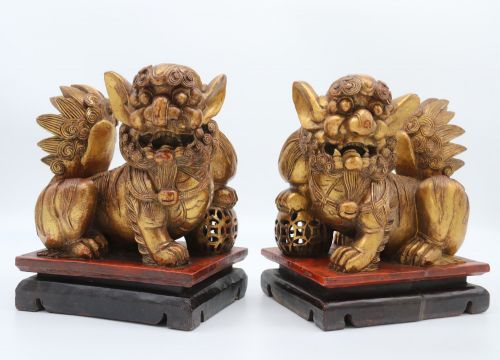
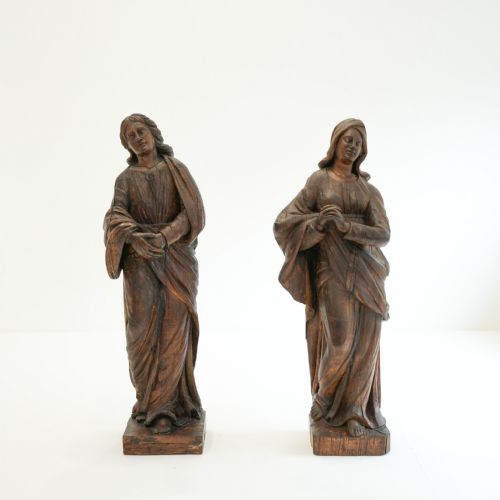
The selections encountered range from European Black Forest animal studies and Swiss limewood dancers to Asian hardwood deities, animals and temple guardians. Earlier examples often take the form of ecclesiastical saints, kings or queens executed in solid oak.
Domestic applications extend to functional pairs such as table lamps, card butlers and decorative book rests. The grouping relies on symmetry and shared subject matter, whether depicting human figures, mythological beasts or fauna.
How They Were Made
Artisans carved these objects from dense domestic timbers like oak, limewood, and boxwood, alongside exotic hardwoods including teak, coromandel, and bamboo. Tool marks from gouges and chisels remain visible on many surfaces, demonstrating manual reduction from solid blocks.
Surfaces frequently received secondary treatments such as polychrome paint, gold leaf, gesso, ebonisation, or dark lacquer. These finishes served to protect the grain while enhancing decorative detail on garments, animal hides, and architectural enrichments.
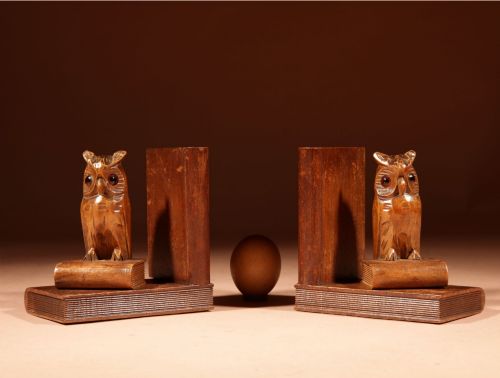
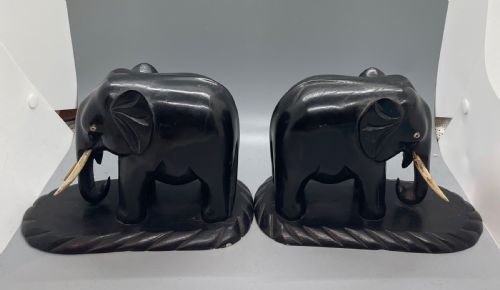
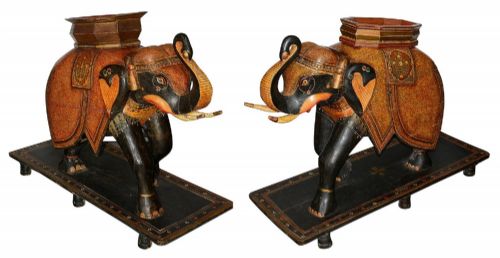
Several pairs depict wise owls and sturdy elephants patiently holding up books.
What Varies in Quality
Proportional balance between the two matched items governs the success of a pair. Minor discrepancies in height, stance, or facial carving indicate separate carving sessions rather than a unified production.
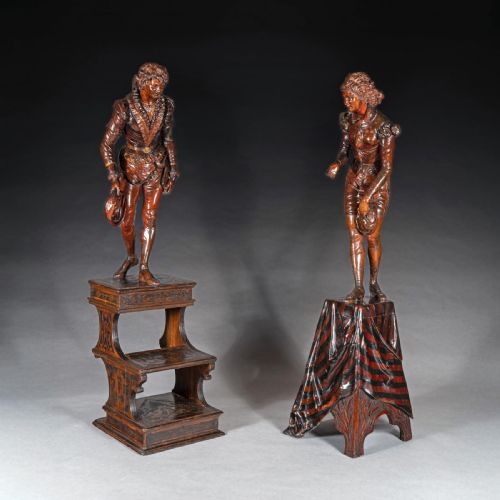
Valentino Besarel
The Carved Wood Figures Pair Glossary
- Polychrome paint
- Decoration applied using multiple colours to render garments, flesh tones, and natural markings on wood. This technique adds vibrancy to figurative carvings.
- Black Forest
- A regional style originating from Switzerland and Germany, celebrated for realistic animal carvings such as bears, owls, and deer. These objects often incorporate naturalistic foliage and rockwork bases.
- Gesso
- A plaster-based mixture applied to wood surfaces to provide a smooth ground for gilding or painting. It helps secure fine details before finishing.
- Okimono
- A Japanese statuette designed for display in a household setting, typically carved from boxwood or hardwood. These figures depict people, animals, or mythical subjects.
- Corbel
- A structural piece of stone or wood projecting from a wall to support a weight, often carved into figurative or architectural forms. They frequently survive as architectural salvage.
Carved Wood Figures Pair: Frequently Asked Questions
What subjects do these pairs show?
Subjects range widely across cultures and centuries, encompassing religious saints, mythological griffins, Daoist immortals, and human figures in regional dress. Animal studies, particularly bears, elephants, and owls, appear with notable frequency.
Many pairs served functional purposes beyond pure display, acting as bookends, table lamps, architectural corbels, or card butlers for domestic interiors.
How are wooden pairs displayed at home?
These sculptures suit mantelpieces, bookcases, and console tables where their matching symmetry creates visual balance. Freestanding pairs work effectively on pedestals or sideboards.
Bookend pairs integrate directly into home libraries to support volumes while adding sculptural interest to shelving.
How can I tell the period?
Dating relies on timber selection, tool marks, and stylistic conventions associated with specific movements like Art Deco, Baroque, or Gothic Revival. Earlier pieces from the sixteenth and seventeenth centuries typically employ heavy oak and distinct architectural framing.
Nineteenth-century works often feature softer limewood or exotic hardwoods with machine-assisted preparation alongside hand finishing.
What is Black Forest carving?
Black Forest carving refers to nineteenth and early twentieth-century wooden sculptures originating from the mountainous regions of central Europe. These works are known for highly detailed depictions of local fauna, particularly bears, fawns, and birds.
Many of these items function as practical objects such as bookends, umbrella stands, or inkwells, combining utility with naturalistic artistry.