
Carved Wood Elbow Chair
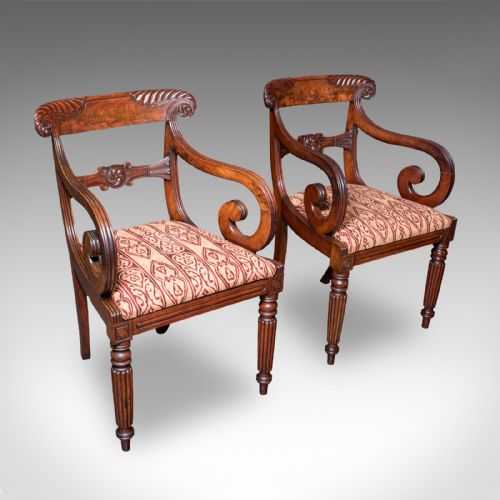
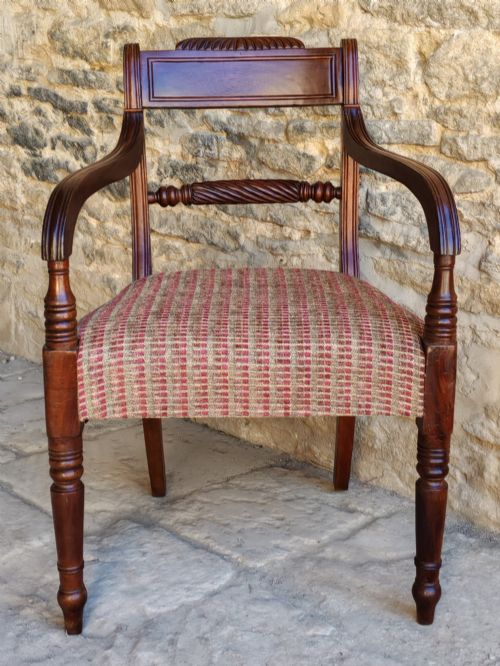
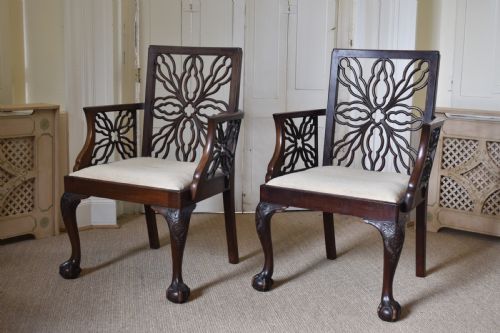
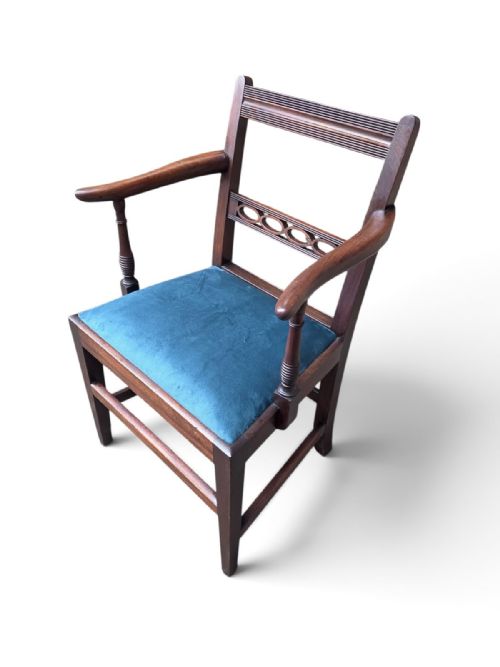
A carved wood elbow chair brings sturdy comfort and period character to a desk or dining table.
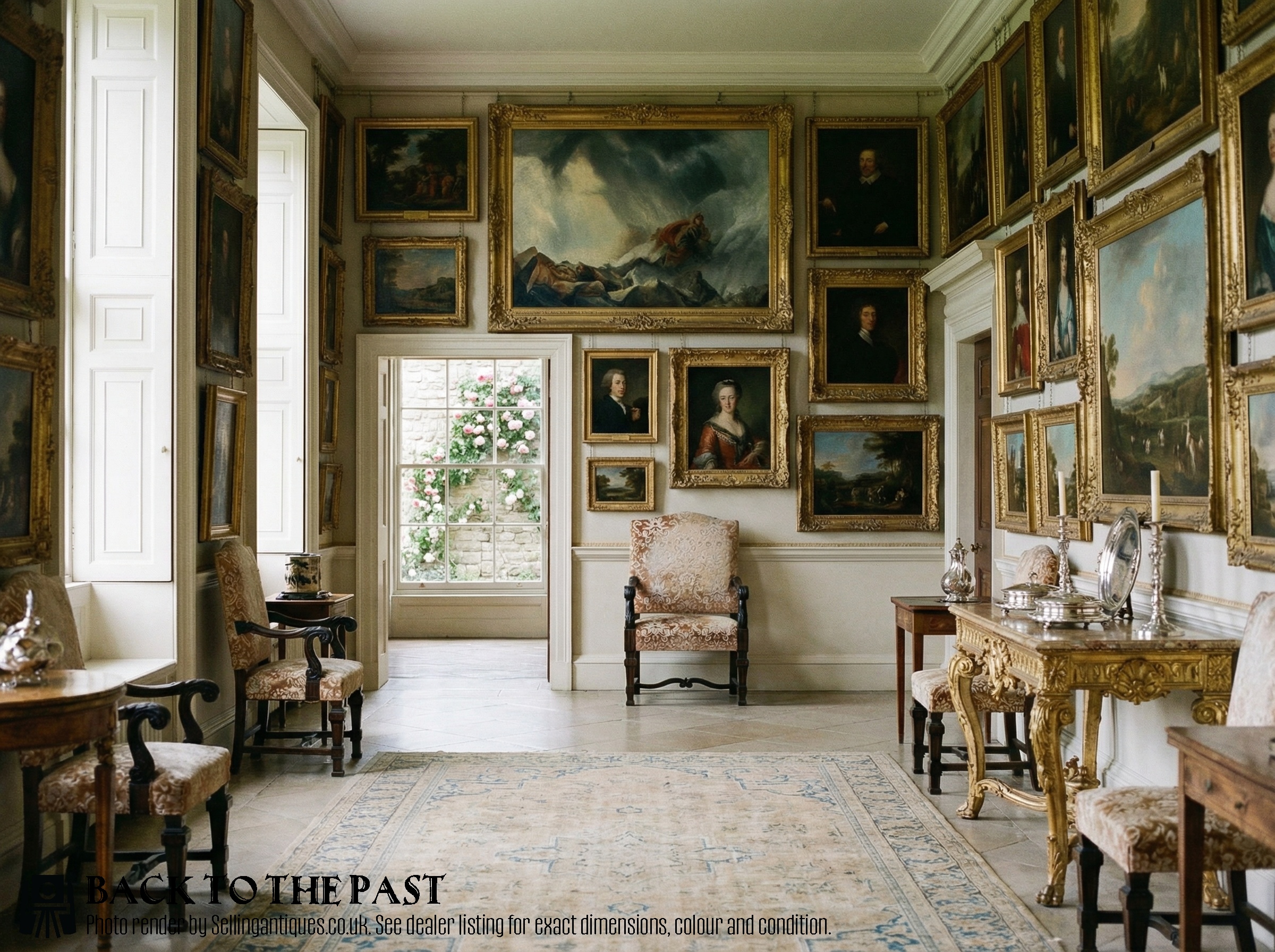
Carved Wood Elbow Chair
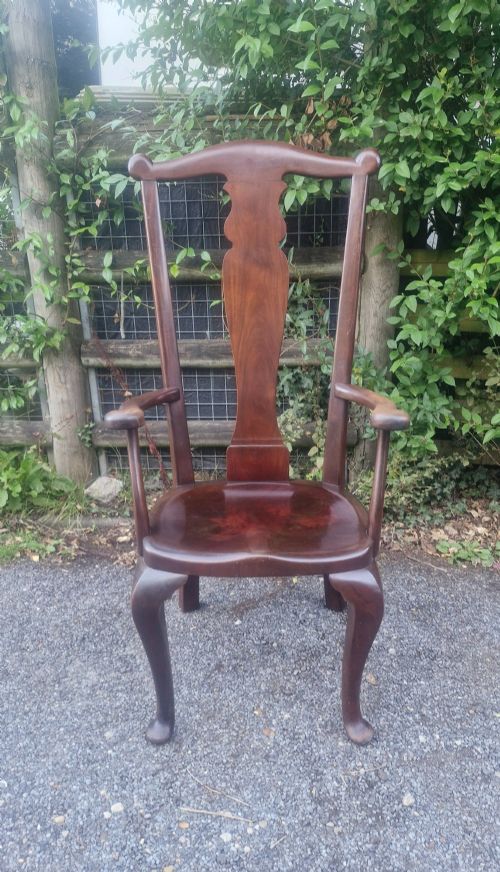
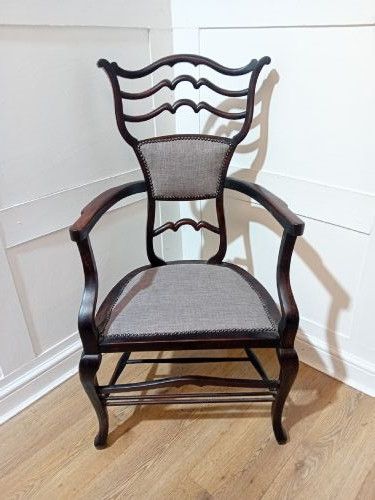
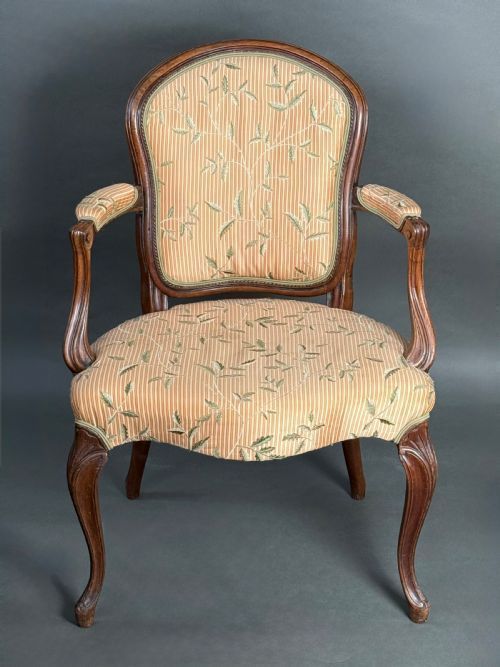
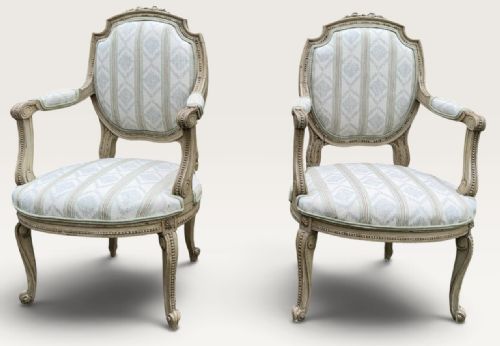
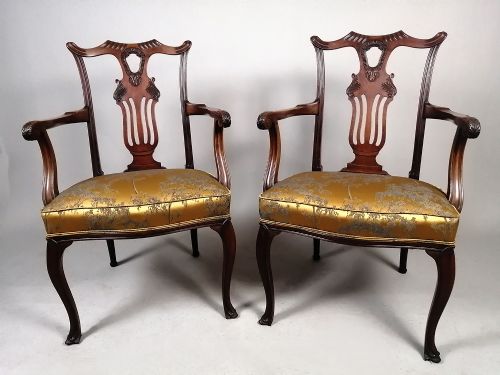
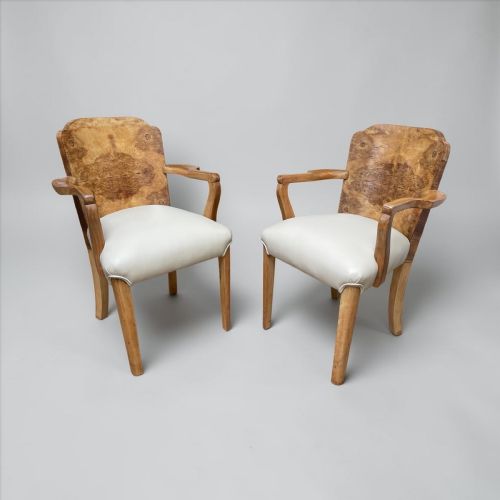
A carved wood elbow chair offers a supportive seat with armrests, appearing across periods from the eighteenth century through the Edwardian era. These pieces function as desk chairs, carvers at the ends of dining tables, or reception seats in morning rooms.
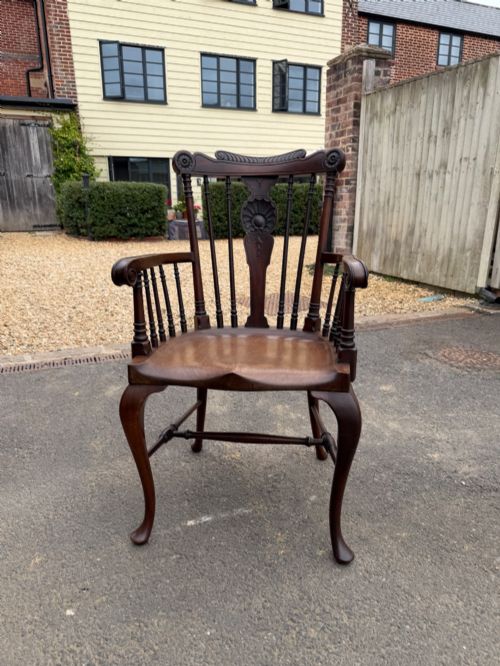
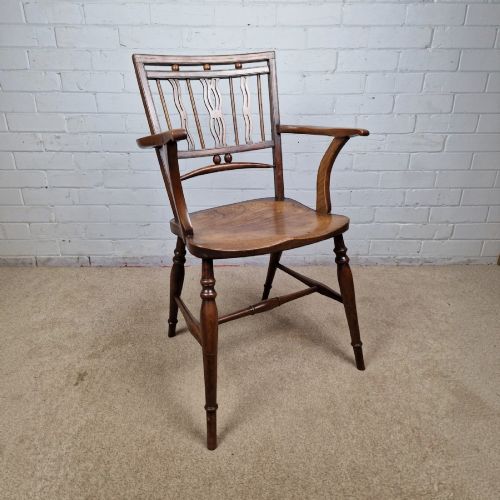
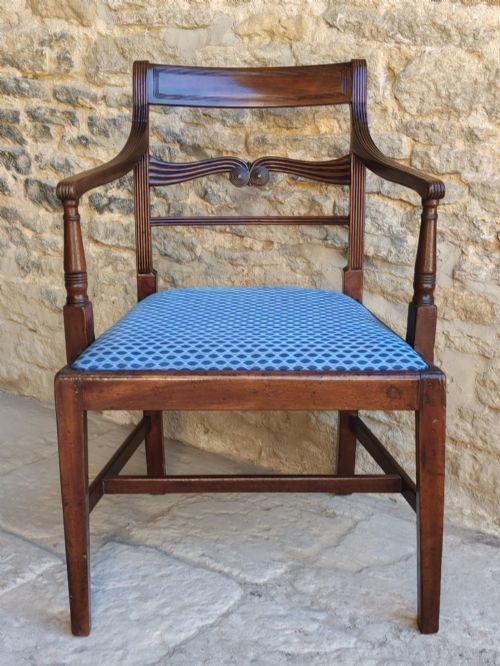
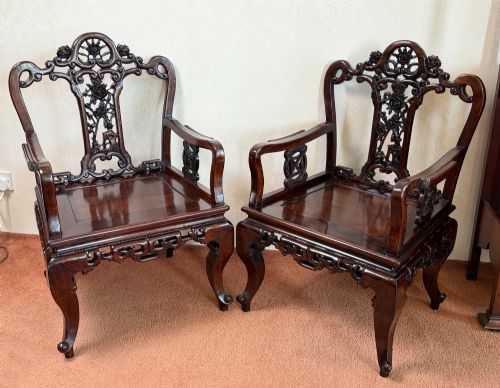
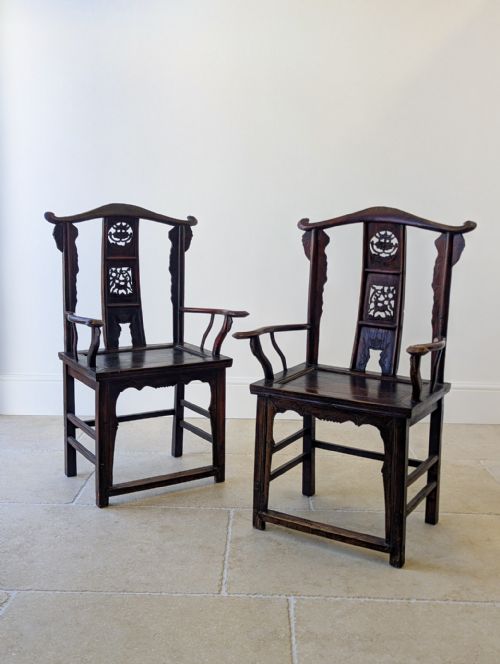
The selection on this page leans heavily towards mahogany frames from the Georgian and Victorian periods, alongside regional Windsor armchairs built from elm, ash, and fruitwood. Buyers also encounter revival styles, Chinese hardwood pieces, and Anglo-Indian designs.
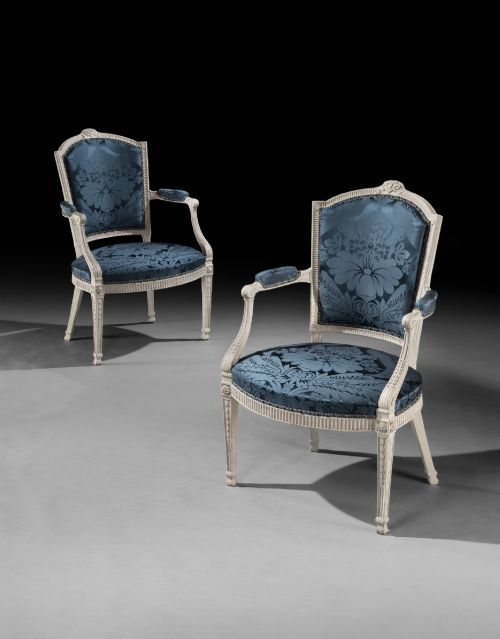
Makers shaped these armchairs for utility and display, combining open arms with upholstered pads, drop-in velvet seats, or carved wooden backsplats. The forms range from ropeback and lyre-back carvers to heavy spindle-backed primitive seating.
How they were made
Cabinet makers and joiners shaped these frames primarily from solid mahogany, oak, yew, and elm, often turning spindles or carving rails by hand. Timber selection dictated the structural strength of the elbow joints and the crispness of the carved details on the backsplats.
Upholstery methods varied from drop-in velvet pads and silk coverings to webbed seats beneath traditional horsehair stuffing. Regional windsor pieces relied on spindle-and-hoop construction, pegging elm seats to ash or fruitwood stems without metal fasteners.
Carved Wood Elbow Chair Retail Price Guide 2026
Typical asking prices for carved wood elbow chair among the pieces listed under this phrase on Sellingantiques today, from the lower quarter to the upper quarter. They describe what is for sale here now, not the wider market.
Listings feature eighteenth-century Georgian mahogany carvers alongside nineteenth-century Windsor chairs in elm, ash, and fruitwood.
What varies in quality
The standard of timber and the depth of carving separate standard examples from finer commissions. Dense, well-figured mahogany and tightly grained hardwoods hold crisp lines along the arms and crest rails, whereas utility pieces show simpler turning and plain timber.
Structural integrity at the elbow joints and legs dictates the longevity of the seat. Original timber surfaces, untouched paint, and intact joinery hold greater appeal than chairs rebuilt with modern replacement rails or heavy over-restoration.
The Carved Wood Elbow Chair Glossary
- Carver
- An armchair designed to match a set of dining chairs, usually placed at the table head. These seats feature open elbows to accommodate wider garments.
- Windsor
- A chair constructed with a solid wooden seat into which the legs and back spindles are wedged directly. Traditional versions combine elm seats with bentwood hoops and ash stems.
- Splat
- The vertical central strip of wood down the middle of a chair back. Master carvers pierced and shaped these boards into ribbons, urns, or interlaced knots.
- Padouk
- A heavy, durable tropical timber with a reddish hue used in Anglo-Indian furniture. Craftsmen carved this wood deeply to achieve intricate floral and animal motifs.
- Drop-in seat
- A removable frame upholstered separately and dropped into the chair seat rebate. This design allowed easy recovering of velvet or fabric without dismantling the main structure.
Carved Wood Elbow Chair: Frequently Asked Questions
What is a carver chair?
A carver chair is an armchair built with open elbows to match a set of dining chairs. Historically, hosts placed these at the head of the table.
They offer broader support and distinct back designs while maintaining visual harmony with the smaller side chairs.
How do I identify a Windsor chair?
Windsor chairs feature a thick wooden seat directly drilled to receive legs, back spindles, and a curved bow. Makers typically paired elm seats with ash or fruitwood components.
These country chairs display honest pegged joinery and sturdy hoop or comb backs built for farmhouse utility.
Where should I place an elbow chair?
Elbow chairs suit studies as desk seats, reception rooms as reading chairs, or flanking dining tables. Their armrests require more clearance than standard side chairs.
Matching pairs work well by a fireplace or flanking a sideboard to frame a room layout.
What woods were used in these chairs?
Mahogany dominates formal Georgian and Victorian pieces, while oak appears in earlier Saxon and revival styles. Country makers utilised regional timbers like yew, elm, fruitwood, and laburnum.
Imported pieces occasionally feature dense tropical hardwoods such as padouk or Chinese varieties.
Are drop-in seats original?
Drop-in seats are a common historical feature designed for easy reupholstery without damaging the frame. Many retain period textiles like velvet or silk.
Buyers should inspect the inner frame beneath the drop-in pad to verify age and wood condition.