

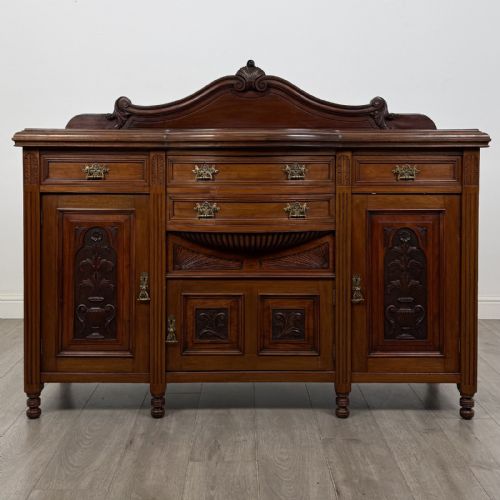
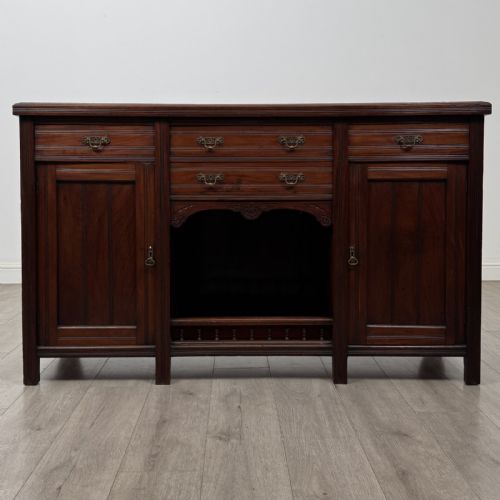
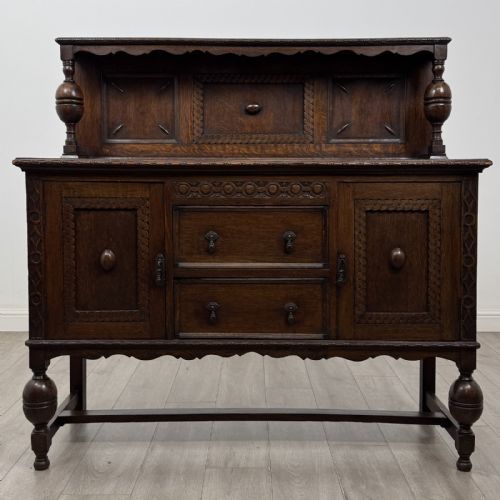
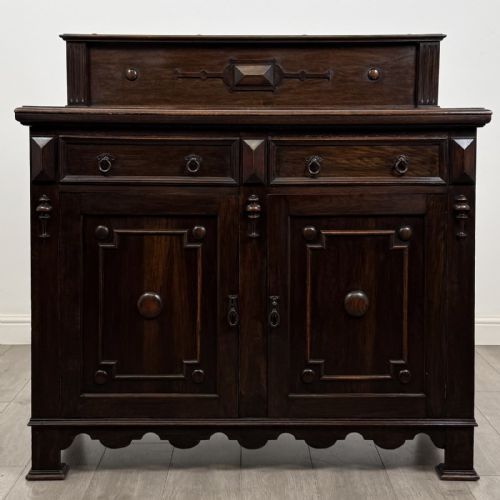
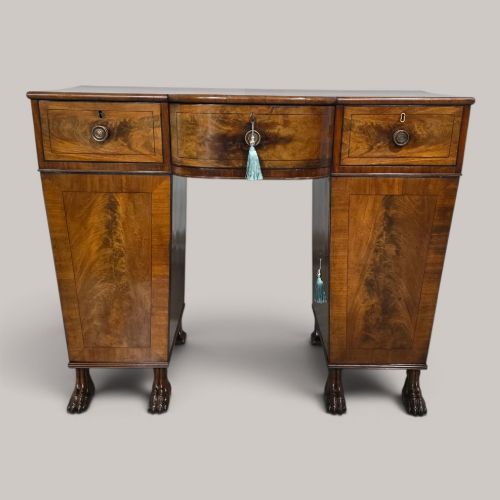
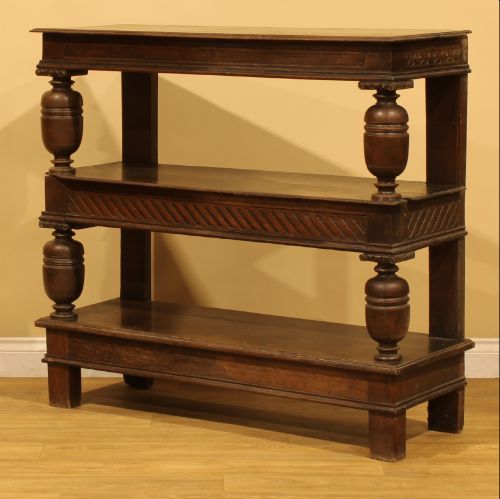
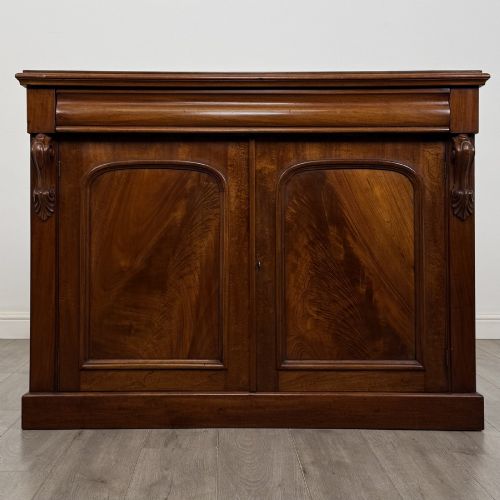
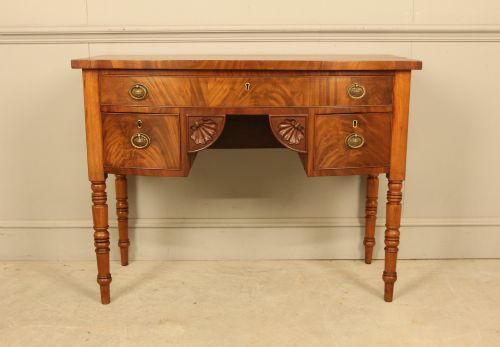
Carved Wood Buffet Server
These carved wood buffet server pieces bring enduring craftsmanship and robust storage into dining spaces.
Carved Wood Buffet Server
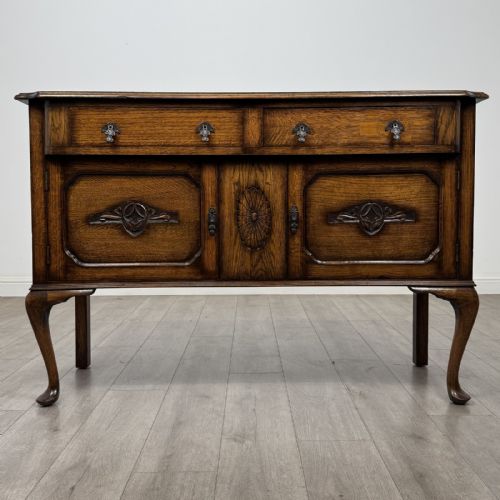
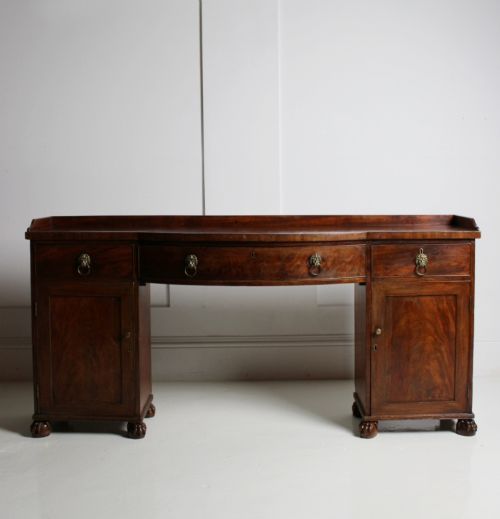
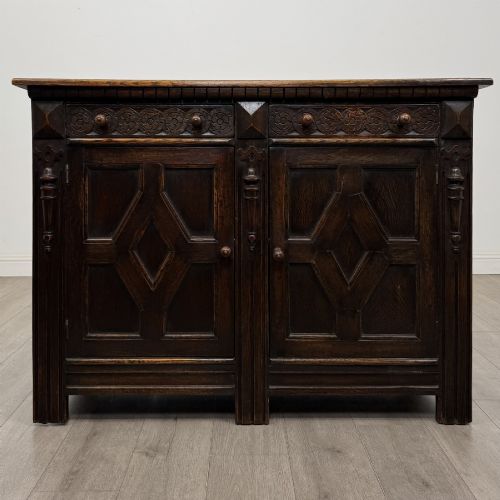
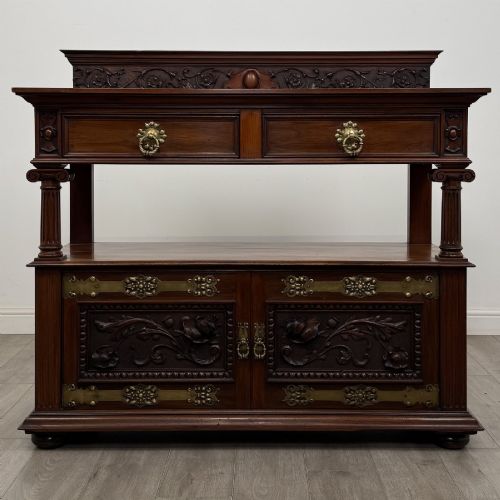
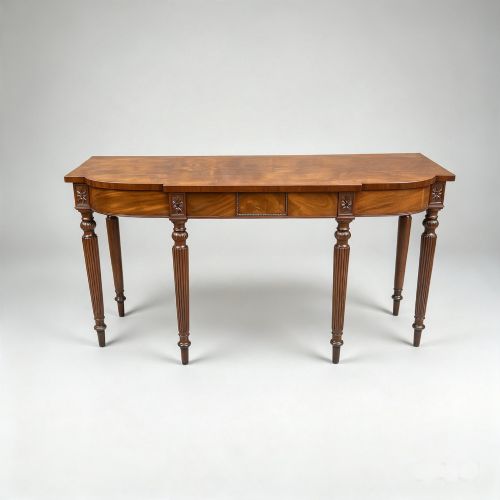
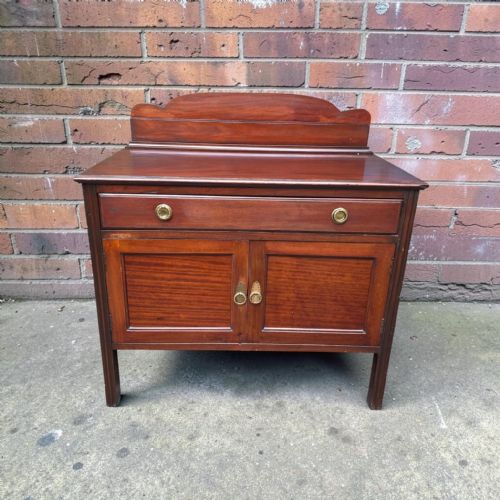
A carved wood buffet server encompasses substantial dining room furniture built to store tableware, linen and serving dishes. You will find these listed variously as sideboards, serving tables, side cabinets and dressers across this page.
The selections span from the Regency and William IV periods through the Victorian and Edwardian eras, extending to 1920 revival pieces. Mahogany, oak and walnut predominate, often enriched with carved details.
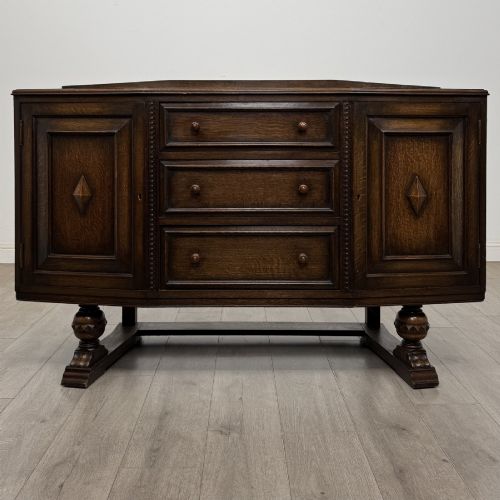
Victorian heavy oak and mirror-back mahogany variants appear frequently alongside Edwardian Adam revival pieces and Jacobean style geometric panel designs. Each offers a distinct structural interpretation suited to formal dining interiors.
Materials and Construction Methods
Cabinetmakers utilised solid timbers alongside figured veneers such as flame mahogany, pollard oak and burr walnut to create varied surface textures. Secondary woods provided sturdy internal framing while exterior surfaces received detailed hand carving.
Joinery methods relied on traditional mortise and tenon joints for structural integrity, complemented by dovetailed drawer construction. Decorative elements incorporated turned columns, cabriole legs, brass hardware and occasional marble tops.
Carved Wood Buffet Server Retail Price Guide 2026
Typical asking prices for carved wood buffet server among the pieces listed under this phrase on Sellingantiques today, from the lower quarter to the upper quarter. They describe what is for sale here now, not the wider market.
Several Victorian oak examples incorporate built-in bottle racks designed to keep vintage wine securely stored beneath the serving surface.
Distinctions in Execution
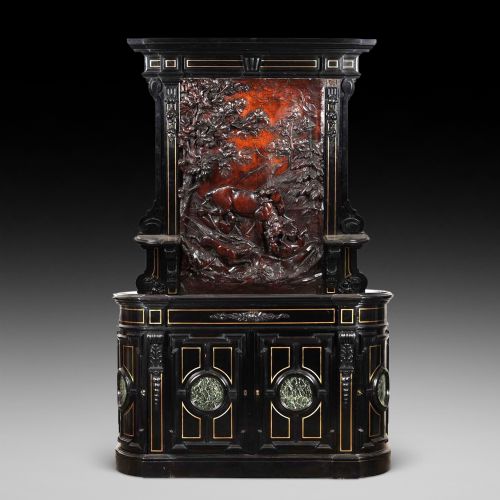
The standard of carving distinguishes standard production from exceptional examples, with crisp undercut foliage and well-defined figures marking superior workshop output. Timber selection also dictates grade, where evenly figured grain and book-matched veneers elevate the piece.
Hardware integrity and structural joinery soundness further separate fine examples from simpler items. Original brass fittings, smoothly running drawers and substantial timber thickness denote careful historical craftsmanship.
Gillows·Maple & Co
The Carved Wood Buffet Server Glossary
- Chiffonier
- A compact sideboard cabinet featuring a low superstructure or mirror back above enclosed lower cupboards. It developed during the nineteenth century for convenient parlour storage.
- Potboard
- An open slatted lower shelf incorporated into dresser bases and serving tables. Originally utilised for airing pottery and heavy kitchen vessels.
- Serpentine Front
- A furniture facade featuring a convex centre flanked by concave curves. This contour requires advanced woodworking skill to shape accurately from solid timber or thick veneer.
- Breakfront
- A cabinet design where the central section projects forward from the flanking wings. It creates visual depth and breaks up long linear elevations in large dining rooms.
- Mirror Back
- An upright wooden frame containing a polished glass plate attached to the rear of a sideboard. It reflects light and displays decorative objects placed upon the serving surface.
Carved Wood Buffet Server: Frequently Asked Questions
What is a carved wood buffet server used for?
These pieces serve as functional dining room furniture designed for storing dinner services, cutlery, table linen and serving platters. The expansive top surface provides a practical staging area for serving food and displaying decorative objects during meals.
Historically positioned against dining room walls, they also functioned as central display units for silver and glassware. Their robust storage capacity helps keep dining spaces organised while adding architectural presence to the room.
How do I identify a Victorian sideboard?
Victorian examples frequently display heavy proportions executed in dark mahogany, walnut or deeply carved oak. Common design indicators include large mirror backs, turned pilasters, panelled cabinet doors and generous central drawers.
Construction details such as hand-cut dovetailing and solid timber framing point to nineteenth-century workshop practices. Stylistic influences range from Gothic Revival heaviness to simpler Aesthetic Movement and Arts & Crafts interpretations.
Where should I place a large sideboard?
Position your sideboard against a principal dining room wall where it has adequate clearance for doors and drawers to open fully. Ensure it sits away from direct heat sources and strong sunlight to protect polished wood surfaces and delicate veneers.
Allow sufficient floor space around the piece so its substantial scale does not crowd the room. Pairing it with a matching dining table and chairs creates a cohesive interior scheme.
How do I care for antique wood furniture?
Maintain finished wood surfaces by dusting regularly with a soft, dry cloth and applying natural beeswax polish occasionally. Avoid using silicone-based sprays or harsh chemical cleaners that can degrade historic French polish or wax finishes.
Protect timber from extreme humidity fluctuations and direct sunlight to prevent warping and fading. Using felt pads under serving dishes helps guard against surface scratches and heat rings.